Portable Generator Advantages: Is One Worth Buying?
You don’t need a whole-house system to keep the lights on. For most homeowners, a portable generator does the job for a fraction of the price — if you understand what it can and can’t do.
I’ve set up, run, and repaired portable generators for homeowners for over a decade, and the same question comes up every storm season: is a portable unit actually enough, or am I just buying a headache with a pull-cord? Here’s the honest breakdown.
1. Lower Cost, No Installation
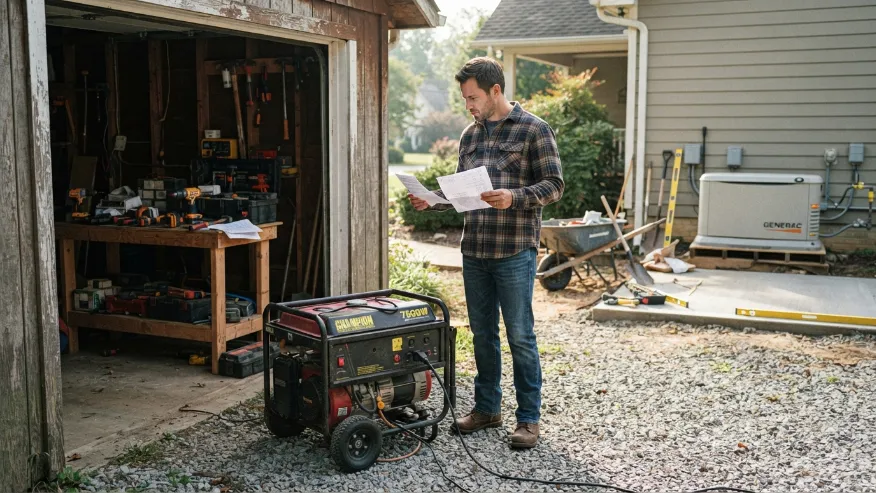
This is the advantage that decides most purchases. A capable portable generator — enough to run a fridge, sump pump, some lights, and a window AC — usually costs between $500 and $2,000. A dual-fuel portable generator in the 7,500-watt range sits at the sweet spot for most houses.
A standby (whole-house) generator, by comparison, runs $5,000 to $15,000+ once you include the concrete pad, permit, and a licensed electrician for the automatic transfer switch. There’s no getting around that gap.
| Factor | Portable Generator | Standby Generator |
|---|---|---|
| Upfront cost | $500–$2,000 | $5,000–$15,000+ |
| Installation | None required | Permit + electrician + pad |
| Startup during outage | Manual, 1–5 minutes | Automatic, seconds |
| Mobility | Fully portable | Fixed in one location |
| Typical coverage | Essential circuits only | Whole house |
| Noise | 64–74 dBA typical | 58–68 dBA, enclosed |
2. Real Mobility, Not Just “Backup Power”
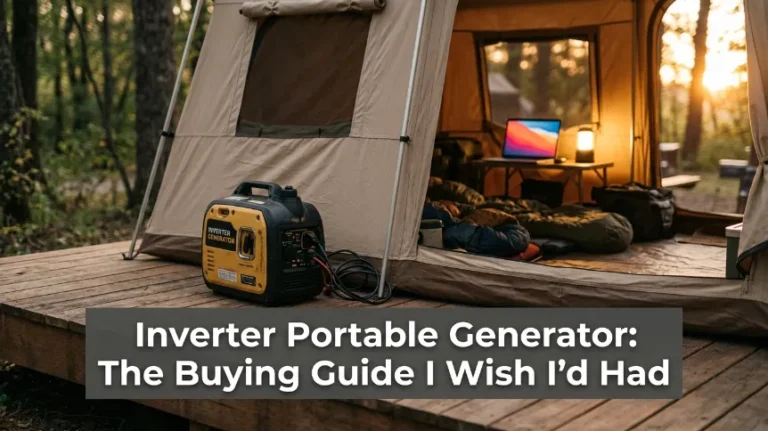
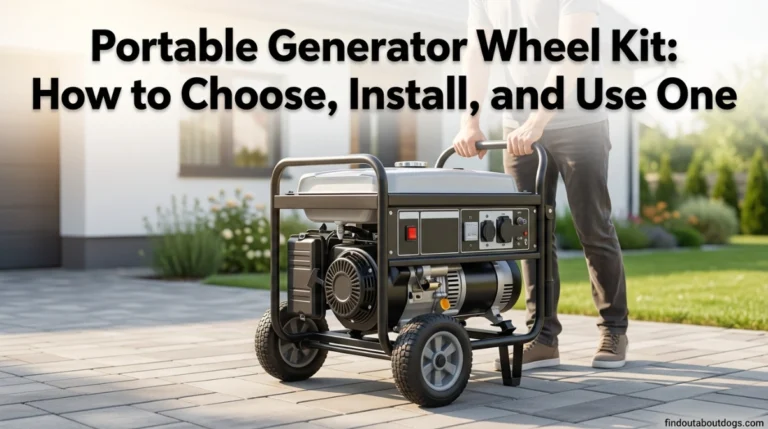
A standby generator lives in one spot in your yard, forever. A portable one goes wherever you need power. Camping trip, tailgate, a remote job site with no grid access — same machine, different use.
That flexibility is why a lot of buyers who don’t even have frequent outages still keep one in the garage. It’s a tool, not just an insurance policy.
3. No Permits, No Waiting
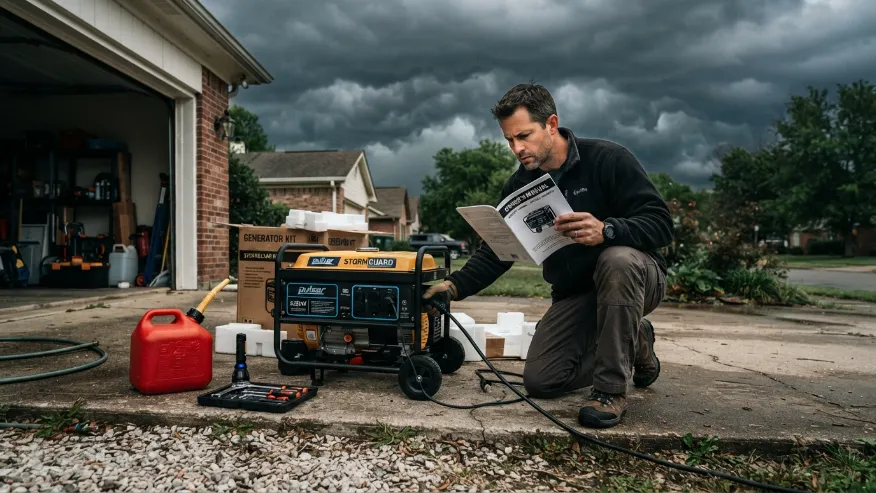
Buy it, fill the tank, run it. A standby system can take weeks between the electrician’s site visit, permitting, and install scheduling. If a storm is forecast for this weekend, a portable unit is the only backup option that can actually be ready in time.
4. Fuel Flexibility
Gasoline is the default and easiest to find, but it goes stale in 30–90 days without a stabilizer. Propane stores indefinitely and burns cleaner. A dual-fuel model lets you run either one — useful if gas stations are jammed after a storm but you’ve got a spare propane tank from the grill.
Straight diesel units are heavier and pricier but sip less fuel per kWh produced, which matters if you’re running one for days at a time.
What a Portable Generator Won’t Do
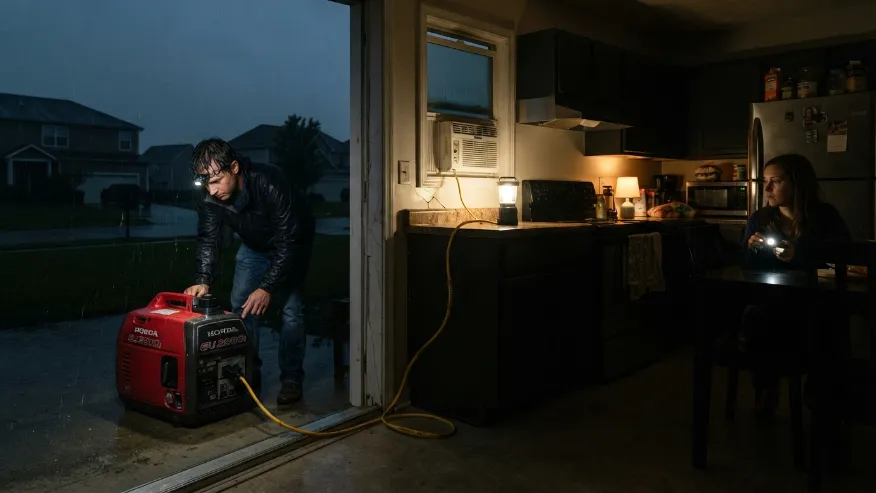
It won’t power your whole house. Central AC, an electric range, and a well pump running simultaneously will overload almost any portable unit. You pick your priority circuits — fridge, some lights, a sump pump, maybe a window unit — and run those.
It also won’t start itself. When the power drops at 2 a.m., you’re the one going outside in the weather to set it up. That’s the real tradeoff for the lower price tag.
The Carbon Monoxide Rule That Isn’t Optional
This is the one place I won’t soften the language. Portable generators produce carbon monoxide (CO), a gas you cannot see or smell. The CDC’s generator safety fact sheet confirms CO from generator exhaust can cause sudden illness and death — and it’s preventable with the right placement.
The Consumer Product Safety Commission is specific: run the generator outside only, at least 20 feet from doors, windows, and vents, and never in a garage, shed, or crawlspace — even with the door open. Install a battery-backed CO alarm inside the home regardless of how careful you are with placement.
Headache, dizziness, and nausea while the generator is running are your signal to get outside immediately and call 911 if symptoms don’t clear.
Who Should Buy a Portable Generator
- Renters and apartment-adjacent homes — no permanent installation possible anyway
- Occasional outages (a few times a year) — the cost of a standby system isn’t justified
- Buyers who also camp, tailgate, or do remote work — get double duty out of one machine
- Anyone who wants backup power this month, not after a permitting process
If you lose power for a week or more every year, or you can’t be home to set up a generator manually (medical equipment dependents, frequent travelers), a standby system’s automatic switchover earns its higher price.
How to Size One for Your Home
Add up the running watts of what you actually want to power, then add the highest single starting-watt draw on top (usually the fridge or a well pump motor kicking on). A 7,500-watt portable generator covers a fridge, sump pump, a window AC, and lights with room to spare for most homes. For a full appliance-by-appliance breakdown, see our generator sizing guide.
Conclusion
A portable generator wins on price, speed to purchase, and flexibility — it just asks more of you when the power actually goes out. For most homes with occasional outages, that trade is worth it. For frequent, multi-day outages or anyone who can’t manually start a machine at 2 a.m., a standby system closes that gap.
Whichever way you go, don’t skip the CO alarm. That’s the one corner nobody should cut. — Michael Turner
If you’re shopping for a first portable generator, a 7,500-watt dual-fuel model gives you enough headroom for a fridge, sump pump, and a few essentials without overloading the unit, plus the flexibility to run on gas or propane depending on what’s available.
Is a portable generator worth it if I only lose power once or twice a year?
Yes, for most homes. At $500–$2,000 with no installation cost, a portable unit covers occasional outages far more cost-effectively than a standby system, which only pays off with frequent or extended outages.
Can a portable generator run my whole house?
No. Portable units are sized for essential circuits — fridge, sump pump, some lighting, maybe one AC unit — not simultaneous whole-house loads like central air and an electric range.
How far from my house does a portable generator need to be?
At least 20 feet from doors, windows, and vents, per CPSC guidance. It should never run in a garage, shed, or crawlspace, even with the door open, because carbon monoxide can build up quickly and linger for hours.
What’s the main downside of a portable generator compared to standby?
You have to manually set it up and start it during an outage, and it can’t power the whole house at once. Standby systems switch on automatically and cover far more of the home.
Gasoline or propane — which is better for a portable generator?
Gasoline is more available and gives more power per dollar, but degrades in 30–90 days without a stabilizer. Propane stores indefinitely and burns cleaner, which is why many buyers choose a dual-fuel model to get both.

Hi, I’m Michael Turner. I own a generator workshop in the United States and founded HomeGeneratorBlog to share practical, hands-on guidance about generator installation, maintenance, troubleshooting, safety, and backup power solutions. My goal is to help homeowners make smarter, more confident decisions through clear and reliable information