Which Type of Generator Is Best for a Home? 2026 Guide
Quick Answer
For most homeowners, a standby generator is the best choice for automatic whole-home backup, while an inverter portable generator is better for occasional outages and essential appliances. Before choosing either, calculate your actual load with this generator power capacity guide instead of sizing by house square footage alone.
Best generator type by situation
- Whole-home backup: Choose a permanently installed standby generator with automatic transfer capability.
- Essential appliances: A 5,000–8,500-watt portable or inverter generator works well for many homes.
- Sensitive electronics: Choose an inverter generator for cleaner, more stable electrical output.
- Fuel flexibility: Dual-fuel or tri-fuel models give you alternatives when gasoline becomes difficult to find.
- Lowest purchase cost: A conventional open-frame portable generator usually provides more watts per dollar.
My rule of thumb
- Choose the generator around the appliances you need during an outage, not the size of your house.
I’ve worked around portable and standby generators long enough to see one buying mistake repeatedly. Homeowners often ask for the “best generator” before deciding what they actually need to keep running.
That reverses the process. In this 2026 guide, I’ll show you which generator type fits each home-backup situation and where spending more genuinely helps.
What Type of Generator Is Best for Most Homes?
A standby generator is the best overall choice for homeowners who want automatic, broad household backup. An inverter portable generator is my preferred alternative when the goal is powering essential circuits for occasional outages.
There isn’t one generator type that wins every category. Convenience, wattage, fuel access, noise, installation, and budget all change the answer.
- Standby generator: Best for automatic whole-home backup and frequent outages.
- Inverter portable generator: Best for quieter operation, electronics, and moderate emergency loads.
- Conventional portable generator: Best when maximum wattage per dollar matters most.
- Dual-fuel generator: Best when you want gasoline plus propane flexibility.
- Tri-fuel generator: Best when your home also has an accessible natural-gas supply.
A home generator is simply a machine that supplies electricity when utility power is unavailable. Portable units must be moved and started manually, while standby systems stay permanently installed outside.
Is a Standby Generator Better Than a Portable Generator?
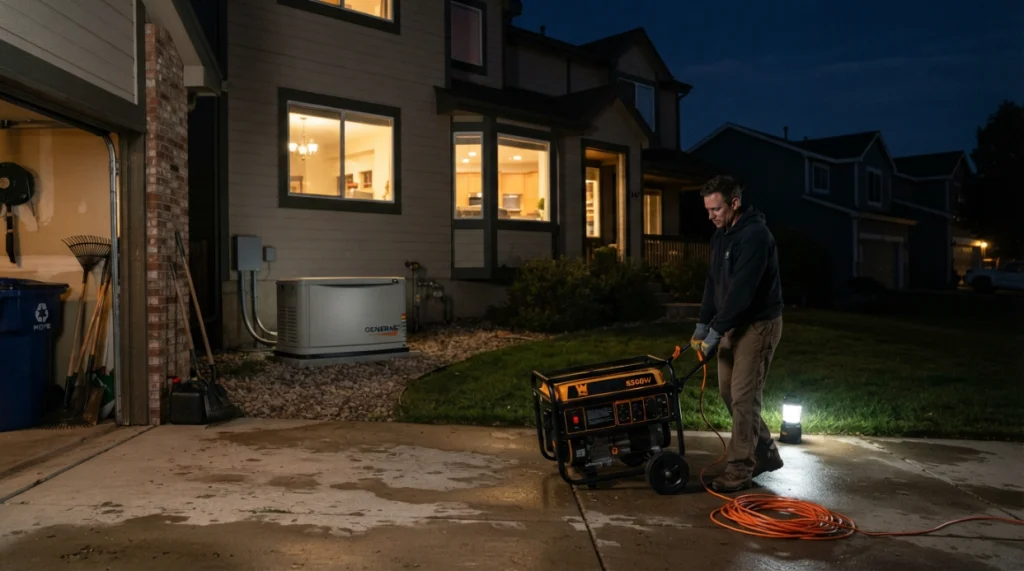
A standby generator is better when you want automatic operation, higher capacity, and minimal work during an outage. A portable generator is better when purchase cost and flexibility matter more.
A standby generator connects to the home through professionally installed electrical equipment. When utility power fails, a properly configured system can start automatically and supply selected circuits or most of the house.
That convenience matters during overnight outages. It also helps when nobody is home to roll out and start a portable unit.
- Automatic starting: No manual setup after the outage begins.
- Higher capacity: Models commonly cover HVAC, pumps, refrigerators, lighting, and other circuits when sized correctly.
- Long-duration fuel: Natural gas or a large propane supply avoids constant gasoline refilling.
- Permanent connection: You don’t need extension cords running through the property.
The downside is cost and installation. Standby systems require site planning, electrical work, fuel connections, permits where applicable, and routine maintenance.
Portable generators require more hands-on work, but they cost much less to get started. That makes them practical for homeowners who experience only occasional outages.
When I would choose a standby generator
I lean toward standby power when outages are frequent, medical or accessibility needs make manual setup difficult, or important equipment must stay powered automatically.
It also makes sense when the homeowner expects central air, well pumps, refrigeration, and other major circuits to operate with few compromises.
Is an Inverter Generator Better for a House?
An inverter generator is usually the best portable generator type for a home when noise, fuel efficiency, and sensitive electronics matter. Larger inverter models can now handle substantially more than phones and camping equipment.
An inverter generator adjusts engine operation with changing electrical demand and electronically conditions its output. That helps produce stable power while reducing unnecessary engine speed under lighter loads.
If you want the technical differences, my inverter portable generator buying guide explains how inverter and conventional designs compare.
- Cleaner output: Well suited to computers, televisions, routers, chargers, and electronic appliance controls.
- Lower noise: Enclosed inverter models can be much easier to live with during long outages.
- Better partial-load efficiency: The engine can reduce speed when demand drops.
- Portable choices: Sizes range from small recreational units to larger 120/240-volt home-backup models.
The biggest tradeoff is price. Inverter generators usually cost more per watt than basic conventional generators.
When is a conventional portable generator better?
A conventional open-frame generator still makes sense when you need substantial wattage without paying the inverter premium. They’re especially attractive for pumps, refrigerators, furnaces, tools, and other heavy outage loads.
I wouldn’t automatically dismiss conventional generators. A properly sized, reputable model can be a cost-effective home-backup tool when noise and portability are secondary concerns.
Home Generator Types Compared: Which One Fits You?
The easiest way to choose is to compare each generator against the problem you need it to solve. Here’s how I separate the main options in 2026.
| Generator Type | Example | Verified Output | Fuel | Best For |
|---|---|---|---|---|
| Inverter Portable | Honda EU7000iS | 5,500W rated / 7,000W maximum | Gasoline | Quiet essential-circuit backup |
| Tri-Fuel Inverter | Champion 201176 | 7,250W gas / 6,525W propane / 5,875W natural gas running | Gasoline, propane, natural gas | Fuel flexibility and larger portable loads |
| Standby | Generac 22kW | 22kW LP / 21kW natural gas continuous | Propane or natural gas | Automatic whole-home backup |
Those numbers also show why the generator’s advertised type isn’t enough. You still need to check its continuous wattage on the fuel you plan to use.
How Many Watts Should a Home Generator Have?
Many households can keep essential appliances operating with roughly 5,000 to 8,500 running watts. Broader whole-home coverage with central air and major electric appliances can move into the 12,000–20,000-watt range or higher.
Don’t select a generator from square footage alone. Two homes of identical size can have completely different electrical loads.
For a more detailed calculation, see my guide on what size generator you need for your home.
Start with the appliances you cannot lose
I tell homeowners to make an outage list before looking at generator models. This avoids paying for capacity they won’t use.
- Refrigerator and freezer
- Furnace blower or heating controls
- Sump pump or well pump
- Selected lighting
- Internet equipment and chargers
- Window or central air conditioning if required
Add the running watts of equipment that may operate together. Then account for the largest motor-starting surge and leave sensible headroom.
The workshop mistake I see most often is buying from the big number printed on the box. Starting watts and continuous running watts are not interchangeable.
Which Fuel Type Is Best for a Home Generator?
Natural gas is convenient for permanently installed standby systems, while gasoline and propane provide flexibility for portable generators. Dual-fuel and tri-fuel designs are worth considering when fuel availability during a long outage concerns you.
Gasoline provides strong portable-generator output and is easy to obtain before a storm. Storage becomes more demanding when fuel sits for long periods.
Propane stores more conveniently for emergency use and avoids stale gasoline sitting in a carburetor. However, many multi-fuel generators produce fewer running watts on propane than gasoline.
Natural gas can be especially convenient when a compatible generator connects to an existing residential supply. A tri-fuel unit gives you that option while remaining portable.
- Gasoline: Strong output and widespread availability.
- Propane: Excellent emergency storage and cleaner fuel-system storage.
- Natural gas: Convenient for homes with an appropriate fixed gas supply.
- Dual fuel: Good balance of gasoline performance and propane storage.
- Tri fuel: Maximum flexibility if natural gas is available.
If gasoline and propane sound like the right combination, read my dual-fuel portable generator guide before choosing a model.
What Is the Safest Generator Type for Home Use?
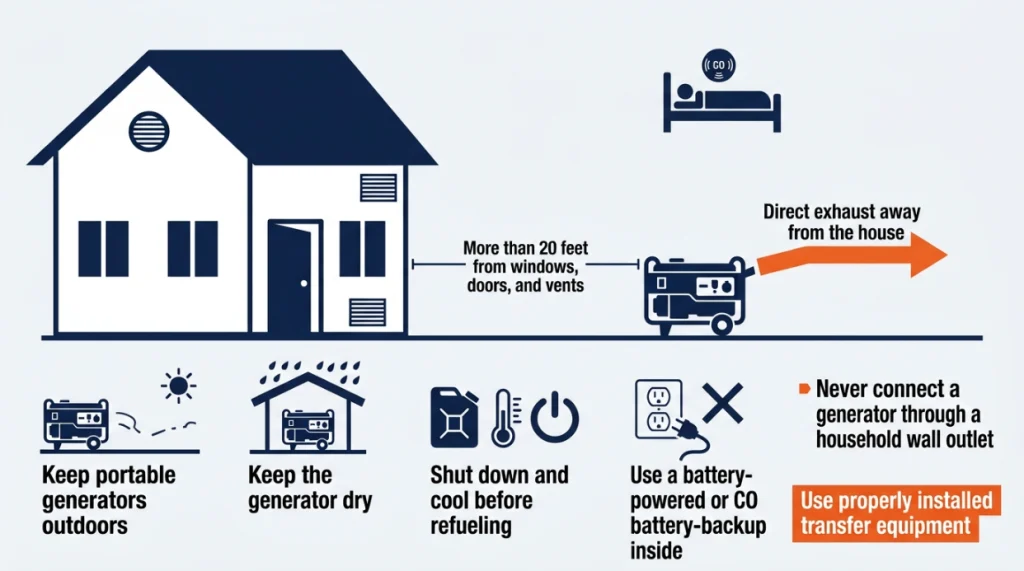
No fuel-burning portable generator is safe to operate inside a house, garage, basement, carport, or other enclosed area. Generator exhaust contains carbon monoxide, which you cannot see or smell.
The CDC recommends operating portable generators outdoors more than 20 feet from windows, doors, and vents. A battery-powered or battery-backup carbon monoxide detector should also be used inside the home.
- Keep portable generators outdoors and away from building openings.
- Direct exhaust away from the house.
- Keep the generator dry and follow its manufacturer instructions.
- Shut the engine down and allow it to cool before refueling.
- Never improvise a connection from the generator into a household wall outlet.
The OSHA generator-safety guidance warns against connecting a generator directly to a building electrical system without a properly installed transfer switch.
The U.S. Consumer Product Safety Commission also warned in 2026 against male-to-male extension cords sometimes used for dangerous generator backfeeding.
My Generator Recommendations for Home Backup
If you’re ready to choose a generator, these are three types of products I’d put on the shortlist for different home-backup priorities.
🏆 BEST PORTABLE HOME PICK
Champion 201176 9000W Tri-Fuel Open-Frame Inverter
★★★★☆
It provides 7,250 running watts on gasoline, 6,525 on propane, and 5,875 on natural gas. I like this format for homeowners who want substantial portable output without committing to one fuel.
🔇 BEST QUIET PREMIUM PICK
Honda EU7000iS
★★★★★
Honda rates the EU7000iS at 5,500 watts continuous and 7,000 watts maximum, with 120/240-volt output. It’s the kind of generator I prefer when quiet operation and clean inverter power matter more than getting the cheapest watts possible.
🏠 BEST FOR WHOLE-HOME BACKUP
Generac 22kW Home Standby Generator
★★★★★
The current 22kW Generac standby platform is rated for 22kW on liquid propane and 21kW on natural gas. I’d choose a properly sized standby system when automatic backup and broad household coverage matter more than portability.
Frequently Asked Questions
What is the best generator for a house during a power outage?
A standby generator is the best option when you want automatic and extensive household backup. For occasional outages, a properly sized inverter or conventional portable generator usually costs less and can keep essential appliances running effectively.
Is an inverter or regular generator better for home use?
An inverter generator is better when you value quiet operation, fuel efficiency at lighter loads, and clean power for electronics. A conventional generator can be the better value when you need higher wattage for pumps, appliances, and other heavy loads.
Is a 7,500-watt generator enough for a house?
A 7,500-watt generator can cover many emergency essentials, including refrigeration, lighting, a furnace blower, pumps, and selected outlets. Whether it is enough depends on each appliance’s running watts and motor-starting surge, especially if air conditioning is included.
Is dual fuel worth it for a home generator?
Dual fuel is worth considering for emergency backup because it lets you switch between gasoline and propane. That flexibility becomes useful during extended outages when gasoline stations are closed, crowded, or temporarily out of fuel.
Can I plug a generator directly into my house?
Never power household wiring by improvising a connection through a wall outlet. A generator supplying a home electrical system should use properly installed transfer equipment that isolates the home from utility power and follows applicable electrical requirements.
Which Generator Type Should You Choose?
If I wanted automatic backup with the fewest compromises, I’d choose a professionally installed standby generator. If I wanted affordable emergency power for essentials, I’d start with a correctly sized inverter or multi-fuel portable generator.
Do the wattage calculation first. Once you know the loads, the best generator type becomes much easier to identify.

Hi, I’m Michael Turner. I own a generator workshop in the United States and founded HomeGeneratorBlog to share practical, hands-on guidance about generator installation, maintenance, troubleshooting, safety, and backup power solutions. My goal is to help homeowners make smarter, more confident decisions through clear and reliable information