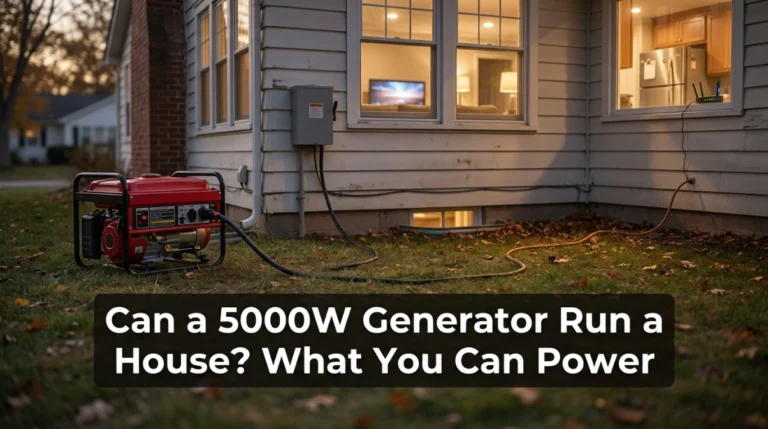
Can You Leave a Portable Generator Running All Night?
Quick Answer
Some portable generators can physically run through the night, but I don’t recommend treating one as a set-it-and-forget-it machine while everyone sleeps. If overnight power is essential, follow the manufacturer’s runtime instructions, keep the unit outdoors at least 20 feet from the home, use working CO alarms, maintain a safe electrical load, and follow the placement rules in my portable generator carbon monoxide safety guide.
What matters before an overnight run
- Keep your distance: Place the generator at least 20 feet from the house, doors, windows, and vents.
- Point exhaust away: Never aim exhaust toward your home, a neighboring building, or a sleeping area.
- Use CO alarms: Keep working battery-powered or battery-backup carbon monoxide alarms inside the home.
- Check runtime: Confirm that the fuel supply and manufacturer-rated runtime cover the hours you actually need.
- Never hot-refuel: Shut the generator down and let it cool before adding gasoline.
- Control the load: Don’t exceed the generator’s continuous running-watt rating.
My safer approach
- If continuous power isn’t essential, I shut a portable generator down before sleeping rather than leave a combustion engine running unattended all night.
A long power outage makes overnight generator use tempting. Your refrigerator, sump pump, furnace blower, medical equipment, or air conditioner may still need electricity after everyone goes to bed.
The important question isn’t only whether the engine can run eight or ten hours. It’s whether the entire setup can operate safely during those hours.
Can a Portable Generator Run All Night?
Yes, some portable generators have enough rated runtime to operate through a normal night’s sleep. Others will empty their fuel tanks much sooner, especially under a heavy electrical load.
Definition: Overnight generator operation means running a portable generator continuously for several nighttime hours while it supplies essential electrical loads. Runtime capability does not automatically make unattended operation safe.
Fuel capacity, engine design, connected wattage, temperature, and fuel type all affect runtime. If you want the mechanical side explained first, my guide to how a portable generator works shows where that energy goes.
| Generator | Rated Output | Published Runtime | CO Safety Feature |
|---|---|---|---|
| Westinghouse iGen5000DFc | 3,900W gas / 3,500W propane | Up to 18 hours at 25% load | CO sensor with automatic shutdown |
| Champion 201531 | 3,250W gas / 2,925W propane | Up to 10 hours gas / 25 hours propane | CO Shield automatic shutdown |
| Honda EU2200i | 1,800W rated / 2,200W maximum | Up to 8.1 hours at 25% load | CO-MINDER |
Those numbers are manufacturer ratings, not permission to ignore the machine. A generator carrying a heavier load may run for far less time.
Is It Safe to Sleep While a Portable Generator Is Running?
Sleeping while a fuel-burning portable generator runs increases the importance of every safety control. A sleeping person may not notice exhaust movement, an electrical problem, a fuel leak, or early symptoms of carbon monoxide exposure.
The CDC’s carbon monoxide guidance says generators should operate outdoors more than 20 feet from windows, doors, and vents. It also recommends battery-powered or battery-backup CO detectors inside the home.
- Never use the generator indoors. That includes basements, garages, crawlspaces, and living areas.
- Don’t use an open garage as a compromise. An open garage door doesn’t make generator exhaust safe.
- A porch or carport is still too close. Exhaust can move into the building through nearby openings.
- Keep windows near the exhaust path closed. Wind direction can change during the night.
- Treat CO shutdown as backup protection. It doesn’t replace correct generator placement.
The U.S. Consumer Product Safety Commission warns that generator carbon monoxide can incapacitate or kill people within minutes. That’s why I never consider a built-in CO sensor an excuse to move a generator closer.
How Far From the House Should a Generator Run Overnight?
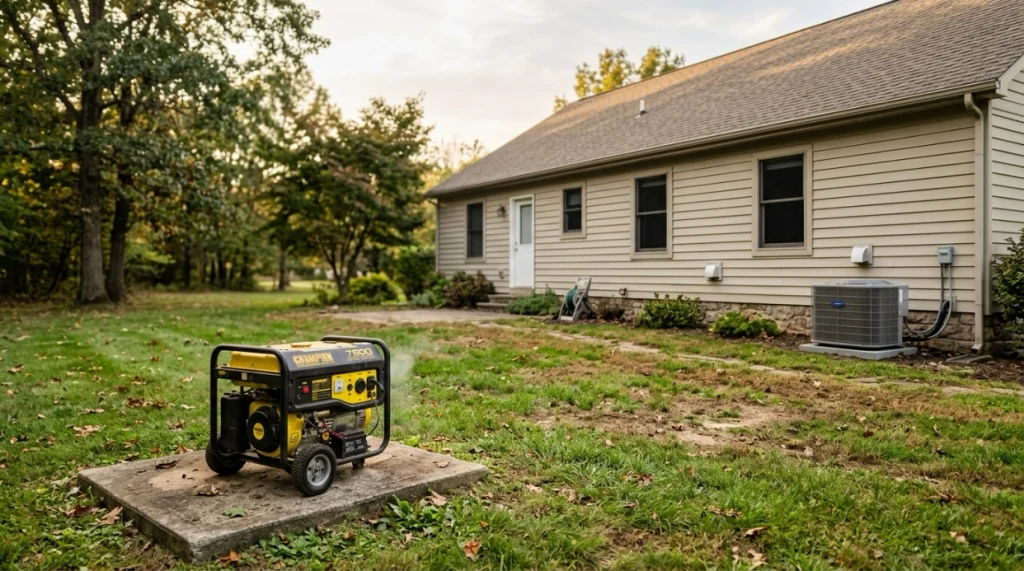
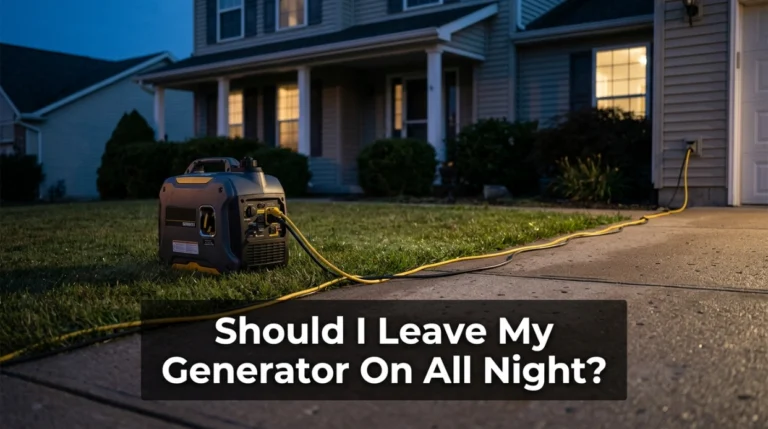
Use at least 20 feet of separation between a portable generator and your home. Measure from the generator to doors, windows, vents, and other openings that could pull exhaust indoors.
Distance alone isn’t enough. Exhaust direction, surrounding structures, wind, and ventilation also matter.
- Place the generator outdoors on a stable surface.
- Direct the exhaust away from your house and neighboring buildings.
- Keep it away from doors, windows, dryer vents, soffit vents, and HVAC air intakes.
- Maintain the clearances specified in your owner’s manual.
- Don’t surround the machine with walls, tarps, boxes, or improvised enclosures.
- Keep children and pets away from hot engine and exhaust components.
I also keep the area around the machine uncluttered. OSHA’s portable-generator guidance calls for good ventilation and warns against using generators near openings where exhaust can enter.
How Long Can a Portable Generator Run Continuously?
There is no universal maximum. The correct answer comes from your exact generator manual, maintenance schedule, fuel system, and connected load.
A light load can dramatically extend tank runtime compared with running near maximum output. Before an outage, calculate what you truly need using my generator power capacity guide.
- Gasoline models: Tank size often limits how long the engine can operate before shutdown and refueling.
- Dual-fuel models: Propane may provide a longer practical run when connected to a suitable cylinder.
- Inverter generators: Variable engine speed can improve fuel efficiency under lighter loads.
- Heavy loads: Air conditioners, pumps, heaters, and compressors can shorten runtime substantially.
- Maintenance intervals: Long outages may require oil checks or other service before the outage ends.
My rule is simple: I plan around the conservative runtime, not the biggest marketing number. If the specification says “up to” 18 hours, I don’t assume I’ll get exactly 18 hours in real outage conditions.
Can You Refuel a Generator During the Night?
You can refuel when needed, but never add gasoline while the generator is running or still dangerously hot. Spilled fuel or vapor can ignite on hot engine and exhaust components.
My detailed portable generator fuel safety guide covers storage and refueling in depth.
- Reduce or disconnect the load. Avoid an abrupt shutdown under a heavy electrical demand.
- Turn the generator off. Never pour gasoline into a running machine.
- Let the engine cool. Follow the cooling instructions for your exact model.
- Keep ignition sources away. No smoking, flames, heaters, or spark-producing work.
- Add fuel carefully. Don’t overfill the tank or spill fuel on the engine.
- Move the fuel container away. Don’t store gasoline beside the operating generator.
- Check the area before restarting. Don’t start the engine while spilled gasoline or strong vapor remains.
During a blackout, it’s easy to rush because everyone wants the lights back on. I would rather leave the house without generator power for a short cooling period than rush a hot refuel.
Can a Portable Generator Run Overnight in Rain?
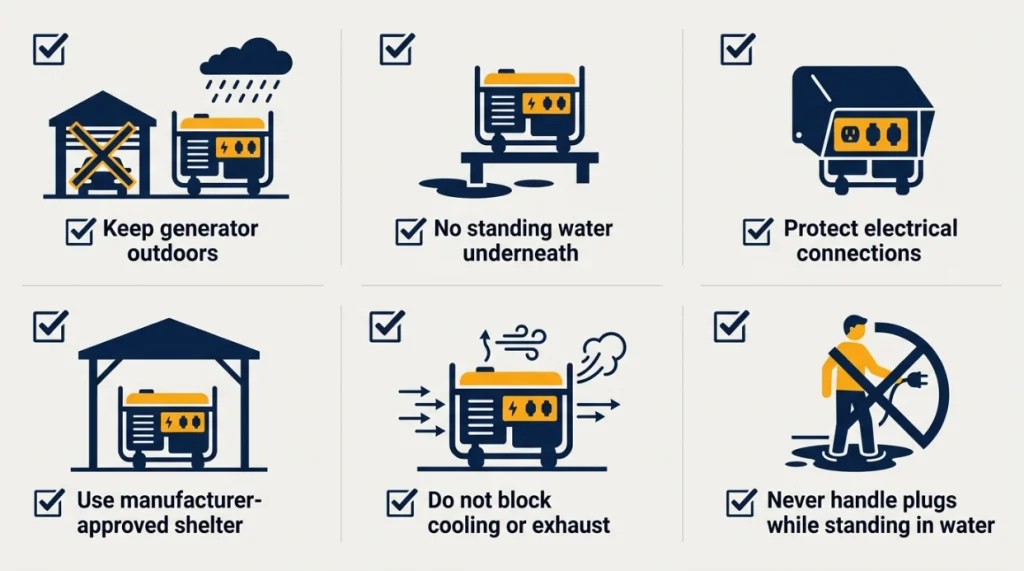
A fuel generator still has to stay outdoors, but that doesn’t mean its electrical system should sit exposed to rain. Water around outlets, plugs, extension cords, and energized equipment creates another serious hazard.
The safer approach is to follow the weather-protection instructions supplied by the generator manufacturer. The EPA’s power-outage guidance also stresses keeping fuel-powered generators outside and far from buildings.
- Never move the generator into a garage because rain starts.
- Never operate it where water can pool underneath.
- Protect electrical connections from rain and runoff.
- Use only a generator shelter or cover allowed by the manufacturer.
- Don’t block engine cooling or exhaust flow with a tarp.
- Never handle plugs or receptacles while standing in water.
What Should You Power From a Generator Overnight?
Overnight operation becomes easier when you power only equipment that matters. Lower load usually means lower fuel consumption, less noise, and more runtime.
Your connection method matters too. Review my portable generator electrical safety guide before connecting household circuits.
- Refrigerator or freezer: Useful during extended outages, though continuous operation may not always be required.
- Sump pump: Often critical during storms or flooding conditions.
- Furnace blower: May be important in freezing weather when connected correctly.
- Selected lights: LED lighting adds relatively little load.
- Essential electronics: Inverter generators are often preferred for sensitive electronics.
- Medical equipment: Plan a backup power strategy that doesn’t depend on one generator alone.
Never backfeed your house by connecting a generator to a wall outlet. A properly installed transfer switch or other approved transfer equipment is required when powering household wiring.
What Is My Overnight Generator Safety Checklist?
I use a checklist because nighttime is the worst time to discover a weak extension cord, nearly empty fuel tank, or poor generator location. Set everything up before darkness when possible.
- Generator is outdoors and at least 20 feet from the home.
- Exhaust points away from every occupied building.
- Nearby doors, windows, vents, and air intakes are protected from exhaust.
- Working CO alarms are installed inside the home.
- Smoke alarms are operational.
- Generator oil level and maintenance condition are acceptable.
- Fuel is sufficient for the planned operating period.
- Spare fuel is stored safely away from the generator.
- Outdoor-rated cords are undamaged and correctly sized.
- Total running load stays within the generator’s rating.
- Weather protection follows the manufacturer’s instructions.
- No one plans to hot-refuel the machine.
As of 2026, I also strongly favor portable generators with automatic CO shutoff technology. It’s valuable backup protection, although it never replaces the 20-foot placement rule.
What Is Safer Than Running a Portable Generator All Night?
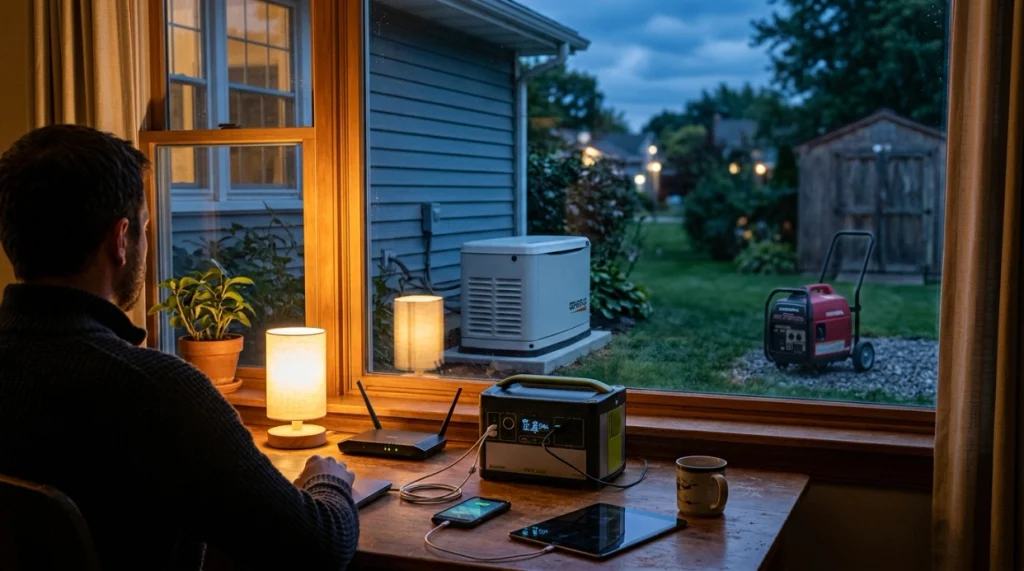
If you only need modest overnight power, a battery power station can remove the exhaust and refueling problem entirely. It produces no combustion exhaust while operating.
A permanently installed standby generator is another option for homes needing automatic, extended backup. Unlike a portable generator, the complete system is designed around fixed installation, fuel supply, transfer equipment, and automatic operation.
- Battery power station: Good for phones, lights, networking equipment, CPAP equipment, and selected small appliances when properly sized.
- Standby generator: Better suited to automatic whole-home or multi-day outage backup.
- Portable generator: Useful temporary power, but requires active fuel, placement, electrical, and maintenance management.
For many households, the best setup combines technologies. A portable generator can handle daytime recharging and heavy loads, while stored battery power handles quiet overnight essentials.
If you’re choosing equipment specifically for longer outages, these are the portable models I’d put on the shortlist:
🏆 Best For Long Runtime
Westinghouse iGen5000DFc
★★★★½
This dual-fuel inverter supplies up to 3,900 running watts on gasoline and is rated for up to 18 hours at 25% load. I like the combination of long light-load runtime, inverter power, and built-in CO sensing for outage planning.
⛽ Best Dual-Fuel Flexibility
Champion 201531 4500W Dual Fuel Inverter
★★★★½
Champion rates this model for up to 10 hours on gasoline and up to 25 hours on propane, with 3,250 gasoline running watts. CO Shield adds automatic carbon-monoxide shutdown, and the fuel flexibility is useful during long outages.
🔇 Best For Quiet Light Loads
Honda EU2200i
★★★★½
The EU2200i provides 1,800 rated watts and up to 8.1 hours at quarter load. I prefer it when portability, lower noise, clean inverter output, and Honda’s CO-MINDER system matter more than powering large household loads.
Frequently Asked Questions
Can I run a portable generator for eight hours straight?
Possibly. Many portable generators are rated for eight hours or more under certain loads, but you must follow the operating and maintenance limits for your exact model. Runtime decreases as electrical demand rises, so don’t assume a published light-load figure applies at full output.
Can I leave a generator running while I sleep?
I don’t recommend treating a portable combustion generator as unattended equipment. If overnight electricity is essential, correct outdoor placement, working CO alarms, safe loading, weather protection, adequate fuel, and strict manufacturer instructions become critical. Shut the generator down overnight when continuous power isn’t necessary.
Can I run a generator overnight with the garage door open?
No. Never run a portable fuel generator inside a garage, even with the garage door open. Carbon monoxide can build up or enter your living space through doors, cracks, vents, or air movement. Move the generator outdoors and at least 20 feet from the home.
Can a CO detector make overnight generator use completely safe?
No. A CO alarm is an important backup warning system, not a substitute for correct generator placement. The generator still belongs outdoors at least 20 feet away, with exhaust directed away from occupied buildings and every nearby opening that could allow fumes inside.
Is propane better for running a generator overnight?
Propane can be convenient because some dual-fuel generators run longer from an appropriate propane supply and you avoid pouring gasoline into a hot fuel tank. It still produces carbon monoxide, so the same outdoor placement, exhaust, CO alarm, electrical, and manufacturer-safety rules apply.
Bottom Line: Should You Leave a Portable Generator Running All Night?
A portable generator may have enough fuel and rated runtime to operate all night, but that doesn’t mean it should be left running without thought or supervision. Carbon monoxide, fire, weather, overloads, refueling, and changing conditions still matter while you’re asleep.
If you genuinely need overnight power, plan the setup before the outage. Keep the generator outdoors at least 20 feet away, use working CO alarms, stay within its electrical rating, and follow the exact operating instructions for your model.
If the load can wait until morning, shut the generator down. For essential overnight power, consider pairing your generator with battery storage or moving toward a properly installed standby system designed for extended automatic operation.

Hi, I’m Michael Turner. I own a generator workshop in the United States and founded HomeGeneratorBlog to share practical, hands-on guidance about generator installation, maintenance, troubleshooting, safety, and backup power solutions. My goal is to help homeowners make smarter, more confident decisions through clear and reliable information