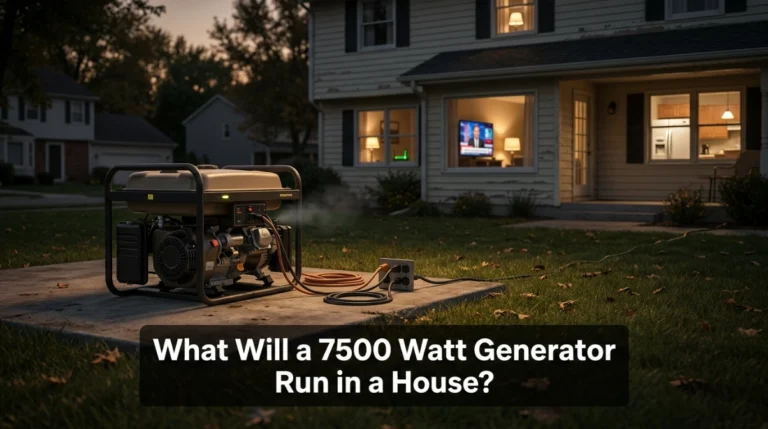
What Are the Downsides of Using a Generator?
Quick Answer
The main downsides of using a generator are noise, fuel costs, carbon monoxide risk, regular maintenance, limited power capacity, and the work involved in operating it safely. Portable models also require manual setup and refueling, while permanently installed standby generators cost much more to buy and install. If you’re comparing the two types, my portable vs. standby generator guide explains the trade-offs in more detail.
Biggest generator disadvantages
- Carbon monoxide: Fuel-burning generators create dangerous exhaust and must never operate inside a home or garage.
- Noise: Engine-driven generators can be loud enough to disturb you and nearby neighbors.
- Fuel dependence: Gasoline, propane, diesel, or natural gas must remain available during an outage.
- Ongoing maintenance: Engines need oil checks, inspections, testing, and proper storage.
- Limited capacity: Smaller generators cannot run every household appliance at the same time.
- Extra expense: Fuel, cords, transfer equipment, maintenance supplies, and installation add to the purchase price.
My rule before buying
- Decide which loads you truly need during an outage, then compare the inconvenience and total ownership cost with other backup-power options.
Generators are excellent tools when the grid goes down, but they aren’t effortless backup power. Every generator brings some combination of noise, fuel handling, maintenance, safety concerns, and operating expense.
I’ve found that buyers are happiest when they understand those compromises before choosing a machine. Here’s what I would consider before relying on one for a home in 2026.
What Are the Main Downsides of Using a Generator?
A generator trades outage protection for added cost, maintenance, fuel management, noise, and safety responsibilities. The exact disadvantages depend heavily on whether you choose a portable or permanently installed standby model.
A portable machine usually costs less, but you do more of the work yourself. A standby system reduces that effort but adds installation complexity and a much larger upfront investment.
| Downside | Portable Generator | Standby Generator |
|---|---|---|
| Setup during outage | Usually manual | Usually automatic |
| Fuel management | Often requires stored gasoline or propane | Commonly connected to natural gas or LP |
| Power capacity | Often requires load prioritization | Can support broader home coverage when sized correctly |
| Installation | Simple for cord-connected loads; more involved for home circuits | Professional permanent installation required |
| Maintenance | Owner-managed engine and fuel-system care | Routine service still required |
| Noise | Can be noticeable, especially open-frame models | Enclosures help, but the engine remains audible |
1. Can a Generator Be Dangerous to Use?
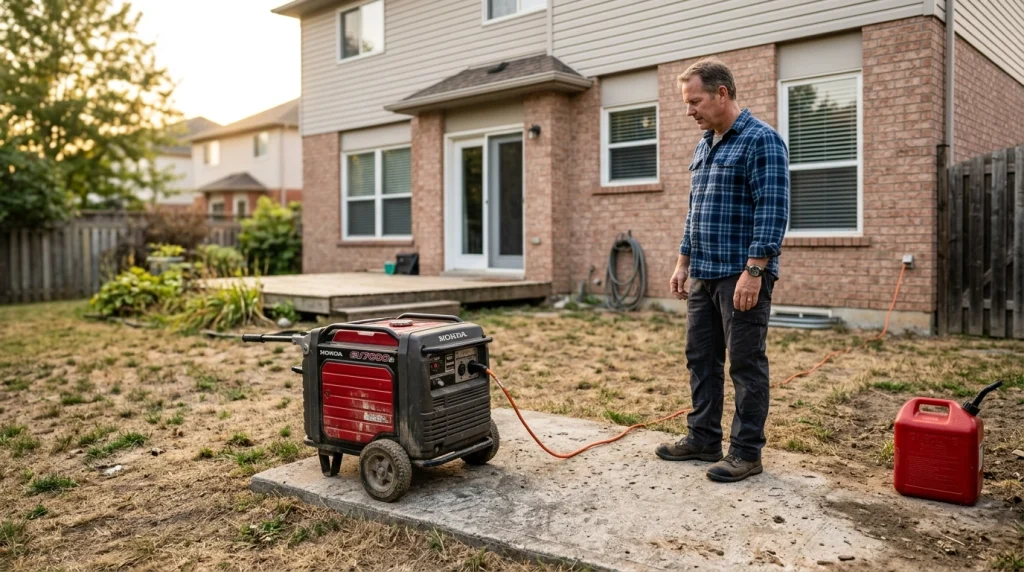
Yes. Fuel-burning generators create carbon monoxide, electrical, fire, and fuel-handling hazards when they’re operated incorrectly. Carbon monoxide deserves the most attention because you cannot see or smell it.
The CDC’s carbon monoxide guidance says portable generators should operate outdoors, more than 20 feet from windows, doors, and vents. A working battery-powered or battery-backup CO alarm should also be inside the home.
- Never run one indoors: That includes garages, basements, crawl spaces, and other enclosed areas.
- Keep exhaust away: Point exhaust away from occupied buildings and openings.
- Keep equipment dry: Electricity and wet conditions create shock hazards.
- Cool before refueling: Spilled fuel can ignite on hot engine or exhaust components.
- Use proper connections: Never improvise a connection that can backfeed utility lines.
The Occupational Safety and Health Administration also identifies carbon monoxide, electrocution, fires, noise, and vibration among portable-generator hazards.
These aren’t reasons to avoid generators completely. They are reasons to treat one like an engine-powered electrical system rather than another household appliance.
2. Are Generators Too Noisy for Residential Use?
Noise can be one of the most noticeable everyday drawbacks. A combustion engine must run continuously while producing electricity, so conventional generators cannot be silent.
Open-frame machines tend to be more intrusive than enclosed inverter designs. Distance, engine speed, load, exhaust design, and surrounding structures also change what you hear.
- Neighbors may hear it: This matters on small suburban lots.
- Night use is more noticeable: Background noise drops while you’re sleeping.
- Heavy loads can increase noise: An engine working harder often becomes more noticeable.
- Local rules may apply: Some communities have restrictions on excessive residential noise.
I wouldn’t choose a generator from its wattage rating alone if it will sit near a bedroom, patio, or neighboring property. Published sound specifications are worth comparing before you buy.
3. How Much Work Is Fueling a Generator?
Fuel management can become inconvenient during a long outage. Portable generators may require gasoline or propane to be transported, stored, and replenished while local fuel supplies are under pressure.
Gasoline also needs more storage attention than many first-time owners expect. My portable generator fuel safety guide covers storage, cooling, and refueling practices in more detail.
Each fuel solves one problem and creates another
- Gasoline: Widely available, but storage and fuel deterioration require planning.
- Propane: Convenient for longer storage, but cylinders occupy space and still need refilling.
- Diesel: Common on some larger units, but fuel availability and storage still matter.
- Natural gas: Avoids portable cans, but depends on a suitable gas supply and compatible equipment.
If a storm disrupts local roads or filling stations, the generator is only useful while you can feed it. That’s why I treat fuel planning as part of generator sizing.
4. Do Generators Require a Lot of Maintenance?
Generators need periodic care because most fuel-powered models contain an internal-combustion engine. Ignoring that maintenance can leave you with a machine that refuses to start during the next outage.
Your owner’s manual should control the exact service intervals. My portable generator maintenance schedule also explains the main items worth tracking.
- Engine oil: Check the level and replace oil at the manufacturer’s specified intervals.
- Air filter: Inspect and service it as instructed.
- Spark plug: Inspect or replace it when scheduled.
- Fuel system: Prevent stale gasoline from creating storage problems.
- Starter battery: Electric-start models may need battery maintenance.
- Test runs: Periodic operation helps reveal problems before an emergency.
This is one ownership cost that people sometimes overlook. A generator sitting unused still needs attention.
5. Can a Generator Power Everything in a House?
Not necessarily. Every generator has a maximum electrical capacity, and high-demand appliances can consume that capacity quickly. Portable units especially may require you to choose which loads matter most.
Central air conditioning, electric water heating, electric ranges, clothes dryers, pumps, and other large loads can demand substantial power. Motor-driven equipment may also need extra power for a short period when starting.
Load management becomes part of the job
- Refrigerator and freezer
- Essential lighting
- Internet equipment
- Furnace blower
- Sump or well pump
- Selected outlets
- Medical equipment when appropriate
I prefer making that priority list before buying anything. Otherwise, it’s easy to pay for a generator and discover that the loads you expected to run together exceed its practical capacity.
6. Why Is Connecting a Generator to a House More Complicated?
Powering household circuits safely requires suitable transfer equipment rather than simply connecting a generator to a random wall outlet. The system must prevent generator power from feeding backward toward the utility supply.
A proper portable generator transfer switch can provide a controlled way to power selected circuits. Installation involving a service panel should be handled according to local electrical requirements.
- Extra hardware: You may need an inlet, cable, transfer switch, or other approved equipment.
- Installation cost: Professional electrical work increases the total project price.
- Planning: Circuits and generator capacity need to be matched correctly.
- Electrical safety: Improvised backfeeding can expose people to dangerous voltage.
The U.S. Consumer Product Safety Commission publishes generator and consumer-product safety information that is useful when planning a backup-power setup.
7. Are Generators Expensive to Own?
The generator’s sticker price is only one part of its cost. Depending on the system, ownership can include fuel, oil, filters, electrical hardware, weather protection, installation, repairs, and periodic service.
A permanently installed standby generator adds another layer because the site, fuel connection, transfer equipment, electrical work, and permits may all be part of the project.
| Expense | When It Appears |
|---|---|
| Generator purchase | Upfront |
| Fuel | During operation |
| Oil, filters, plugs | Routine maintenance |
| Cords or power inlet equipment | Initial setup |
| Transfer equipment | Home-circuit connection |
| Repairs or professional service | As required |
For a household that loses power rarely, these costs deserve comparison with battery backup, smaller emergency-power systems, or simply protecting a few essential circuits.
The U.S. Department of Energy is also a useful starting point when researching household energy and resilience options.
8. Does Weather Make a Portable Generator Harder to Use?
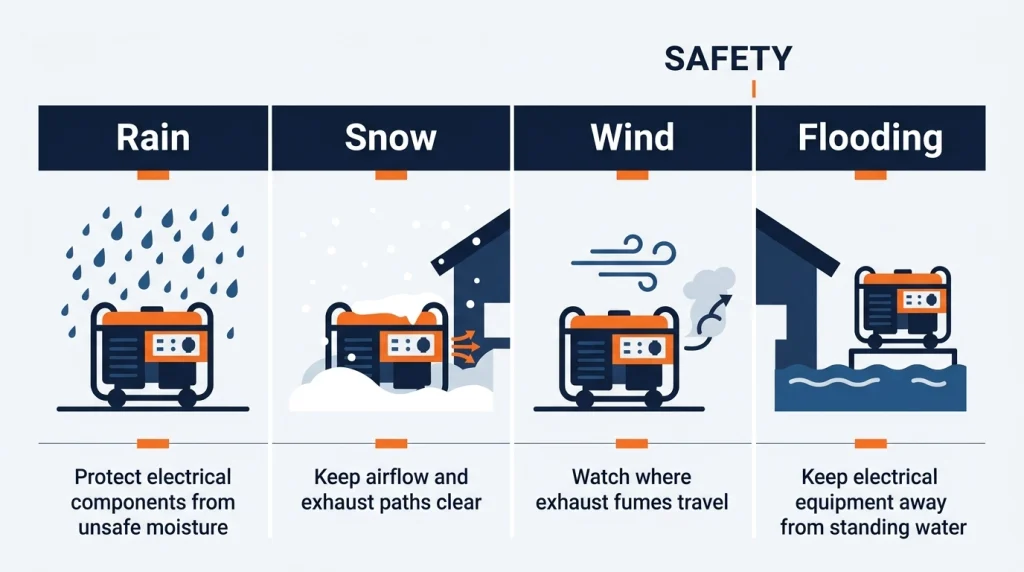
Yes. A portable generator needs outdoor ventilation but electrical equipment also needs protection from unsafe wet conditions. That combination can become inconvenient during storms.
You cannot solve the exhaust problem by moving a running generator into a garage. You need a safe outdoor location and any weather protection must follow the generator manufacturer’s requirements.
- Rain: Electrical components must stay protected from unsafe moisture exposure.
- Snow: Airflow and exhaust paths must remain clear.
- Wind: Exhaust direction can affect where fumes travel.
- Flooding: Never place electrical equipment where standing water creates a hazard.
That outdoor setup is easy to underestimate on a sunny day. It matters much more at night during a severe storm.
9. A Generator Still Requires Someone to Manage It
A portable generator usually does not provide hands-off backup power. Someone may have to move it outside, connect loads, start it, watch the fuel level, refuel it safely, and shut it down.
This can be a major drawback for older homeowners, people with mobility limitations, or anyone who travels often. It also matters when an outage happens overnight.
Standby generators solve much of the manual setup problem. However, they replace it with higher purchase, installation, and maintenance costs.
When Do the Downsides Outweigh the Benefits?
A generator may be the wrong solution when its fuel, noise, maintenance, or operating requirements conflict with how you need backup power to work. Start with your outage pattern instead of starting with a generator model.
- Frequent long outages: Constant refueling of a small portable unit may become frustrating.
- Automatic backup needed: Manual portable setup may not meet your needs.
- Limited outdoor space: Safe placement can become difficult.
- Sensitive neighbors: Noise may be a major purchasing factor.
- Large electrical loads: A small unit may require too much load juggling.
- Minimal maintenance wanted: Engine-powered equipment will need more attention than many battery systems.
The important question isn’t whether generators are good or bad. It’s whether the drawbacks make sense for the type of outages you expect.
How Can You Reduce the Downsides of a Generator?
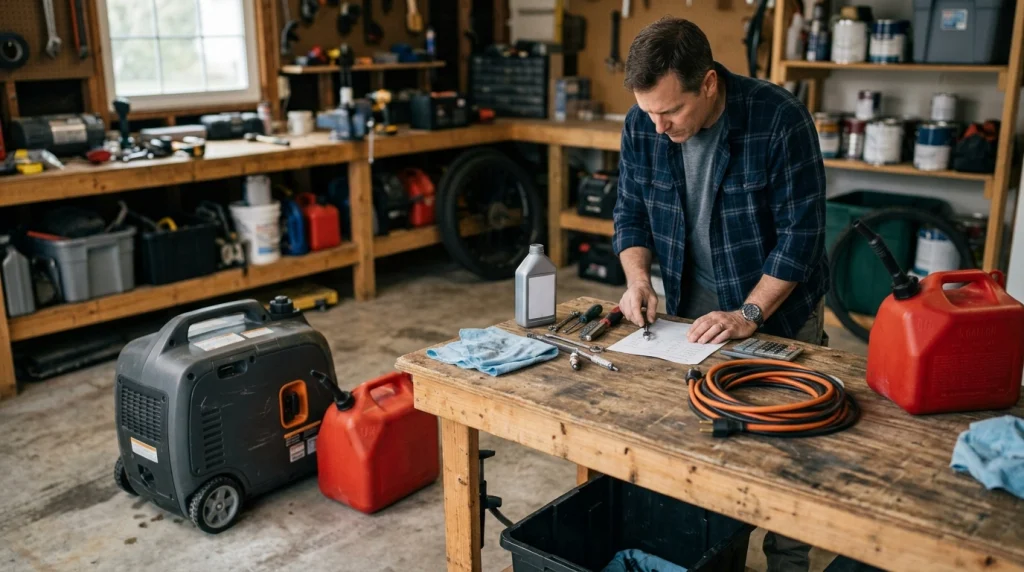
You can’t remove every drawback, but careful equipment selection and planning can reduce many of them. I focus on safety, realistic capacity, fuel flexibility, and ease of operation first.
- Calculate essential loads: Buy for the equipment you genuinely need to run.
- Choose a suitable fuel: Think about what you can safely store and obtain during an emergency.
- Consider an inverter model: These can be attractive when lower noise and clean power for electronics matter.
- Look for CO safety features: Built-in CO shutoff technology adds another layer of protection, but never replaces safe outdoor placement.
- Plan the electrical connection: Use properly rated cords or approved transfer equipment.
- Create a maintenance schedule: Don’t wait for the outage to discover a dead battery or fuel problem.
- Test the setup: Practice starting and connecting the generator before an emergency.
Generators I’d Consider for Different Needs
If a generator still makes sense after weighing the drawbacks, I would focus on models that solve a specific problem rather than simply buying the biggest machine available.
🏆 Best for Quiet Portable Power
Honda EU2200i
★★★★½
This compact inverter generator targets smaller essential loads and portable use. I like this type of machine when noise, portability, and electronics-friendly power matter more than whole-home capacity.
⛽ Best for Fuel Flexibility
Champion 4500-Watt Dual Fuel Inverter Generator
★★★★½
A dual-fuel inverter gives you gasoline and propane options while targeting quieter portable operation. I prefer this approach when homeowners want flexibility without stepping immediately into a large open-frame unit.
🏠 Best for Larger Backup Loads
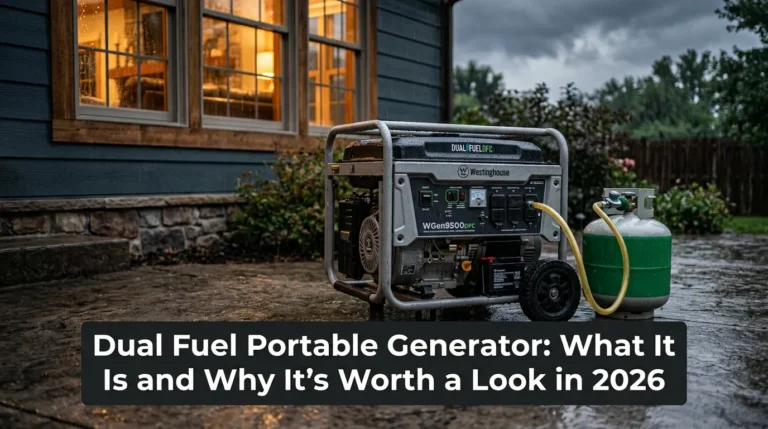
Westinghouse WGen9500DFc
★★★★☆
This larger dual-fuel portable generator targets heavier emergency loads than a compact inverter. I would consider this class when capacity matters more than minimum weight and minimum noise.
Frequently Asked Questions
What is the biggest disadvantage of using a generator?
The most serious disadvantage of a fuel-burning generator is carbon monoxide risk if it is used incorrectly. Portable generators must operate outdoors and away from windows, doors, vents, garages, and other openings where exhaust could enter an occupied building.
Is it expensive to run a generator?
Operating cost depends on generator size, electrical load, fuel type, local fuel prices, and runtime. You should also include oil, filters, scheduled maintenance, electrical connection equipment, and possible repair costs when estimating total ownership expense.
Can I run a generator all night?
A generator may be capable of extended operation when the manufacturer permits it, but you still need safe outdoor placement, sufficient fuel, proper loading, and required maintenance. Never move a running generator into a garage or enclosed area simply because you are going to sleep.
Is a generator bad for electronics?
Power quality varies by generator design. Inverter generators are commonly chosen for sensitive electronics because they regulate output differently from traditional open-frame units. Always check the generator specifications and the power requirements of the device you intend to connect.
Is a generator worth having despite the downsides?
A generator can still be useful when outages threaten refrigeration, heating controls, pumps, lighting, communications, or other essential loads. The important step is matching the generator type to your actual needs while budgeting for safe setup, fuel, maintenance, and operation.
Final Takeaway
The downsides of using a generator are manageable, but they shouldn’t be ignored. Fuel, noise, maintenance, carbon monoxide, limited capacity, and setup requirements all become part of owning one.
Before buying, decide what must stay powered and how much manual work you’re willing to accept. A well-matched generator can make an outage much easier, while the wrong one can become an expensive machine that is difficult to use safely.

Hi, I’m Michael Turner. I own a generator workshop in the United States and founded HomeGeneratorBlog to share practical, hands-on guidance about generator installation, maintenance, troubleshooting, safety, and backup power solutions. My goal is to help homeowners make smarter, more confident decisions through clear and reliable information