How Far Away Does a Generator Need to Be From the House?
Quick Answer
A portable generator should be operated outdoors at least 20 feet away from your house. Keep it more than 20 feet from doors, windows, and vents whenever possible, and point the exhaust away from the building. For a practical setup, see my portable generator placement guide.
Safe generator placement checklist
- 20-foot minimum: Place a portable generator at least 20 feet from your home.
- Exhaust direction: Point the exhaust away from the house and nearby occupied buildings.
- Avoid openings: Keep exhaust away from doors, windows, soffit vents, dryer vents, and fresh-air intakes.
- Stay outdoors: Never run a portable generator inside a garage, basement, shed, or enclosed porch.
- Use CO alarms: Keep working carbon monoxide alarms inside your home, especially near sleeping areas.
- Follow the manual: Manufacturer instructions and local requirements may require additional clearance.
Before starting the generator
- Check the wind direction and make sure exhaust cannot blow toward an open window, door, or neighboring building.
If you’re setting up a generator during an outage, the distance from your house isn’t a minor detail. It directly affects the risk of carbon monoxide entering your home.
My practical rule is simple: I start with 20 feet as the minimum, then move farther away whenever the property layout allows it. Distance, exhaust direction, openings, weather protection, and electrical connections all need to work together.
How Far Should a Portable Generator Be From a House?
A portable generator should be used outdoors at least 20 feet from the house. The U.S. Consumer Product Safety Commission also says the exhaust should face away from the home.
The CDC’s carbon monoxide guidance recommends keeping generators more than 20 feet from windows, doors, and vents. That’s an important distinction because an opening can pull exhaust indoors even when the generator isn’t directly beside a wall.
Generator clearance is the open-air distance between a running generator and your home, building openings, combustible materials, and other areas specified by the generator manufacturer.
As of 2026, I would treat the 20-foot recommendation as a starting point rather than a target to beat by inches. If you can safely place the generator 25 or 30 feet away, that gives exhaust more room to disperse.
Why Does a Generator Need to Be 20 Feet Away?
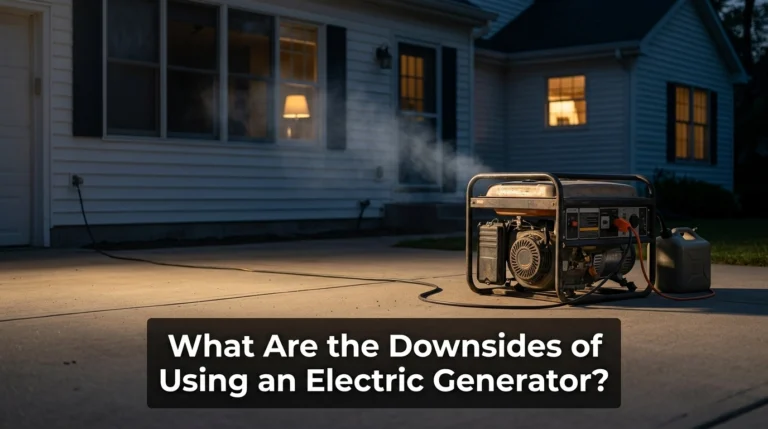
The main reason is carbon monoxide, or CO. Portable generators burn fuel and produce this colorless, odorless poisonous gas in their exhaust.
You can’t depend on smell to warn you. That’s why proper placement matters even when the generator seems to be running normally.
- CO can enter through openings: Windows, doors, vents, and air intakes can pull generator exhaust indoors.
- Wind can change: Exhaust that initially blows away from your home may shift direction later.
- Garages don’t provide safe ventilation: An open garage door doesn’t make indoor generator operation safe.
- Covered spaces can trap exhaust: Porches and carports may allow CO to collect near the home.
The Consumer Product Safety Commission specifically warns against operating portable generators inside garages or other enclosed spaces. It also recommends at least 20 feet of separation.
If you’d like a deeper explanation of the exhaust hazard, my portable generator carbon monoxide safety guide covers warning signs, alarms, and safer operation.
Is 20 Feet From the Wall Enough?
Not always. You also need to measure the generator’s relationship to windows, doors, vents, and air intakes.
For example, a generator might sit 22 feet from one exterior wall but only 12 feet from a basement window around the corner. I would consider that an unsafe placement.
| Generator Location | Recommended? | Main Concern |
|---|---|---|
| 20+ feet outdoors with exhaust away | Yes | Follow manufacturer instructions and check nearby openings. |
| Inside an attached garage | No | Dangerous carbon monoxide accumulation. |
| Inside a detached shed | No | Enclosed exhaust, heat, and fire hazards. |
| Covered porch or carport | No | Too close to the home and possible exhaust trapping. |
| 25–30 feet outdoors when practical | Good option | May require properly sized outdoor electrical connections. |
Can You Run a Generator in a Garage With the Door Open?
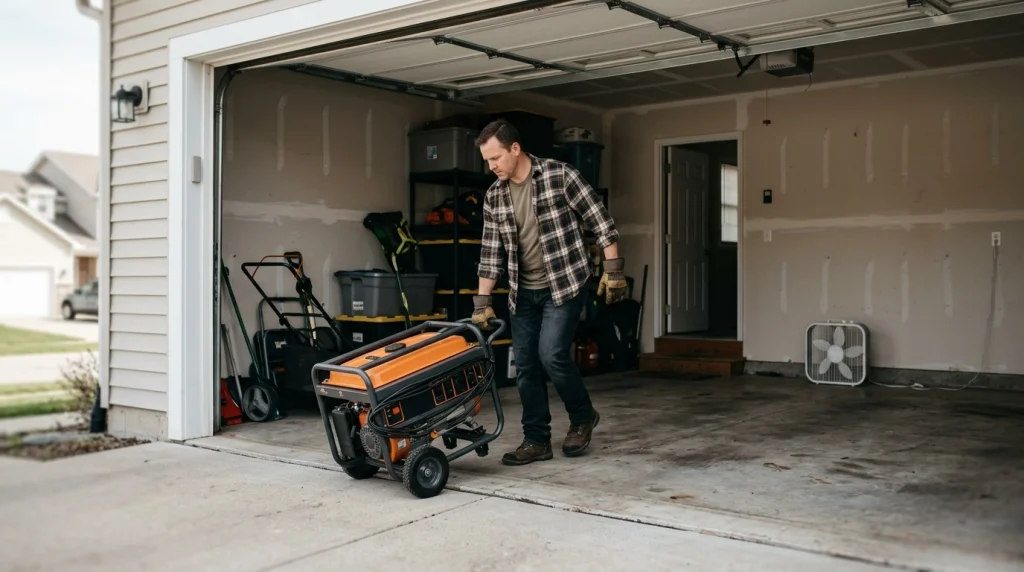
No. A portable generator should never run inside a garage, even when the main garage door is fully open.
Carbon monoxide can accumulate inside the garage and move into adjoining living areas. Opening doors or windows isn’t a substitute for outdoor placement.
- Don’t place the generator just inside the garage doorway.
- Don’t rely on a fan to push exhaust outside.
- Don’t run it in a basement, crawlspace, or utility room.
- Don’t move it into a shed simply to keep rain off it.
The same principle applies to partially enclosed spaces. A covered porch may feel outdoors, but it’s still too close to doors, walls, windows, and roof structures.
Which Direction Should Generator Exhaust Face?
The exhaust should point away from your home and other occupied buildings. Don’t aim it toward a window, door, vent, garage, or neighbor’s house.
I also check the actual exhaust outlet before deciding where to park a generator. The control-panel side isn’t necessarily the exhaust side.
- Check the muffler: Identify exactly where exhaust exits.
- Look at nearby openings: Include dryer vents, soffit vents, and HVAC fresh-air intakes.
- Check neighboring structures: Your safe setup shouldn’t send exhaust toward someone else’s home.
- Watch changing wind: Recheck conditions during long outages.
FEMA’s U.S. Fire Administration carbon monoxide guidance also recommends using portable generators outdoors and away from doors, windows, and vents.
Can I Put the Generator Farther Than 20 Feet Away?
Yes. More distance can be helpful when you have enough outdoor space and can still make safe electrical connections.
The catch is that moving a generator farther away often requires longer extension cords. Those cords must be properly rated for the load and outdoor conditions.
Don’t solve the CO problem by creating an electrical problem. My portable generator electrical safety guide explains grounding, GFCIs, overloads, cords, and backfeeding in more detail.
- Use grounded, outdoor-rated cords.
- Match the cord’s amperage rating to the connected load.
- Keep connectors away from standing water.
- Inspect cords for cuts, heat damage, or missing ground pins.
- Never plug a generator into a household wall outlet.
OSHA’s portable generator safety guidance also stresses dry equipment, suitable cords, proper grounding, and protection against electrical hazards.
What About Rain and Bad Weather?
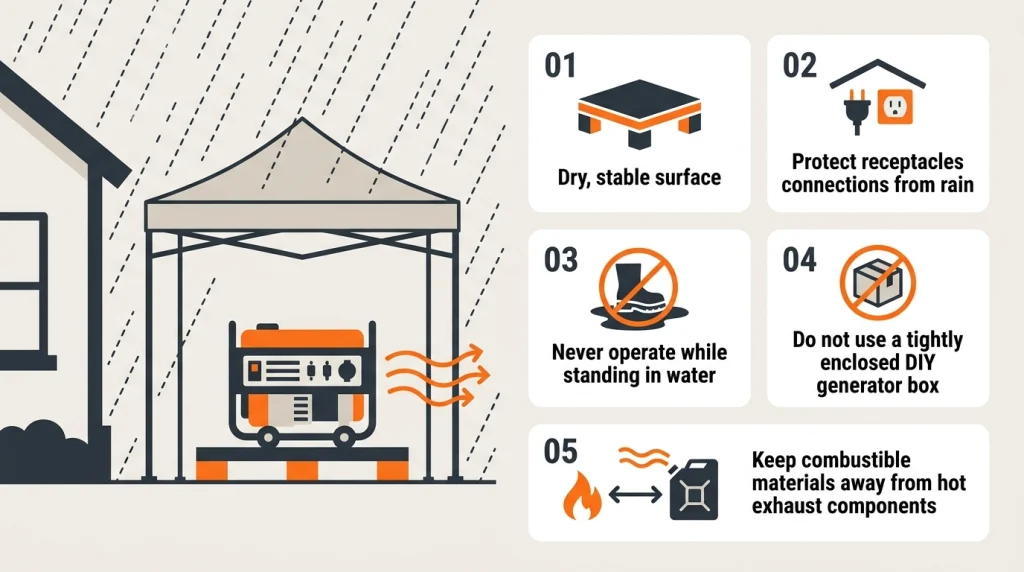
A generator still needs to remain outdoors during rain. Moving it into the garage or onto a covered porch isn’t the safe answer.
Instead, follow the generator manufacturer’s instructions for weather protection. Any running cover must allow proper cooling and unrestricted exhaust flow.
- Keep the generator on a dry, stable surface.
- Protect receptacles and connections from rain.
- Never operate electrical equipment while standing in water.
- Don’t build a tightly enclosed DIY generator box.
- Keep combustible materials away from hot exhaust components.
Does a Standby Generator Follow the Same 20-Foot Rule?
No. A permanently installed standby generator follows its manufacturer’s listed clearances, applicable codes, and local installation requirements.
Don’t automatically apply portable-generator placement rules to a standby unit. Standby generators are designed and certified for permanent installation under specific conditions.
A qualified installer should evaluate windows, doors, vents, gas connections, electrical equipment, property lines, and combustible surfaces. The installation manual for the exact model matters here.
What Should You Check Before Starting a Portable Generator?
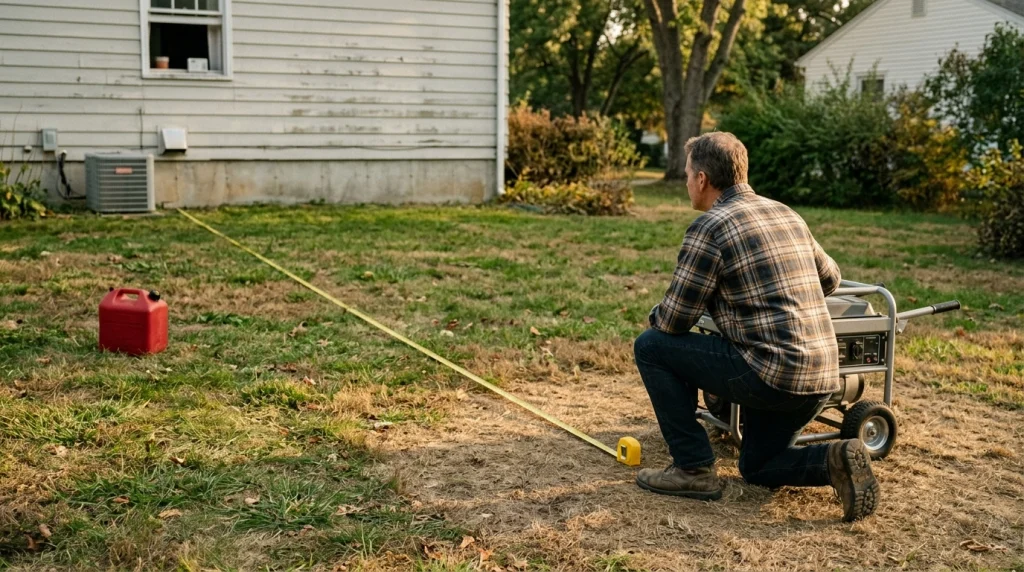
I use a simple five-point check before thinking about cords or appliances. It catches most placement problems while the generator is still off.
- Measure the distance. Confirm at least 20 feet of separation from your home.
- Inspect nearby openings. Look for windows, doors, vents, and HVAC intakes.
- Turn the exhaust away. Never aim it toward an occupied structure.
- Check the surface. Use a stable location where water won’t collect.
- Test CO alarms. Make sure alarms inside the home are working before starting the engine.
Fuel handling deserves the same attention. Shut the generator down and allow hot components to cool before adding gasoline.
For storage and refueling details, see my portable generator fuel safety guide.
What Safety Gear Is Worth Having?
Correct generator placement comes first. A CO alarm, suitable outdoor cord, or weather cover should support safe placement rather than justify moving the generator closer to your home.
🏆 Best Safety Add-On
Kidde KN-COPP-B-LPM Carbon Monoxide Alarm
★★★★☆
This battery-powered CO alarm includes a digital display and doesn’t depend on household AC power. I consider working CO alarms essential backup protection whenever a fuel-burning generator is operating nearby.
🌧️ Best for Weather Protection
GenTent 10k Generator Running Cover
★★★★☆
The GenTent 10k is designed to protect compatible portable generators from wet weather while they’re operating. I prefer purpose-built weather protection over moving a generator into a porch, garage, or shed.
🔌 Best for Extra Reach
Southwire 2588SW0002 12/3 50-Foot Extension Cord
★★★★☆
This heavy-duty 12/3 outdoor cord can provide useful reach for compatible 120-volt loads. Always verify the cord, generator receptacle, and appliance amperage before connecting anything.
Frequently Asked Questions
Can a generator be 10 feet from the house?
Ten feet is too close for a portable fuel-burning generator under current CDC and CPSC guidance. Keep it outdoors at least 20 feet away, and make sure the exhaust points away from doors, windows, vents, and occupied buildings.
Is 15 feet far enough for a generator?
No. For a portable generator, use at least 20 feet as the minimum separation from the house and building openings. If your yard allows more distance without creating electrical or property hazards, farther away can be a better setup.
Can I run a generator under a covered patio?
You shouldn’t run a portable generator under a covered patio or porch. These locations can trap exhaust and often place the generator too close to windows, doors, walls, and other openings where carbon monoxide could enter the home.
Should I close my windows when the generator is running?
Yes, especially windows near the generator or in the path of its exhaust. You should still maintain at least 20 feet of separation and point the exhaust away from the building rather than relying on closed windows alone.
How far should a generator be from a neighbor’s house?
Treat a neighboring occupied building with the same caution as your own. Keep the generator well away from their doors, windows, and vents, direct exhaust away from the building, and follow applicable local noise, fire, and property-line rules.
The Bottom Line
For a portable generator, remember one number: 20 feet minimum. Keep the generator outdoors, point exhaust away from buildings, and stay clear of doors, windows, vents, garages, porches, and other enclosed or partially enclosed spaces.
More distance can be useful when your property allows it, but don’t compromise electrical safety to get there. Measure the location before an outage, test your CO alarms, prepare suitable cords, and follow the instructions for your exact generator.

Hi, I’m Michael Turner. I own a generator workshop in the United States and founded HomeGeneratorBlog to share practical, hands-on guidance about generator installation, maintenance, troubleshooting, safety, and backup power solutions. My goal is to help homeowners make smarter, more confident decisions through clear and reliable information