How Long Will 2 Gallons of Gas Last in a Generator?
Quick Answer
Two gallons of gas will usually run a portable generator for about 2 to 8 hours, but generator size and electrical load can push the range much wider. A small inverter may stretch two gallons beyond 10 hours at light load, while a large generator can burn the same amount in under two hours near maximum output; see my gasoline portable generator guide for more fuel and sizing details.
What determines your runtime?
- Generator size: A 2,000-watt inverter generally uses less gasoline than a 7,500- or 10,000-watt conventional generator.
- Electrical load: Running at 25% load can extend runtime substantially compared with operating near full output.
- Engine design: Inverter generators can lower engine speed when demand drops, reducing fuel consumption.
- Maintenance: Dirty filters, old fuel, and poor engine condition can increase fuel use.
- Fuel burn rate: Divide two gallons by your generator’s gallons-per-hour consumption for the best estimate.
Fast estimate
- If your generator burns 0.5 gallon per hour, two gallons gives you about four hours of runtime.
When someone asks me how long two gallons of gasoline will last, the first thing I want to know is what generator they’re running. Two gallons means something completely different to a compact inverter than it does to a large home-backup unit.
The good news is that you don’t need to guess. Once you know the generator’s fuel consumption and approximate load, the runtime math is simple.
How Long Will 2 Gallons of Gas Last in a Generator?

For many portable generators, expect roughly 2 to 8 hours from two gallons of gasoline. Small fuel-efficient inverter generators can run much longer under light loads.
Large open-frame generators can use those two gallons surprisingly quickly. That’s especially true when you’re running air conditioners, pumps, heaters, or several appliances together.
| Generator example | Tank / published runtime | Approx. 2-gallon equivalent |
|---|---|---|
| Honda EU2200i at 25% load | 0.95 gal / 8.1 hours | About 17 hours |
| Honda EU2200i at rated load | 0.95 gal / 3.2 hours | About 6.7 hours |
| Champion 201419 at 25% load | 1.54 gal / up to 10 hours | About 13 hours |
| Honda EB10000 at 50% load | 8.19 gal / 7.9 hours | About 1.9 hours |
Those examples show why a single universal runtime number doesn’t work. Honda publishes its own generator runtime specifications, and the differences between load levels are substantial.
Champion shows the same pattern with its 201419 inverter generator. Its 1.54-gallon tank can run up to 10 hours at 25% load.
Note: A generator with a tank smaller than two gallons obviously cannot hold all two gallons at once. The figures above represent total equivalent runtime across the amount of fuel used.
How Do You Calculate Generator Runtime From 2 Gallons?
You can estimate runtime by dividing the amount of fuel available by the generator’s hourly fuel consumption. The formula works for any tank size.
Generator fuel burn rate is the amount of gasoline the engine consumes in one hour at a given electrical load.
Runtime = gallons available ÷ gallons burned per hour.
For example, a generator burning 0.4 gallon per hour would run about five hours on two gallons. At 0.8 gallon per hour, the same fuel supply lasts only about 2.5 hours.
- 0.25 gal/hour: about 8 hours
- 0.40 gal/hour: about 5 hours
- 0.50 gal/hour: about 4 hours
- 0.75 gal/hour: about 2.7 hours
- 1.00 gal/hour: about 2 hours
- 1.25 gal/hour: about 1.6 hours
Your owner’s manual is the best starting point because manufacturers usually publish runtime at a specified load. You can also read my guide to the portable generator fuel system to understand what happens between the tank and engine.
What Makes a Generator Burn Through 2 Gallons Faster?
Electrical load is usually the biggest factor. Every appliance you add asks the engine to produce more mechanical power, which requires more fuel.
A refrigerator and several LED lights create a much lighter load than a well pump, electric heater, and window air conditioner running together. The generator reacts accordingly.
1. Running close to maximum output
A generator near its rated wattage has to work harder. Fuel consumption climbs, while runtime per gallon falls.
I tell owners to look at running watts rather than counting appliances. Two appliances can have completely different power demands.
2. Using resistance heaters
Space heaters, electric kettles, hair dryers, and similar devices can consume 1,000 to 1,500 watts each. They can quickly turn a light generator load into a heavy one.
If fuel conservation matters during an outage, reserve generator power for equipment you truly need. Heating water or rooms electrically can drain a small gasoline supply fast.
3. Starting motors and compressors
Refrigerators, freezers, pumps, and air conditioners often require extra power for a few seconds during startup. This is called starting or surge wattage.
Those short surges don’t consume an entire gallon by themselves. However, several motor-driven appliances can keep a generator operating at a higher average load.
4. Poor maintenance
A dirty air filter can restrict airflow, while old spark plugs and fuel-system problems can hurt combustion quality. A poorly maintained engine may not deliver its best fuel economy.
- Check the air filter on schedule.
- Use the oil grade specified by the manufacturer.
- Inspect the spark plug as recommended.
- Don’t leave untreated gasoline sitting in the carburetor for long storage periods.
- Keep cooling openings clean and unobstructed.
Does Generator Size Change How Long 2 Gallons Last?
Yes. Generator size can make a dramatic difference because larger engines generally need more fuel to produce higher electrical output.
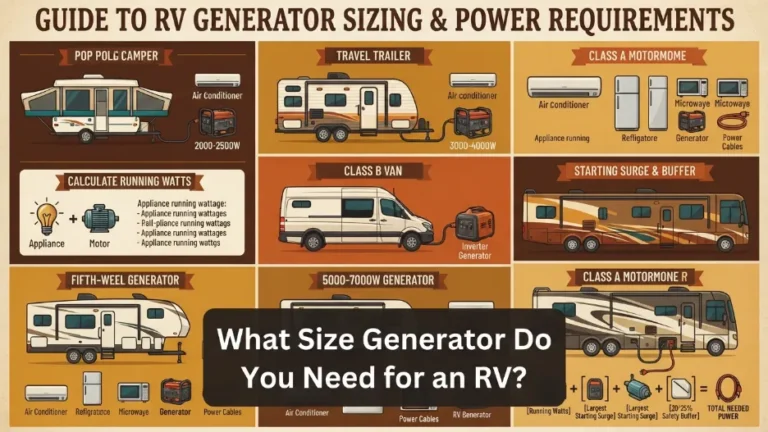
A small 2,000-watt inverter running a refrigerator, lights, and phone chargers may barely increase engine speed. A 10,000-watt generator supplying several large household loads has a much greater fuel demand.
| Generator class | Typical use | What 2 gallons means |
|---|---|---|
| 1,800–2,500W inverter | Fridge, lights, electronics | Potentially 10+ hours at light load |
| 3,000–5,000W portable | Several essentials or RV loads | Often several hours depending on load |
| 6,000–8,000W portable | Home backup with pumps or appliances | Often around 2–4 hours under moderate demand |
| 10,000W-class generator | Heavy backup or job-site loads | Can be under 2 hours at substantial load |
These are planning ranges rather than promises. The exact engine, load, temperature, maintenance condition, and operating mode all matter.
How Can You Make 2 Gallons of Gas Last Longer?

The easiest way to stretch two gallons is to reduce the generator’s average electrical load. Every unnecessary watt makes the engine work harder.
- Power essentials first. Prioritize refrigeration, necessary lighting, communications, and critical pumps.
- Run large appliances separately. Avoid stacking several high-wattage loads when you don’t need them simultaneously.
- Use LED lighting. LEDs require far less power than old incandescent bulbs.
- Use economy mode when appropriate. Many inverter generators automatically reduce engine speed at lighter loads.
- Keep the engine serviced. Follow the manufacturer’s oil, filter, and spark-plug intervals.
A properly sized inverter portable generator is especially useful when your load rises and falls during the day. Variable engine speed can improve partial-load fuel economy.
I also avoid oversizing a generator simply because a larger wattage number looks safer. If your real emergency load is only 1,500 watts, running a huge generator can be a costly way to produce that power.
Does Gasoline Quality Affect Generator Runtime?
Fresh gasoline helps a small engine start and run as designed, while stale or contaminated fuel can cause poor operation. The U.S. Energy Information Administration explains that most finished motor gasoline sold in the United States contains ethanol.
You can read the EIA’s gasoline overview for background on modern fuel blends. Always follow your generator manufacturer regarding acceptable octane and ethanol content.
- Buy fuel from a reliable station.
- Use an approved gasoline container.
- Keep water and dirt out of stored fuel.
- Follow the owner’s manual for long-term storage.
- Use stabilizer when the manufacturer recommends it.
Is It Safe to Run a Generator Until the Fuel Tank Is Empty?
Running out of fuel isn’t usually the biggest safety concern. Refueling a hot generator is much more serious because spilled gasoline can ignite on hot engine components.
My portable generator fuel safety guide covers storage and refueling in more detail. Shut the generator down and allow it to cool before adding gasoline.
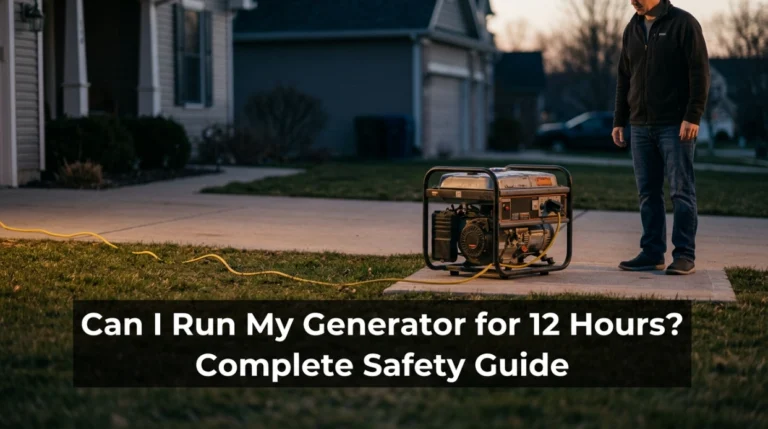
Carbon monoxide safety matters even more. The U.S. Consumer Product Safety Commission warns never to operate portable generators indoors, in garages, basements, sheds, or other enclosed areas.
The CDC generator safety guidance also warns that portable generators produce carbon monoxide. Current guidance calls for outdoor operation more than 20 feet from windows, doors, and vents.
- Operate outdoors: Never run a gasoline generator inside a house, garage, basement, or shed.
- Keep your distance: Place it more than 20 feet from windows, doors, and vents.
- Point exhaust away: Don’t aim exhaust toward occupied structures.
- Use CO alarms: Keep working carbon-monoxide alarms in the home.
- Cool before refueling: Never pour gasoline onto a hot or running engine.
How Much Gas Should You Keep for a Power Outage?

Start by calculating how many hours per day you expect to run the generator. Then multiply those hours by its approximate gallons-per-hour fuel consumption.
For example, a unit burning 0.5 gallon per hour needs about four gallons for eight operating hours. Two days at the same schedule would require about eight gallons.
| Fuel burn | 8 hours | 12 hours | 24 hours |
|---|---|---|---|
| 0.25 gal/hr | 2 gal | 3 gal | 6 gal |
| 0.50 gal/hr | 4 gal | 6 gal | 12 gal |
| 0.75 gal/hr | 6 gal | 9 gal | 18 gal |
Don’t stockpile gasoline without checking local fire and storage rules. Store it only in approved containers and away from living areas or ignition sources.
Generators I’d Consider When Fuel Economy Matters
If you’re trying to make a limited gasoline supply last, these are two models I’d put on the shortlist. Both use inverter technology and publish useful partial-load runtime figures.
🏆 Best for Fuel Efficiency
Honda EU2200i
★★★★★
The EU2200i produces 1,800 rated watts and Honda lists up to 8.1 hours at quarter load from its 0.95-gallon tank. I like this size when the goal is keeping refrigerators, lights, and smaller essentials running without feeding a large engine all day.
💰 Best Higher-Output Value
Champion 201419 4000W Inverter
★★★★☆
This Champion supplies 3,000 running watts and has a 1.54-gallon gasoline tank. Champion rates it for up to 10 hours at 25% load, so it gives you more output than a small 2,000-watt inverter while still targeting efficient partial-load operation.
Frequently Asked Questions
How long will 2 gallons of gas last in a 5,000-watt generator?
Two gallons may last roughly three to six hours in many 5,000-watt-class gasoline generators, depending heavily on load and engine efficiency. Check the manufacturer’s runtime specification and convert it to gallons per hour for a more dependable estimate.
How long will 1 gallon of gas run a generator?
A gallon may last from less than one hour to eight hours or more depending on generator size and load. A small inverter at light load can run for many hours per gallon, while a large generator under heavy demand burns fuel much faster.
Does a generator use less gas with fewer appliances plugged in?
Usually, yes. Reducing the electrical load lowers the power the engine must produce, and inverter models can often reduce engine speed automatically when demand falls.
Can I add gas while my generator is running?
No. Shut the generator off and let the engine cool before refueling because spilled gasoline can ignite on hot components or exhaust surfaces.
Is it cheaper to run a generator at half load?
A generator generally consumes less fuel per hour at half load than at full load. However, the exact fuel savings depend on the engine, generator design, and whether the unit can adjust engine speed with changing demand.
Final Takeaway
So, how long will two gallons of gas last in a generator? For practical planning, about 2 to 8 hours is a useful starting range, but small inverter generators can run far longer under light loads.
Don’t plan an outage around the average alone. Find your generator’s published runtime, calculate its gallons-per-hour burn rate, and base your fuel supply on the appliances you actually intend to power.
That simple calculation gives you a much better answer than guessing from tank size. It also makes it easier to stretch every gallon when fuel stations are closed or lines are long.

Hi, I’m Michael Turner. I own a generator workshop in the United States and founded HomeGeneratorBlog to share practical, hands-on guidance about generator installation, maintenance, troubleshooting, safety, and backup power solutions. My goal is to help homeowners make smarter, more confident decisions through clear and reliable information