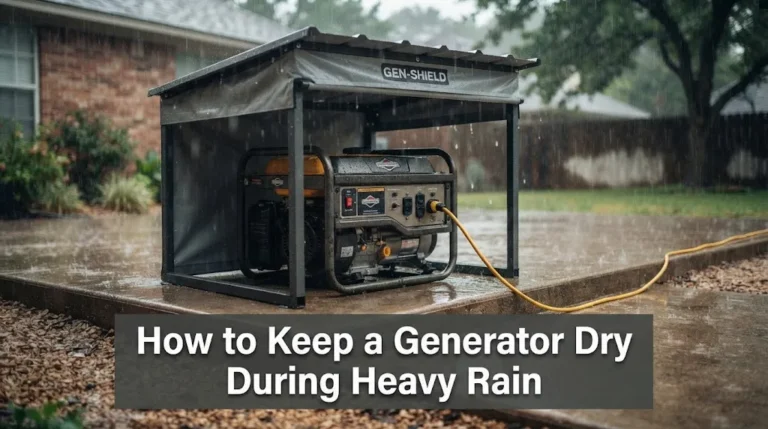
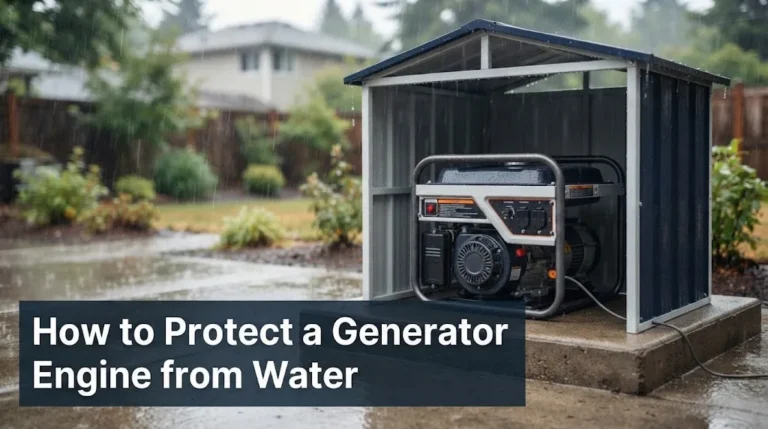
Does an Outdoor Generator Need Weather Protection?
Quick Answer
Yes. An outdoor generator needs appropriate protection from rain, snow, standing water, and excessive moisture. However, protection must suit the exact generator model and must never block cooling airflow or trap exhaust. Follow the owner’s manual, and never move a fuel-powered portable generator into a garage, shed, or enclosed area to keep it dry.
Why Does an Outdoor Generator Need Weather Protection?
An outdoor generator needs protection because exposure to water and harsh weather can damage electrical components, interrupt operation, accelerate corrosion, and create a risk of electric shock. Being designed for outdoor use does not automatically mean a generator can operate safely while directly exposed to rain.
Rainwater can reach outlets, control panels, wiring, plugs, and other electrical connections. If moisture enters vulnerable areas, it may contribute to short circuits, malfunction, or dangerous electrical contact. Standing water also creates problems around the generator’s frame and connected equipment.
Weather protection serves several purposes:
- Electrical safety: Keeps rain and runoff away from vulnerable electrical parts and connections.
- Equipment protection: Helps reduce moisture-related corrosion and damage during use or storage.
- Reliable operation: Reduces the chance that weather will interrupt power when it is needed.
- Long-term maintenance: Helps prevent avoidable deterioration caused by repeated exposure to moisture, debris, and harsh sunlight.
Protection does not make every generator safe to operate in every weather condition. Generac, for example, warns users not to run its portable generators directly in rain, snow, or other wet conditions. Caterpillar explains that wet-weather operation requires protection from rain or snow and compliance with the owner’s manual. These instructions show why the specific model’s requirements matter more than a general claim that a generator is weather-resistant.
What Types of Weather Can Damage an Outdoor Generator?
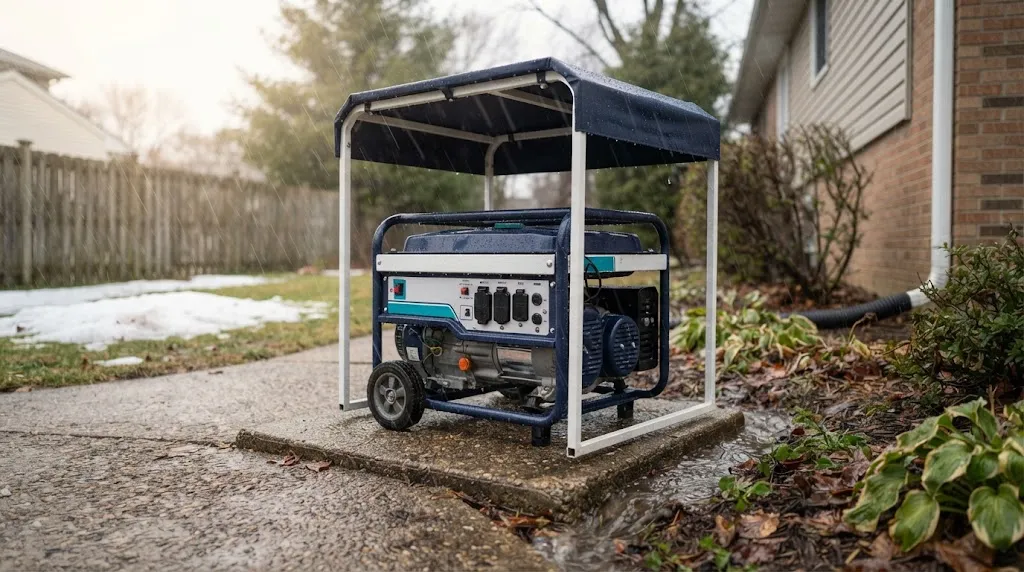
Rain is an obvious concern, but it is not the only weather condition worth considering. The appropriate protection depends on where the generator is installed, whether it is operating or stored, and the conditions expected at the site.
Rain and heavy moisture
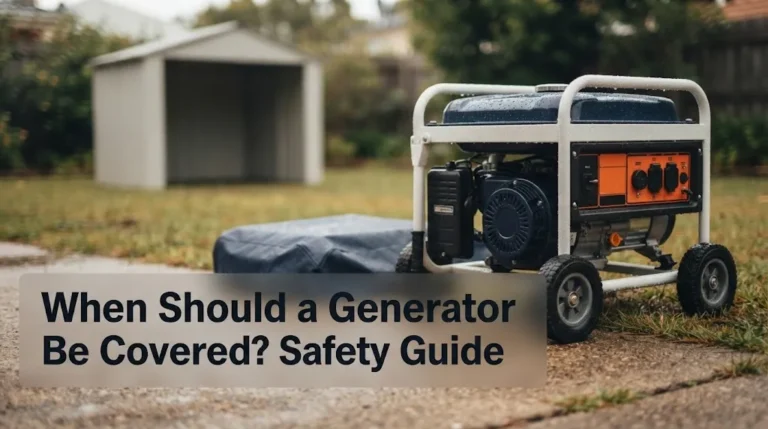
Rain can wet electrical connections and exposed components, especially when wind drives water beneath an overhead shelter. Dripping from a roof, splashing from nearby surfaces, and water flowing across the ground can create exposure even when the generator is not directly beneath rainfall.
Never assume that a small outlet flap or enclosed-looking housing makes the entire generator rainproof. Follow the model’s wet-weather instructions, and do not operate it if water reaches electrical parts or connections.
Snow and ice
Snow can accumulate around the machine, enter openings as it melts, and obstruct ventilation. Ice can also affect controls and moving parts. A shelter that prevents direct snowfall may not protect a generator from wind-driven snow or melting runoff.
Use only the weather conditions and protection arrangements permitted by the manufacturer. If snow or ice obstructs airflow or makes the operating surface unsafe, do not start the generator until the problem can be addressed safely.
Wind and storms
Wind can blow rain sideways, dislodge lightweight shelters, and carry branches or debris into the generator. Thunderstorms may also make it unsafe to go outside to start, refuel, move, or adjust equipment.
A canopy that works during light rainfall may not remain safe during strong gusts. If the shelter becomes unstable or the weather makes outdoor work dangerous, postpone operation rather than attempting a rushed repair.
Humidity, condensation, and sunlight
High humidity can encourage corrosion, particularly when moisture remains on metal parts or inside a poorly ventilated storage cover. Temperature changes may also cause condensation, even when rain never directly reaches the generator.
Direct sunlight can gradually deteriorate some plastics, rubber components, and cover materials. A suitable storage location and regular inspection help limit these effects, but the generator’s specified temperature and ventilation requirements still apply.
How Should You Protect a Generator Without Creating Another Hazard?
The safest approach is to choose protection that matches the generator’s intended use. A cover designed for storage is not automatically suitable while the engine is running, and an overhead roof is not necessarily enough to prevent water from reaching electrical connections.
- Read the owner’s manual. Check whether the manufacturer permits operation during rain or snow and what type of shelter, clearance, and surface is required. If wet-weather operation is prohibited, do not assume an aftermarket cover overrides that restriction.
- Choose an appropriate location. Use a stable, level outdoor surface where water cannot collect around the generator. Avoid low spots, drainage channels, and areas vulnerable to flooding.
- Use compatible operating protection when permitted. A purpose-designed running canopy may protect against precipitation while preserving ventilation. Verify compatibility with the exact model and follow both the generator and shelter instructions.
- Preserve airflow and exhaust clearance. Keep the cooling air intake, ventilation openings, muffler, and exhaust unobstructed. Do not wrap the machine tightly or build an enclosure that traps heat or combustion gases.
- Protect the electrical connections. Use intact, correctly rated outdoor extension cords and keep plugs and connections away from rain and runoff. Follow the generator’s grounding and ground-fault protection instructions.
- Inspect the setup before operation. Check the shelter’s stability, the operating surface, visible connections, and the forecast. Do not touch wet electrical components or attempt adjustments in unsafe weather.
These steps are preventive measures, not permission to operate a generator in conditions its manufacturer prohibits. If you cannot maintain a safe, dry electrical setup with adequate ventilation, wait for the weather to improve.
Warning
Never drape an ordinary tarp, plastic sheet, or storage cover directly over a running generator. It may obstruct cooling airflow, contact hot surfaces, or trap exhaust. Never operate a fuel-burning portable generator indoors, in a garage, in a shed, or on a porch or carport as a workaround for rain.
What Is the Difference Between a Running Cover and a Storage Cover?
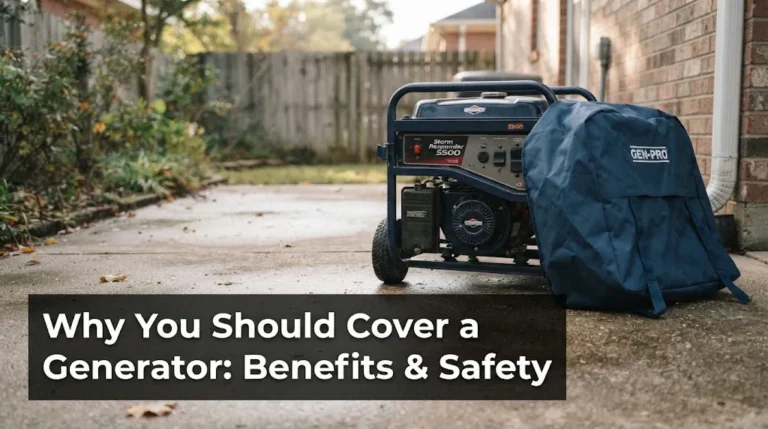
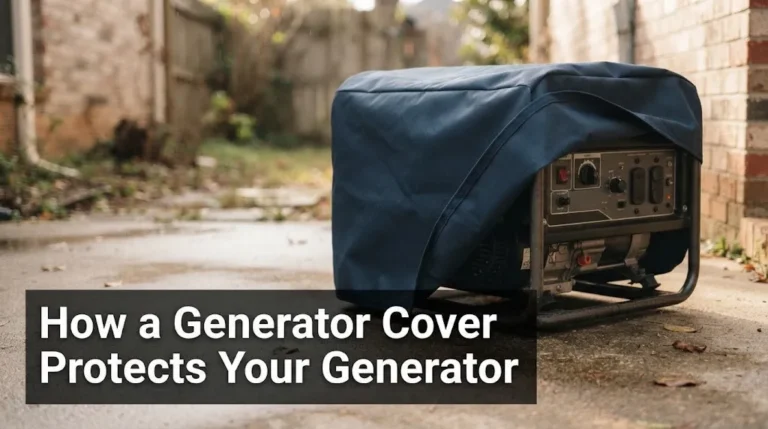
The key difference is when the cover is designed to be used. A storage cover protects a switched-off generator from dust, moisture, and debris. A running cover is specifically designed to provide weather protection during operation while maintaining the required airflow and exhaust clearance.
| Protection type | Appropriate use | Main limitation |
|---|---|---|
| Storage cover | Protecting a switched-off, cool generator | Must be removed before operation |
| Purpose-designed running canopy | Operating in permitted weather conditions | Must be compatible and preserve ventilation |
| Permanent weather-resistant enclosure | Suitable installed generator systems | Must meet the generator’s installation requirements |
| Loose tarp over the machine | Not suitable over a running generator | May obstruct airflow or contact hot parts |
The practical lesson is to choose a cover according to its intended use, not simply its waterproof rating. A product that keeps rain off during storage may be dangerous when placed over a hot, operating engine.
For more detail, see this guide to portable generator covers for storage and operation and the separate advice on covering a generator with a tarp.
How Far Should a Weather-Protected Generator Be From the House?
A weather shelter does not make it safe to operate a fuel-burning portable generator close to a building. The U.S. Consumer Product Safety Commission advises operating portable generators outdoors at least 20 feet from the home, with exhaust directed away from windows, doors, and vents.
Carbon monoxide is an invisible, odorless gas produced by combustion engines. It can enter a building through openings, and exposure can become fatal. A garage door left open, a covered porch, or an improvised enclosure does not provide adequate protection.
For a safer arrangement:
- Keep the generator outdoors and at least 20 feet from the home and relevant openings, following current safety guidance and the owner’s manual.
- Direct exhaust away from buildings and occupied spaces.
- Keep the generator on a stable surface that will not become flooded or waterlogged.
- Maintain the clearances needed for cooling, servicing, and the protective canopy.
- Install and maintain working carbon monoxide alarms inside the home according to their instructions.
The U.S. Consumer Product Safety Commission’s generator safety guidance also emphasizes following the manufacturer’s instructions for reducing electrical-shock risks during wet weather. A safe setup must address both water exposure and exhaust; solving one problem must not create the other.
If your generator cannot be placed at a safe distance while remaining protected from the weather, do not compromise the distance to fit a shelter. Reconsider the location or wait until you can operate it safely.
What Should You Do if the Generator Gets Wet?
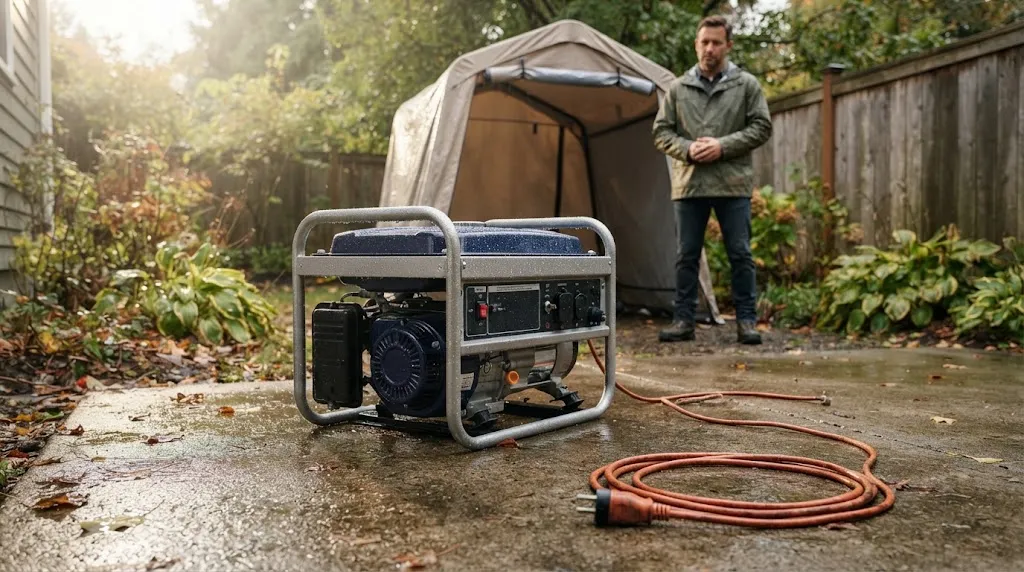
If rain reaches the generator or you discover wet electrical connections, do not touch the wet equipment or attempt to keep using it as though nothing happened. The correct response depends on whether it is running, whether water has reached electrical components, and what the manufacturer’s instructions say.
- If it is switched off: Keep people away from wet electrical parts. Do not start it until it has been assessed and made safe according to the manufacturer’s guidance.
- If it is running: Do not approach or handle wet equipment, plugs, or cords. Keep others away and follow the manufacturer’s emergency shutdown instructions. If reaching the controls would expose you to electrical danger, do not attempt to do so.
- If water has entered the unit or it has been flooded: Do not restart it. Have the generator inspected by a qualified service professional before use.
- If a cord or connector is damaged: Stop using that equipment and replace or repair it appropriately before operation resumes.
Never assume a generator is safe simply because it dries on the outside. Moisture may remain inside the electrical system, and visible drying does not confirm that internal components are undamaged.
For a broader overview of electrical hazards, consult the site’s portable generator electrical safety guide.
Frequently Asked Questions
Can an outdoor generator stay outside all year?
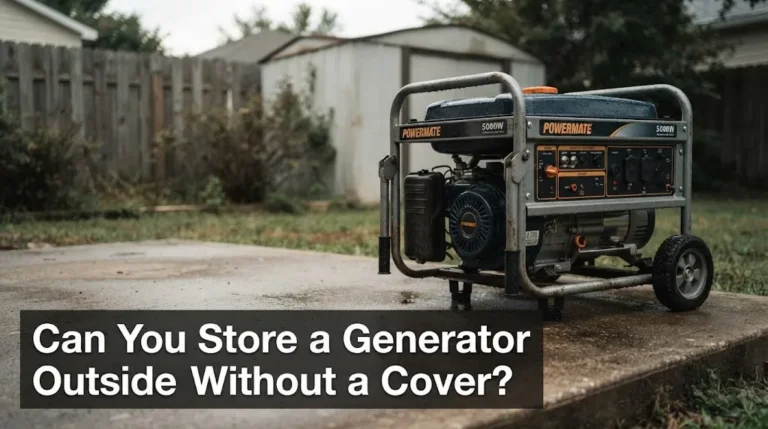
It can remain outdoors only if its design, installation, and storage arrangements permit it. Use the manufacturer’s recommended weather protection, inspect for corrosion and moisture, and protect the unit from flooding and debris. A portable generator should not be left exposed to conditions prohibited by its manual.
Can I run a generator under a roof or awning?
Not automatically. A roof may reduce direct rainfall, but wind can still drive water into electrical components, and nearby walls or ceilings can interfere with exhaust dispersal. Follow the generator’s required outdoor clearances and use only a permitted shelter that preserves ventilation.
Does a generator cover prevent rust?
A suitable storage cover can reduce direct exposure to rain and debris, helping limit corrosion. However, trapped humidity and condensation can still cause rust. Keep the generator dry before covering it, allow appropriate ventilation during storage, and inspect it periodically.
Can I use a waterproof tarp as a generator cover?
You should not drape a regular waterproof tarp over a running generator. It can block cooling airflow or contact hot engine parts. For operation in wet weather, use only a compatible protective system permitted by the generator manufacturer.
Are permanently installed standby generators weatherproof?
Many standby generators have weather-resistant enclosures designed for outdoor installation, but protection varies by model and installation requirements. The enclosure does not remove the need for correct clearances, drainage, maintenance, and safe exhaust placement. Check the installation manual for your specific unit.
Should I cover a generator immediately after shutting it off?
No. Let the generator shut down and cool as directed by its manufacturer before fitting a storage cover. Hot exhaust and engine parts can damage the cover or create a fire hazard. Make sure the unit is dry enough for storage and follow the specified storage procedure.
Conclusion
An outdoor generator needs appropriate weather protection, but the safest solution depends on the model and whether it is running or stored. Protect it from rain, snow, standing water, and moisture without obstructing cooling airflow or allowing exhaust to accumulate.
Use a storage cover only when the generator is off and cool. For operation, use a purpose-designed shelter only when the manufacturer’s instructions permit it. Keep fuel-burning portable generators outdoors, at least 20 feet from the home and relevant openings, and direct exhaust away from buildings. If you cannot maintain safe electrical conditions, adequate ventilation, and the required distance, wait for safer conditions rather than improvising a cover.

Hi, I’m Michael Turner. I own a generator workshop in the United States and founded HomeGeneratorBlog to share practical, hands-on guidance about generator installation, maintenance, troubleshooting, safety, and backup power solutions. My goal is to help homeowners make smarter, more confident decisions through clear and reliable information