How Far Should a Tarp Be from a Running Generator? Safe Clearances
Quick Answer
A tarp should never directly touch a running generator and must be kept at least 3 to 5 feet away from the unit in all directions, while the exhaust muffler needs a clearance of at least 5 to 10 feet from any flammable material. If you are using a protective canopy or tent over a portable generator, it must be an open-sided, fire-retardant structure specifically designed for generator use to prevent lethal carbon monoxide accumulation and fire hazards.
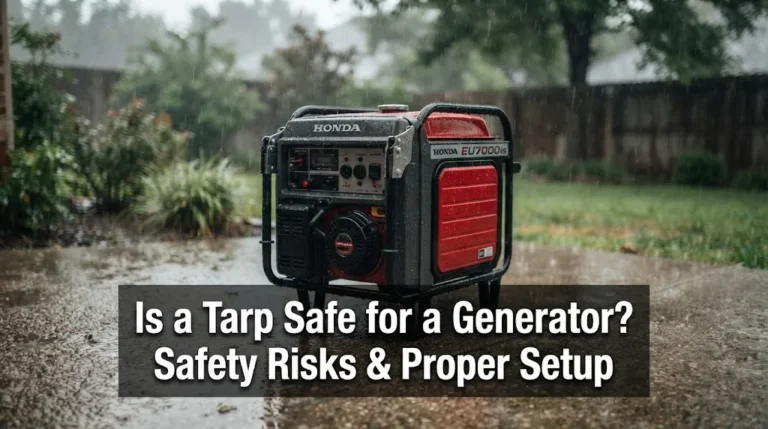
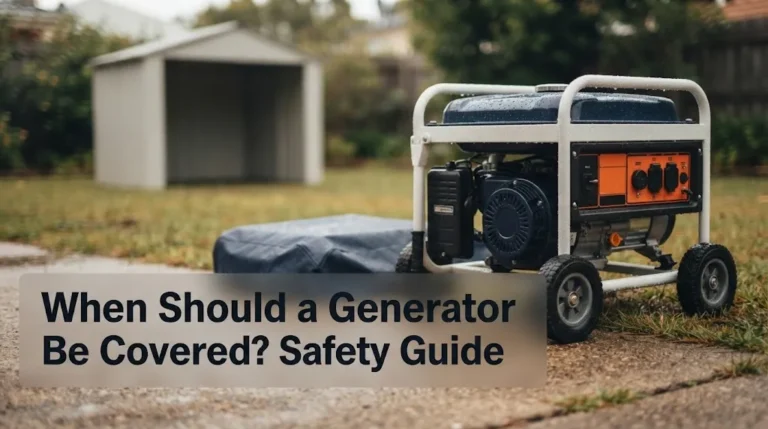
Using a portable generator during heavy rain, snow, or severe storms often prompts homeowners to rig a makeshift canvas or plastic cover. However, combining hot engine components, explosive fuel, and flammable plastic sheeting creates a severe safety hazard.
Understanding proper clearance distances protects your property from fire and keeps your household safe from dangerous exhaust fumes.
The Primary Dangers of Covering a Generator with a Tarp
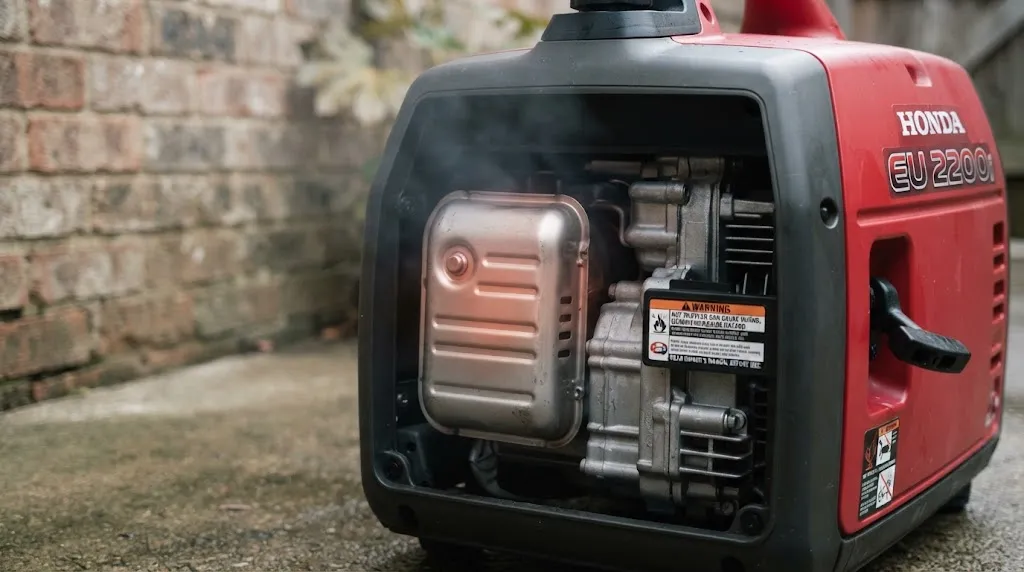
Before establishing precise clearance numbers, it is essential to understand why standard tarps pose major risks when placed near operating power equipment. Portable generators generate intense heat, expel toxic exhaust gas, and consume large amounts of oxygen.
Fire Hazards from Engine Heat and Exhaust
The exhaust muffler on a standard portable generator can easily reach temperatures exceeding 500°F (260°C). Standard polyethylene tarps, plastic sheeting, and canvas drop cloths melt or ignite instantly upon direct contact with a hot exhaust pipe. Even radiant heat from the engine block can weaken low-quality plastics, causing them to drip hot material onto the fuel tank.
Carbon Monoxide Accumulation
A generator must never be enclosed in a tight, unventilated space. Tarping a unit too closely creates a pocket that traps carbon monoxide (CO)—an odorless, colorless, and lethal gas. If wind shifts or a sagging tarp pushes exhaust back toward living spaces or open windows, deadly fumes can quickly enter a home.
Engine Starvation and Overheating
Generators require continuous airflow to cool the alternator windings and engine block. Restricting airflow with a low-hanging tarp causes the unit to overheat, leading to automatic thermal shutdown, damaged electronics, or complete engine failure.
Recommended Clearances for Tarps and Covers
Safety organizations and generator manufacturers outline strict guidelines regarding outdoor placement and clearance from structures, vegetation, and temporary protective covers.
| Component / Area | Minimum Recommended Clearance | Safety Reason |
|---|---|---|
| Exhaust Muffler to Tarp | 5 to 10 feet | Prevents melting, ignition, and direct radiant heat damage. |
| Engine Body to Side Tarps | 3 to 5 feet | Maintains adequate cooling airflow and prevents overheating. |
| Overhead Tarp Canopy | At least 3 to 4 feet above top | Allows hot exhaust gases to rise and dissipate safely. |
| Generator to Home Walls | At least 15 to 20 feet | Prevents carbon monoxide from entering windows and doors. |
When positioning a cover, always direct the exhaust away from any walls, outdoor furniture, or protective canvas walls.
How to Safely Protect a Generator in Wet Weather
Operating a generator in the rain requires specialized solutions rather than a standard flat tarp tied down with bungee cords.
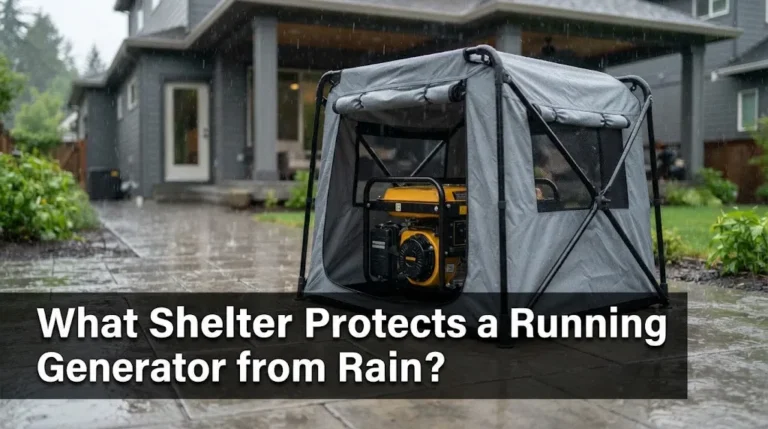
Use a Dedicated Generator Tent
Specially engineered generator tents feature flame-retardant fabric, open mesh sides, and rigid frames that sit several feet away from the machine. These enclosures protect the sensitive electrical panel and inverter housing from direct rainfall while allowing complete ventilation on all sides.
Build an Open-Sided Canopy
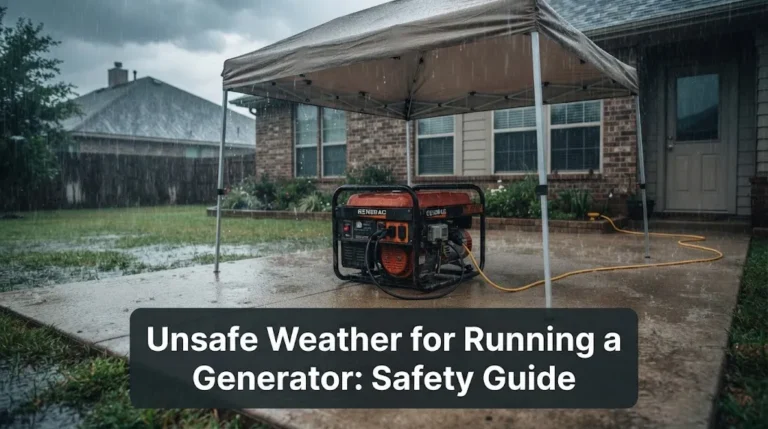
If you construct a permanent or temporary shelter, ensure it features an open roof overhang or high gable with at least three completely open sides. Never place a generator inside a closed shed, garage, or under a low-hanging deck.
Warning
Never drape a loose tarp directly over a running generator frame. High winds can easily blow the plastic sheeting down onto the hot exhaust pipe, sparking a sudden fire within seconds.
Critical Safety Rules for Wet-Weather Generator Operation
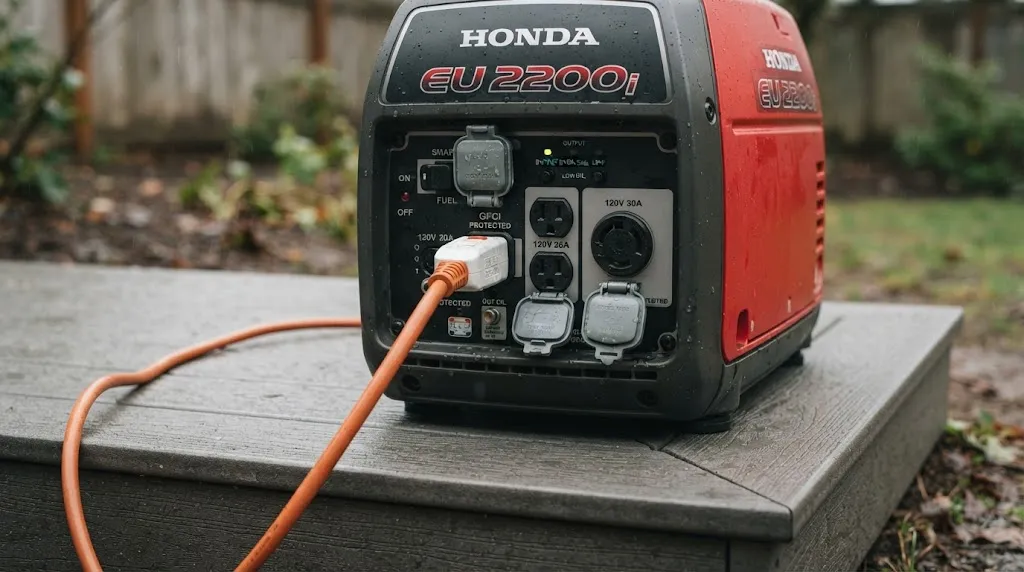
Moisture creates electrical shock hazards that require careful setup and grounding practices.
- Keep Outlets Dry: Ensure connection panels and extension cords are rated for outdoor wet conditions and fitted with Ground Fault Circuit Interrupters (GFCIs).
- Elevate the Unit: Place the generator on a dry, level concrete pad or composite platform to prevent pooling water from reaching the electrical components.
- Never Refuel Hot Engines: Turn off the generator and let it cool for at least 10 minutes before refueling under a protective cover. Spilled fuel on a hot engine can ignite instantly.
- Install Battery-Operated CO Detectors: Always place a functioning carbon monoxide detector inside your home near sleeping areas whenever a generator is running outside.
Common Mistakes to Avoid
Homeowners often make hazardous errors when attempting to shield power equipment from storms.
A frequent mistake is tying a blue polyethylene tarp tightly around the generator cage to block blowing rain. This traps exhaust gases, melts the plastic, and chokes the engine of oxygen. Another error is placing the generator under a porch roof with low clearance; trapped heat can warp vinyl siding and ignite roof overhangs.
Tip
Always position your generator so that the exhaust points away from your home, neighbor properties, and any temporary protective shelters you have set up.
Related Product
Portable Generator Tent Cover
Safely protect your portable generator from heavy rain and snow while maintaining proper ventilation and exhaust clearance.
As an Amazon Associate, we earn from qualifying purchases.
Frequently Asked Questions
Can I use a regular blue tarp over my generator if it’s raining hard?
No. Standard plastic tarps can melt against hot engine parts, trap lethal carbon monoxide gas, and restrict vital airflow. Always use an open-sided shelter or a certified generator tent designed to withstand high temperatures.
How far away from the house should a running generator be placed?
A portable generator should be operated at least 15 to 20 feet away from your home, with the exhaust pointing away from all doors, windows, and ventilation intake ducts.
What happens if a tarp touches a running generator?
If a tarp makes contact with the hot exhaust muffler, it will melt or catch fire almost immediately. Furthermore, covering the ventilation grills causes the engine to overheat rapidly.
Can I run a generator under a covered porch?
Running a generator under a standard porch roof is dangerous unless the area has exceptionally high ceilings and is completely open on at least three sides to allow proper exhaust dispersion.
Are generator tents fireproof?
Quality generator tents are constructed from heavy-duty, flame-retardant fabric designed to resist ignition, but they still require several feet of clearance from the hot muffler.
How do I keep my generator dry without a tarp?
You can use a specialized weather-resistant generator canopy, set up a pop-up canopy tent with open walls positioned far from the unit, or build a dedicated sloped wooden enclosure with wide mesh venting.
Conclusion
Keeping a safe distance between a tarp and a running generator is vital for preventing fires and carbon monoxide poisoning. Never drape plastic sheeting directly over your equipment. Maintain at least 3 to 5 feet of clearance around the engine, ensure proper airflow, and rely on open-sided, fire-retardant enclosures when operating power equipment in wet weather.

Hi, I’m Michael Turner. I own a generator workshop in the United States and founded HomeGeneratorBlog to share practical, hands-on guidance about generator installation, maintenance, troubleshooting, safety, and backup power solutions. My goal is to help homeowners make smarter, more confident decisions through clear and reliable information