How to Protect a Generator from Rain Safely
Quick Answer
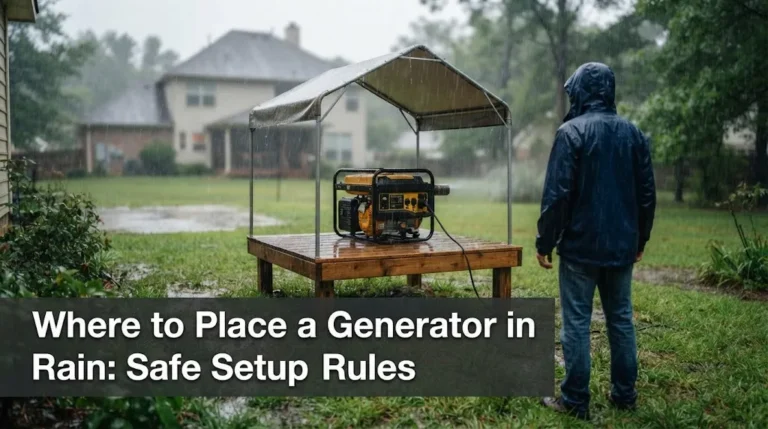
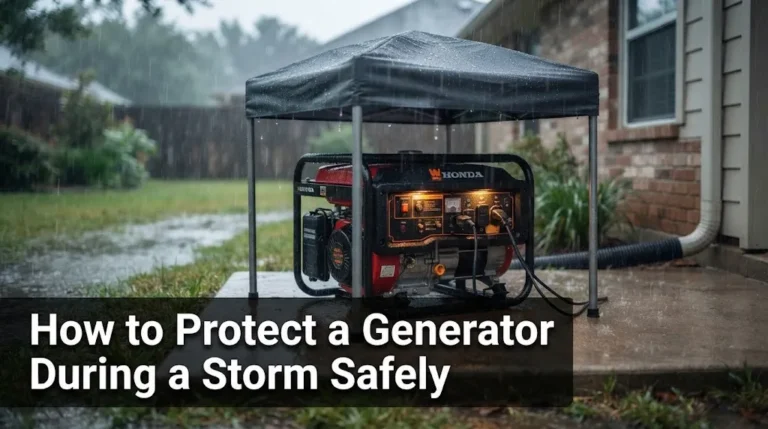
Protect a generator from rain by keeping it outdoors, at least 20 feet from your home, under a running-rated cover, tent, or open-sided canopy that sheds rain without blocking airflow. Never drape a tarp or storage cover over a running generator, and never move it into a garage, shed, or enclosed porch to keep it dry.
Rain creates two problems at once. Water can reach outlets, cords, and electrical parts, while a cover that is too tight can trap heat and exhaust. The safest setup solves both: rain stays off the top and electrical panel, air keeps moving freely, and exhaust escapes away from people and buildings.
That balance matters most during an outage, when the generator is needed precisely because the weather is bad.
Why Rain Is More Than a Rust Problem
Wet outlets and damaged cords raise the risk of electric shock, and moisture inside electrical components can cause a short circuit. A short can damage the generator, trip protection devices, or start a fire near fuel.
Rain can also reach the air intake, fuel cap area, and control panel, making starting harder and causing corrosion over time.
The Safety Rules That Come Before Any Cover
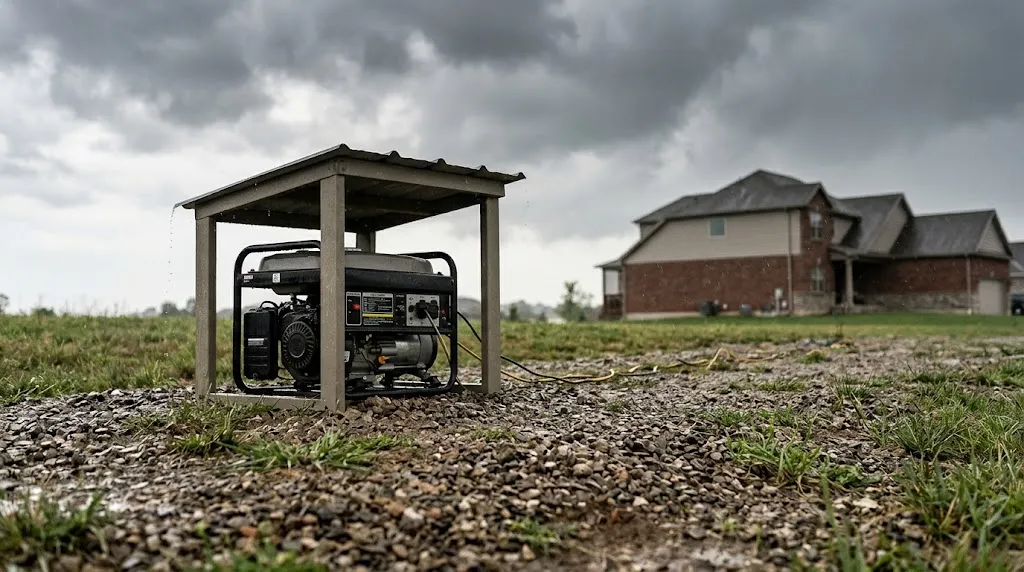
A rain cover does not make an unsafe location safe. Get these rules right first.
- Keep it outdoors and at least 20 feet from the home. Point the exhaust away from doors, windows, vents, and air intakes. Carbon monoxide is colorless and odorless, and it can build up quickly in an enclosed space.
- Never run it in a garage, shed, basement, or enclosed porch, even with a door or window open. The Occupational Safety and Health Administration guidance is direct here: keep the generator dry, protect it with a canopy if needed, and do not use it indoors or in enclosed spaces.
- Leave 3 to 4 feet of clear space on all sides and above the unit for ventilation and cooling, unless your manual requires more. Do not stack fuel, boxes, or debris against it.
- Keep the generator off standing water. Do not operate it while standing in water, and avoid touching it with wet hands where possible.
- Use battery-powered carbon monoxide alarms in the home during generator use, following the alarm maker’s placement and testing instructions.
Warning
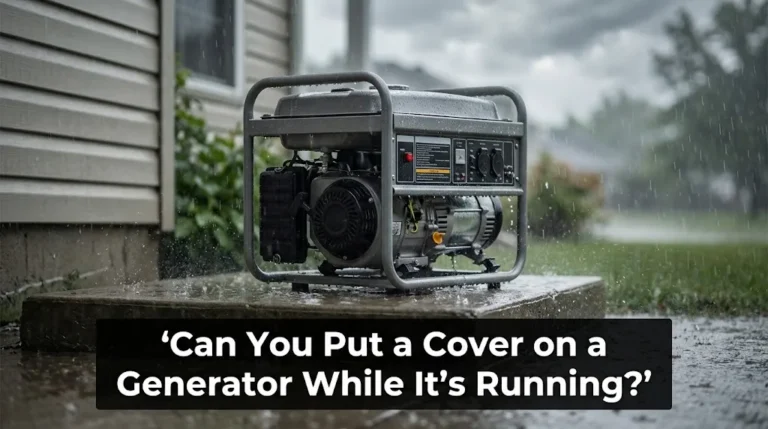
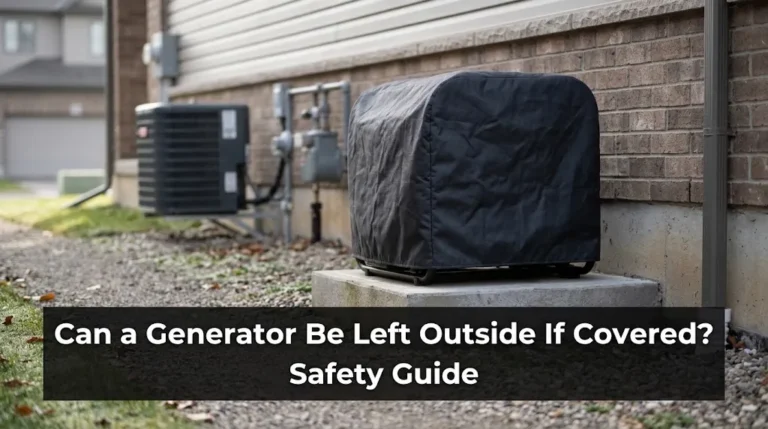
A storage cover is not a running cover. A tight cover, plastic sheet, or tarp draped over a running generator can trap heat, block cooling air, melt, or trap exhaust. If a cover is not rated for use while the generator is running, use it only when the generator is cool and switched off.
Choose Rain Protection That Still Lets the Generator Breathe
The right choice depends on whether the generator is running, how long the rain will last, and how much wind you expect. In every case, the cover should act like a roof, not a sealed bag.
| Option | Best for | Main limitation |
|---|---|---|
| Running cover or generator tent | Running in rain | Must fit the model and leave exhaust and air paths clear |
| Open-sided canopy | Short storms | Wind-driven rain can still reach the sides |
| Permanent ventilated shelter | Frequent or long outages | Needs proper intake and exhaust routing |
| Storage cover | Cool, switched-off storage only | Never use while running |
A purpose-built running cover or generator tent is usually the simplest safe choice. It sits above or around the frame while leaving the sides open or vented, so heat and exhaust can escape. Check that exhaust, air intake, panel, and refueling access are not blocked, and that the cover cannot sag onto hot parts.
An open-sided canopy can work for a short storm if it is large, firmly anchored, and high enough to avoid heat buildup. Keep the generator well inside the roofline, not at the edge where rain blows in. Walls turn a canopy into an enclosure.
For a permanent shelter, ventilation is the whole project: low air intakes, a clear path for hot air to leave, and a separate route for exhaust to leave entirely. If exhaust routing is uncertain, use a qualified installer. See how to ventilate a generator shelter.
Set Up a Safe Spot Before the Rain Starts
- Pick high, level, firm ground. Avoid low spots where water pools and soft mud. Concrete, pavers, gravel, or a sturdy raised platform all help, as long as the generator stays level and stable.
- Raise it slightly if the ground may flood or splash. A pallet, blocks, or raised platform can keep the base out of shallow water, without blocking underside airflow.
- Face the exhaust away from the house and shelter opening. Check wind direction too. Exhaust blowing back under a canopy or toward a door defeats the 20-foot distance.
- Fit the running cover or canopy first, then check clearances. Look for sagging fabric, cords touching hot surfaces, and cover material that could blow into the exhaust. Anchor the shelter before the storm arrives.
- Route cords on dry, raised ground. Keep connections out of puddles and away from foot traffic, using outdoor-rated cords sized for the load.
- Do a short dry check. Start the generator, confirm it runs normally, and check that nothing is overheating or flapping in the wind.
If you only have a tarp, use it as a high roof well above the generator, with all sides open — never as a wrap. See what to use to cover a generator in the rain safely.
Tip
Face the control panel and outlets away from the prevailing wind and rain when you can. That one change often keeps the parts you touch most often drier, without adding any extra cover.
Protect Cords, Outlets, and Connections
The generator itself is only half the system. Wet extension cords, submerged plugs, and rain-soaked power strips create shock and short-circuit risks even when the generator looks dry.
Use heavy-duty, outdoor-rated cords, and check for cuts, cracked insulation, or damaged plugs before use. Do not run cords through standing water or under a door where they can be pinched. Keep outdoor connections elevated and shielded from direct rain, but do not seal them in a plastic bag that traps moisture.
Ground-fault protection matters in wet conditions. Many modern generators have GFCI outlets, and a GFCI cord can add protection where one does not. If a GFCI trips repeatedly, find the wet or damaged part before resetting it.
Never refuel a running generator, and let it cool before adding fuel. Spilled fuel on a wet, hot surface is a fire risk, and fueling in heavy rain makes spills and contamination more likely.
Mistakes That Undo Good Rain Protection
- Moving the generator under a roof that is still enclosed. A carport, garage, or covered porch may keep rain off, but it can trap carbon monoxide. Open sides and distance matter more than a roof alone.
- Covering the exhaust or air intake. Even a partial blockage can raise heat, reduce performance, and push exhaust where it does not belong.
- Using a cover that is too small. A tight cover pulls fabric toward hot parts, blocks access, and leaves outlets exposed at the edges.
- Ignoring wind. An unanchored canopy becomes a sail. Anchor legs, use weights where the design allows, and take a flimsy shelter down in severe wind rather than chasing it in a storm.
- Leaving the generator in a puddle. A dry top does not help if the base sits in water. Elevation and drainage are part of rain protection.
- Skipping the post-storm check. Water can hide in outlets, connectors, and the air filter long after the rain stops.
A storage cover is meant for a cool, unused machine — not for running in a storm. See can a portable generator stay outside in the rain.
If the Generator Gets Wet Anyway
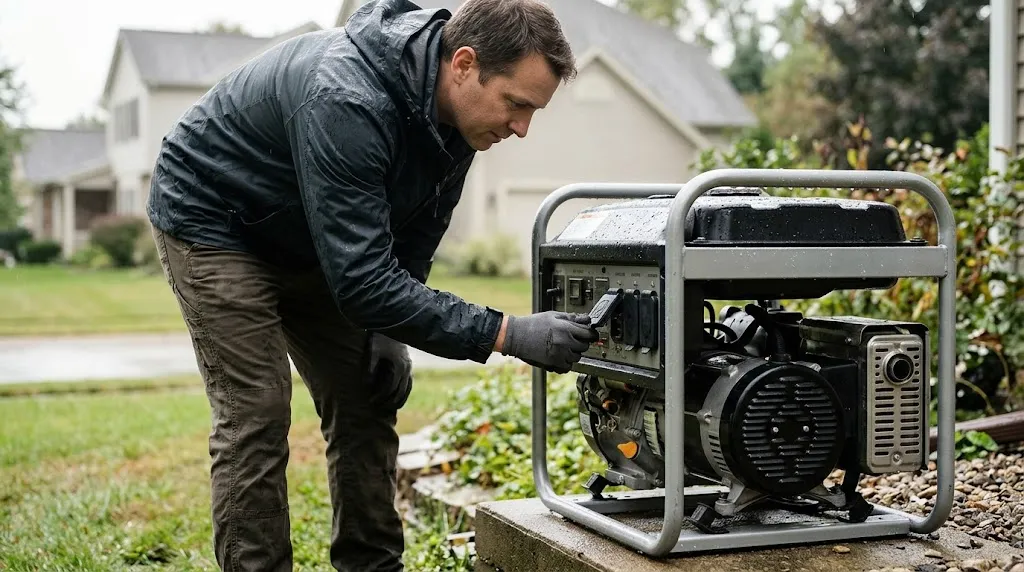
Stop the generator if it is safe to do so, disconnect loads, and move away if you smell fuel or see sparking. Do not reach into standing water to switch it off.
Once it is off, cool, and dry, let it dry thoroughly before restarting. Check outlets, cords, vents, and the air intake. If water reached the panel or it trips protection after drying, have it inspected before use.
After the Rain: Storage and the Next Storm
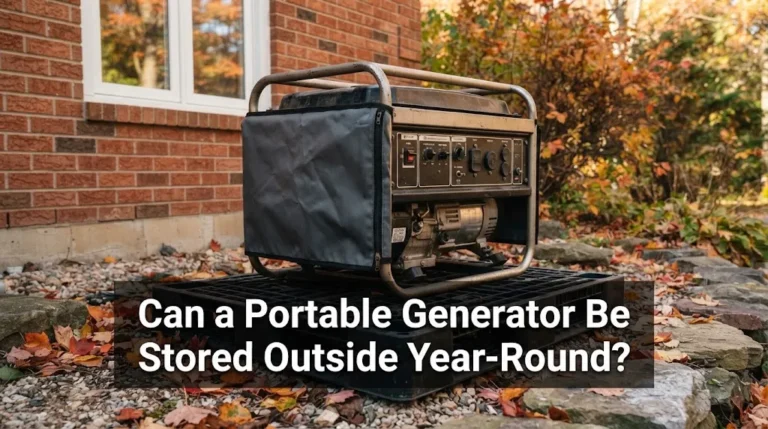
After wet use, clean off mud, dry the frame and panel, and check for rust. Store it in a dry, ventilated place with a storage cover once completely cool — and remove that cover before the next run.
Keep the running cover with the generator, check straps and fabric before storm season, and replace a torn cover that could blow onto hot parts. For a permanent shelter, check vents for debris and confirm exhaust still has a clear path. See how much ventilation a generator shelter needs.
If high winds, flooding, or lightning are forecast, shut down and wait rather than protecting a running generator in unsafe conditions. See how to protect a portable generator during storms safely.
Related Product
Generator Running Cover / Rain Tent
A running-rated cover keeps rain off the engine and outlets while leaving airflow and exhaust clear, which is exactly the balance this guide describes.
As an Amazon Associate, we earn from qualifying purchases.
Frequently Asked Questions
Can I run a generator in light rain if it has a cover?
Yes, if the cover is rated for running use, the generator stays outdoors at least 20 feet from the home, and airflow and exhaust remain clear. A storage cover does not meet that test.
Can I put a tarp over my generator while it is running?
Do not drape a tarp directly over a running generator. It can trap heat and exhaust, block cooling air, and melt or catch fire near hot parts. A high, open-sided tarp roof is safer temporarily, but a purpose-built running cover is better.
How far should a generator be from the house in rain?
At least 20 feet, with exhaust pointed away from doors, windows, vents, and air intakes. Rain protection does not shorten that distance.
Should I use a GFCI outlet or cord in wet weather?
Yes, where available. GFCI protection can shut off power quickly if a ground fault occurs, lowering shock risk in wet conditions. Investigate repeated trips instead of repeatedly resetting the device.
What should I do if rain gets into the outlets?
Switch the generator off safely if you can do so without standing in water, disconnect loads, and let it dry fully in a ventilated area. Have it inspected if water reached the panel, if it trips protection repeatedly, or if you see damage or sparking.
Is a permanent generator shed safe in rain?
It can be, but only with proper ventilation, exhaust routed completely outside, fire-resistant materials, and clearance that matches the manual. A sealed shed or one with blocked vents is not safe.
Conclusion
Protecting a generator from rain comes down to a simple rule: keep water off, keep air moving, and keep exhaust away from people. Use a running-rated cover or open canopy outdoors, at least 20 feet from the home, raise the unit out of standing water, and protect cords and outlets. Avoid shortcuts that trap heat or exhaust — especially storage covers and enclosed spaces.

Hi, I’m Michael Turner. I own a generator workshop in the United States and founded HomeGeneratorBlog to share practical, hands-on guidance about generator installation, maintenance, troubleshooting, safety, and backup power solutions. My goal is to help homeowners make smarter, more confident decisions through clear and reliable information