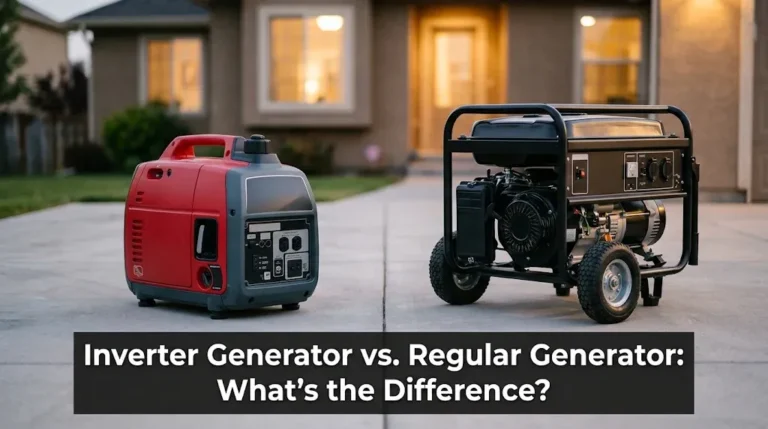
Are Inverter Generators More Reliable Than Regular Generators?
Quick Answer
Yes, inverter generators are more reliable for sensitive electronics and steady light-to-medium loads, but regular generators are more reliable for big surge loads and simple, cheap repairs. If you want the full picture, start with how an inverter generator works.
The short verdict
- Cleaner power: Inverter output stays under 3% total harmonic distortion, while a regular generator typically runs 10–25%.
- Steadier voltage: Inverter electronics hold voltage and frequency steady as loads switch on and off.
- Fewer fuel problems: Eco-throttle cuts fuel use at light load, so the tank lasts longer through an outage.
- Harder surge work: A regular generator handles big motor starts better, because it has more raw surge headroom per dollar.
- Simpler repairs: A regular generator has fewer electronics, so a small-engine shop can often fix it faster and cheaper.
Check before you buy
- Add up running watts, then add the biggest starting watts on top.
- Leave at least 20% headroom above that total, and check the spec sheet for both ratings.
I’ve run both types through real outages, and the honest answer surprised me. An inverter generator saved my fridge and furnace controls during one storm, while a plain open-frame unit carried the heavy loads next door without blinking.
This guide goes deeper than the usual “inverter is better” take. You’ll learn what reliability really means, where each type wins, what breaks first, and how to make either one start on the night you need it most.
In This Guide
- What Does “Reliable” Mean for a Generator?
- How Is an Inverter Generator Different From a Regular Generator?
- Inverter vs Regular Generator: Reliability Compared
- Where Is Each Type More Reliable?
- What Breaks First on Each Type?
- How Can You Make Either Type More Reliable?
- Which Type Should You Buy for Reliable Backup Power?
- Frequently Asked Questions
- The Bottom Line
What Does “Reliable” Mean for a Generator?
Reliable means it starts when you need it, runs without drama, and does not damage the things plugged into it. A generator that starts on the third pull but fries a furnace board was not reliable.
It also means the unit lasts. A cheap generator that dies after two seasons cost more than a good one that runs for ten years.
How do I judge generator reliability?
I use four simple tests, and they cover almost every failure I have seen in the field. Run through them before you trust any generator with your home.
- Starts on demand: It fires on the first or second pull (or one push of the button) after months in storage.
- Holds steady power: Voltage and frequency stay stable when the fridge compressor or sump pump kicks in.
- Finishes the outage: It runs for the full outage without an overload shutdown, a fuel problem, or overheating.
- Survives the years: It keeps doing all three after seasons of use, storage, and regular maintenance.
Notice what is missing from that list. Brand name is not there, and neither is peak wattage.
Section Takeaway: Reliability is starting on demand, holding steady power, finishing the outage, and repeating that for years — not the biggest number on the box.
How Is an Inverter Generator Different From a Regular Generator?
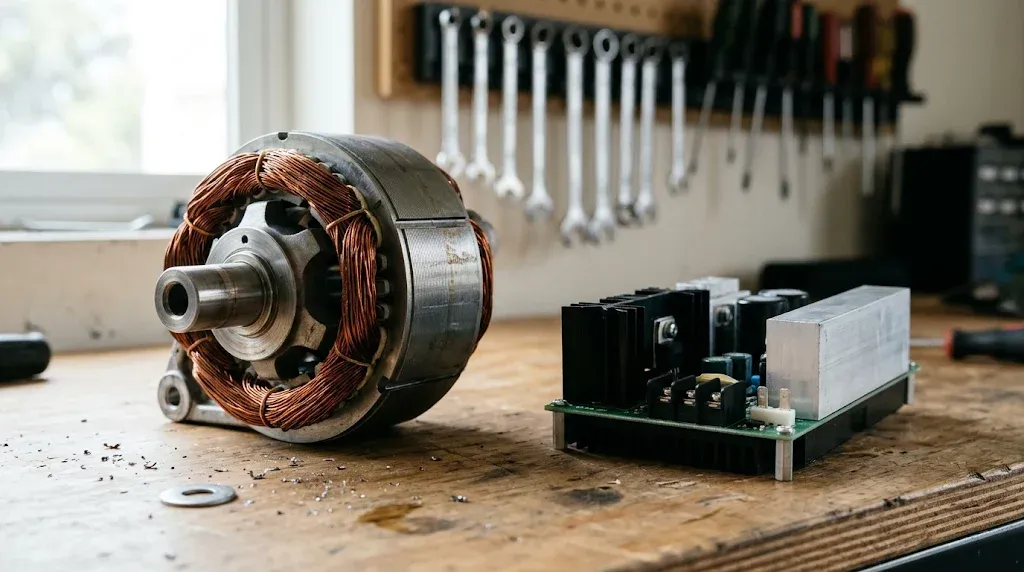
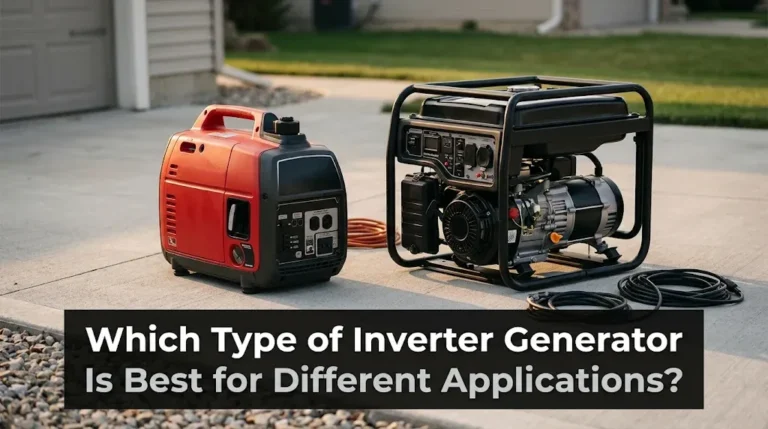
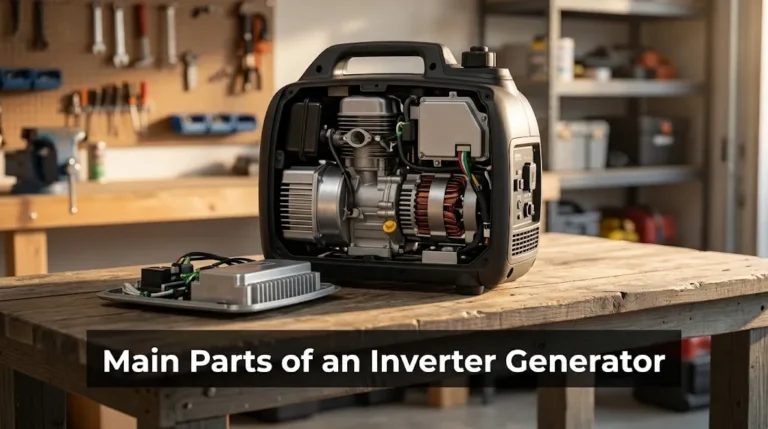
An inverter generator is a portable generator that makes raw AC power, converts it to DC, then rebuilds it as a clean sine wave through an inverter module. That extra conversion step is the whole story.
A regular generator, also called a conventional or open-frame generator, skips that step. Its engine spins an alternator at a fixed speed, and the alternator makes AC power directly.
How does a regular generator make power?
A regular generator locks its engine at about 3,600 RPM to hold 60 Hz output. That speed never changes, even when you only run a phone charger.
Fixed speed has one big advantage: simplicity. The engine, alternator, and voltage regulator are proven parts that any small-engine shop understands.
It has one big cost too. The engine burns fuel at full speed all day, and the output waveform is rougher, with total harmonic distortion (THD) typically around 10–25%.
THD measures how far the power waveform strays from a perfect sine wave. High THD can make sensitive electronics run hot, glitch, or fail early.
How does an inverter generator make power?
An inverter generator lets its engine speed rise and fall with the load. A light load means a slow, quiet engine, and a heavy load spins it up.
The inverter module then rebuilds the power into a smooth sine wave. Output THD usually stays under 3%, which is close to normal wall power.
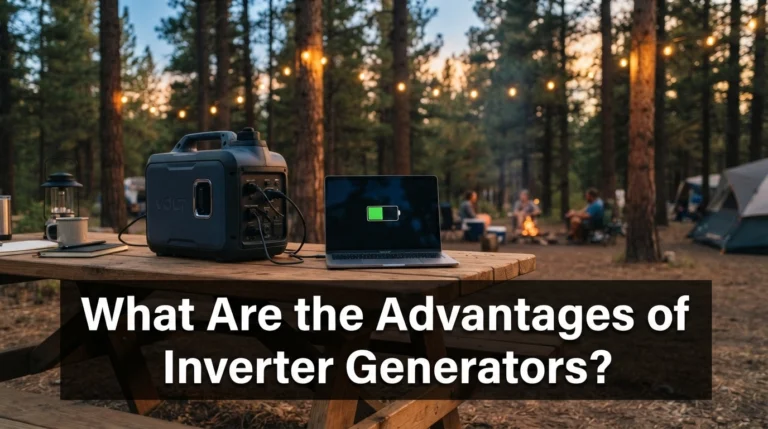
That clean output is why inverter generators are the default pick for laptops, phones, CPAP machines, and modern furnace controls. If you want the full rundown on safe loads, see our guide to the best portable generator for sensitive electronics.
Why does the design change reliability?
The inverter design removes one failure mode and adds another. It removes rough power and constant full-speed running, which wear engines and stress electronics.
It adds a complex electronic module. That module rarely fails, but when it does, the repair is a replacement part, not a tune-up.
Section Takeaway: An inverter generator trades mechanical simplicity for clean, steady power, while a regular generator trades clean power for simple parts and easy repairs.
Inverter vs Regular Generator: Reliability Compared
No single spec settles the reliability question. You have to compare the two types across the jobs that actually cause failures.
The table below lines up the factors that matter most, based on how these machines behave in home backup, RV, and job-site use as of 2026.
| Reliability factor | Inverter generator | Regular generator |
|---|---|---|
| Power quality (THD) | Under 3%, safe for most electronics | Typically 10–25%, risky for sensitive boards |
| Voltage stability | Holds steady as loads switch on and off | Dips and surges when big motors start |
| Surge capacity | Limited; check starting watts carefully | Strong; more surge headroom per dollar |
| Fuel use at light load | Low; eco-throttle slows the engine | High; engine holds about 3,600 RPM always |
| Overload behaviour | Shuts down cleanly and warns you first | May bog down, surge, or trip a breaker |
| Most common failure | Stale fuel, then sensors or inverter module | Stale fuel and carburetor varnish |
| Repair complexity | Higher; electronics need a dealer or specialist | Lower; most small-engine shops can fix it |
| Typical lifespan with care | Often 1,000–3,000 running hours or more | Often 1,000–2,000 running hours with care |
One note on the THD numbers: most sources list conventional generator THD at 10–25%, while some sources list 6–25% for conventional models. The range varies by model and source, so check the spec sheet for the exact unit you buy.
Lifespan deserves a warning too. Hours on the meter matter less than maintenance history, so a neglected 500-hour unit can be less reliable than a cared-for 2,000-hour one.
Section Takeaway: Inverters win on power quality, stability, and fuel use, while regular generators win on surge capacity and repair simplicity — the table is a tie until your loads break it.
Where Is Each Type More Reliable?
Context decides the winner. A generator that is rock-solid for a campsite can be the wrong pick for a home with a well pump.
Where do inverter generators win?
Inverter generators win wherever clean power and long, light-load running matter. That covers most home backup loads: fridge, furnace controls, CPAP, phones, laptops, and LED lights.
Eco-throttle is the quiet hero here. The engine slows at light load, which stretches fuel, cuts noise, and reduces engine wear over a multi-day outage.
Parallel capability helps too. Two small inverters linked with a parallel kit can share a load, and if one has trouble, you still have the other.
Where do regular generators win?
Regular generators win wherever big motors start hard and often. Well pumps, sump pumps, large air conditioners, and job-site compressors all pull a heavy surge at startup.
A 5,000-watt conventional unit often costs about the same as a 3,000-watt inverter. That extra headroom is real insurance when two motors kick on together.
Simple design wins in the repair shop too. A carburetor clean or a voltage regulator swap is a same-day job at most small-engine shops.
What happened during my 52-hour outage?
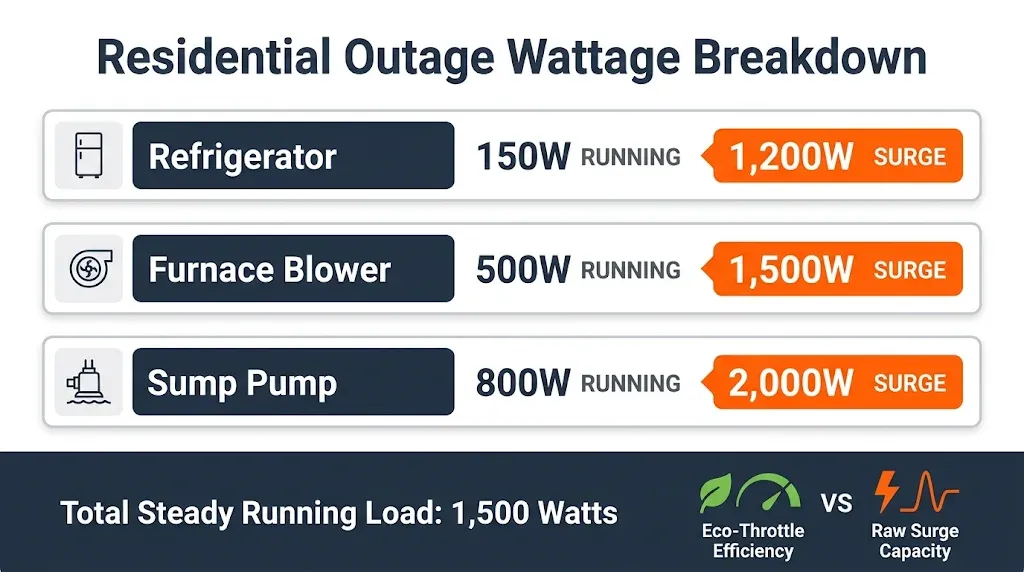
A spring storm cut our power for 52 hours, and the rain kept coming. My setup was a 3,500-watt inverter running the fridge, the furnace blower, and the sump pump, with lights and phone charging on top.
The running math looked like this: fridge about 150 watts, furnace blower about 500 watts, sump pump about 800 watts, plus roughly 50 watts of lights and chargers. That totals about 1,500 running watts, well inside the inverter’s rating.
Starting watts were the real test. The fridge needs about 1,200 watts to start, the blower about 1,500 watts, and the sump pump about 2,000 watts.
I staggered the starts by hand, letting the fridge settle before switching on the blower. The inverter never tripped once, and eco-throttle kept it quiet overnight while the sump cycled in the rain.
Next door, my neighbour ran a 5,500-watt conventional unit. It started the sump and fridge together without a thought, yet his lights flickered each time the sump kicked in.
His unit burned through fuel far faster at fixed speed. He refilled at 2 a.m. in the rain.
He told me the next morning he wished he had started with a full spare can.
Both homes kept their food cold and their basements dry. The inverter won on steadiness and fuel, while the conventional unit won on raw surge muscle.
Safety note: Run any generator outdoors, at least 20 feet from the house, with the exhaust pointed away from doors, windows, and vents. The Centers for Disease Control and Prevention guidance on carbon monoxide explains why distance and a working CO alarm matter.
Section Takeaway: Pick the inverter for clean power and long light-load outages, and pick the regular generator when big motors must start together — my 52-hour outage proved both can work when sized right.
What Breaks First on Each Type?
Generators rarely die without warning. They usually fail at the same few weak points, and those weak points differ by type.
What fails first on an inverter generator?
The inverter module itself is the part owners fear most. It is a sealed electronic board, and a surge, overheating, or water damage can kill it.
In practice, though, the module is not the first thing to fail. Sensors, low-oil shutdown switches, and clogged cooling vents cause far more no-start complaints.
Electric-start models add one more weak link: the starter battery. A dead battery after a winter in the garage is common, so keep the pull cord as your backup plan.
What fails first on a regular generator?
The carburetor is the classic failure point. Gasoline left in the bowl for months turns to varnish, clogs the jets, and leaves you pulling a dead cord in the dark.
The automatic voltage regulator, or AVR, is next. It keeps output voltage steady, and heat plus vibration wear it out over time.
Older brushed alternators add brush wear to the list. Brushes are cheap and easy to swap, but a worn set causes flickering lights and weak output first.
What breaks on both types?
Stale fuel tops the shared list by a wide margin. It causes more failed starts than every other problem combined, on both types.
Old oil, dirty air filters, and fouled spark plugs follow close behind. None of them are expensive, yet any one of them can ruin an outage night.
Overloading is the shared self-inflicted wound. Running past the rated watts trips the inverter’s protection or bogs down a conventional engine, and repeated overloads shorten the life of either machine.
If your unit will not fire at all, work through the steps in our portable generator won’t start guide before you call a shop. Most no-starts are fuel, spark, or oil level, not a dead engine.
Section Takeaway: Inverter modules rarely fail first, carburetors do — and stale fuel is the top killer of both types, so fuel care beats brand choice.
How Can You Make Either Type More Reliable?
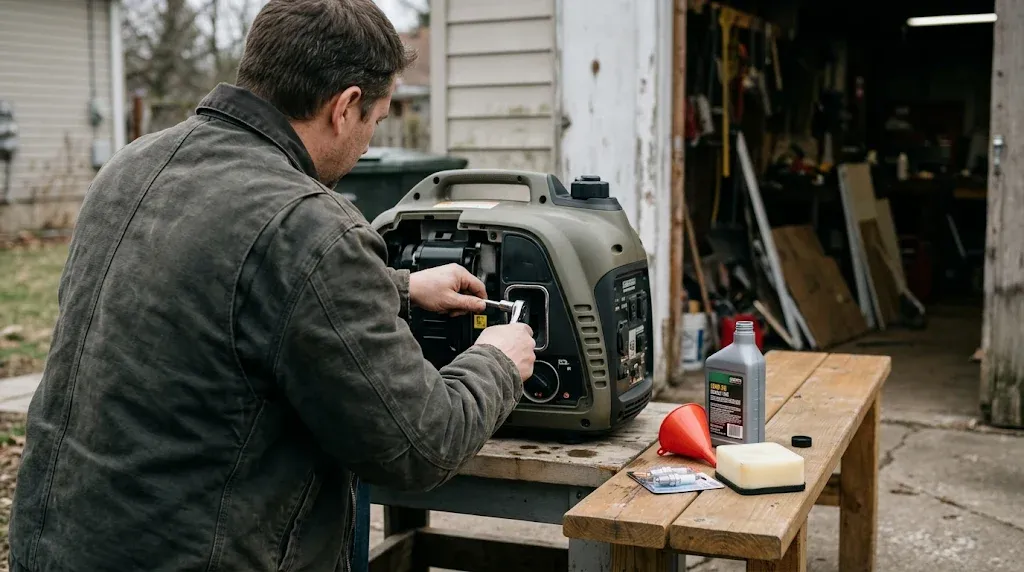
Reliability is mostly maintenance, not shopping. A mid-range generator with fresh fuel and clean oil beats a premium unit that sat neglected for two years.
Start with the break-in. Most manuals call for the first oil change after about 20 hours of break-in running, so follow your manual and do not skip it.
Fuel care comes next. Use fresh gasoline, add stabilizer if the fuel will sit more than a month, and run the carburetor dry before long storage.
Propane avoids the stale-fuel problem entirely. It stores for years without going bad, which is why dual-fuel owners often keep a propane cylinder as their outage backup.
Safety note: Store fuel in approved containers, away from the house and any ignition source, and never refuel a hot generator. The U.S. Environmental Protection Agency publishes guidance on small-engine fuel handling and storage.
- Test monthly: Run the generator for 20–30 minutes under a real load, such as a space heater, and confirm it holds voltage.
- Change oil on schedule: Follow the manual’s hours, not the calendar, and check the level before every outage run.
- Clean the air filter: A clogged filter makes the engine run rich, surge, and waste fuel.
- Replace the spark plug yearly: It is a cheap part, and a fresh plug fixes many hard starts.
- Store it dry and covered: Keep the unit out of rain and dust, with the fuel tank either full and stabilized or fully drained.
Home hookups deserve a separate warning. A transfer switch or interlock kit must be installed by a licensed electrician, and backfeeding through a household outlet can kill a line worker.
The U.S. Consumer Product Safety Commission warns against unsafe generator connections and indoor running. For a routine you can repeat, follow our portable generator maintenance schedule.
Section Takeaway: Fresh fuel, break-in oil, a monthly test run under load, and a clean filter do more for reliability than any upgrade you can buy.
Which Type Should You Buy for Reliable Backup Power?
Start with your must-run list, not with a brand. Write down every load that must run during an outage, with its running and starting watts.
Then match the type to the list. The right answer is usually clear once the numbers are on paper.
- Home backup with electronics: Choose an inverter. Furnace controls, fridge boards, CPAP, and chargers all want clean power.
- Well pump or large AC: Choose a regular generator, or a large inverter with verified starting watts. Surge headroom decides this one.
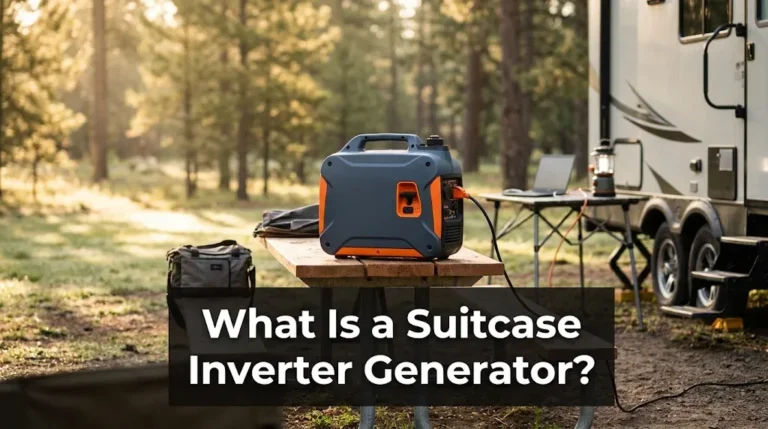
- RV and camping: Choose an inverter. Quiet running, light weight, and clean power matter more than raw surge.
- Job site with power tools: Choose a regular generator. Tools tolerate rougher power, and the unit costs less to replace.
- Long outages, light loads: Choose an inverter. Eco-throttle stretches every gallon through the night.
Size with margin either way. Add your running watts, add the biggest starting watts, then leave at least 20% headroom above the total.
A generator that runs at 50–70% of its rating lasts longer than one pinned at 95% all night. Overloading is the fastest way to turn a reliable unit into an unreliable one.
For current models, see our best portable inverter generator roundup. And if you want a sense of the long game, read how long a portable generator lasts before you compare warranties.
The U.S. Department of Energy also explains home backup-power options, which helps if you are weighing a portable unit against a standby system.
Section Takeaway: Match the type to your must-run list, size with 20% headroom, and run at 50–70% of rating — that combination is what makes backup power reliable.
Frequently Asked Questions
Do inverter generators last longer than regular generators?
Often, yes, but maintenance matters more than type. A cared-for inverter often reaches 1,000–3,000 running hours, while a cared-for regular generator often reaches 1,000–2,000 hours.
Are inverter generators less likely to break down?
They break down less often from power-quality problems, because clean output protects connected electronics and the engine runs slower at light load. They share the same fuel, oil, and spark-plug failures as regular generators, so neglect breaks both types equally.
Can an inverter generator run a refrigerator reliably?
Yes, if it is sized right. A typical fridge needs about 150 watts running and about 1,200 watts to start, so a 2,000-watt inverter usually covers it — just add the starting watts first and check the spec sheet.
Is a regular generator bad for electronics?
It can be, because typical THD of 10–25% is rough for sensitive control boards, laptops, and medical devices. Simple loads such as lights, heaters, and power tools handle it fine — save the inverter for anything with a delicate circuit board.
What size inverter generator is most reliable for home backup?
There is no single best size, because it depends on your must-run list. A 3,000–3,500-watt inverter covers a fridge, furnace blower, lights, and charging for many homes, so add up your loads first and leave 20% headroom.
Do inverter generators need more maintenance?
No, the routine is the same: oil changes, air filter cleaning, spark plug replacement, and fresh fuel. The difference is repair access, because inverter electronics usually need a dealer, while regular generator parts suit most small-engine shops.
If you need clean, steady backup for the loads that matter most, start with your must-run list, then choose the smallest inverter that covers it with margin. That list, not the headline watts, is the right buying guide.
The Bottom Line
Inverter generators are more reliable where it counts for most homes: clean power, steady voltage, and long light-load running. Regular generators are more reliable where it counts for heavy work: big motor starts, simple parts, and cheap repairs.
Neither type saves a neglected machine. Fresh fuel, clean oil, and a monthly test run decide whether your generator starts on the worst night of the year.
Pick the type that fits your loads, size it with headroom, and test it before the storm. Do that, and either type will be there when the lights go out.

Hi, I’m Michael Turner. I own a generator workshop in the United States and founded HomeGeneratorBlog to share practical, hands-on guidance about generator installation, maintenance, troubleshooting, safety, and backup power solutions. My goal is to help homeowners make smarter, more confident decisions through clear and reliable information