Are Craftsman Inverter Generators Worth Buying? 2026 Review
Quick Answer
Yes, for most casual users, if you buy the right size and keep your expectations realistic. A Craftsman inverter generator is a solid budget-to-midrange choice for camping, tailgating, and light home backup, with clean power for phones, laptops, and other sensitive electronics. It usually costs less than a premium brand, but you trade some refinement, dealer support, and long-term parts depth. For heavy daily use or whole-home backup, a larger or premium machine is smarter, as explained in this guide to whether inverter generators are worth buying in general.
The short verdict
- Best for: Campers, tailgaters, and homeowners covering essentials during short outages.
- Power: Small models suit lights and electronics, while larger models can run a fridge plus a few essentials.
- Noise: Quieter than an open-frame generator, but louder under load than premium suitcase models.
- Value: Strong on price, especially on sale, with fewer premium touches.
- Watch out: Size it by starting watts, not the headline number, and check the spec sheet first.
Skip Craftsman if you need
- Whole-home backup, daily job-site power, or thousands of hours of run time.
- The quietest possible campsite neighbor or a deep local dealer network.
I’ve tested many inverter generators in this price class, and Craftsman keeps coming up for one reason. It promises clean, quiet portable power without the premium price tag.
This guide goes deeper than a star rating, with an honest read on quality, power, noise, and cost.
In This Guide
- What Is a Craftsman Inverter Generator?
- Are Craftsman Inverter Generators Good Quality?
- How Much Power Do Craftsman Inverter Generators Provide?
- Craftsman vs Honda, Champion, and Westinghouse: How Do They Compare?
- What Are the Pros and Cons of Craftsman Inverter Generators?
- How Much Do Craftsman Inverter Generators Cost — and Are They Good Value?
- How Do You Choose the Right Craftsman Inverter Generator?
- How Do You Keep a Craftsman Inverter Generator Reliable?
- Frequently Asked Questions About Craftsman Inverter Generators
- Final Verdict: Should You Buy a Craftsman Inverter Generator?
What Is a Craftsman Inverter Generator?
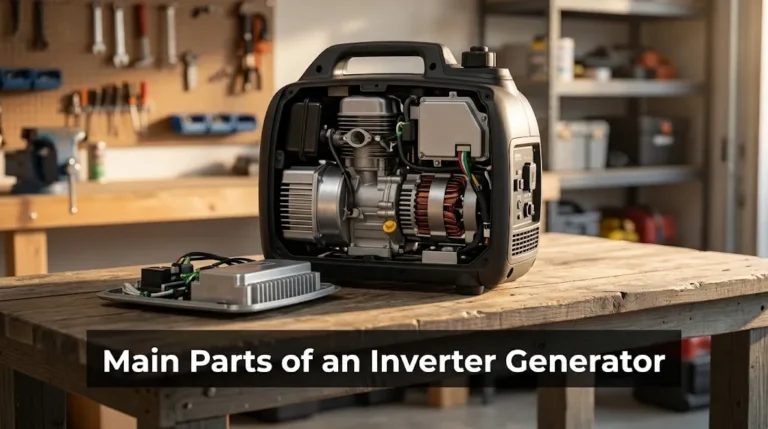
A Craftsman inverter generator is a portable generator sold under the Craftsman tool brand. It uses inverter technology to produce stable, clean power for sensitive electronics.
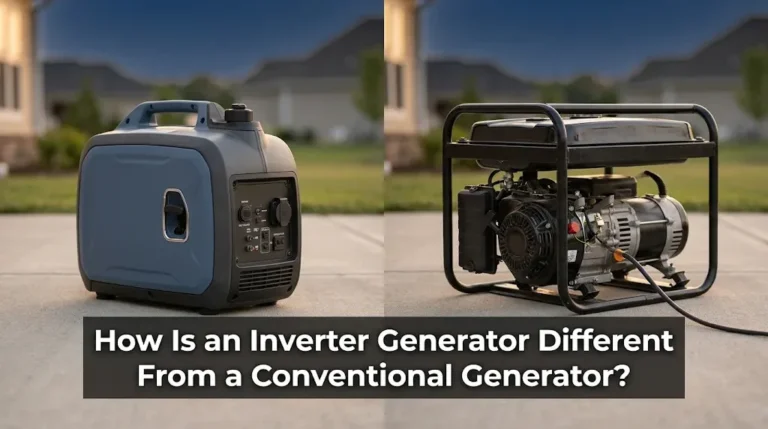
Definition: An inverter generator is a portable generator that converts raw engine power to DC, then back to clean AC power. That keeps voltage and frequency steady, protecting laptops, phones, CPAP machines, and appliance controls.
What does the Craftsman name mean today?
Craftsman started as a Sears tool brand known for hand tools. Today it sits under Stanley Black & Decker and sells widely through major home-improvement retailers, including Lowe’s.
What types are sold?
The lineup shifts over time, so check the spec sheet for the exact model. As of 2026, buyers typically see three broad classes.
- Compact suitcase models: Light units for camping, tailgating, and charging essentials.
- Mid-size models: More power for RV use, a fridge, and a few household essentials.
- Larger models: Heavier, wheeled units that may offer a 30-amp RV outlet.
Most Craftsman inverter models run on gasoline. Confirm fuel type before you buy, since larger models in the broader range can differ.
Are Craftsman Inverter Generators Good Quality?
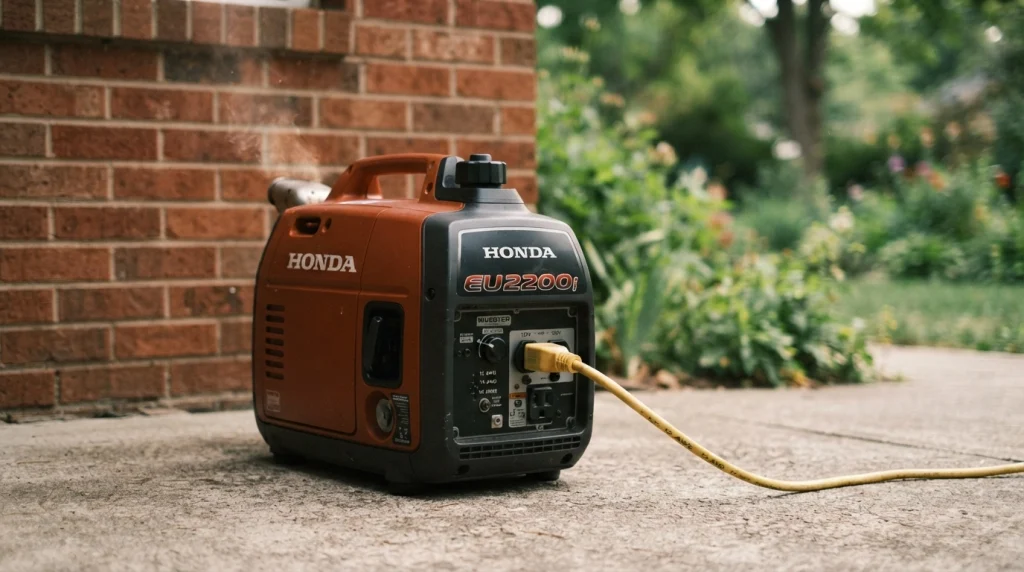
Craftsman inverter generators offer decent quality for the price, with the usual budget-brand trade-offs. They work well for occasional use, and they reward owners who maintain them and store fuel correctly.
I have run this class of machine through a multi-day outage powering a fridge and a CPAP machine. The lesson was simple: a mid-priced inverter can carry essentials fine, but it notices every extra load you add.
How reliable are Craftsman inverter generators?
Reliability is good for intermittent use, such as weekend camping and short outages. Problems show up most often after long storage, stale fuel, or repeated overloading.
Premium brands tend to earn stronger long-term reliability reports in independent testing. See the generator coverage at Consumer Reports for background, not as a guarantee for any single model.
What do owners complain about most?
- Hard starting: Stale gasoline and a gummed carburetor cause most no-start complaints after storage.
- Noise under load: A heavily loaded unit sounds louder than its idle rating suggests.
- Overload trips: A fridge compressor or power tool can trip protection if the size math was too tight.
- Service waits: Warranty help may route through the retailer or a service center, not a local dealer.
How does build quality compare at this price?
Before you buy, confirm warranty length, service process, and parts availability for your exact model on the Craftsman website. Terms vary by model and retailer, so the listing page is not enough.
How Much Power Do Craftsman Inverter Generators Provide?
Power depends entirely on the model, so start with your loads and work backward. Small suitcase units cover light loads, while larger models can run a fridge plus lights, chargers, and a small fan.
What do running watts and starting watts mean?
Running watts measure the steady power a generator can supply. Starting watts, also called surge watts, cover the brief extra draw when a motor starts.
A fridge may run on a few hundred watts but need far more for a second at startup. That spike is what trips an undersized generator, even when the running load looks small.
What size do you need for common uses?
Use this table as a planning guide, then confirm each appliance on its nameplate. Check the spec sheet, since the headline number is usually starting watts.
| Use case | Typical size class | What it can usually cover |
|---|---|---|
| Camping and tailgating | Small suitcase | Phones, lights, charging |
| RV essentials, no air conditioning | Small to mid-size | Lights, pump, chargers |
| Home essentials in an outage | Mid-size to larger | Fridge, lights, CPAP |
| RV or window air conditioner | Larger, or two paralleled units | One AC plus light loads |
Can a Craftsman inverter generator run an RV air conditioner?
Sometimes, but only with the right size and a careful startup plan. A small suitcase unit will usually overload when a rooftop air conditioner compressor kicks in.
Larger models and parallel-capable pairs handle this job better. Parallel capability lets two compatible units link together for more combined power, using a parallel kit.
Safety note: Run any generator outdoors, well away from windows, doors, and vents, and never in a garage. Use heavy-duty outdoor-rated cords, and keep connections dry.
Section takeaway: Match the generator to starting watts, not just running watts, and size up or parallel two units for air conditioning.
Craftsman vs Honda, Champion, and Westinghouse: How Do They Compare?
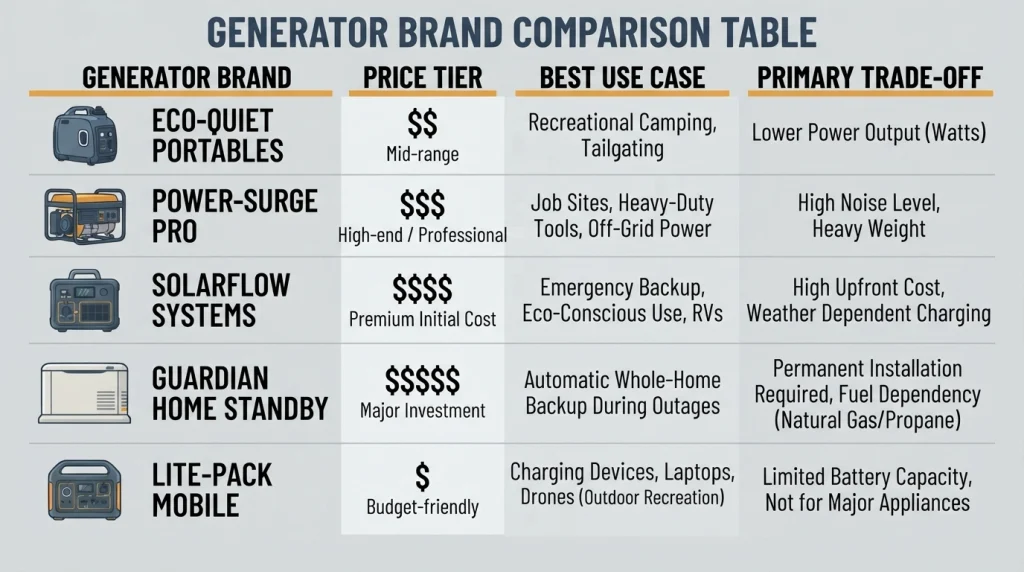
Craftsman competes on price and easy retail availability. Honda leads on refinement and resale value, while Champion and Westinghouse sit in the crowded middle with strong feature lists.
| Brand | Price tier | Best for | Main trade-off |
|---|---|---|---|
| Craftsman | Budget to midrange | Occasional camping, light backup | Less dealer support, less refinement |
| Honda | Premium | Frequent use, quiet operation | Highest purchase price |
| Champion | Midrange | Feature-rich RV and home backup | Quality varies by model line |
| Westinghouse | Midrange | Value buyers wanting more power options | Support varies by model |
Is Craftsman as good as Honda?
No, not in overall refinement, noise control, or long-term support. Honda earns its premium with smoother operation and stronger service support.
That gap matters most for heavy users. If you are weighing the premium, read our breakdown of whether Honda inverter generators are worth the money.
How does Craftsman compare with Champion and Westinghouse?
This is the closest fight, and the winner changes by model. Champion and Westinghouse often offer more outlets, dual-fuel options, and remote-start choices in the same price band.
Craftsman wins on simple retail access and familiar branding. For a wider view, see our guide to the best inverter generator brands.
What Are the Pros and Cons of Craftsman Inverter Generators?
Craftsman does the basics well. Its limits show up in noise, features, and service.
What does Craftsman get right?
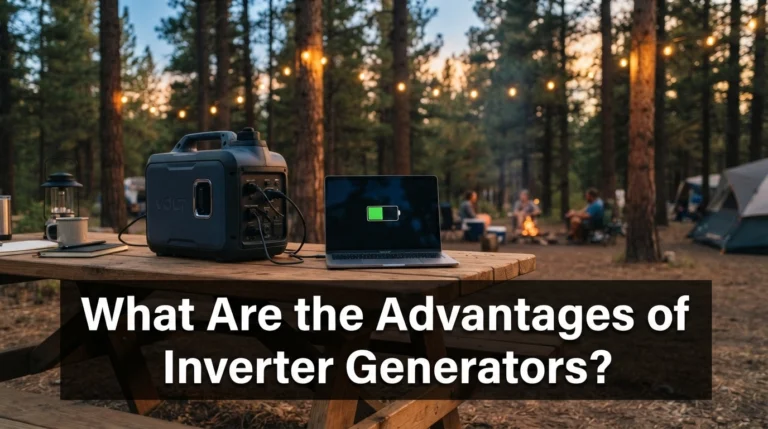
- Clean power: Inverter output suits electronics needing stable voltage.
- Fair price: Usable inverter performance without a premium-brand price.
- Easy to buy: Wide retail availability makes comparing and returning simple.
- Portable designs: Suitcase and wheeled models are easy to move and store.
- Useful features: Many models include eco-throttle, low-oil shutdown, and parallel capability.
Where does Craftsman fall short?
- Noise under load: More engine noise at high load than a premium suitcase inverter.
- Shorter runtime: Small tanks mean more refueling during long outages, even in eco mode.
- Fewer fuel options: Most models are gasoline-only, so propane flexibility is limited.
- Service access: Support often runs through retail or service centers, not a local dealer.
- Resale value: Premium brands tend to hold value better on the used market.
How Much Do Craftsman Inverter Generators Cost — and Are They Good Value?
Craftsman inverter generators usually sit in the budget-to-midrange band for their wattage class. You will often pay hundreds less than a comparable Honda, and roughly the same as other value brands.
Check current listings for your exact model, since prices move with sales and stock.
What does the total cost include?
- Fuel and oil: Fresh gasoline, engine oil, and fuel stabilizer for storage.
- Cords and inlet: Heavy-duty cords, plus an inlet or interlock kit for a safe home hookup.
- Parallel kit: Needed to link two compatible units for more power.
- Cover and storage: A cover and a dry spot protect the unit between uses.
- Maintenance: Filters, spark plugs, and occasional service, per your manual.
When is Craftsman the best value?
Craftsman shines when use is occasional and loads are modest. A few camping trips and a short outage each year fit that pattern well.
When should you spend more instead?
Spend more if you run a generator weekly, depend on it for medical equipment, or need whole-home coverage. A premium or standby solution fits those stakes better.
Also spend more if quiet operation is a hard requirement. For help judging the price jump, see our guide on whether inverter generators are worth the extra cost.
How Do You Choose the Right Craftsman Inverter Generator?
Start with your loads, then pick the smallest machine that covers them with headroom. Buying too small causes overload trips, and buying too large wastes fuel and money.
- List must-run loads: Fridge, lights, chargers, CPAP machine, and any fan or pump.
- Add running watts: Use the nameplate on each appliance, not a guess.
- Add the largest starting watts: Add the biggest motor startup spike on top.
- Leave headroom: Pick a running-watts rating above your total.
- Check outlets and runtime: Confirm outlets, tank size, and runtime at partial load.
Which outlets and features matter most?
- 120-volt outlets: Standard GFCI outlets for cords, lights, and chargers.
- 30-amp RV outlet: For RV hookups, on larger models.
- USB ports: Handy for phones, but no substitute for real wattage.
- Eco-throttle: Economy mode saves fuel and cuts noise at light loads.
- CO shutoff: A carbon monoxide sensor that shuts the unit down is valuable.
For a full buying checklist, see our guide on what to look for in an inverter generator. The Department of Energy also offers backup-power guidance through Energy.gov.
Safety note: Never plug a generator into a wall outlet to backfeed your home, and never run one indoors or in a garage. For a house hookup, use a transfer switch or interlock kit installed by a licensed electrician, and check your owner’s manual before use.
Section takeaway: Size by your real loads, confirm outlets and safety features, and get a proper hookup for house circuits.
How Do You Keep a Craftsman Inverter Generator Reliable?
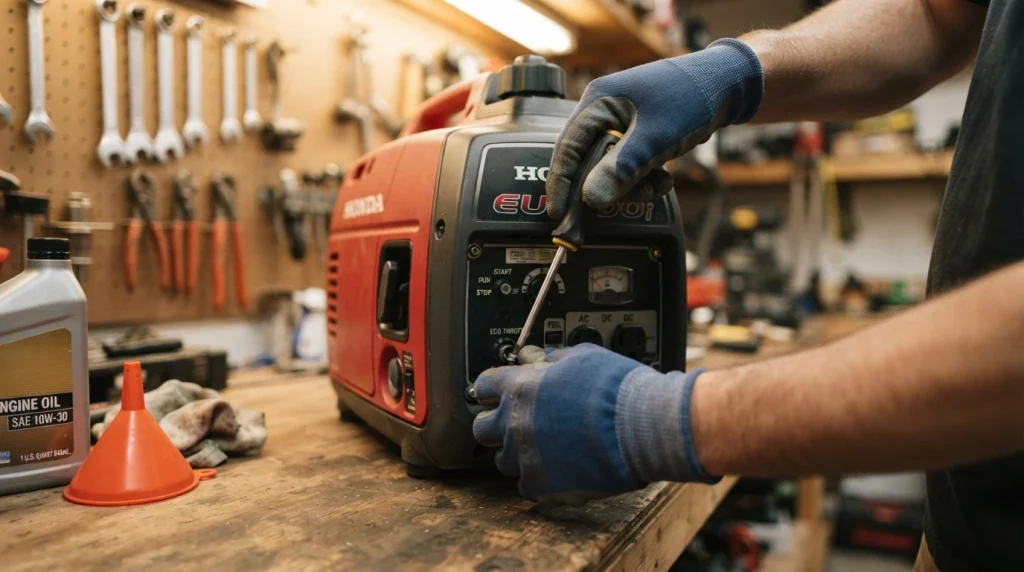
Most Craftsman reliability problems are maintenance problems, not design flaws. Fresh fuel, clean oil, and regular exercise runs prevent most no-start calls.
What maintenance is needed?
- Change the oil: Follow the break-in and regular intervals in your manual.
- Check the air filter: Clean or replace it when dirty, especially after dusty use.
- Inspect the spark plug: Replace it on schedule, or sooner if starting gets rough.
- Run it monthly: A short run under light load keeps the carburetor healthy.
- Check for leaks: Look for fuel or oil drips before each use.
How do you store it without carburetor trouble?
Stale fuel is the top enemy of a stored generator. Gasoline can go bad in weeks, and residue can clog a carburetor.
Use fresh fuel with stabilizer, or drain the fuel system for long storage, per your manual. Store the unit dry, covered, and away from ignition sources.
How do you run it safely?
Place the generator outdoors, at least 20 feet from your home, with exhaust pointed away from the house. Keep it away from windows, doors, and vents.
Carbon monoxide is colorless and odorless, and it can kill quickly in enclosed spaces. Install working CO alarms, and follow guidance from the Consumer Product Safety Commission and the Centers for Disease Control and Prevention.
See also our guide on whether inverter generators are more reliable than regular generators.
Safety note: Let the engine cool before refueling, and never refuel a hot generator. Store fuel in approved containers outdoors, away from living spaces.
Frequently Asked Questions About Craftsman Inverter Generators
Are Craftsman inverter generators quiet?
They are quieter than open-frame conventional generators, especially in eco mode at light loads. Under heavy load they get noticeably louder, so check the spec sheet for the rated noise level and measurement distance.
Who makes Craftsman inverter generators?
Craftsman is a Stanley Black & Decker brand, and its generators are built by outside manufacturing partners to Craftsman specifications. Suppliers vary by model, so your manual and warranty terms matter more.
Are Craftsman inverter generators good for RVs?
Yes, for light RV loads such as lights, charging, and a water pump, a small or mid-size model works well. For a rooftop air conditioner, you need a larger model or two paralleled units, sized to the starting watts.
How long do Craftsman inverter generators last?
Lifespan depends on hours run, load, and maintenance more than calendar age. With fresh fuel, regular oil changes, and proper storage, an occasionally used unit can last for years with proper care.
Can a Craftsman inverter generator power a house?
It can power selected essentials, such as a fridge, lights, and chargers, through extension cords or a proper inlet setup. It will not run a whole home with central air, an electric range, and a water heater at once.
What warranty do Craftsman inverter generators include?
Warranty length and coverage vary by model, retailer, and purchase date, so there is no single answer. Check the warranty statement for your exact model before you buy, and keep your receipt in a safe place.
Final Verdict: Should You Buy a Craftsman Inverter Generator?
Buy a Craftsman inverter generator if you want affordable, clean portable power for camping, tailgating, and light home backup. It earns its place as a value buy, as long as you size it correctly and maintain it well.
Choose a premium or larger machine if you need quiet, frequent, or whole-home power. Before you buy, list your loads and confirm the spec sheet, warranty, and outlets.

Hi, I’m Michael Turner. I own a generator workshop in the United States and founded HomeGeneratorBlog to share practical, hands-on guidance about generator installation, maintenance, troubleshooting, safety, and backup power solutions. My goal is to help homeowners make smarter, more confident decisions through clear and reliable information