Are Benchmark Inverter Generators Reliable? 2026 Verdict
Quick Answer
Benchmark inverter generators can be a solid value choice for occasional RV, camping, and light home backup use, but they are less proven for long-term, critical reliance than the best inverter generator brands with deeper service networks. Owner reports are mixed, the review base is smaller, and support runs mainly through Home Hardware and Midland Power in Canada. Buy one for part-time portable power, not as your only plan for a multi-day outage.
What the evidence points to
- Good fit: Weekend RV trips, campsites, tailgating, and short outages with modest loads.
- Key strength: Useful features for the price, including remote start, RV-ready outlets, and eco-mode on many models.
- Main risk: A thinner track record, with some reports of casing, handle, fuel-system, and after-storage starting problems.
- Warranty help: A 5-year limited warranty is advertised on many listings, but terms, registration, and service routes vary by model.
- Power quality: Inverter models are built to give clean power for electronics, yet you should still check the spec sheet for THD and outlets.
Before you buy
- Match running watts to your real loads, test the unit under load early, and register the warranty right away.
- Confirm who handles parts and service near you before an outage forces the question.
I’ve spent years testing inverter generators and portable power setups in real outages, at campsites, and on job sites. I’ve also learned that a generator earns trust on the third cold morning, not on the showroom floor.
This guide goes deeper than a spec sheet. It weighs what Benchmark is, what owners report, how the brand compares, and how to keep any small inverter generator ready when you need it.
In This Guide
- What Is a Benchmark Inverter Generator?
- Are Benchmark Inverter Generators Reliable for Everyday Use?
- How Do Benchmark Models Compare With Other Inverter Generator Brands?
- What Do Owners Report About Starting, Noise, and Power Quality?
- How Long Should a Benchmark Inverter Generator Last?
- What Problems Should You Watch For Before You Buy?
- How Do You Keep a Benchmark Inverter Generator Reliable?
- Should You Buy a Benchmark Inverter Generator in 2026?
- Frequently Asked Questions
- Final Takeaway
What Is a Benchmark Inverter Generator?
Benchmark is a house brand sold through Home Hardware in Canada. Support and warranty help for many Benchmark generators is handled with Midland Power, so your retailer and that support channel matter as much as the engine.
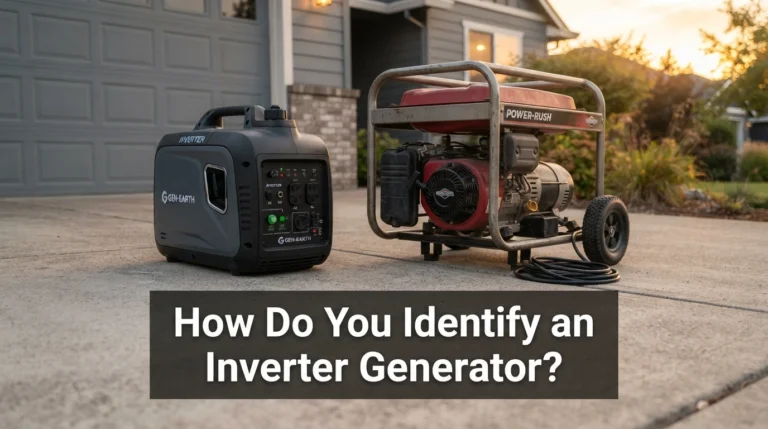
An inverter generator is a portable generator that makes AC power, converts it to DC, then rebuilds it as clean AC power. That process helps it run sensitive electronics and lets the engine slow down under light loads.
What does “clean power” mean in plain terms?
Clean power means a smooth sine wave with low total harmonic distortion, often called THD. Low THD matters for laptops, phones, TVs, CPAP machines, and modern furnace controls.
Benchmark listings commonly promote pure sine wave output for electronics. Check the exact model spec sheet for THD, outlets, and parallel capability before you assume every unit matches.
Which Benchmark inverter models do buyers usually see?
The most discussed class is the 4,500-watt inverter range, including gasoline-only and dual fuel versions. Smaller 4,000-watt class inverter listings also appear, and model numbers and features change by season and store stock.
Common features on the larger models include remote start, an RV-ready 30-amp outlet, wheels, and an eco-throttle mode. Eco-mode, also called economy mode, lowers engine speed when demand drops to save fuel and cut noise.
- Gasoline-only models: Simple to fuel, but stale gas is the top enemy during storage.
- Dual fuel models: Can run on gasoline or propane, which helps when gas stations close or fuel goes stale.
- RV-focused models: Built around a 30-amp RV outlet, remote start, and quieter enclosed design.
Don’t shop by peak watts alone. Running watts tell you what the unit can carry hour after hour, while starting watts cover the brief surge when a motor starts.
Section Takeaway: Benchmark is a Canadian retail brand with Midland Power support, not a long-standing global engine maker. That shapes parts access, service speed, and how much long-term proof you can expect.
Are Benchmark Inverter Generators Reliable for Everyday Use?
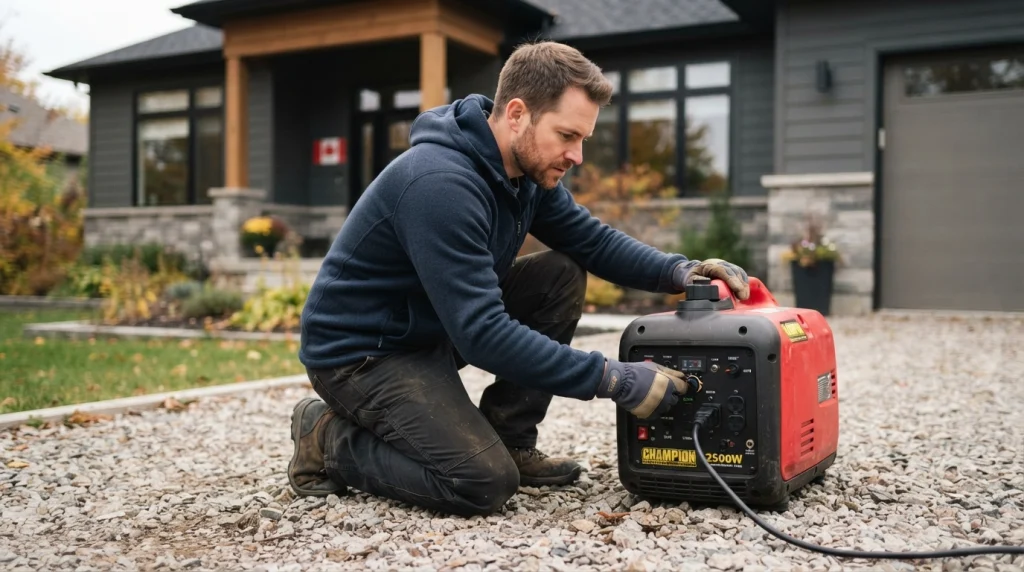
For everyday, part-time use, a Benchmark inverter generator can be reliable enough if you size it right and maintain it. For daily job-site work or critical home backup, the evidence is thinner and the margin for error is smaller.
Reliability here means three things at once. It must start after storage, hold voltage under load, and get fixed fast when a part fails.
How should you judge reliability with a smaller brand?
Large brands leave a long trail of reviews, dealer notes, and parts listings. Benchmark leaves a shorter trail, so one bad unit or one great unit can skew what you read online.
I weigh four signals more than any single review. They are warranty terms, parts and service access, build quality in hand, and early test runs under real load.
- Starts: Does it start on the first or second pull after a month in the garage?
- Stability: Does it hold steady when a fridge cycles or an RV air conditioner kicks in?
- Support: Can you reach a person, get a part, and get a clear repair path?
- Survival: Do handles, wheels, panels, and fuel parts hold up after transport and vibration?
Inverter designs as a class tend to be quieter and more fuel-efficient than open-frame conventional models. You can read more about whether inverter models are more reliable than regular generators before you treat the inverter label alone as proof.
My own rule is simple. I run a new portable generator for an hour under a known load in the first week, then again after a month of storage.
That early test once caught a surging unit before a storm did. It saved a fridge full of food and a long night of guesswork.
Section Takeaway: Benchmark can handle regular light use, but reliability depends heavily on sizing, fuel care, and local support. Test early, and do not wait for an outage to learn how your unit behaves.
How Do Benchmark Models Compare With Other Inverter Generator Brands?

Benchmark competes on value and retail convenience. Honda, Yamaha, Champion, Westinghouse, and WEN compete with wider dealer networks, larger review bases, and longer histories in portable power.
Price alone does not make a generator cheap to own. A low purchase price plus a long wait for parts can cost more than a pricier unit with local support.
Benchmark vs Honda, Champion, WEN, and Westinghouse
Honda sets the premium standard for quiet operation, dealer support, and resale value. Champion and Westinghouse offer broad lineups at mid-range prices, while WEN often leads on budget value.
Benchmark sits closer to the value end. It offers strong features for the money, but with a narrower retail footprint and less independent long-term testing in public view.
| Brand focus | Typical strengths | Reliability signal | Best for |
|---|---|---|---|
| Benchmark | Value features, remote start, RV outlets | Mixed, smaller review base | Occasional RV and camping use in Canada |
| Honda | Quiet running, dealer network, resale | Strong long-term reputation | Buyers who prize proven dependability |
| Champion | Wide sizes, dual fuel options, support | Broad owner feedback, mid-range track record | Home backup and RV buyers who want choice |
| WEN | Low price, light enclosed inverters | Good value reports, lighter-duty build | Budget camping and light backup use |
| Westinghouse | Mid-size power, remote start, RV-ready models | Broad owner feedback, solid value record | Home backup with larger loads |
Use the table as a starting point, not a final verdict. Compare the exact models, watt ratings, warranty terms, and local service options side by side.
Availability also matters. If you live outside Canada, Benchmark may be hard to buy, hard to service, and hard to source parts for at all.
Section Takeaway: Benchmark wins on features per dollar in its home market, but it does not yet match the proven support depth of the biggest inverter brands. Choose based on service access, not just the box price.
What Do Owners Report About Starting, Noise, and Power Quality?
Owner reports for Benchmark inverter generators are limited and mixed. Some buyers praise the power, remote start, and value, while others report early faults and durability concerns.
One detailed two-unit ownership account of a gasoline 4,500-watt model is often cited in RV circles. It praised RV air conditioner performance and helpful warranty contact, but also described a replacement unit, a cracked base and loose handle, and a later failure to turn over after storage.
That is one owner’s story, not a failure-rate study. Treat it as a warning to inspect build quality and test after storage, not as proof that every unit will fail.
Does a Benchmark inverter generator start easily?
Remote start and electric start help on cold mornings and late-night RV use. A weak battery, old fuel, or low oil level can still stop any small engine from starting.
Keep the battery charged and test the recoil starter too. A remote that works in July may not save you in January if the battery has sat flat for months.
Is it quiet enough for a campsite?
Enclosed inverter generators are usually quieter than open-frame models at light loads. Published noise ratings are often measured at quarter load and at a set distance, so real noise rises as load rises.
Check the spec sheet for the dB rating, load level, and test distance. At a campsite, point the exhaust away from neighbors, use eco-mode when loads allow, and avoid running near quiet hours.
Is the power safe for electronics and RV air conditioners?
Inverter output is designed for electronics, phones, laptops, and RV controls. A 4,500-watt class unit can often run a smaller RV air conditioner plus lights and charging, but starting surge decides the real limit.
Turn the air conditioner on first, let it settle, then add other loads one at a time. Watch for overload shutoff, surging, or dimming, and shed load fast if the unit strains.
Section Takeaway: Owners like the power and convenience when units work well, but reports of physical wear and storage-related starting trouble are a real caution. Your first month of testing matters more than any single review.
How Long Should a Benchmark Inverter Generator Last?
Most portable inverter generators can last many years with light, seasonal use and steady care. Heavy, daily use shortens life for any small air-cooled engine, whatever the badge says.
Think in hours and care, not just calendar years. A camper who runs 50 hours a year will age a unit far slower than a contractor who runs it all day.
What decides lifespan most?
Fuel care, oil changes, air filter care, and load discipline decide most outcomes. Overloading, stale fuel, and long storage without prep cause more early failures than brand choice alone.
Follow the owner’s manual for break-in, oil type, and service intervals. Manuals differ by model, so do not borrow a schedule from another brand.
- Fuel: Use fresh fuel, add stabilizer when the manual allows it, and drain or run dry for long storage as directed.
- Oil: Check oil before each use and change it on the manual schedule, not when it looks dark.
- Load: Stay within running watts, and leave headroom for motor starting surges.
- Exercise: Run the unit under load every month or two so seals, fuel parts, and the battery stay active.
How much power do you need?
Size by running watts first, then check starting watts for motors. The table below gives typical estimates only, so always check appliance nameplates and the generator spec sheet.
| Typical load | Typical running watts | Starting surge note |
|---|---|---|
| Refrigerator | 100 to 200 | Brief surge several times running watts |
| CPAP machine | 30 to 90, without heated humidifier | Low surge, steady draw |
| Sump pump | 800 to 1,200 | High surge, size with care |
| Window air conditioner | 900 to 1,500 | High surge on compressor start |
| Laptops and phones | 50 to 200 combined | Low surge |
Work through running watts vs starting watts for your own list before you buy. A unit that looks big enough on peak watts can still trip when two motors start together.
For home backup planning, the U.S. Department of Energy offers broad guidance on home energy and backup planning. Use it to frame your plan, then size with your appliance labels.
Section Takeaway: Lifespan is earned through fuel care, oil care, and sane loads. A well-kept Benchmark can serve for years of seasonal use, while a neglected one can fail in its first stored winter.
What Problems Should You Watch For Before You Buy?
No brand is free of faults. With Benchmark, the smart move is to check the weak spots owners mention and inspect the unit before the return window closes.
Look for shipping damage, loose panels, and fuel leaks on day one. Run it, load it, and listen for surging, knocking, or rough idle under a steady load.
Fuel system and carburetor trouble
Stale gasoline can clog a carburetor, flood an engine, or make starting hard after storage. Ethanol-blended fuel goes stale faster, and small carburetor jets clog with little warning.
One owner account linked a faulty fuel shut-off valve to a flooded carburetor and an early replacement. That points to a useful check, not a proven pattern across all units.
Use fresh fuel, follow the manual on ethanol limits, and store fuel in a sealed, approved container. The Environmental Protection Agency provides broad fuel and small-engine guidance that helps frame safe fuel handling.
Safety note: Store fuel outdoors in approved containers, away from heat and living spaces, and never refuel a hot or running generator.
Physical wear, vibration, and transport damage
Handles, bases, wheels, and side panels take a beating in trucks and RV bays. Vibration can loosen fasteners over time, so check bolts and mounts after the first few trips.
Cracked plastic or a loose handle is not just cosmetic. It can expose wiring, fuel parts, or hot surfaces, and it can make safe lifting harder.
Starting trouble after storage
After-storage no-starts are the most common portable generator complaint across brands. Dead batteries, stale fuel, fouled plugs, and low oil shutdowns cause most of them.
If your unit will not start, work through fuel, oil, choke, spark plug, and battery checks in order. Read what to check when a generator won’t start before you assume the engine has failed.
Warranty, parts, and service limits
A 5-year limited warranty sounds strong, but limits, exclusions, and registration rules decide what it covers. Some manuals require online registration for the warranty to stay valid, so register on day one and keep your receipt.
Ask your store who handles a claim, how long parts take, and whether a local small-engine shop can help. A warranty that ships parts for DIY repair helps handy owners, but it may not help everyone.
Safety note: Never open a fuel or electrical repair beyond what the manual allows, and stop use if you smell fuel, see leaks, or find damaged wiring.
Section Takeaway: Inspect early, test under load, and confirm the service path before you rely on the unit. Most Benchmark risks are manageable, but only if you catch them while help is easy to reach.
How Do You Keep a Benchmark Inverter Generator Reliable?
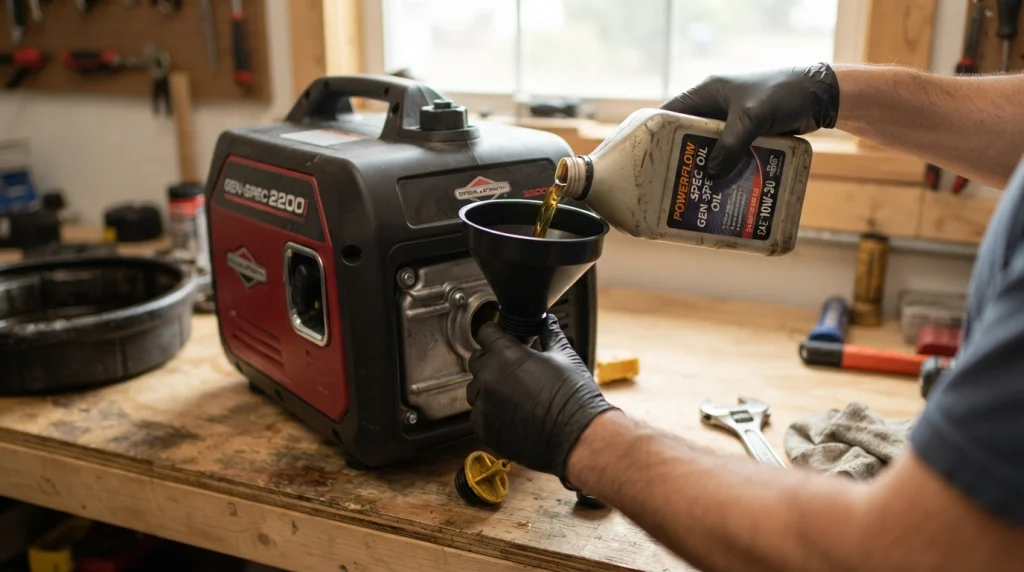
Care beats brand loyalty every time. A simple routine keeps small inverter generators starting, running clean, and lasting longer.
I keep a one-page log with each generator I test. It records run hours, oil changes, fuel dates, and any odd noise or surge I notice.
What is a simple care routine?
Start with the manual schedule, then add habits that catch small problems early. Short, regular runs beat one long run after a year of silence.
- Before each use: Check oil, fuel, air filter, and cords, and look for leaks or loose parts.
- Monthly: Run the unit under a real load for 20 to 30 minutes and test both electric and recoil start.
- Seasonally: Change oil, clean or replace the air filter, check the spark plug, and inspect the battery per the manual.
- Before storage: Add stabilizer or drain fuel as the manual directs, protect the unit from dust and moisture, and store it dry.
Follow a clear portable generator maintenance schedule and adjust it to your manual. Hours matter more than months when use is heavy.
How do you run it safely?
Run generators outdoors only, well away from windows, doors, and vents. Carbon monoxide is colorless and odorless, and it can build up fast in garages, tents, and covered porches.
Use heavy-duty, outdoor-rated extension cords sized for the load. Keep cords dry, uncoiled under heavy load, and clear of walkways.
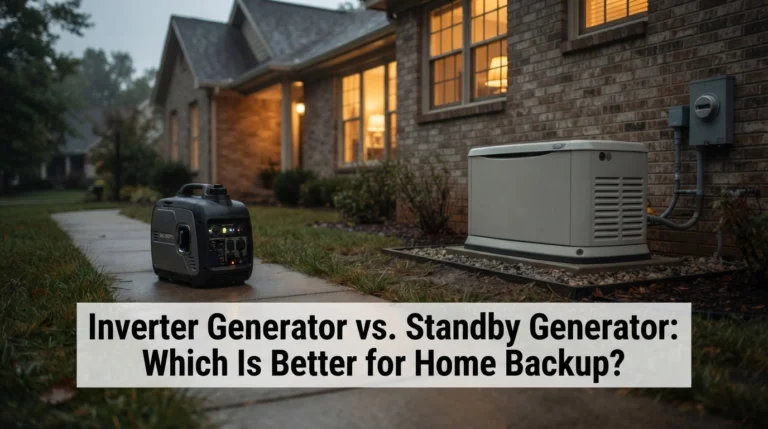
For home circuits, use a transfer switch or interlock kit installed by a licensed electrician. A transfer switch safely isolates your home wiring from the grid so power cannot back-feed utility lines.
The Consumer Product Safety Commission and the Centers for Disease Control and Prevention both publish generator and carbon monoxide safety guidance. Read it before your first outage, not during one.
Safety note: Run generators outdoors and at least 20 feet from the house when possible, with exhaust pointed away, and use battery-powered CO alarms indoors.
Section Takeaway: Fresh fuel, clean oil, regular load runs, and safe placement do more for reliability than any add-on. Make care a habit, and the generator will be ready when the lights go out.
Should You Buy a Benchmark Inverter Generator in 2026?
Buy a Benchmark inverter generator in 2026 if you are in Canada, you want value features for RV and camping use, and you can confirm local support. Skip it as your sole critical backup if you need proven multi-day reliability and fast nationwide service.
As of 2026, the brand still lacks the deep, independent track record of the top inverter makers. That gap may close with time, but buyers today must judge with the evidence available now.
Who is it a good fit for?
- RV owners: You need RV-ready power, remote start, and quiet enclosed running for weekend trips.
- Campers: You want clean power for lights, charging, and small appliances without open-frame noise.
- Value buyers: You accept a smaller service network in exchange for features and price.
Who should look elsewhere?
- Medical needs: You rely on powered medical devices and need the most proven unit plus a backup plan.
- Daily work use: You run a generator for hours each day and need fast parts and dealer support.
- Outside Canada: You cannot easily buy parts or get warranty help where you live.
What should you check before you pay?
Use this short checklist at the store or before delivery day ends. It takes minutes and can prevent months of regret.
- Spec sheet: Confirm running watts, starting watts, THD, runtime at stated load, tank size, and outlets.
- Warranty: Confirm length, exclusions, registration steps, and who handles claims.
- Service: Ask where parts come from and how long a repair would take.
- Test run: Run it under load, test remote and recoil start, and check for leaks and surging.
- Fit: Lift it, roll it, and check that it fits your RV bay, truck bed, or storage spot.
Compare your shortlist with what to look for in an inverter generator before you decide. The right size and support plan matter more than a single feature.
Section Takeaway: Benchmark is a reasonable value buy for part-time Canadian buyers who test early and maintain well. For critical backup, pay for proven support depth or keep a second power plan ready.
Frequently Asked Questions
Are Benchmark inverter generators reliable?
Benchmark inverter generators can be reliable for occasional RV, camping, and light backup use when sized and maintained well. The long-term record is thinner than top brands, and owner reports are mixed, so test early and confirm local service support.
Who makes Benchmark generators?
Benchmark is a Home Hardware house brand in Canada, with support and warranty help handled with Midland Power for many models. Check your exact model manual and receipt for the support route, warranty terms, and registration steps that apply to you.
Can a Benchmark inverter generator run an RV air conditioner?
A 4,500-watt class Benchmark inverter can often run a smaller RV air conditioner plus light loads, but starting surge decides the outcome. Start the air conditioner first, add loads slowly, and check the spec sheet for running watts, outlets, and parallel capability.
Are Benchmark inverter generators quiet?
Enclosed Benchmark inverter models are generally quieter than open-frame conventional generators at light loads, especially in eco-mode. Real noise rises with load, so check the dB rating, test distance, and load level on the spec sheet before you judge campsite manners.
What warranty do Benchmark inverter generators have?
Many Benchmark listings advertise a 5-year limited warranty, but coverage, exclusions, and registration rules vary by model. Register online if the manual requires it, keep your receipt, and confirm who handles parts and claims before you buy.
Are Benchmark generators good for home backup?
They can cover lights, a fridge, charging, and small loads during short outages if sized right. For multi-day outages, sump pumps, furnaces, or medical devices, choose a proven unit, use a licensed electrician for home connections, and keep a backup plan.
Final Takeaway
Benchmark inverter generators offer real value for part-time portable power, with useful RV features and a strong advertised warranty. They do not yet offer the deep proof and service depth of the most trusted inverter brands.
If you buy one, size it with care, test it under load in week one, and keep fuel and oil care on schedule. That discipline turns a value buy into a generator you can count on when it matters.

Hi, I’m Michael Turner. I own a generator workshop in the United States and founded HomeGeneratorBlog to share practical, hands-on guidance about generator installation, maintenance, troubleshooting, safety, and backup power solutions. My goal is to help homeowners make smarter, more confident decisions through clear and reliable information