Portable Generator Maintenance Schedule: Complete 2026 Checklist
Quick Answer
A practical portable generator maintenance schedule starts with an inspection before every use, followed by a break-in oil change, periodic oil and filter service, spark plug checks, fuel care, and seasonal storage work. Exact intervals vary by model, so your owner’s manual always overrides a general schedule; understanding how a portable generator engine works also makes these service tasks much easier to understand.
Quick Maintenance Schedule
- Before every use: Check engine oil, fuel, leaks, air openings, cords, and loose hardware.
- First 5–30 hours: Complete the manufacturer’s required break-in oil change.
- Every 25–50 hours: Inspect the air filter and clean it sooner in dusty conditions.
- Every 50–100 hours: Plan for routine oil service unless your manual specifies another interval.
- About every 100 hours: Inspect the spark plug, spark arrestor, fuel system, and other wear items.
- Before storage: Deal with old gasoline, clean the machine, and protect the starting battery if fitted.
One Rule Matters Most
- Service by operating hours or calendar time, whichever comes first in your owner’s manual.
A generator rarely gets to choose an easy day to work. It usually gets dragged out during storms, long outages, extreme heat, or freezing weather.
That is why I prefer a simple maintenance schedule instead of waiting for symptoms. This guide shows what to check, when to service it, and which jobs shouldn’t be delayed.
What Is a Portable Generator Maintenance Schedule?
A portable generator maintenance schedule is a planned list of inspections and service tasks triggered by operating hours, time, or storage conditions. It keeps the engine, fuel system, ignition system, cooling system, and electrical components ready for the next outage.
As of 2026, manufacturers still use different service intervals between models. Champion’s current maintenance guidance, for example, emphasizes inspections before use, a break-in oil change, and larger service around the 100-hour point.
You can compare your model against the manufacturer’s guidance, such as Champion’s portable generator maintenance schedule. Your own operator’s manual remains the final authority.
Portable Generator Maintenance Schedule at a Glance
Here’s the planning table I would keep beside the generator. Think of these intervals as reminders, not replacements for your model-specific schedule.
| Maintenance Task | Normal Planning Interval | Service Earlier When |
|---|---|---|
| Check engine oil | Before every use; recheck during extended operation | Running long hours, high temperatures, or heavy loads |
| Break-in oil change | First 5–30 operating hours, depending on model | Follow the manual exactly |
| Routine oil change | Commonly within a 50–100-hour service window | Hot, dusty, or sustained heavy-load operation |
| Inspect air filter | Roughly every 25–50 hours | Dust, sawdust, grass, or construction debris is present |
| Inspect spark plug | Around 100 hours or annually on many models | Starting becomes difficult or the engine misfires |
| Inspect spark arrestor | Periodically and before heavy seasonal use | Performance drops or carbon buildup is visible |
| Fuel system/storage service | Before extended storage | Fuel is aging or the generator will sit unused |
| Electric-start battery check | Monthly during storage | Cranking speed slows or terminal corrosion appears |
The biggest mistake is treating every generator like it uses the same engine. A small inverter and a 12,000-watt open-frame generator can have very different oil capacities and service requirements.
What Should You Check Before Every Generator Use?
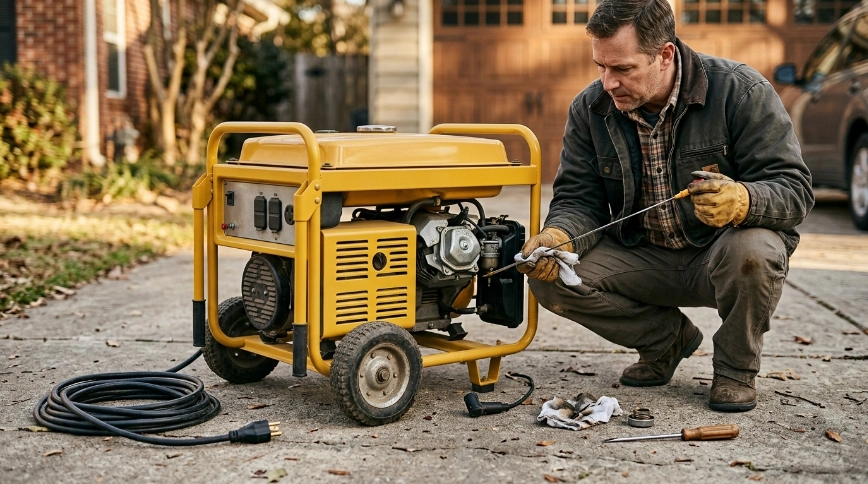
Before every start, check oil level, fuel condition, leaks, cooling openings, wiring, and overall condition. This five-minute inspection catches many problems before the engine is under load.
- Oil level: Place the generator on level ground and check it using the method in the manual.
- Fuel: Look for stale fuel, contamination, leaks, cracked hoses, and loose connections.
- Air intake: Remove leaves, dust, nests, plastic, and anything blocking cooling airflow.
- Electrical outlets: Look for cracked receptacles, burns, corrosion, or damaged covers.
- Extension cords: Check insulation, plugs, grounding pins, and outdoor ratings.
- Fasteners: Look for loose wheels, handles, frame bolts, and vibration-related hardware problems.
Before touching engine components, shut the generator down and let hot parts cool. Disconnecting the spark plug boot during maintenance also reduces the chance of an accidental start.
When Should You Change the Oil in a Portable Generator?
Change the break-in oil exactly when the manufacturer specifies, then follow the normal hour-based interval. New portable generators may call for their first oil change anywhere from roughly 5 to 30 operating hours.
After break-in, many portable-generator schedules place routine oil changes somewhere around 50–100 operating hours. Severe conditions can shorten that interval.
Why the first oil change matters
A new small engine experiences normal bedding-in as internal surfaces begin working together. Changing the break-in oil removes contaminants suspended in that first fill.
I like to record the hour-meter reading directly in a maintenance notebook as soon as the oil is changed. That prevents the familiar problem of wondering six months later whether the service happened at 48 hours or 88.
How to handle used generator oil
Collect used oil in a clean, leak-resistant container instead of pouring it onto soil or into household drains. The EPA recommends recycling used motor oil through an appropriate collection facility.
You can review the EPA’s used-oil recycling guidance before disposing of an oil change.
How Often Should You Check the Air Filter and Spark Plug?
Inspect the air filter more often than you replace it, especially when operating around dust or grass. Inspect the spark plug periodically and replace it at the interval specified for your engine.
Air filter maintenance
Your engine needs a steady supply of clean air. A clogged filter restricts airflow and can contribute to poor running, increased fuel use, and spark plug fouling.
- Foam elements: Some can be washed, dried, and re-oiled according to manufacturer instructions.
- Paper elements: These normally get replaced instead of washed.
- Damaged filters: Replace torn, hardened, oil-soaked, or poorly sealing elements.
Briggs & Stratton also advises owners to inspect the carburetor, air filter, fuel filter, and spark plug according to the generator manual. Its portable generator maintenance guidance is a useful reference.
Spark plug maintenance
Remove the plug only after the engine has cooled. Check the electrode condition, gap, deposits, and threads using the specifications for your engine.
Never assume every portable generator takes the same plug. Our portable generator parts guide explains why matching replacement components to the exact model matters.
What Maintenance Does the Fuel System Need?
Fuel maintenance is mainly about keeping gasoline fresh and preventing deposits inside the carburetor. Long storage periods create more fuel-system trouble than normal weekly operation.
A gasoline generator that will sit unused needs a storage plan. Depending on the manufacturer’s instructions, that may mean treated fresh fuel, draining the carburetor, or removing gasoline completely.
Don’t forget the carburetor bowl
Draining only the main fuel tank can still leave gasoline in the carburetor. That small amount can deteriorate while the generator sits.
Use the procedure specified by your manufacturer before storage. For a deeper explanation, see our portable generator fuel system guide.
Should You Run a Portable Generator Every Month?
A periodic test run can confirm that the generator starts and carries a load, but follow your manufacturer’s exercise instructions. Champion currently recommends a monthly 15–20 minute load test as a readiness check for its portable generators.
Simply hearing the engine idle isn’t the whole test. You want to know whether the machine remains stable once electrical demand is applied.
My simple readiness test
- Move the generator to its safe outdoor operating location.
- Check the engine oil and fuel system.
- Start it using the normal procedure.
- Allow the engine to stabilize.
- Apply a reasonable electrical load within the generator’s rating.
- Watch for surging, smoke, unusual vibration, warning lights, or unstable output.
- Remove the load before shutting the generator down as directed by the manual.
- Record the new hour-meter reading.
This habit also gives you an early warning when a battery, carburetor, recoil starter, or ignition component is beginning to cause trouble.
How Do You Maintain a Generator During a Long Power Outage?
During an extended outage, maintenance switches from calendar-based to hour-based. A generator running continuously can reach a 50-hour service point in just over two days.
That is why I keep spare oil and basic service supplies with the generator rather than in a separate workshop cabinet.
- Track runtime: Write down the hour reading when the outage begins.
- Check oil often: Long runtimes and high temperatures deserve closer attention.
- Watch airflow: Storm debris can quickly block cooling areas.
- Inspect for leaks: Look around fuel lines, the tank, carburetor, and crankcase.
- Respect service intervals: Don’t postpone an oil change because utility power is still out.
- Let it cool before refueling: Never pour gasoline onto or near a hot running engine.
Routine maintenance can strongly influence useful engine life. See our guide to how long portable generators last for the larger ownership picture.
What Should You Do Before Long-Term Generator Storage?
Before storage, deal with fuel first, then service the engine and clean the generator. Gasoline left untreated in a carburetor is one of the problems you want to avoid.
- Check the service hours. Complete any oil or filter work already due.
- Handle gasoline correctly. Follow the manual’s draining or fuel-stabilizing procedure.
- Run treated fuel through the system. Do this only when your chosen storage procedure calls for it.
- Clean cooling passages. Remove dust, grass, leaves, and insects.
- Inspect the spark arrestor. Clean carbon deposits according to the manual.
- Protect the battery. Maintain electric-start batteries with a compatible charger if appropriate.
- Store the generator dry. Keep it protected from rain and excessive moisture.
Avoid pressure washing the generator. High-pressure water can reach the control panel, electrical connections, alternator, and other areas where moisture does not belong.
Which Safety Checks Belong on the Maintenance Schedule?
Safety equipment deserves the same routine attention as engine oil. A generator that runs perfectly can still be dangerous when placed or connected incorrectly.
The CPSC says portable generators should operate outdoors at least 20 feet from the home, with exhaust directed away from doors, windows, and vents. Review the agency’s carbon monoxide safety guidance before an outage.
- CO alarms: Test household carbon monoxide alarms and replace batteries when required.
- Generator placement: Keep the unit outdoors and away from structures and openings.
- Exhaust direction: Point exhaust away from occupied buildings.
- Extension cords: Replace damaged, underrated, or improperly grounded cords.
- Fuel leaks: Repair leaks before starting the engine.
- Wet conditions: Follow manufacturer procedures for operating safely around rain and moisture.
OSHA’s portable generator safety guidance also warns against running generators indoors or in enclosed spaces. Our own portable generator carbon monoxide safety guide covers this risk in more detail.
How Do You Keep Track of Generator Maintenance?
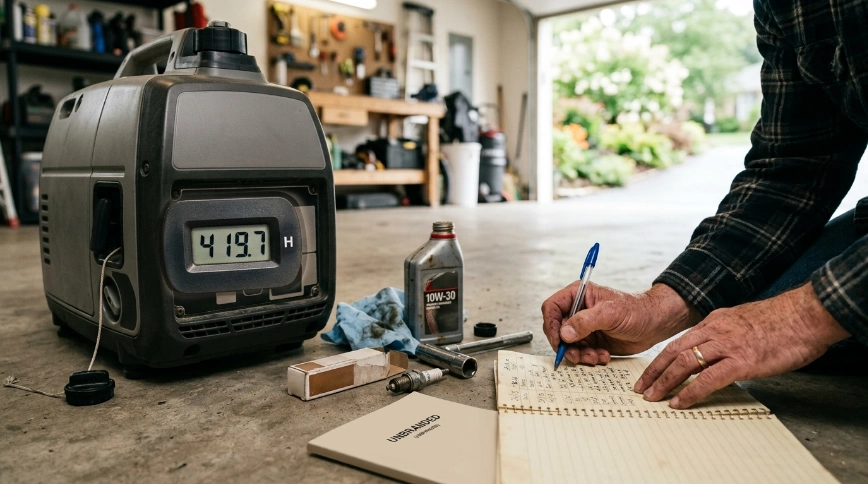
The easiest system is an hour meter plus a written log. Record the date, operating hours, service performed, oil used, replacement part number, and the next service point.
I prefer hours over memory. Storm season can turn a lightly used generator into a machine that accumulates several months of normal runtime in one week.
| Date | Hour Meter | Work Completed | Next Service |
|---|---|---|---|
| Example: Aug. 17 | 52.4 hours | Oil changed; air filter inspected | Per manual at next specified interval |
A cheap notebook stored with the manual works fine. You don’t need an app to maintain a reliable record.
Useful Products for Portable Generator Maintenance
If you’re putting together a small generator service kit, these are three practical items I’d consider. Always confirm compatibility with your generator, fuel, and battery before use.
🏆 Best for Seasonal Storage
STA-BIL Storage Fuel Stabilizer
★★★★★ 4.8/5
Designed for gasoline stored in seasonal equipment, including generators. I like a stabilizer for owners who deliberately store treated fresh gasoline rather than draining the fuel system.
🔋 Best for Electric Start
NOCO GENIUS1 1A Smart Battery Charger
★★★★☆ 4.7/5
This 1-amp maintainer supports common 6V and 12V battery types. It makes sense for an electric-start generator that spends months parked, provided its charging mode matches your battery.
🔧 Best Simple Service Tool
TEKTON SHD15016 5/8-Inch Spark Plug Socket
★★★★☆ 4.6/5
The deep six-point socket uses an internal rubber grommet to grip a spark plug during removal. Buy this size only if your generator’s specified spark plug requires a 5/8-inch socket.
Frequently Asked Questions
How often should a portable generator be serviced?
Inspect a portable generator before every use and service it according to both operating hours and calendar intervals. Common jobs include oil changes, air-filter inspection, spark plug service, fuel-system care, and storage preparation, but the exact schedule in your owner’s manual takes priority.
How often should I change portable generator oil?
Complete the manufacturer’s break-in oil change first, which may fall within roughly the first 5–30 operating hours. Routine oil changes commonly occur within a 50–100-hour window, but engine design, temperature, load, and manufacturer requirements can change that interval.
What happens if I skip generator maintenance?
Skipped maintenance increases the chance of hard starting, stale-fuel problems, restricted airflow, worn ignition parts, overheating, and engine damage. The worst time to discover those problems is after the utility power has already failed.
Should I service my generator before or after storage?
Do both when necessary. Before storage, handle fuel properly, clean the generator, and complete any service already due; before returning it to emergency duty, inspect oil, fuel, filters, wiring, battery condition, and operation under load.
Does a generator need maintenance if it was barely used?
Yes. Low runtime doesn’t stop gasoline from aging, batteries from discharging, corrosion from developing, or insects and debris from blocking airflow. Calendar-based inspections remain important even when the hour meter barely moves.
Keep the Schedule Simple and Your Generator Ready
You don’t need to constantly work on a portable generator. You need to perform the right maintenance before small problems turn into outage-day failures.
Start with the owner’s manual, record every operating hour, inspect the generator before use, and never delay a service interval during a long outage. A few planned maintenance sessions each year are far easier than troubleshooting a dead generator in the dark.

Hi, I’m Michael Turner. I own a generator workshop in the United States and founded HomeGeneratorBlog to share practical, hands-on guidance about generator installation, maintenance, troubleshooting, safety, and backup power solutions. My goal is to help homeowners make smarter, more confident decisions through clear and reliable information