Portable Generator DC Output: What It’s For and How to Use It Right
Quick Answer: The DC output (usually a 12V receptacle) on a portable generator exists to trickle-charge 12V batteries using a set of charging cables, not to run electronics directly. It’s typically capped around 5-8 amps and the voltage isn’t regulated, so it’s fine for topping off a car or RV battery but a poor choice for fully charging a deep-cycle bank.
Safety Note: Run any generator outdoors only, at least 20 feet from doors, windows, and vents, with the exhaust pointed away from your home. Carbon monoxide from generator exhaust is odorless and can be fatal in minutes — opening a garage door isn’t enough. If you feel dizzy, nauseous, or confused near a running generator, get to fresh air immediately.
I learned what my generator's DC port was actually for the hard way. The first winter I owned a dual-fuel unit, I assumed the little 12V plug on the side was basically a second wall outlet for anything battery-related. I hooked up a car battery charger to it during a five-day outage expecting a fast top-off. Four hours later, the battery had barely moved. That’s when I actually read the manual.
What the DC Output on a Generator Is Actually For
Most portable and inverter generators include a small round DC receptacle alongside the main AC outlets. It’s built for one specific job: charging 12-volt batteries directly through a set of DC charging cables, the kind that plug into the port on one end and clip to your battery terminals on the other.
According to Polaris Power’s own generator documentation, the DC receptacle on their generators outputs 15 to 30 volts and is designed strictly for 12V battery charging — not for running DC motors, transformers, or anything else plugged in directly. That’s a useful baseline because most consumer portable generators follow a similar pattern.
It is not a USB port, and it’s not the same as the 120V AC outlets you use for tools or appliances. Confusing the two is the single biggest misunderstanding people have about this feature.
Why the DC Port Isn’t a Full Battery Charger
This is the part most owner’s manuals gloss over. Two limitations make the DC output a poor substitute for a real charger:
- Low amperage. Most units cap the DC receptacle at 5 to 8 amps. A 100Ah deep-cycle battery at that rate could take well over a day to fully charge, assuming nothing else is drawing power.
- Unregulated voltage. The output rides on engine RPM instead of a smart charging curve. As load changes, voltage swings — and the generator has no way to taper off as the battery nears full, the way a smart charger would.
Battery University’s charging reference notes that a proper three-stage charger tapers voltage from a bulk charge down to a float stage to avoid gassing and overcharging once the battery approaches full capacity. A generator’s raw DC port can’t do that on its own — it just keeps pushing current.
Bottom line: the DC port is fine for an emergency trickle charge or a jump-start assist. It is not the tool for maintaining a solar battery bank or reviving a battery that’s been sitting dead for weeks.
What You’ll Need
- A generator with a functioning DC receptacle
- The manufacturer’s DC battery charging cable (often sold separately — check compatibility before buying a universal one)
- Safety glasses and gloves
- A well-ventilated outdoor space, at least 20 feet from your home
- Fresh air access — never do this in a closed garage
How to Charge a Battery Using a Generator’s DC Output
Step 1: Position the generator safely
Set the generator up outdoors, away from doors, windows, and vents, with the exhaust facing away from any structure. Never run it in a garage, even with the door open.
Step 2: Disconnect the battery correctly
If the battery is still installed in a vehicle or RV, disconnect the negative (black) cable first, then the positive (red) cable. Disconnecting negative first avoids accidental sparking against grounded metal.
Step 3: Plug in the charging cable
Insert the DC charging cable into the generator’s DC receptacle before starting the engine. Don’t force a cable that isn’t rated for your generator’s port — a loose or mismatched fit is a common cause of arcing.
Step 4: Connect to the battery in the right order
Connect the red (positive) lead to the battery’s positive terminal first, then the black (negative) lead to the negative terminal. Reversing this order risks damaging both the battery and the generator’s charging circuit.
Step 5: Start the generator and monitor charging
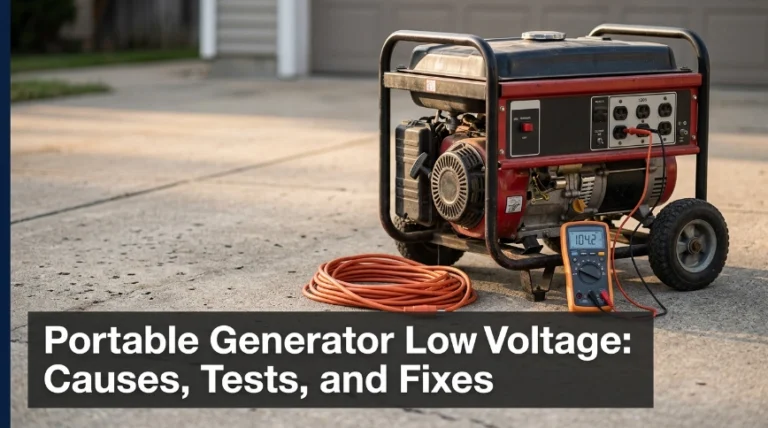
Start the engine and keep an eye on things — don’t walk away for hours. Since the voltage isn’t regulated, check the battery periodically with a multimeter. If you’re not familiar with reading one, a simple rule of thumb: stop charging once the battery reads close to 12.6-12.8V at rest.
Step 6: Disconnect in reverse order
Stop the generator first. Then disconnect black (negative), then red (positive), then unplug the charging cable from the generator. Reconnect the vehicle’s own cables in the reverse order you removed them — positive first, negative last.
What Can Go Wrong
| Mistake | What Happens |
|---|---|
| Reversing polarity on the cables | Can blow the DC circuit protector or damage the battery and generator |
| Leaving it charging unattended for hours | Overcharging, gassing, and shortened battery life since there’s no auto-cutoff |
| Using a generic, unrated DC cable | Poor connection, arcing, or a cable that melts under sustained load |
| Running the generator in a garage “for a minute” | Carbon monoxide buildup — the most dangerous mistake on this list |
A Better Way to Charge a Larger Battery Bank
If you need to fully charge a deep-cycle or RV house battery — not just trickle it — skip the DC port entirely. Plug a dedicated smart charger, like the kind sold for automotive or marine use, into the generator’s 120V AC outlet instead. A quality smart battery charger handles the bulk, absorption, and float stages automatically, so you get a full charge without babysitting voltage swings.
Here’s the math on why that matters: a 2,000-watt generator running an AC-powered 40-amp charger can deliver roughly 480 watts to the battery (40A × 12V), charging a 100Ah battery from 50% in a few hours. The same battery on the 6-amp DC port, at best, adds about 6Ah per hour — over eight times slower.
DC Port vs. AC-Powered Charger
| Factor | Generator DC Port | AC Outlet + Smart Charger |
|---|---|---|
| Typical current | 5-8A | 10-100A depending on charger |
| Voltage regulation | None — follows engine RPM | Yes — automatic bulk/absorption/float |
| Auto shutoff at full charge | No | Yes, on most smart chargers |
| Best use case | Emergency trickle charge, jump-start assist | Full charging, ongoing maintenance |
| Extra equipment needed | Manufacturer DC charging cable | Standalone smart charger |
Can You Charge a Portable Power Station from a Generator’s DC Port?
This trips people up because “portable power station” and “portable generator” both get called generators online. A lithium power station (like the kind sold for camping) usually wants its own solar or AC input, not a raw 12V feed from a gas generator’s DC port. Check the power station’s manual — most explicitly call for AC charging via the wall-style input, not the car-style 12V plug.
Conclusion
The DC output on a portable generator is a narrow, purpose-built feature: an emergency way to trickle-charge a 12V battery, nothing more. For anything beyond a quick top-off, route power through the AC outlets and a real smart charger instead. Keep the generator outdoors, watch your connections, and you’ll get exactly what this feature was designed to do. — Michael Turner
If you’re charging batteries off a generator regularly, a dedicated smart charger will save your battery’s lifespan and get the job done in a fraction of the time compared to the DC port alone.
FAQ
Is the DC output on a generator the same as a USB port?
No. The DC output is a dedicated 12V charging receptacle for battery charging cables, while USB ports (if present) are a separate, lower-voltage feature for phones and small electronics.
Can I run a 12V appliance directly from the DC port?
Manufacturers generally advise against it. The port is designed for battery charging, not for powering DC motors or devices directly, and doing so can damage the generator’s stator.
How long does it take to charge a car battery from a generator’s DC port?
Expect several hours for a meaningful top-off, since most DC ports cap out around 5-8 amps. A fully dead battery could take the better part of a day.
Why isn’t my generator’s DC port charging the battery at all?
Check the circuit protector first — DC receptacles trip if overloaded, and that protector doesn’t reset itself. Also confirm the charging cable is fully seated and the polarity is correct.
Is it safe to leave a battery charging on the DC port overnight?
It’s not recommended. Since the output isn’t voltage-regulated and won’t taper off automatically, unattended overnight charging raises the risk of overcharging the battery.

Hi, I’m Michael Turner. I own a generator workshop in the United States and founded HomeGeneratorBlog to share practical, hands-on guidance about generator installation, maintenance, troubleshooting, safety, and backup power solutions. My goal is to help homeowners make smarter, more confident decisions through clear and reliable information