What Is the Lifespan of a Generator? Average Life by Type
Quick Answer
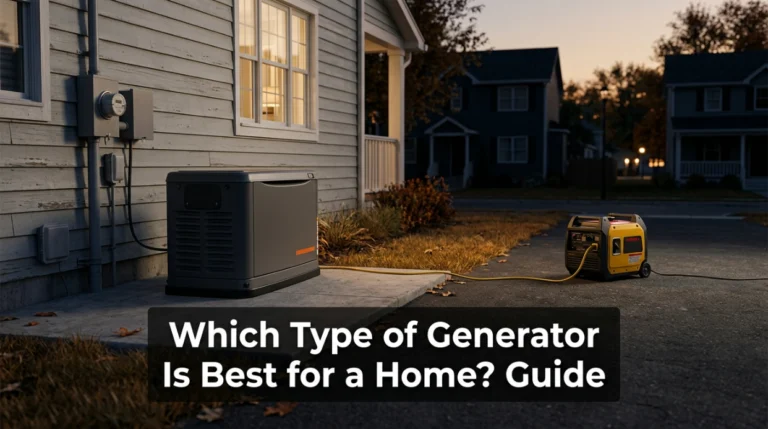
A well-maintained home standby generator can last 20 years or more, while many portable generators provide roughly 1,000–2,000 operating hours before major engine wear becomes a concern. Actual generator lifespan depends more on run hours, maintenance, load, storage, fuel quality, and operating conditions than age alone. Generac also notes that a properly maintained home standby generator can remain useful for 20 years or longer.
Typical Generator Lifespan
- Portable generators: Often around 1,000–2,000 operating hours, depending heavily on engine quality and maintenance.
- Home standby generators: Around 15–20+ years is a practical planning range for a properly serviced residential system.
- Liquid-cooled generators: Heavy-duty designs may remain serviceable longer than smaller air-cooled residential units.
- Frequent-use generators: Engine hours become more important than calendar age when the generator runs often.
- Poorly maintained units: Neglected oil, batteries, filters, fuel, or cooling airflow can shorten service life dramatically.
Best way to judge remaining life
- Check the generator’s age, total engine hours, service history, corrosion, starting reliability, and recent repair frequency together.
When someone asks me how long a generator lasts, I never look at its age alone. Two ten-year-old machines can be in completely different condition.
One may have logged only occasional outage hours and received regular service. The other may have spent years running overloaded, sitting with stale fuel, or missing oil changes.
As of 2026, the safest answer is to judge generator life by both calendar age and operating hours. I’ll explain how that works and what you can do to keep your generator dependable longer.
What Does Generator Lifespan Actually Mean?
Generator lifespan is the useful period during which a generator can reliably produce its rated electrical power without excessive repairs or unacceptable failure risk.
That lifespan can be measured in years, engine hours, or both.
- Calendar age affects batteries, hoses, seals, wiring, corrosion, and other materials even while the generator sits unused.
- Engine hours measure how much mechanical work the engine has performed.
- Number of starts also matters because starting cycles place extra stress on batteries and engine components.
- Operating conditions affect cooling, lubrication, corrosion, and contamination.
I think of it like mileage and age on a vehicle. Neither number tells the whole story by itself.
How Long Does a Generator Last on Average?
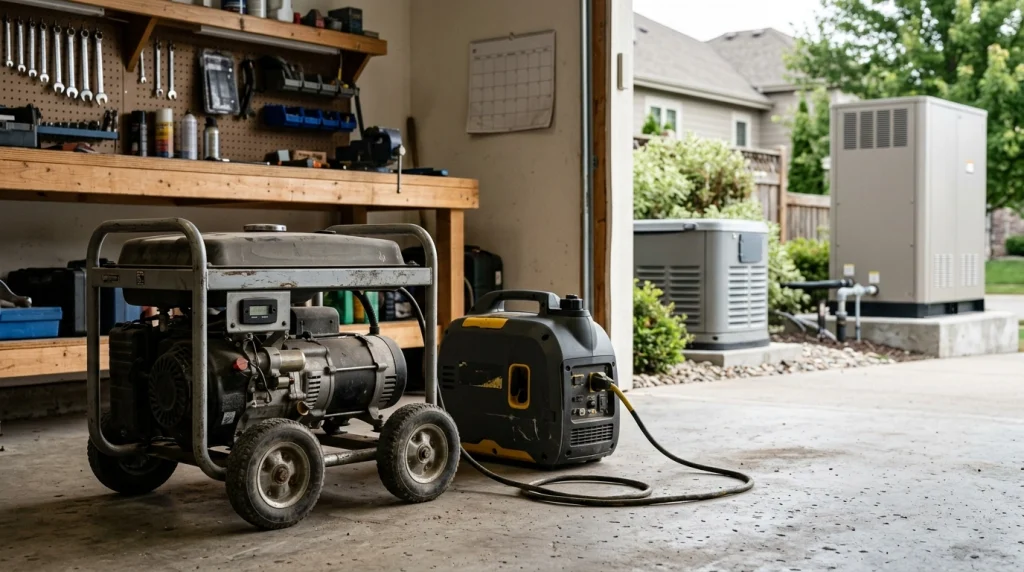
A typical residential generator may remain useful for roughly 10 to 20-plus years, but generator type creates major differences. Portable units are often better judged by running hours.
Installed standby generators commonly accumulate fewer engine hours because they spend most of their lives waiting for outages.
| Generator Type | Practical Lifespan Range | Best Measurement | Main Life Factors |
|---|---|---|---|
| Portable gasoline generator | Often around 1,000–2,000 engine hours | Run hours | Oil service, fuel quality, load and storage |
| Portable inverter generator | Often around 1,500–2,000+ hours with good care | Run hours | Engine speed, loading, maintenance and storage |
| Air-cooled home standby | Often 15–20+ years | Years plus hours | Maintenance, outages, weather and installation |
| Liquid-cooled standby | Potentially 20+ years | Years plus hours | Cooling system, load, maintenance and environment |
These numbers are planning ranges rather than expiration dates. Your owner’s manual and the condition of your specific generator matter more than a generic average.
How Long Does a Standby Generator Last?
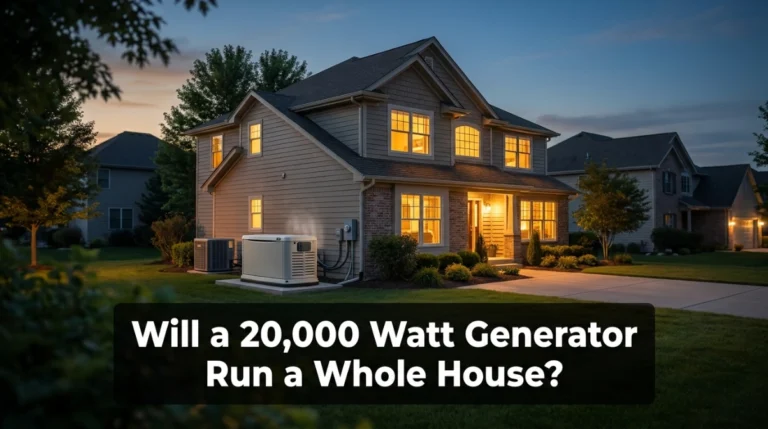
A properly maintained residential standby generator can often remain in service for roughly 15 to 20 years or longer. Generac currently states that a well-maintained home standby generator can last 20 years or more.
Standby units benefit from a different operating pattern than most portable machines. They may sit idle for weeks and then operate automatically when utility power fails.
Why can standby generators last so long?
Most spend relatively little time under heavy electrical load compared with equipment used for daily power production. Scheduled exercise cycles also allow the system to start and reveal problems before an outage.
However, low run hours do not stop calendar aging.
- Starter batteries lose capacity as they age.
- Rubber components can harden or deteriorate.
- Electrical connections may corrode outdoors.
- Fuel systems still need inspection.
- Oil and filters require scheduled replacement.
That’s why I don’t assume a generator with low hours is automatically healthy. A machine can deteriorate while sitting.
How Long Does a Portable Generator Last?
Many homeowner-grade portable generators can provide roughly 1,000 to 2,000 engine hours when maintained correctly. Some may fail earlier, while well-built and carefully serviced models can exceed that range.
Portable generators often experience harder service than standby units.
- They may run for long periods during storms.
- Owners sometimes operate them close to maximum load.
- Gasoline may remain in the fuel system during storage.
- Oil changes are easier to overlook without an hour meter.
- Dust, rain, heat, and transport can increase wear.
A portable generator used for only a few outages each year could therefore last many calendar years. The same model used daily on a jobsite may reach its engine-hour limit much sooner.
Does Running a Generator for Long Hours Shorten Its Life?
Long operation is not automatically harmful when the generator is designed for it and serviced correctly. The problem comes when continuous operation carries the machine past required inspection or maintenance intervals.
Generac’s current guidance for certain air-cooled standby models calls for continuous-use checks after 24 hours of operation.
- Check engine oil: Confirm the level before continued operation.
- Inspect for leaks: Look around fuel and oil connections.
- Clear cooling openings: Remove debris that restricts airflow.
- Track accumulated hours: Don’t postpone scheduled service because an outage continues.
The manufacturer also uses hour-based maintenance intervals on covered standby models. Some service occurs at 200 or 400 hours, depending on the maintenance schedule.
That is why an hour meter is so useful. It tells you how much work the engine has actually completed.
What Shortens the Lifespan of a Generator?
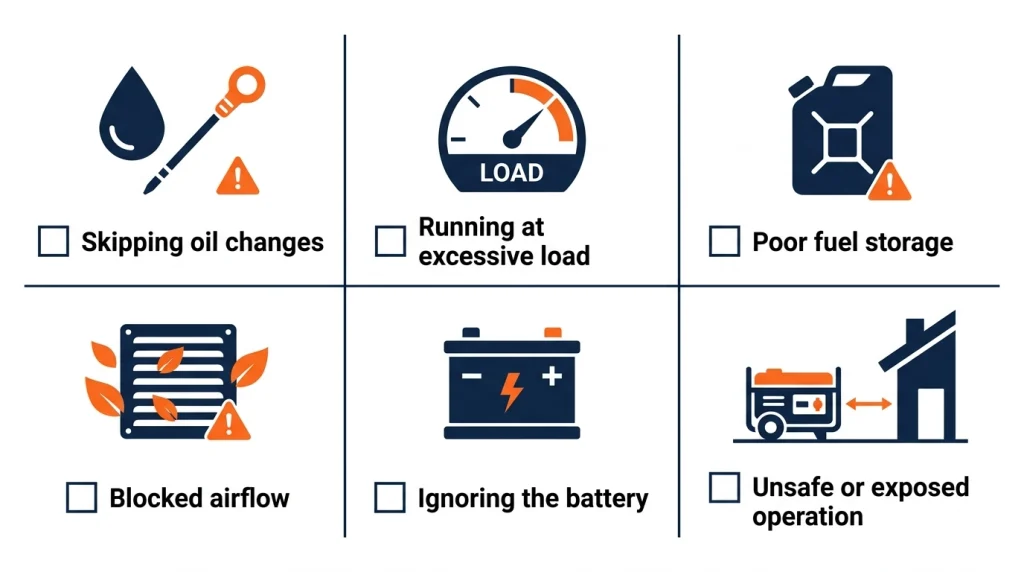
The biggest lifespan problems I see are usually ordinary maintenance problems rather than dramatic mechanical failures. Small issues compound over time.
1. Skipping oil changes
Engine oil lubricates moving components and helps control heat. Old, contaminated, or low oil increases friction and wear.
Follow the exact interval in your owner’s manual rather than applying another generator’s schedule.
2. Running at excessive load
Operating close to or beyond rated capacity creates extra heat and mechanical stress. It can also cause voltage problems or breaker trips.
A correctly sized generator should have enough capacity for both normal running loads and motor-starting surges.
3. Poor fuel storage
Gasoline-powered portable generators often suffer from storage-related fuel problems. Old fuel can leave deposits that interfere with carburetor operation.
If the generator will sit unused, follow the manufacturer’s storage procedure rather than simply parking it with fuel inside.
4. Blocked airflow
Air-cooled generators depend on clean cooling passages. Leaves, grass, dust, snow, and other debris can make the engine run hotter.
Inspect cooling openings regularly, especially during extended outages.
5. Ignoring the battery
Automatic standby generators depend on a healthy starting battery. A generator with a good engine is useless during an outage if the battery cannot crank it.
Battery condition should therefore be part of routine generator maintenance.
6. Unsafe or exposed operation
Portable generators must remain outdoors because exhaust contains dangerous carbon monoxide. The U.S. Consumer Product Safety Commission advises placing portable generators at least 20 feet from a home, with exhaust directed away from doors, windows, and vents.
Never move a generator into a garage, shed, basement, porch enclosure, or other enclosed area to protect it from weather.
How Can You Make a Generator Last Longer?
The best way to extend generator life is surprisingly simple: follow the service schedule and correct small problems early. Consistency matters more than complicated maintenance tricks.
- Track engine hours. Record the meter reading after long outages or heavy portable-generator use.
- Change oil on schedule. Use the viscosity and specification listed by the manufacturer.
- Service the air filter. Restricted airflow affects combustion and can increase engine stress.
- Inspect the spark plug. Replace it at the specified interval.
- Maintain the starter battery. Check condition and replace it before reliability becomes questionable.
- Keep cooling areas clean. Clear leaves, dirt, nests, snow, and other obstructions.
- Use fresh fuel. Follow the correct storage procedure for gasoline-powered models.
- Avoid chronic overload. Stay within the generator’s rated capacity.
- Exercise standby systems. Keep the manufacturer’s automatic exercise schedule active.
- Fix abnormal behavior early. Investigate leaks, surging, hard starts, warning codes, smoke, or unusual vibration.
My practical rule is simple: don’t wait for a power outage to discover what maintenance you skipped. I would rather find a weak battery during a routine check than during a storm.
When Should You Replace a Generator?
A generator does not need replacement merely because it reaches a certain birthday. Reliability, repair frequency, parts availability, and overall condition matter more.
Start considering replacement when several warning signs appear together.
- Hard starting: The generator repeatedly struggles to start despite proper maintenance.
- Frequent repairs: New mechanical or electrical problems appear regularly.
- Excessive oil use: Consumption increases without an obvious external leak.
- Unstable output: Voltage or frequency problems continue after proper diagnosis.
- Severe corrosion: Enclosure, frame, electrical, or fuel components show substantial deterioration.
- Parts are unavailable: Important replacement components become difficult or uneconomical to source.
- Capacity is inadequate: The generator no longer supports the home’s current electrical load.
A single repair does not automatically justify replacement. An older generator with a strong maintenance history may still have useful service life.
Generator Age vs. Running Hours: Which Matters More?
Both matter, but running hours usually tell you more about engine wear while calendar age tells you more about system aging.
| Factor | What It Mainly Affects |
|---|---|
| Engine hours | Pistons, rings, bearings, valves and other moving engine parts |
| Calendar age | Batteries, rubber, seals, wiring, corrosion and electronics |
| Heavy electrical load | Heat, fuel consumption and mechanical stress |
| Poor maintenance | Can accelerate wear throughout the entire generator |
For a portable generator, I pay close attention to engine hours. For an older standby unit, I also inspect age-related components even when the hour meter remains low.
Useful Generator Maintenance and Safety Products
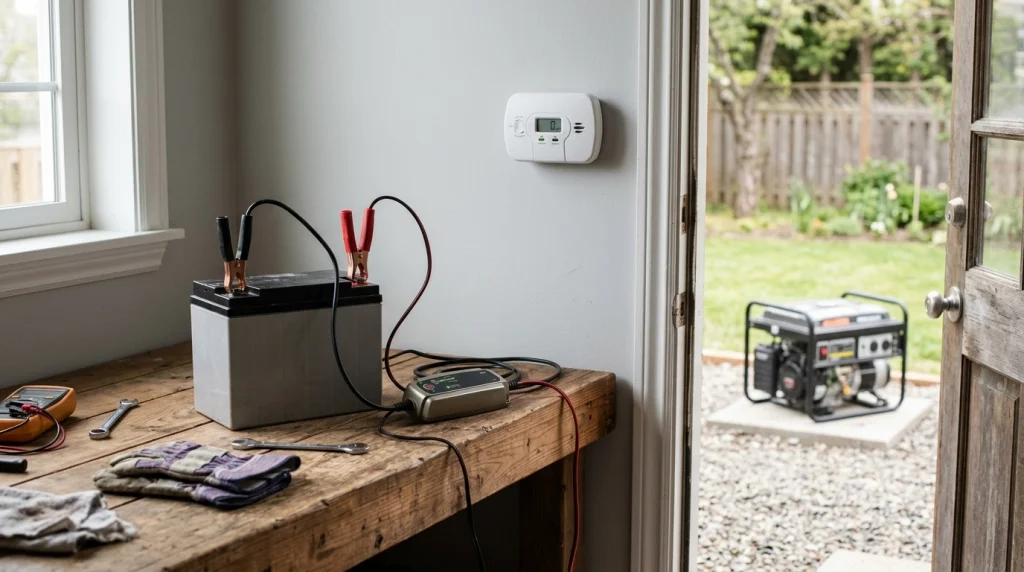
If you’re building a basic generator-care setup, these are two practical products I would consider rather than buying unnecessary accessories.
🔋 BEST FOR BATTERY CARE
NOCO GENIUS1 1-Amp Smart Battery Charger
★★★★½
The GENIUS1 supports 6V and 12V lead-acid and lithium batteries and can maintain batteries of different capacities. I like a maintainer for equipment that may sit unused for long periods, but always confirm compatibility with your generator battery first.
🛡️ BEST SAFETY ADD-ON
Kidde KN-COB-LP2 Battery Carbon Monoxide Alarm
★★★★½
This battery-operated CO alarm uses two AA batteries, so protection continues during a utility outage. I consider working indoor CO alarms essential whenever a fuel-burning portable generator is operating outside the home.
Frequently Asked Questions
Can a generator last 20 years?
Yes. A properly maintained residential standby generator can remain useful for 20 years or more. Generac currently gives 20-plus years as a possible lifespan for a well-maintained standby system, although actual life depends on operating hours, environment, maintenance, installation, and overall condition.
How many hours will a generator last?
There is no universal hour limit for every generator. Many consumer portable generators are commonly expected to provide roughly 1,000–2,000 hours, while heavier-duty equipment may last much longer. Always use the manufacturer’s service information for your specific engine and generator.
Does a generator wear out if it is rarely used?
Yes. Low engine hours reduce mechanical wear, but batteries, hoses, wiring, seals, fuel systems, and metal components continue aging. Moisture and corrosion can also damage a generator that spends most of its life sitting outdoors.
Is it bad to run a generator continuously?
Not necessarily. Some generators are designed for extended operation, but they still require oil checks, inspections, cooling airflow, and scheduled service. For certain Generac air-cooled standby units, continuous-use maintenance is required after every 24 hours of operation.
Is an old generator worth repairing?
It can be. Consider its total hours, maintenance history, reliability, repair cost, parts availability, corrosion, and electrical capacity. One reasonable repair on a dependable generator may make sense, while repeated failures on an obsolete system may justify replacement.
Final Takeaway
The lifespan of a generator isn’t controlled by one number. Generator type, engine hours, age, maintenance, load, fuel, and operating environment all matter.
A portable generator may provide around 1,000–2,000 useful operating hours, while a well-maintained standby generator can potentially serve a home for 20 years or longer.
If you want yours to reach the upper end of its lifespan, track engine hours, follow the owner’s manual, maintain the battery, keep cooling areas clean, and never postpone required service during a long outage.
Most importantly, treat reliability as something you maintain before an emergency. The best time to discover a weak battery, dirty filter, or overdue oil change is while utility power is still available.
“`
Hi, I’m Michael Turner. I own a generator workshop in the United States and founded HomeGeneratorBlog to share practical, hands-on guidance about generator installation, maintenance, troubleshooting, safety, and backup power solutions. My goal is to help homeowners make smarter, more confident decisions through clear and reliable information