What Will a 10,000 Watt Generator Run in a House?
Quick Answer
A 10,000-watt generator can run most essential household appliances at the same time, including a refrigerator, freezer, furnace blower, sump pump, well pump, lights, electronics, microwave, and often a window air conditioner. It may also run some central AC systems if their starting surge fits the generator, but you still need to calculate your actual generator power capacity before connecting large loads.
What a 10,000-watt generator can typically handle
- Refrigeration: A refrigerator and separate freezer can usually run together.
- Heating equipment: A gas or oil furnace blower is usually manageable.
- Water systems: Many sump and well pumps fit within this size when startup surge is accounted for.
- Kitchen loads: A microwave, coffee maker, or similar appliance can be used with load management.
- Cooling: Window AC units are normally practical, while central AC must be checked individually.
- Electronics: TVs, routers, computers, chargers, and LED lighting use relatively little capacity.
Check the label first
- Confirm whether your generator provides 10,000 running watts or only 10,000 starting watts. Those are not the same capacity.
A 10,000-watt generator sits in a useful middle ground for home backup. It gives you far more flexibility than a small essentials-only unit without automatically putting you into large standby-generator territory.
The catch is that the number printed in big type on the generator isn’t always its continuous output. That detail changes everything.
What Does a 10,000-Watt Generator Actually Mean?
A true 10,000-running-watt generator can continuously supply up to 10,000 watts within its rated operating limits. A generator advertised as “10,000 watts” may instead have 10,000 starting watts and only 7,500–8,000 running watts.
That is why I check the specification plate before calculating a single appliance. The running-watt rating is the number that tells me how much equipment can stay on.
- Running watts: Continuous electricity available while appliances operate.
- Starting watts: Short-term extra output available when a motor or compressor starts.
- Peak watts: Another common term for starting or surge capacity.
If these terms are new to you, my guide to running watts vs. starting watts explains the difference in more detail.
What Appliances Will a 10,000-Watt Generator Run?
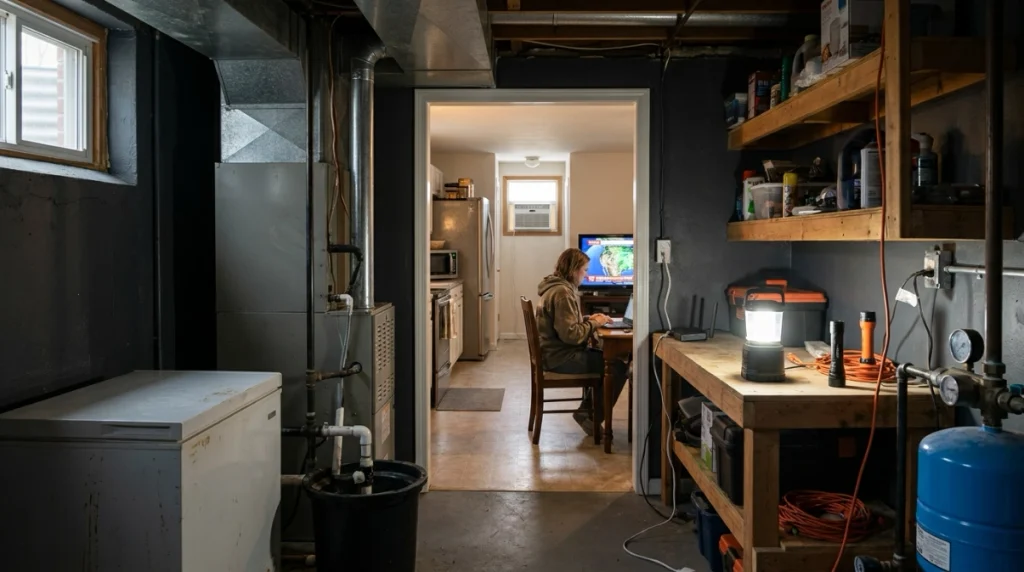
A 10,000-running-watt generator can usually support a substantial emergency household load. Refrigeration, heating controls, pumps, lighting, internet equipment, and several convenience appliances can often operate together.
The figures below are planning examples. Your appliance nameplates and manuals should determine the final calculation.
| Household Item | Typical Running Watts | Typical Starting Watts | 10,000W Generator? |
|---|---|---|---|
| Refrigerator | About 700W | Up to about 2,200W | Yes |
| Chest freezer | About 300W | About 900W | Yes |
| Gas furnace blower | About 800W | About 2,350W | Usually |
| 1/3 HP sump pump | About 800W | About 1,300W | Usually |
| Well pump | About 1,000W | About 3,000W | Often |
| Microwave | About 1,000W | Minimal surge | Yes |
| Window AC | About 1,200W | Up to about 3,600W | Usually |
| LED lights | About 100–200W total | Minimal | Yes |
| Router, laptop, TV | About 200–350W total | Minimal | Yes |
How Much of a House Can a 10,000-Watt Generator Power at Once?
A 10,000-running-watt generator can often power most emergency circuits in a typical house if you manage large loads. It does not automatically mean every breaker can stay on simultaneously.
Here’s one realistic outage setup I would use when estimating capacity.
- Refrigerator: 700 running watts
- Freezer: 300 running watts
- Furnace blower: 800 running watts
- Sump pump: 800 running watts
- Well pump: 1,000 running watts
- Microwave: 1,000 running watts
- Window AC: 1,200 running watts
- LED lighting: 150 running watts
- Router and laptop: 150 running watts
- Television: 100 running watts
The combined continuous load is roughly 6,200 watts. That leaves about 3,800 watts below a true 10,000-watt continuous rating.
You still have to account for startup demand. If that 1,200-watt window AC briefly needs 3,600 watts, its additional startup demand is roughly 2,400 watts above its normal running load.
That puts this example near 8,600 watts during the AC startup event. A generator rated for 10,000 continuous watts with adequate peak capacity should have room for that scenario.
Can a 10,000-Watt Generator Run Central Air Conditioning?
It can run some central air conditioners, but central AC is one of the loads I would never size by guesswork. Compressor startup current can be much higher than the normal operating draw.
A smaller central system may fit a 10,000-watt generator when other loads are controlled. A larger system can exceed the generator’s surge rating before the compressor gets moving.
- Window AC: Usually a comfortable match for this generator class.
- Mini-split: Often manageable, depending on system size and inverter design.
- Small central AC: Potentially workable after checking startup requirements.
- Large central AC: May require substantially more surge capacity or professionally designed load management.
Check the compressor nameplate and compare its actual requirements with the generator. My generator sizing guide for air conditioners goes deeper into that calculation.
What Won’t a 10,000-Watt Generator Run Comfortably?
The difficult loads are usually electric appliances that create heat or operate large compressors. Running several of them at once can consume the entire generator capacity quickly.
- Electric clothes dryer: Often consumes several thousand watts by itself.
- Electric water heater: A conventional tank heater can be one of the largest steady household loads.
- Electric range: Multiple burners plus the oven can create a heavy load.
- Electric resistance heat: Whole-home electric heating can exceed portable-generator capacity quickly.
- Large central AC: Compressor starting surge can exceed the generator’s peak capability.
- Multiple major 240V appliances: Dryer, water heater, range, and HVAC should not be assumed to operate together.
This doesn’t mean every item above is impossible. It means you may have to choose one large appliance at a time.
Is a 10,000-Watt Generator Enough for a Whole House?
A 10,000-watt generator is enough for many homes when “whole house” means selected essential circuits. It is not necessarily enough for unrestricted whole-house operation.
As of 2026, I would think of this size as high-capacity managed backup rather than automatic unlimited backup.
| Backup Goal | 10,000W Suitability | Load Management |
|---|---|---|
| Fridge, lights, internet | Excellent | Minimal |
| Essentials plus pumps and furnace | Excellent | Low to moderate |
| Essentials plus window AC | Very good | Moderate |
| Central AC plus essentials | Depends on AC | Careful management |
| All-electric home operating normally | Usually undersized | Heavy |
If you are still deciding between generator classes, this broader home generator sizing guide helps match capacity to your outage priorities.
How Do You Calculate Exactly What Your 10,000-Watt Generator Can Run?
Start with the equipment you genuinely need during an outage. Then calculate continuous load and the largest startup event.
- List your must-run appliances. Leave optional high-wattage equipment off the first list.
- Find each running wattage. Use the appliance nameplate or manufacturer’s specifications.
- Add the running watts. Include everything that could operate simultaneously.
- Find the largest motor startup requirement. Pumps, refrigerators, freezers, and AC compressors deserve attention.
- Calculate additional startup demand. Subtract that appliance’s running watts from its starting watts.
- Add that extra surge to your running total. The result must fit below the generator’s peak rating.
- Leave operating headroom. Avoid planning to keep the generator pinned at maximum output.
I prefer this method because it forces me to see the load as a system rather than a list of appliances. It also makes it obvious which single appliance is creating the sizing problem.
How Should a 10,000-Watt Generator Be Connected to a House?
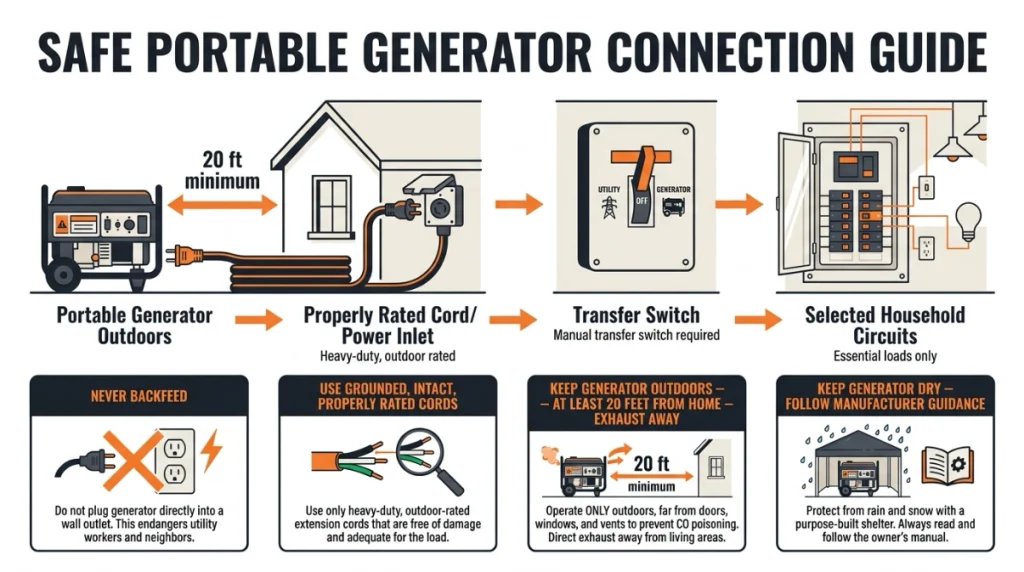
A large portable generator should not be connected to household wiring through an improvised outlet connection. A properly installed transfer system isolates generator power from utility power.
For a permanent or semi-permanent home-backup setup, review the basics in this portable generator transfer switch guide and have the final installation handled by a qualified electrician.
- Never backfeed: OSHA warns against directly connecting a generator to a structure unless a qualified electrician has installed proper transfer equipment.
- Use suitable cords: Extension cords must be grounded, intact, and properly rated for their electrical load.
- Keep it outdoors: The U.S. Consumer Product Safety Commission says portable generators should be operated outside, at least 20 feet from the home, with exhaust directed away from buildings.
- Keep it dry: Follow manufacturer guidance for protecting the generator from wet conditions without enclosing it.
For additional safety guidance, see the OSHA portable generator guidance and the CPSC carbon monoxide safety center.
The CPSC generator safety guide also covers carbon monoxide hazards. The U.S. Fire Administration generator checklist covers ventilation, cords, wet conditions, and refueling.
10,000-Watt Generator vs. 12,000-Watt Generator
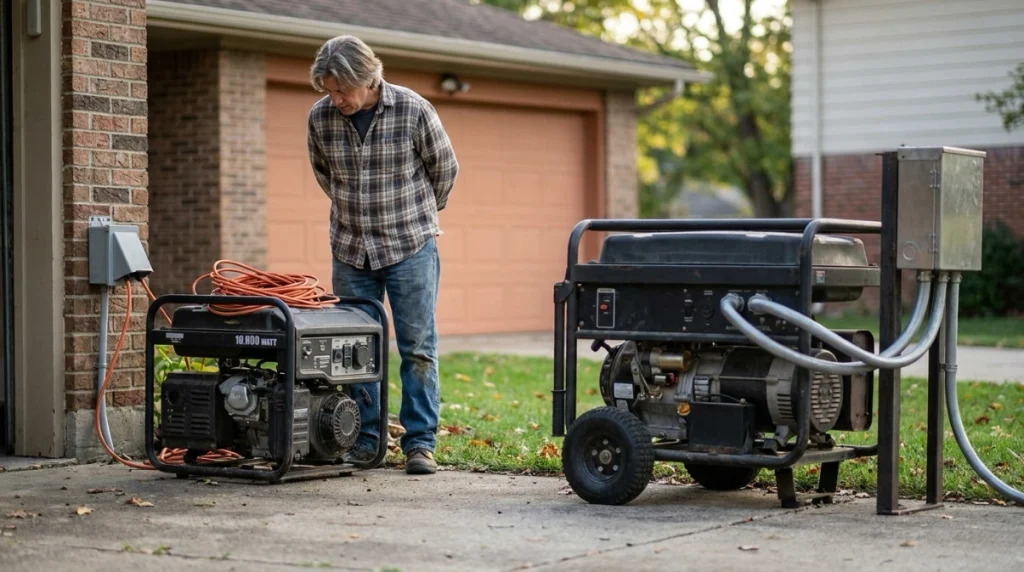
A 12,000-watt-class generator mainly buys you more room for overlapping motor starts and larger appliances. A 10,000-watt unit can still be the better choice when your essential load is comfortably below its continuous rating.
| Factor | 10,000W Class | 12,000W+ Class |
|---|---|---|
| Essential circuits | Excellent | Excellent |
| Large motor surge | Good with careful sizing | More headroom |
| Fuel use | Generally lower potential demand | Potentially higher |
| Weight and portability | Heavy | Usually heavier |
| Best use | Managed home backup | Heavier managed backup |
Generators I Would Consider for This Size of Home Backup
If your load calculation points toward this power class, these are the types of machines I would put on the comparison list.
🏆 Best Overall
Champion 201438 Tri-Fuel Generator
★★★★☆ 4.8/5
Rated at 10,000 running and 12,500 starting watts on gasoline, with propane and natural-gas capability. I like this layout for home backup because three fuel choices give you more flexibility when an outage lasts longer than expected.
⛽ Best Dual Fuel
Westinghouse WGen9500DF
★★★★☆ 4.7/5
It provides 9,500 running and 12,500 peak watts on gasoline, or 8,500 running watts on propane. I would shortlist it when transfer-switch-ready connections and dual-fuel flexibility matter more than hitting exactly 10,000 continuous watts.
⚡ Best for Extra Headroom
DuroMax XP13000HX
★★★★☆ 4.6/5
This dual-fuel model provides 10,500 running watts on gasoline and 10,000 running watts on propane, with higher short-term peak output. I would consider the extra capacity when pumps, air conditioning, or other motor loads make a true 10,000-watt setup feel too close to the limit.
Frequently Asked Questions
Can a 10,000-watt generator run a refrigerator and freezer at the same time?
Yes. A refrigerator and freezer together normally represent only a small part of a 10,000-watt generator’s continuous capacity. You still need enough surge output when their compressors start, particularly if a pump or air conditioner is already operating.
Will a 10,000-watt generator run a furnace?
A 10,000-watt generator can usually operate the blower and controls of a gas or oil furnace. Whole-home electric resistance heating is different because its electrical demand can consume several kilowatts and may exceed a portable generator’s practical capacity.
Can a 10,000-watt generator run a well pump?
Many residential well pumps can run from a generator in this class, but their startup surge must be checked. Verify pump horsepower, voltage, running current, and starting requirements before assuming the generator has enough peak capacity.
Will a 10,000-watt generator run a central AC?
Some central air conditioners can operate on a 10,000-watt generator, especially with careful load management. Larger compressors may require more starting capacity, so use the AC nameplate and generator peak rating rather than relying on tonnage alone.
How many appliances can a 10,000-watt generator run?
There is no fixed appliance count because electrical loads vary widely. A 10,000-watt generator could operate many small devices at once, yet two or three large electric appliances could consume most of its capacity.
Bottom Line: What Will a 10,000-Watt Generator Run in a House?
A true 10,000-running-watt generator can cover an impressive amount of household backup. Refrigerators, freezers, pumps, furnace blowers, lights, electronics, microwaves, and window AC units can often operate together when loads are planned properly.
The smartest approach is to ignore appliance count and calculate watts instead. Confirm continuous output, account for the biggest motor surge, leave headroom, and use proper transfer equipment if you’re powering household circuits.
Do that, and a 10,000-watt generator can provide comfortable, practical emergency power without requiring you to treat every outage like a complete shutdown.

Hi, I’m Michael Turner. I own a generator workshop in the United States and founded HomeGeneratorBlog to share practical, hands-on guidance about generator installation, maintenance, troubleshooting, safety, and backup power solutions. My goal is to help homeowners make smarter, more confident decisions through clear and reliable information