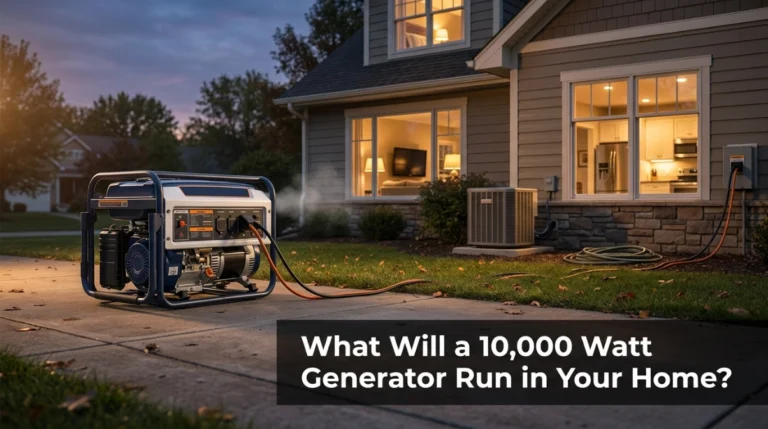
What Will a 10,000 Watt Generator Run in a House?
Quick Answer
A 10,000-watt generator can run most essential household loads at the same time, including a refrigerator, freezer, lights, furnace blower, sump pump, microwave, electronics, and many window air conditioners. The limit usually appears when central air conditioning, electric water heating, an electric range, or other large 240-volt loads overlap. Always calculate running watts versus starting watts before deciding what can operate together.
What a 10,000-watt generator can usually handle
- Refrigeration: A household refrigerator and separate freezer normally leave plenty of capacity for other essentials.
- Heating equipment: A gas or oil furnace blower is usually manageable if its starting surge is included.
- Water pumps: Most residential sump and well pumps can run, although their motors may have substantial startup demand.
- Kitchen loads: A microwave, coffee maker, or one electric cooking element can usually be used when other large loads are managed.
- Cooling: Window air conditioners are generally much easier to power than central AC systems.
- Electronics: TVs, internet equipment, laptops, chargers, and LED lighting use a relatively small share of 10,000 watts.
The main limitation
- Don’t assume every appliance can run simultaneously just because each one works individually. Large motor-starting surges can push the generator beyond its peak rating.
If you’re looking at a 10,000-watt generator for home backup, you’re already in a useful power range. The real question isn’t whether it can run one appliance, but which appliances you can safely run together.
I approach that question by separating continuous loads from short startup surges. That simple distinction prevents most generator-sizing mistakes.
What can a 10,000 watt generator run in a house?
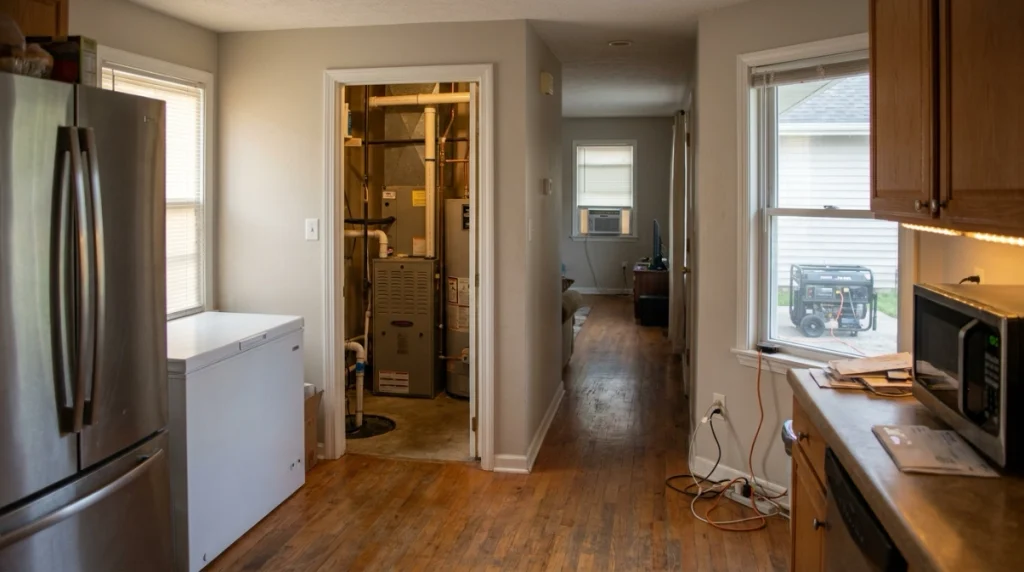
A true 10,000-running-watt generator can cover a strong emergency household setup. For many homes, that means refrigeration, heating equipment, pumps, lighting, communications, and selected kitchen or cooling loads.
Definition: A 10,000-watt generator is a generator capable of supplying about 10,000 watts, or 10 kW, of continuous electrical power when operated under the fuel and conditions for which that rating applies. Its short-duration starting or surge rating may be higher.
The numbers below are practical planning examples. Your appliance nameplates and generator manual should always take priority.
| Household Load | Example Running Watts | Example Starting Watts | 10 kW Generator? |
|---|---|---|---|
| Refrigerator | 700 W | 2,200 W | Yes |
| Chest freezer | 300 W | 900 W | Yes |
| Furnace blower | 800 W | 2,400 W | Usually |
| Sump pump | 1,050 W | 2,150 W | Usually |
| Window AC, 10,000 BTU | 1,200 W | 3,600 W | Usually |
| Microwave | 1,000 W | Minimal motor surge | Yes |
| Electric water heater | 4,000 W | About the same | Yes, with load management |
| Central AC, example 3-ton unit | 3,500 W | Around 9,000 W | Depends heavily on startup demand |
These figures explain why the generator feels much larger when powering lights and electronics than when a compressor starts. Motors change the math quickly.
Can a 10,000-watt generator run a whole house?
A 10,000-watt generator can run a large portion of many houses, but it shouldn’t automatically be considered a no-compromise whole-house generator. All-electric homes can exceed 10 kW surprisingly quickly.
For a broader comparison by backup goal, see my guide on choosing the right generator size for a home.
A comfortable essential-load example
Consider a home running the following equipment during an outage:
- Refrigerator: 700 running watts
- Chest freezer: 300 running watts
- Furnace blower: 800 running watts
- Sump pump: 1,050 running watts
- Microwave: 1,000 running watts
- Six LED lights: about 60 running watts
- Internet equipment: about 20 running watts
The continuous load is roughly 3,930 watts. Even after allowing for a motor startup surge, a genuine 10,000-running-watt generator has substantial breathing room.
Practical tip: I prefer not to plan a normal outage load right against the generator’s continuous maximum. Leaving headroom gives compressors and pumps room to cycle without turning every startup into an overload test.
A heavier load that becomes risky
Now add a 3,500-watt central air conditioner and a 4,000-watt electric water heater. Continuous demand can move close to the generator’s full output before the AC compressor even starts.
If that compressor briefly needs around 9,000 watts, the combination can overwhelm a 10 kW unit. Load management becomes essential.
Will a 10,000-watt generator run central air conditioning?
It can run some central air conditioners, but the compressor’s starting demand determines whether the setup works. A generator that comfortably carries an AC after startup may still fail to start it.
This is why I wouldn’t buy a 10 kW generator for central AC based only on the AC’s running watts. Check the unit’s electrical data and compare it with the generator’s surge capability.
- Window AC: Usually manageable within a 10 kW household setup.
- Mini-split: Often easier to start than a conventional central system, depending on the model.
- Central AC: Can consume a large percentage of available starting capacity.
- Soft starter: May reduce compressor starting demand when approved for the specific HVAC system.
I’ve covered the sizing issue separately in this generator sizing guide for air conditioners.
Can a 10,000-watt generator power 240-volt appliances?
Yes, if the generator provides a proper 120/240-volt output and the appliance is connected through an approved setup. Ten thousand watts at 240 volts works out to roughly 41.7 amps of theoretical continuous output.
That doesn’t mean you should improvise a connection to your breaker panel. Consumer Reports explains why a transfer switch or proper interlock setup matters when powering household circuits.
- Never backfeed a house through a dryer or range receptacle.
- Have panel-connected generator equipment installed according to local electrical requirements.
- Verify the generator’s receptacle and breaker ratings before connecting large loads.
- Balance 120-volt loads appropriately when the generator manual requires it.
Does fuel type change how much a 10,000-watt generator can run?
Yes. Multi-fuel generators often produce different output on gasoline, propane, and natural gas.
This detail matters because a machine marketed around a five-digit wattage number may not deliver that output on every fuel.
| Generator | Gasoline Running Watts | Propane Running Watts | Natural Gas Running Watts |
|---|---|---|---|
| Champion 201438 | 10,000 W | 9,000 W | 8,000 W |
| DuroMax XP13000HX | 10,500 W | 10,000 W | Not applicable |
| Westinghouse WGen11500TFc | 11,500 W | 10,500 W | 9,500 W |
If natural gas is your preferred fuel, size the household load against the natural-gas rating. Don’t calculate against the larger gasoline number.
How do I calculate what my 10,000-watt generator can run?
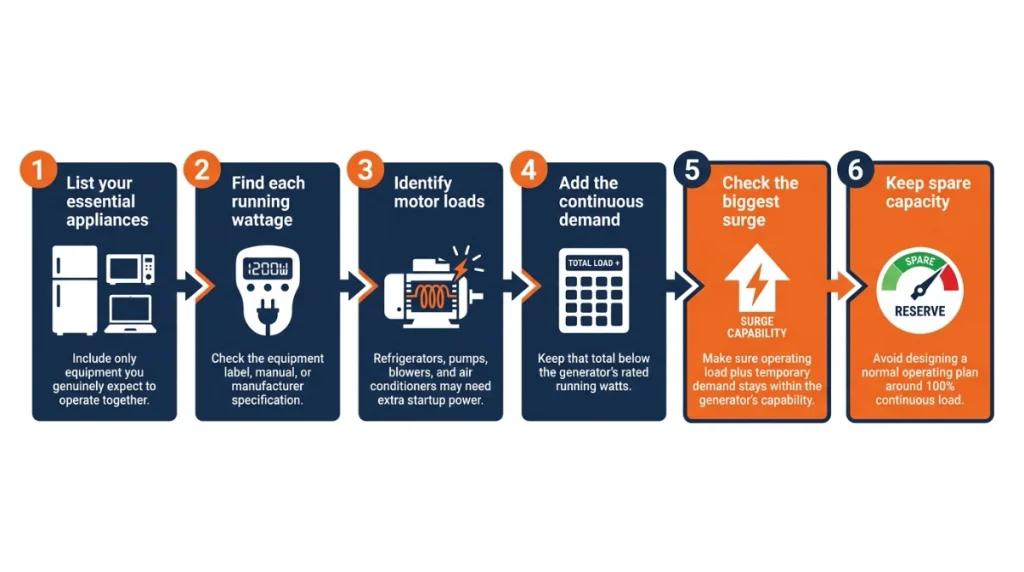
Add the running watts of everything you want operating simultaneously, then account for the largest motor-starting surge. After that, leave reasonable headroom instead of planning around the absolute limit.
- List your essential appliances. Include only equipment you genuinely expect to operate together.
- Find each running wattage. Check the equipment label, manual, or manufacturer specification.
- Identify motor loads. Refrigerators, pumps, blowers, and air conditioners may need extra startup power.
- Add the continuous demand. Keep that total below the generator’s rated running watts.
- Check the biggest surge. Make sure your operating load plus that temporary demand stays within the generator’s capability.
- Keep spare capacity. Avoid designing a normal operating plan around 100% continuous load.
For a deeper walkthrough, my portable generator wattage guide explains the calculation in more detail.
How should a 10,000-watt generator be used safely at home?
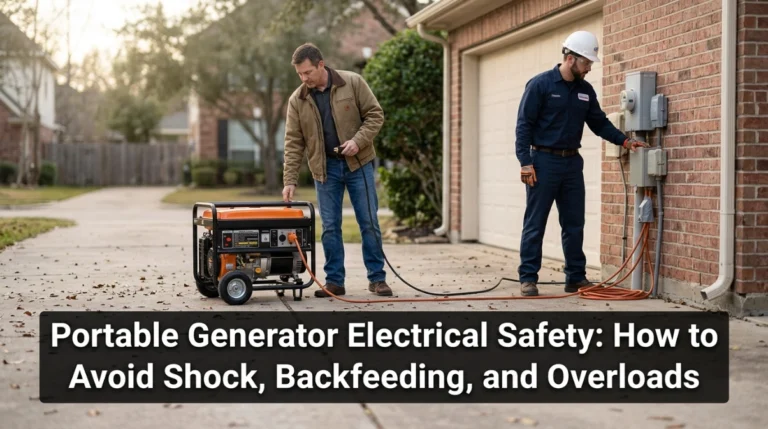
Power capacity doesn’t matter if the installation creates a carbon-monoxide or electrical hazard. Portable generators need outdoor placement and an appropriate electrical connection.
The CDC recommends operating portable generators outside and more than 20 feet from windows, doors, and vents. The exhaust should be directed away from occupied buildings.
- Never run it indoors: Garages, basements, sheds, and enclosed porches are unsafe locations.
- Use CO alarms: Keep working carbon-monoxide alarms inside the home.
- Prevent backfeeding: Use a professionally installed transfer switch or approved interlock arrangement where permitted.
- Keep it dry: Follow the manufacturer’s instructions for operation during wet weather.
- Use proper cords: Extension cords must be grounded and correctly rated for the connected load.
The U.S. Consumer Product Safety Commission also recommends outdoor placement at least 20 feet from the home. A CO shutoff sensor is useful, but it doesn’t replace safe placement.
For electrical connections, the Electrical Safety Foundation International advises against connecting a generator directly to household wiring without a transfer switch. Have a qualified electrician handle panel-connected backup equipment.
Which 10,000-watt-class generators are worth considering?
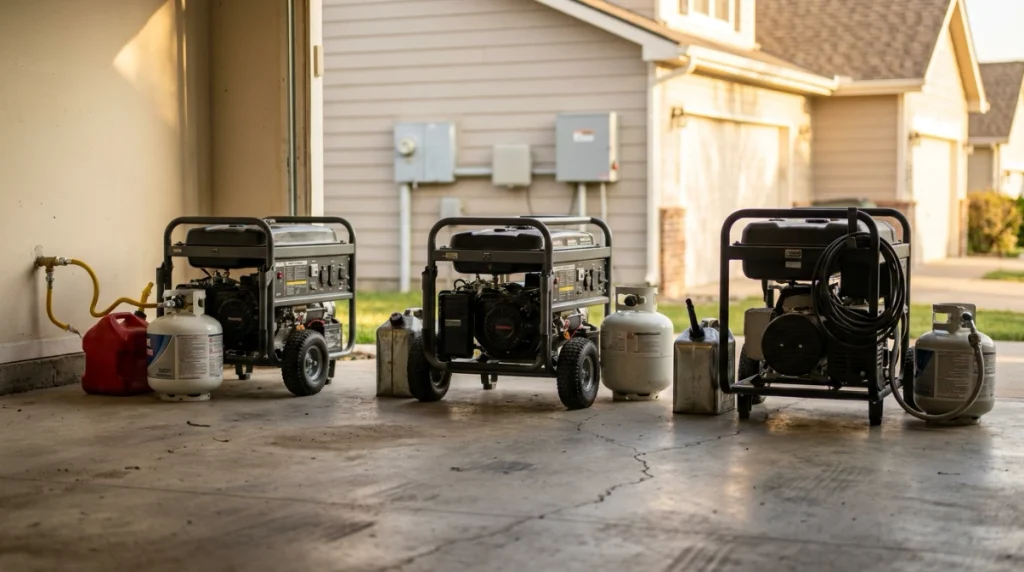
If you’re ready to pick one, these are three useful configurations to compare. The best choice depends on fuel availability, required running output, and how you plan to connect the generator to your home.
🏆 Best Exact 10 kW Tri-Fuel Pick
Champion 201438 Tri-Fuel Generator
★★★★★ 4.8/5 editorial fit
It delivers 12,500 starting and 10,000 running watts on gasoline, with propane and natural-gas capability plus 120/240-volt outlets. I like it most when fuel flexibility matters as much as reaching a true 10,000 running watts on gasoline.
⛽ Best Dual-Fuel Output
DuroMax XP13000HX
★★★★★ 4.7/5 editorial fit
The XP13000HX provides 10,500 running watts on gasoline and 10,000 running watts on propane, plus 120/240-volt output and CO shutdown. I prefer this configuration when propane output needs to stay close to the full 10 kW mark.
🏠 Best Extra Headroom
Westinghouse WGen11500TFc
★★★★★ 4.7/5 editorial fit
This tri-fuel model delivers 11,500 running watts on gasoline, 10,500 on propane, and 9,500 on natural gas. I like the added gasoline headroom for homes with several motor loads that may cycle during an outage.
Frequently Asked Questions
Will a 10,000-watt generator run a refrigerator and central AC?
Possibly, but central AC startup demand is the deciding factor. A refrigerator uses a modest share of 10 kW, while a large compressor can briefly demand several thousand extra watts, so compare the AC’s starting requirements with the generator’s surge rating.
Can a 10,000-watt generator run two refrigerators?
Yes, most 10,000-running-watt generators have enough capacity for two normal refrigerators plus many other household essentials. You still need to allow for compressor startup surges, especially if both refrigerators happen to cycle at nearly the same time.
Can a 10,000-watt generator run a well pump and furnace?
Often, yes. Both loads use motors, though, so check their starting wattage instead of adding only their normal running demand. A larger well pump can require substantially more starting power than its steady operating wattage suggests.
How many amps does a 10,000-watt generator produce at 240 volts?
Ten thousand watts divided by 240 volts equals about 41.7 amps. Actual usable output also depends on the generator’s receptacles, circuit breakers, fuel-specific rating, and manufacturer instructions, so the mathematical maximum isn’t automatically available through every outlet.
Is a 10,000-watt generator enough for a 2,000-square-foot house?
It can be, but square footage isn’t the best sizing method. A 2,000-square-foot home with gas heat may need far less generator power than a smaller all-electric home with central AC, electric water heating, cooking, and other high-demand appliances.
Final takeaway
A 10,000-watt generator is a strong home-backup size when your goal is to keep essential circuits running and selectively operate larger appliances. It can handle far more than a refrigerator and a few lights.
The key is load management. Add your running watts, account for the largest startup surge, check the output for your chosen fuel, and leave enough headroom for equipment to cycle safely.

Hi, I’m Michael Turner. I own a generator workshop in the United States and founded HomeGeneratorBlog to share practical, hands-on guidance about generator installation, maintenance, troubleshooting, safety, and backup power solutions. My goal is to help homeowners make smarter, more confident decisions through clear and reliable information