How Much Is a Generator for a 2,000 Sq Ft Home? (2026 Cost Guide)
Quick Answer
A generator for a 2,000-square-foot home typically costs $8,000–$16,000 fully installed for a permanent standby system in 2026. Many homes in this size range can consider an 18–22 kW generator, although the correct capacity depends on electrical demand. A portable generator costs considerably less but usually powers selected appliances rather than the entire house. Before budgeting, check generator sizing requirements for your appliances and heating system.
Typical 2026 generator costs
- Portable generator: Approximately $700–$2,000 for the equipment, before any permanent electrical connection.
- Smaller standby system: Budget roughly $8,000–$12,000 installed for selected household loads.
- 18–22 kW standby: Around $10,000–$16,000 installed for many whole-home projects.
- Complex installation: Costs can exceed $18,000 when major electrical or fuel-system work is required.
- Annual ownership: Budget for maintenance, fuel, and eventual repairs.
My recommendation
- Start with your loads: Have a qualified installer calculate running demand and motor starting requirements.
- Compare complete quotes: Include transfer equipment, fuel connections, labor, permits, and commissioning.
A generator sounds like a straightforward purchase until installation costs enter the picture. I prefer comparing complete backup systems rather than generator sticker prices alone.
Below, I’ll break down realistic 2026 budgets, explain how generator sizing changes the price, and show where homeowners can save money without sacrificing important backup power.
How Much Does a Whole-House Generator Cost for a 2,000 Sq Ft Home?
For many 2,000-square-foot homes, a reasonable starting budget is $8,000–$16,000 for a permanently installed standby generator. Larger systems or difficult installations can exceed that range.
Generac’s published installation guidance also identifies $8,000–$16,000 as a typical complete-system cost. You can compare that figure with the manufacturer’s generator installation guidance.
The table below separates generator types by practical backup goals.
| Generator Type | Estimated Cost | Backup Coverage |
|---|---|---|
| 7.5–10 kW portable | $700–$2,000 equipment only | Essential appliances and selected circuits |
| 14 kW standby | $8,000–$12,000 installed | Managed household loads |
| 18–22 kW standby | $10,000–$16,000 installed | Broad whole-home coverage |
| 24–26 kW standby | $13,000–$20,000+ installed | Higher electrical demand |
These are national planning estimates, not guaranteed local prices. Installation complexity, regional labor costs, and electrical requirements can change your total substantially.
The important distinction is between purchasing equipment and purchasing a functioning backup system. A generator sitting beside the house cannot safely power your electrical panel without proper installation.
What Size Generator Does a 2,000 Sq Ft House Need?
An 18–22 kW standby generator is a useful starting point for many 2,000-square-foot homes. However, a smaller unit may work with load management, while an all-electric home may require more capacity.
Generator capacity is the electrical power a generator can supply, usually expressed in watts or kilowatts. One kilowatt equals 1,000 watts.
Square footage doesn’t reveal how much electricity your appliances consume. A home with gas heating may require substantially less generator capacity than an equally sized home with electric heating.
Typical generator sizes by backup goal
- 5,000–7,500 watts: Refrigeration, lighting, internet equipment, and selected essential appliances.
- 7,500–10,000 watts: Essentials plus selected pumps, heating equipment, or additional circuits.
- 14–18 kW: Larger household loads, potentially including air conditioning with suitable load management.
- 20–22 kW: Broad home coverage when actual running and starting demands fit the system.
- 24–26 kW or more: Homes with greater electric heating, cooling, cooking, or other heavy loads.
These categories are screening estimates rather than electrical design recommendations. Generac’s home generator sizing guide explains why appliance demand matters more than floor area.
Why starting watts change your generator size
Some motors briefly consume extra electricity when starting. Air conditioners, refrigerators, and water pumps can create these short power surges.
For an initial estimate, I add simultaneous running watts and the largest additional starting surge. A professional then checks the actual equipment ratings and possible overlapping loads.
- List the appliances you want available during an outage.
- Record their running wattages from equipment labels or manuals.
- Add the loads you expect to operate simultaneously.
- Identify motor starting requirements and other temporary demands.
- Have an electrician or generator installer verify the final capacity.
Consider a hypothetical house with 6,000 watts of normal running demand and another 4,000 watts of temporary motor-starting demand. That example creates a 10,000-watt requirement before accounting for additional design factors.
A professional load calculation matters because real equipment can behave differently. Fuel type, ambient conditions, and load management also affect generator performance.
What Is Included in the Installation Price?
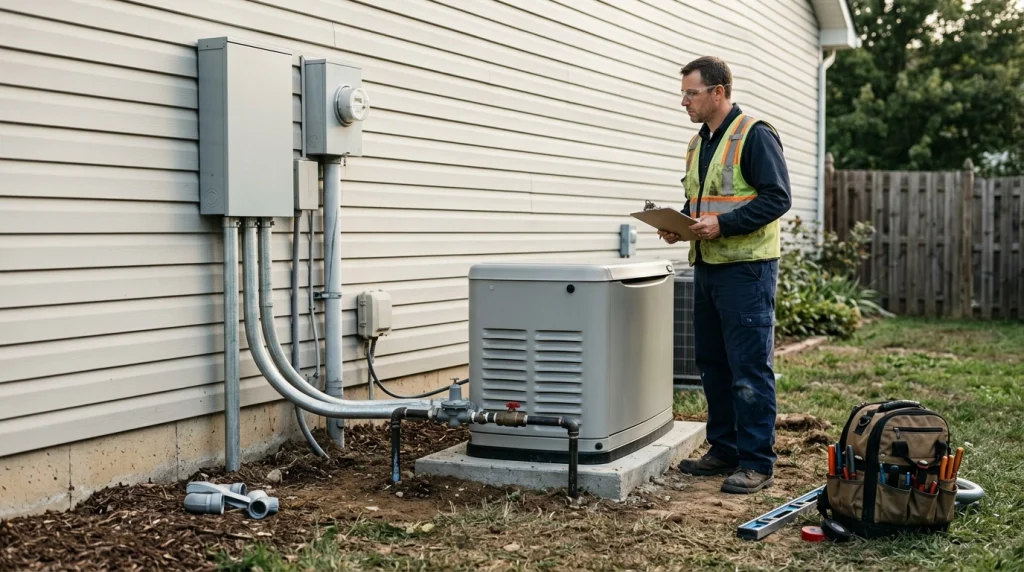
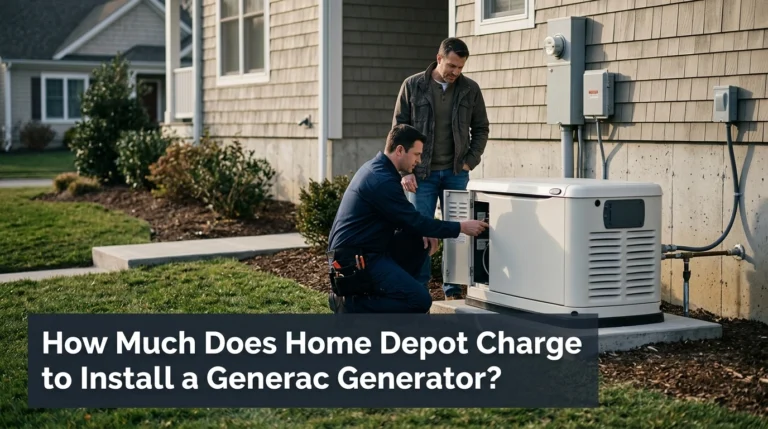
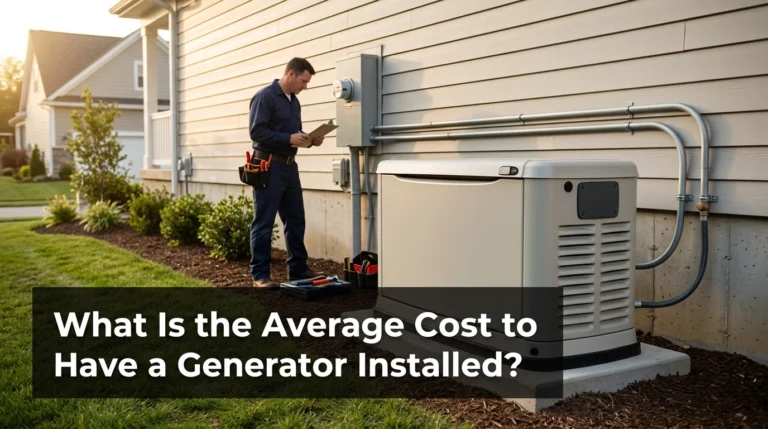
A complete standby installation includes much more than the generator itself. Electrical connections, fuel delivery, site preparation, and transfer equipment often account for a substantial part of the budget.
Example cost breakdown for a 22 kW system
Generac currently lists a 22 kW generator bundled with a transfer switch starting at $7,369. The following example shows how an illustrative installation budget could reach approximately $12,269.
| Cost Item | Example Amount |
|---|---|
| 22 kW generator and transfer switch bundle | $7,369 |
| Electrical labor and wiring | $2,000 |
| Fuel-line installation | $1,500 |
| Generator pad and site preparation | $500 |
| Permits and inspections | $300 |
| Additional materials and commissioning | $600 |
| Illustrative Total | $12,269 |
This is a constructed budget example, not an actual contractor estimate. The equipment amount uses published starting pricing, while the other amounts illustrate a possible project scope.
A proposal may bundle several categories into one line item. Always check what’s included before adding separate allowances.
What increases installation costs?
- Long fuel-line runs: More piping, trenching, or routing increases installation work.
- Gas supply upgrades: An existing meter, regulator, or propane system may need modifications.
- Electrical panel changes: Older or unsuitable equipment can require additional work.
- Distance from the electrical service: Longer wire runs increase materials and labor.
- Site restrictions: Tight spaces, difficult terrain, and local setback rules complicate placement.
- Permits and inspections: Requirements and fees vary by jurisdiction.
I would be cautious about a suspiciously low installation quote. It might exclude the fuel connection, transfer switch, permits, or other essential work.
Is a Portable Generator Cheaper Than a Whole-House Generator?
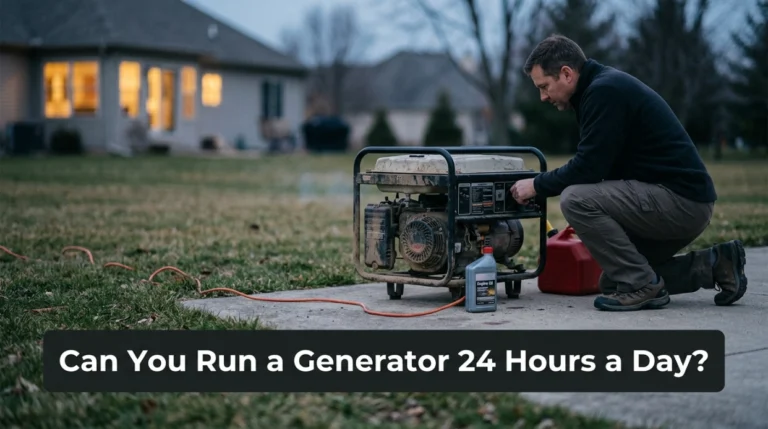
Yes, a portable generator generally costs much less than a permanent standby system. The trade-off is manual operation, limited simultaneous capacity, and more hands-on fuel management.
A portable generator usually needs safe outdoor setup whenever an outage occurs. Standby systems remain installed and can start automatically when utility power fails.
| Feature | Portable | Standby |
|---|---|---|
| Upfront expense | Lower | Higher |
| Starting | Typically manual | Automatic |
| Common fuel | Gasoline or propane | Natural gas or propane |
| Home coverage | Selected loads | Potentially most household circuits |
| Fuel handling | Often manual refueling | Connected fuel supply |
For occasional outages, a portable generator may be the more economical option. If automatic operation and broad household coverage matter, standby equipment becomes more attractive.
My advice is to compare the everyday inconvenience alongside the price difference. This portable versus standby guide explores those trade-offs in more detail.
How Much Does It Cost to Run a Generator for a 2,000 Sq Ft House?
Operating costs depend on the generator’s electrical load, fuel consumption, and local fuel prices. A larger generator does not necessarily consume the same fuel every hour.
Natural gas, propane, and gasoline have different storage and purchasing considerations. The cheapest option depends on your available supply and actual operating conditions.
What determines fuel expense?
- Generator load: Powering more appliances generally increases fuel consumption.
- Fuel prices: Local utility tariffs and fuel suppliers determine your actual cost.
- Generator efficiency: Different models consume different amounts at comparable loads.
- Outage duration: A three-hour interruption costs much less than several days of continuous operation.
- Fuel availability: Natural gas and stored propane have different supply risks.
The calculation itself is simple for fuels purchased by volume. Multiply hourly consumption by operating hours, then multiply by your fuel price.
For example, a generator consuming 1.5 gallons hourly over 12 hours uses 18 gallons. At a hypothetical $3 per gallon, the fuel bill would be $54.
That example is arithmetic, not a typical fuel-consumption claim for a particular generator. For a broader comparison, see the generator fuel cost comparison.
What Are the Ongoing Maintenance Costs?
A standby generator needs periodic maintenance even when outages are uncommon. Set aside a few hundred dollars annually as an initial service budget, then check local contractor rates.
Actual maintenance schedules depend on operating hours, manufacturer instructions, and environmental conditions. Long outages can trigger additional service requirements.
Common maintenance expenses
- Engine oil and oil-filter replacement
- Air-filter inspection or replacement
- Spark plug service when required
- Starting battery testing or replacement
- Fuel-system inspection
- Automatic exercise testing and professional servicing
Ask prospective installers whether their quoted price includes the first scheduled maintenance visit. Some offer service plans, while others charge separately.
Maintenance isn’t the only ownership drawback. Noise, fuel availability, and repairs are worth considering before purchasing, as explained in this guide to generator ownership drawbacks.
How Can You Save Money on a Home Generator?
The best savings usually come from choosing the correct backup capacity. Buying more electrical output than your household needs can increase equipment and installation costs.
I would prioritize an accurate load assessment before comparing brands or promotions. That reduces the chance of purchasing an unsuitable system.
- Identify essential circuits: Separate critical appliances from equipment you can leave off during outages.
- Consider load management: A compatible controller may temporarily limit large appliances and reduce the capacity required.
- Compare fuel options: Existing natural-gas infrastructure may simplify installation when supply capacity is sufficient.
- Get three itemized quotes: Compare the same electrical scope, equipment, warranties, and permits.
- Check bundled equipment: Some generators include transfer switches in their advertised packages.
- Plan before storm season: Allow time for professional sizing, approvals, and installation scheduling.
A cheaper system isn’t useful if it cannot support your critical appliances. Focus on reducing unnecessary capacity rather than eliminating important safety equipment.
What Safety Requirements Affect Generator Installation?
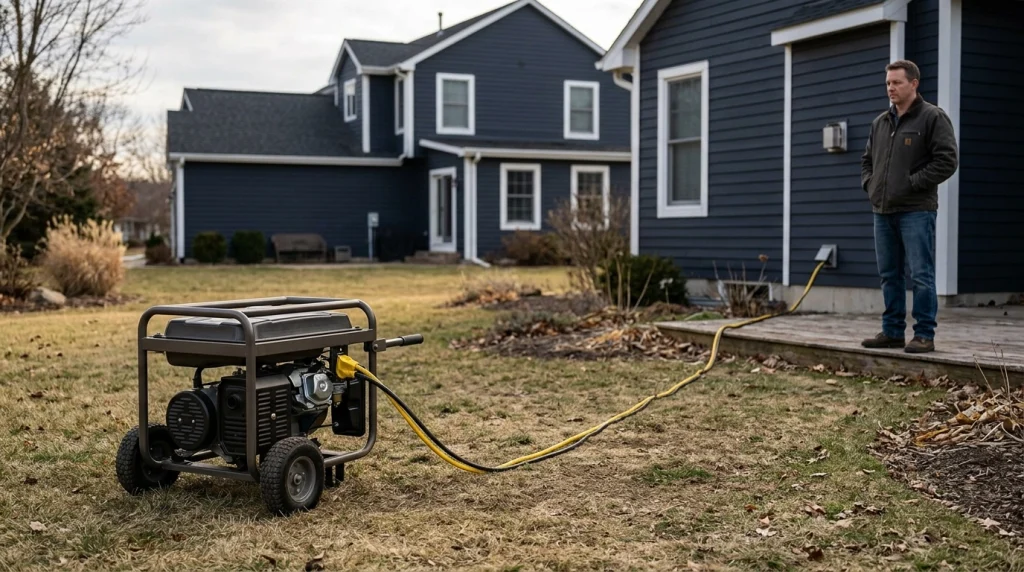
Safe installation is essential regardless of generator price. Fuel-burning equipment produces hazardous exhaust, while incorrect electrical connections can endanger occupants and utility workers.
The U.S. Consumer Product Safety Commission advises operating portable generators outdoors, at least 20 feet from buildings, with exhaust directed away from openings. Review its generator safety recommendations.
Essential safety rules
- Prevent carbon monoxide exposure: Never operate portable generators inside homes, garages, sheds, or other enclosed spaces.
- Install carbon monoxide alarms: Maintain functioning alarms in appropriate household locations.
- Avoid electrical backfeeding: Never connect a generator directly to household wiring without approved transfer equipment.
- Use qualified professionals: Electrical and permanent fuel-system installation should meet applicable codes.
- Follow placement requirements: Standby generator clearances depend on the listed equipment and local regulations.
- Keep equipment dry: Follow the manufacturer’s operating instructions for wet conditions.
The American Red Cross also recommends professional installation of transfer switches for generators connected to household wiring. Its safe generator use guidance explains important precautions.
Which Generators Are Worth Considering for a 2,000 Sq Ft Home?
For a typical 2,000-square-foot property, I would compare three different approaches before purchasing. These options address managed standby loads, broader whole-home power, and lower-cost portable backup.
Prices and specifications below reflect manufacturer information available in 2026. The suitability scores are editorial assessments based on specifications, not hands-on test results or verified customer ratings.
Affiliate disclosure: Some shopping links below are affiliate links, and qualifying purchases may earn a commission at no additional cost to you.
🏆 Best for Managed Standby Backup
Generac 18 kW Standby Generator with Transfer Switch (G0073240)
★★★★☆ 4.4/5 editorial suitability
This 18 kW standby package includes transfer equipment, with published starting pricing around $6,769 before installation. I’d consider this option for a home where essential loads and selected larger appliances can be managed carefully.
Best fit: Homeowners seeking automatic backup without automatically choosing a larger generator.
⚡ Best for More Power Headroom
Generac 22 kW Standby Generator with Transfer Switch (G0073250)
★★★★☆ 4.6/5 editorial suitability
This 22 kW model offers additional capacity for larger household loads, with published bundle pricing starting around $7,369 before installation. It would be my stronger starting candidate when central cooling and multiple major circuits must remain available.
Best fit: Households needing broader automatic coverage after professional load verification.
💰 Best Lower-Cost Portable Option
Westinghouse WGen9500DFc Dual-Fuel Portable Generator
★★★★☆ 4.2/5 editorial suitability
This portable generator provides 9,500 running watts on gasoline or 8,500 on propane, with a carbon monoxide shutdown sensor. Its published equipment price is around $1,399, making it worth considering when automatic whole-home backup isn’t necessary.
Best fit: Homeowners comfortable with safe outdoor operation and selected household loads.
None of these generators should be selected from square footage alone. Confirm voltage, fuel availability, installation requirements, and equipment compatibility before ordering.
Frequently Asked Questions
How much does a Generac generator cost for a 2,000 sq ft house?
A Generac standby system for a 2,000-square-foot home often falls within an $8,000–$16,000 installed planning range. The actual price depends on generator capacity, transfer equipment, labor, fuel connections, permits, and site conditions.
Will a 22 kW generator run a 2,000 sq ft house?
A 22 kW generator can support broad backup coverage in many 2,000-square-foot homes. However, large air conditioners, electric heating, water heaters, and other appliances can exceed its capacity when running together. A professional load calculation determines whether it is sufficient.
Can a 10,000-watt generator power a 2,000 sq ft home?
A 10,000-watt generator may power refrigerators, pumps, lights, heating controls, and selected appliances in a 2,000-square-foot home. It usually isn’t suitable for unrestricted operation of every household appliance, especially when multiple high-demand electrical systems are running.
How much does it cost to install a generator if I already own one?
Installation can still cost several thousand dollars, depending on electrical work, transfer equipment, fuel connections, permits, and site preparation. Get a detailed quote because the generator’s purchase price doesn’t include everything needed for a completed standby system.
Is a whole-house generator worth the money?
A whole-house generator may be worthwhile if outages are frequent, automatic backup is important, or essential household systems must operate reliably. For rare outages involving only a few appliances, a smaller portable generator may provide better financial value.
Final Takeaway: What Should You Budget?
For a 2,000-square-foot home in 2026, I would start with an $8,000–$16,000 standby-generator budget. An 18–22 kW system deserves consideration, but only if your electrical demand supports that choice.
Before buying, get a professional load assessment and compare at least three complete installation quotes. The best generator isn’t necessarily the largest or cheapest—it’s the one that safely powers what your household needs.

Hi, I’m Michael Turner. I own a generator workshop in the United States and founded HomeGeneratorBlog to share practical, hands-on guidance about generator installation, maintenance, troubleshooting, safety, and backup power solutions. My goal is to help homeowners make smarter, more confident decisions through clear and reliable information