
How to Cover a Running Generator From Rain Safely
Quick Answer
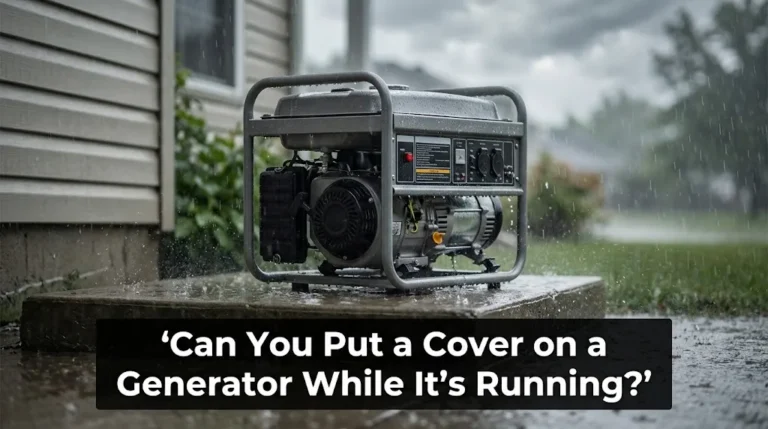
To protect a generator from rain while it is running, use a manufacturer-approved running cover or a suitable open-sided canopy that keeps water away without blocking cooling airflow or exhaust. Place the generator on a dry, stable, well-drained surface outdoors, away from buildings. Never drape an ordinary tarp or storage cover over a running generator. If the owner’s manual prohibits operation in wet weather, shut it down and wait for conditions to improve.
Covering a generator during bad weather requires more than keeping rain off its top. The electrical outlets and control panel need protection from moisture, but the engine also needs cooling air and an unobstructed exhaust path. A cover that solves one problem while creating another can make the setup more dangerous.
The right approach depends on your generator model, the severity of the weather, and the shelter available. Manufacturer instructions take priority because some portable generators must not operate in rain, even when a cover is fitted.
1. Choose a Cover Designed for a Running Generator
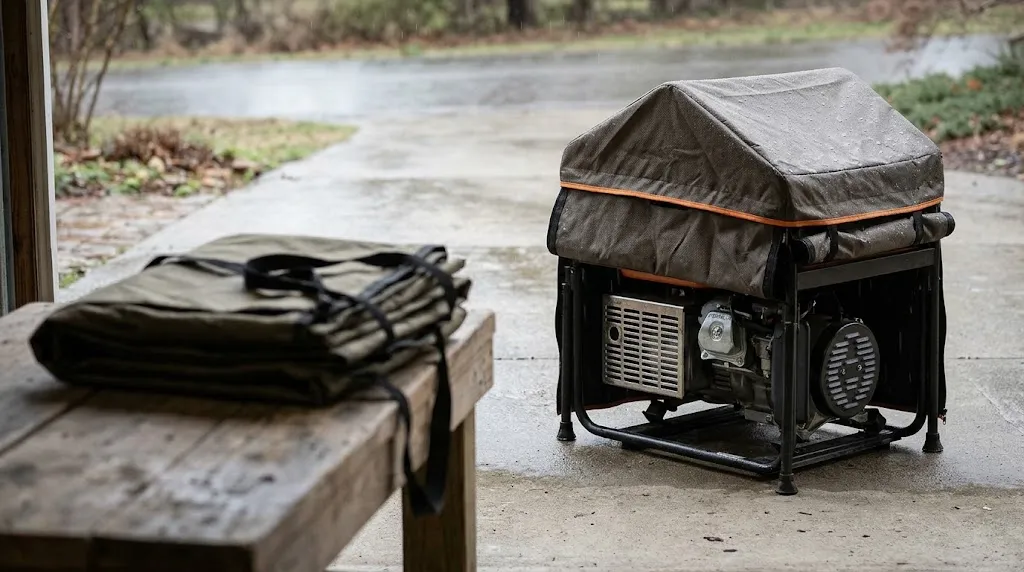
The safest starting point is a weather cover or generator tent specifically approved for operation with your model. These products are designed to protect vulnerable areas while preserving the airflow and clearances the machine needs.
Do not confuse an operating cover with a storage cover. A storage cover is generally intended for a switched-off, completely cooled generator. It may wrap around the machine and restrict airflow, making it unsuitable for use while the engine is running.
What should a suitable running cover provide?
- Rain protection: It should shield the generator’s electrical panel, outlets, and other vulnerable components from direct rainfall.
- Open airflow: It must allow adequate cooling air to enter and heated air to escape.
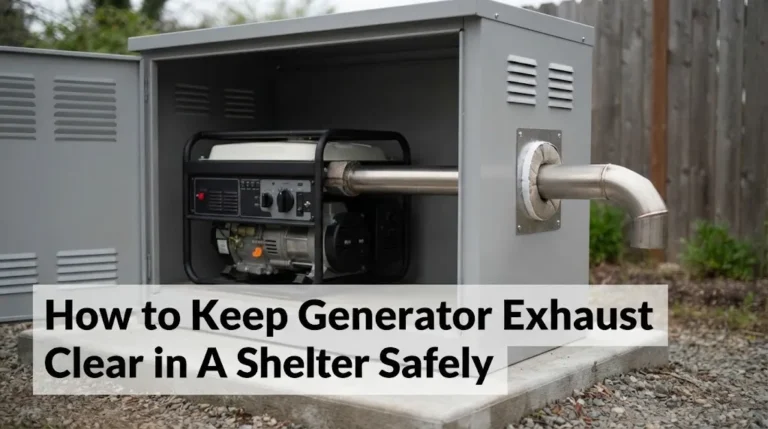
- Exhaust clearance: It must not obstruct the muffler or direct exhaust toward people, buildings, doors, or windows.
- Heat resistance: Materials and components must be suitable for the heat generated during operation.
- Secure installation: The cover must remain stable in the wind without collapsing onto the engine or blocking vents.
Before buying or installing a cover, check the generator’s owner’s manual and the cover manufacturer’s compatibility instructions. A cover that fits physically is not necessarily approved for safe operation.
2. Use an Open-Sided Canopy When the Manual Allows It
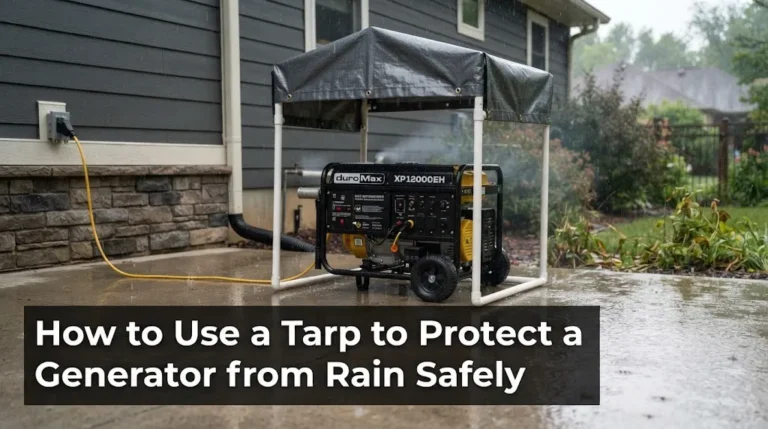
An appropriately designed canopy can protect a generator from overhead rain while keeping its sides open. It may be a practical alternative when the manufacturer permits canopy-protected operation and a compatible running cover is unavailable.
The important distinction is between an overhead shelter and an enclosure. A canopy should provide a roof without turning the generator’s operating area into a small, enclosed space.
How to position the canopy
- Set it up before starting the generator. Install the canopy in dry conditions whenever possible. Do not attempt to assemble a shelter over a running machine during heavy rain.
- Keep the sides open. Leave sufficient space around the generator for cooling, inspection, and exhaust dispersal. Follow the clearances in the owner’s manual and canopy instructions.
- Provide enough roof coverage. The roof should protect the machine from falling rain without interfering with its controls, ventilation, or exhaust outlet.
- Secure the structure. Anchor or stabilize it according to its design so wind cannot shift it toward the generator.
- Check drainage. Position the shelter so roof runoff cannot flow onto the generator or collect around its base.
A canopy is not automatically safe just because it has open sides. A low roof can trap heat, and wind-driven rain can still reach the electrical panel. If the shelter cannot protect the generator without compromising ventilation, it is not suitable.
Practical Tip
Choose the operating location and install the shelter before bad weather arrives. This avoids having to handle wet equipment, move heavy machinery, or improvise a cover during a storm.
3. Place the Generator Where Water Cannot Pool
A good cover cannot compensate for poor placement. Water can splash upward, flow across the ground, or collect around electrical connections even when the generator’s top stays dry.
Set the generator on a firm, level, dry surface that drains properly. If the site is prone to flooding, choose a stable, raised location suitable for the equipment rather than placing the generator where rising water could reach it. Never operate it in standing water.
Keep the generator away from roof drainage, gutters, downspouts, and areas where water runs off a building. Avoid loose or unstable platforms that could tip, shift, or interfere with normal operation.
For a typical portable generator, the U.S. Consumer Product Safety Commission advises operating it outdoors at least 20 feet from the home, with the exhaust directed away from the building. Keep it away from doors, windows, vents, and other openings through which exhaust could enter. Follow any stricter instructions applicable to your specific equipment and location.
For more placement guidance, see our guide to where to place a generator when it is raining.
4. Protect the Electrical Panel and Cord Connections
Rain protection is especially important around outlets, switches, plugs, and cord connections. Water reaching energized electrical components can create a shock or electrocution hazard, damage equipment, or cause a protective device to trip.
Use the following precautions when the generator manufacturer’s instructions permit operation in wet weather:
- Keep the generator’s electrical panel protected by the approved running cover or shelter.
- Use heavy-duty extension cords rated for outdoor use and sized for the connected electrical load.
- Inspect cords, plugs, and connectors for damaged insulation, missing grounding pins, cracks, or other defects before use.
- Keep electrical connections out of puddles and away from runoff. Use suitable weather-rated connection protection where required.
- Arrange cords so water does not run directly along them into a connection. Keep cords away from sharp edges and vehicle traffic.
- Keep your hands dry before touching the generator or electrical connections, and never stand in water while handling electrical equipment.
Outdoor-rated cords are not automatically waterproof, and a weather-resistant connector does not make the generator itself safe to operate in every rainy condition. All components must be suitable for the environment in which they are used.
Our guide to protecting generator connections from rain explains the additional precautions needed around plugs and outlets.
5. Never Use a Tarp or Plastic Sheet as a Running Cover
An ordinary tarp, plastic sheet, garbage bag, or storage cover should not be draped over a running generator. These materials are not necessarily designed to withstand engine heat, preserve cooling airflow, or maintain safe exhaust clearance.
Even if a tarp initially stays in place, wind can push it against a hot muffler or cover an air intake. The material can melt, ignite, or contribute to overheating. A makeshift cover can also trap exhaust in a confined area.
A plastic sheet stretched loosely above the generator is not a dependable solution either. It may sag, tear, collect rainwater, or shift in a gust. A purpose-designed shelter must be securely supported and appropriate for the generator’s operating conditions.
Warning
Never move a running generator into a house, garage, shed, basement, or other enclosed or partly enclosed space to keep it dry. Generator exhaust contains carbon monoxide, a poisonous gas that cannot be seen or smelled. An open door, household fan, or ordinary ventilation arrangement does not make indoor operation safe.
6. Check Whether Your Generator Can Operate in Rain
Not every portable generator is approved for operation in rainy or wet conditions. Some manufacturers permit operation with specified weather protection; others advise against running their portable models in inclement weather.
For example, Generac’s storm-preparation guidance advises against operating its portable generators in rain, sleet, or snow, while identifying certain open-sided, well-ventilated carports as an acceptable protective option when the stated clearance requirements are met. This is model-specific guidance, not blanket permission to run every generator under a carport.
By contrast, Caterpillar’s guidance on operating portable generators in wet conditions emphasizes protecting the generator from rain or snow and following the owner’s manual.
Before operating in bad weather, verify the following:
- The manual allows operation under the type of weather protection you intend to use.
- The cover or canopy is compatible with your exact generator model.
- Required ventilation, exhaust clearances, and heat clearances can be maintained.
- The ground and electrical connections can be kept dry.
- Wind, heavy rain, and flooding will not make the setup unstable or unsafe.
If any requirement cannot be met, turn the generator off according to its manual and wait for safer conditions. A cover does not override a manufacturer’s prohibition on wet-weather operation.
7. Monitor the Setup and Know When to Shut Down
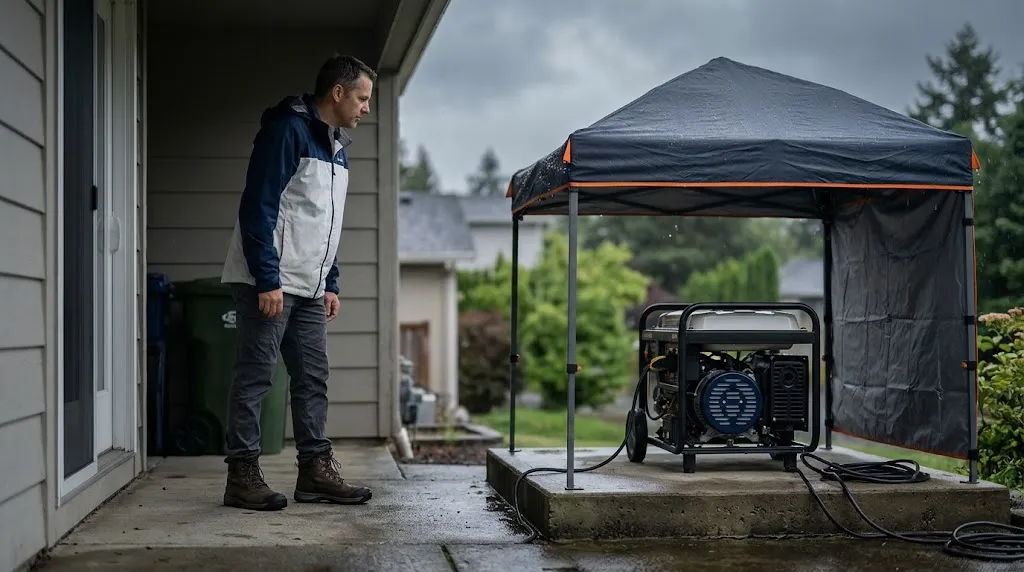
Installing a cover is only the first step. Weather can change while a generator is running, and a setup that was safe in light rain may become unsuitable during a downpour or strong wind.
From a safe, dry position, check periodically that:
- The canopy or running cover remains secure and has not shifted toward the engine or exhaust.
- Cooling vents and the exhaust outlet remain unobstructed.
- Rain is not reaching the control panel or electrical connections.
- Water is not collecting beneath the generator or around the cords.
- Exhaust continues to disperse away from occupied buildings and openings.
- The generator is operating normally, without unusual smells, smoke, noises, or repeated shutdowns.
Stop using the generator if water reaches electrical components, flooding threatens the site, the shelter becomes unstable, or the machine shows signs of overheating or electrical trouble. Follow the manufacturer’s shutdown procedure and do not touch wet electrical parts to investigate the problem.
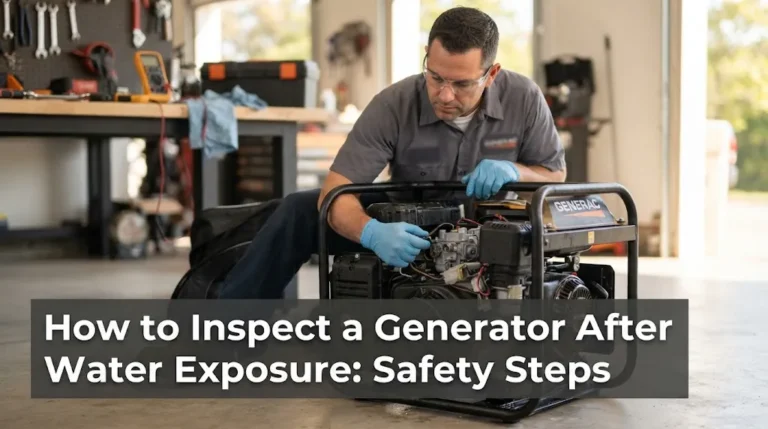
If the generator has been submerged or water may have entered its electrical system, do not restart it simply because the outside appears dry. Have it evaluated according to the manufacturer’s instructions before returning it to service.
Also, never refuel a running or hot generator. Shut it down and allow it to cool as directed by the manufacturer before adding fuel.
Frequently Asked Questions
Can I run a portable generator in light rain?
Only if the manufacturer permits it under the specific conditions and weather protection being used. Some portable generators must not operate in rain, so check the owner’s manual rather than assuming light rain is harmless.
Is a waterproof cover enough to protect a running generator?
No. Waterproof material alone does not ensure safe operation. The cover must be designed for running use and allow adequate cooling airflow, heat dissipation, and exhaust clearance while protecting vulnerable components from rain.
Can I put a generator under a carport during rain?
Possibly, if the manufacturer allows it and the carport provides sufficient ventilation, clearance, and weather protection. Never operate a generator in an enclosed garage or in a location where exhaust can enter an occupied building.
How far should a portable generator be from my house?
The U.S. Consumer Product Safety Commission advises placing portable generators outdoors at least 20 feet from the home, with exhaust directed away from the building. Follow the manufacturer’s instructions and any applicable local requirements.
What should I do if rain reaches the generator’s outlets?
Stop using the generator safely according to its manual. Do not touch wet plugs or outlets while they may be energized. Disconnect and inspect equipment only when it is safe to do so, and have the generator evaluated if water may have entered its electrical components.
Can I cover a running generator with a tarp at night?
No. An ordinary tarp can block cooling airflow, shift against hot components, and interfere with exhaust dispersal. Use only an approved operating cover or suitable shelter, and shut the generator down if safe weather protection cannot be maintained.
Conclusion
Protecting a generator from the weather while it is running means balancing rain protection with ventilation, heat dissipation, and electrical safety. Use a manufacturer-approved running cover or a suitable open-sided canopy only when your generator’s instructions permit wet-weather operation. Keep the unit on a stable, dry, well-drained surface, protect its electrical connections, and maintain safe outdoor placement so exhaust cannot enter occupied spaces.
Never improvise with a tarp or ordinary storage cover over a running machine. If rain, wind, or flooding makes the setup unsafe, shut the generator down according to the owner’s manual and wait for conditions to improve.

Hi, I’m Michael Turner. I own a generator workshop in the United States and founded HomeGeneratorBlog to share practical, hands-on guidance about generator installation, maintenance, troubleshooting, safety, and backup power solutions. My goal is to help homeowners make smarter, more confident decisions through clear and reliable information
One Comment