Does a Generator Need to Be Covered? Safe Guide
Quick Answer
Yes, a generator usually needs protection from weather, but the right kind depends on what it is doing. Cover a cool, switched-off generator for storage. Never put a storage cover or tarp over a running generator. For rain during operation, use only an open canopy or a cover made for running, with full airflow and a clear exhaust path.
That distinction matters more than the word “cover” itself. A cover can extend a generator’s life in storage and cause a serious fire or carbon monoxide hazard during operation. So the useful question is when, with what, and what must stay open.
The Answer Changes With the Situation
A generator in a dry garage faces a different risk from one left beside a house through a storm season. A portable unit also differs from a permanently installed standby unit, which already has its own weather enclosure. Use the situation, not a single rule, to decide.
| Situation | Cover needed? | Right approach |
|---|---|---|
| Switched off, cool, in storage | Yes, usually | A fitted storage cover that does not trap moisture |
| Running portable generator in rain | Rain protection, not a wrap | Open canopy or running cover, with exhaust and intakes clear |
| Installed standby generator | No extra cover | Keep its factory enclosure, vents, and clearances clear |
If you remember only one rule, make it this: protection must never trap heat, exhaust, or moisture where it can do damage.
What a Cover Actually Protects Against
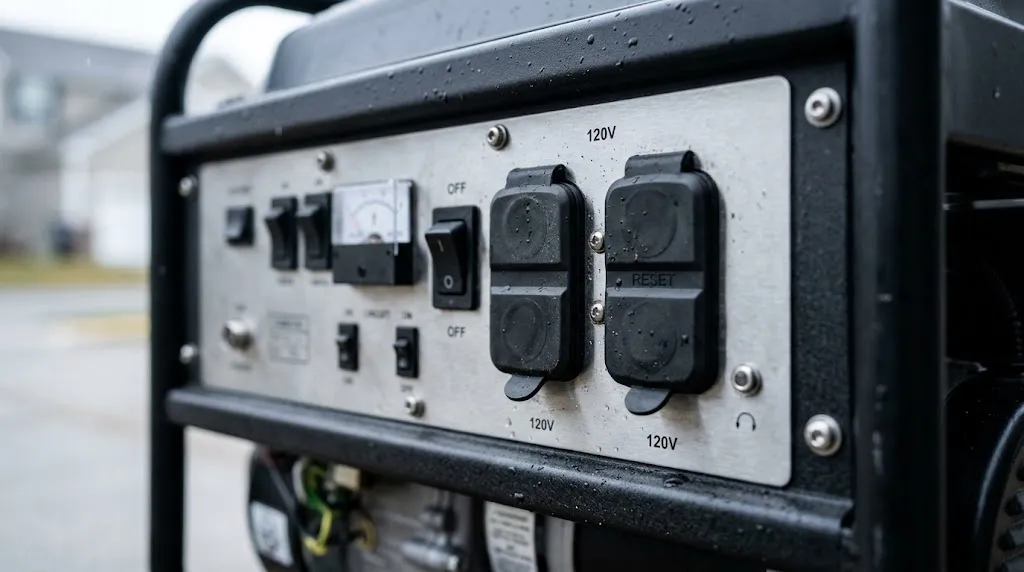
Rain is the most obvious threat, but it is not the only one. Water can reach outlets, switches, and electrical connections, where it raises the risk of a short circuit or shock. Over time, moisture also encourages rust and corrosion on metal parts and can damage fuel-system components if it finds its way inside.
Sun, dust, leaves, and wind-blown debris matter too. Ultraviolet light can age plastic and rubber parts, while dust and debris can block air intakes or settle around cooling fins. Snow can pile up, melt, and refreeze in awkward places. A cover reduces those exposures, especially for a generator unused for weeks or months.
A cover does not fix a bad location. It will not make a flooded spot safe, stop exhaust entering a nearby window, or protect cords lying in a puddle.
When a Generator Is in Storage, Cover It
For storage, the answer is straightforward: yes, cover it once it is switched off and completely cool. Manufacturer storage guidance commonly calls for a clean, dry area and a suitable cover that does not retain moisture. That last detail is important. A cover that seals damp air inside can be worse than no cover in a humid shed, because trapped moisture encourages corrosion and mildew.
Before covering, brush off leaves and dirt, wipe away visible moisture, and check for fuel leaks or damaged cords. Let the engine and muffler cool fully. A hot surface can melt a cover, and fuel vapour near heat is a fire risk. Store fuel separately, away from ignition sources, following the manual for that model.
For outdoor storage, a cover alone is a compromise. It helps against rain and sun, but it cannot replace a dry, sheltered spot or a raised surface that keeps the unit out of standing water. Check it regularly for pooled water, sagging fabric, pests, and rust underneath.
For more on the outdoor-storage question, see the guide to whether a generator can be left outside if covered.
Why a Storage Cover Is Dangerous While Running
A running generator needs air for combustion and cooling, and it must be able to shed heat and exhaust freely. A storage cover or tarp draped over it blocks those paths. Heat builds up around the engine and muffler, which can melt plastic parts, damage the alternator, or ignite the cover itself if it touches a hot surface.
Exhaust is the more serious risk. Generator exhaust contains carbon monoxide, a colourless and odourless gas that can kill quickly. A cover can pool exhaust around the unit or redirect it toward a door, window, or vent. That risk does not disappear because a garage door is open or a window is cracked. The U.S. Consumer Product Safety Commission advises operating portable generators outdoors only, at least 20 feet from the house, with exhaust pointed away from the home.
Warning
Never put a storage cover, tarp, blanket, or box over a hot or running generator, and never run a generator in a garage, shed, porch, or other enclosed or partly enclosed space to keep it dry.
If a running generator smells hot or shows melted material near the exhaust, stop it safely, let it cool, and do not restart it under the same cover.
What Counts as Safe Cover While Running
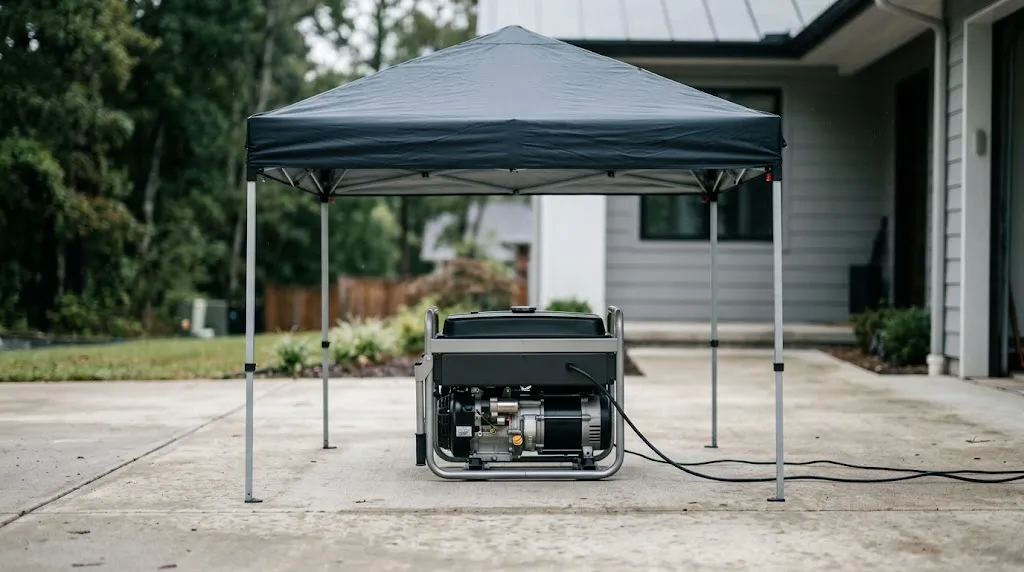
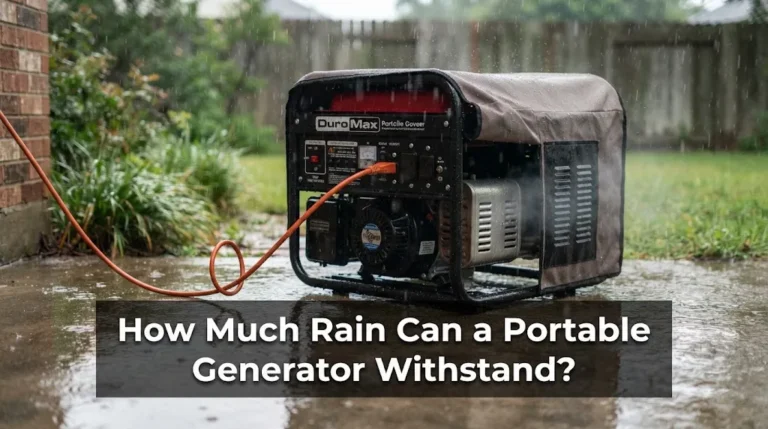
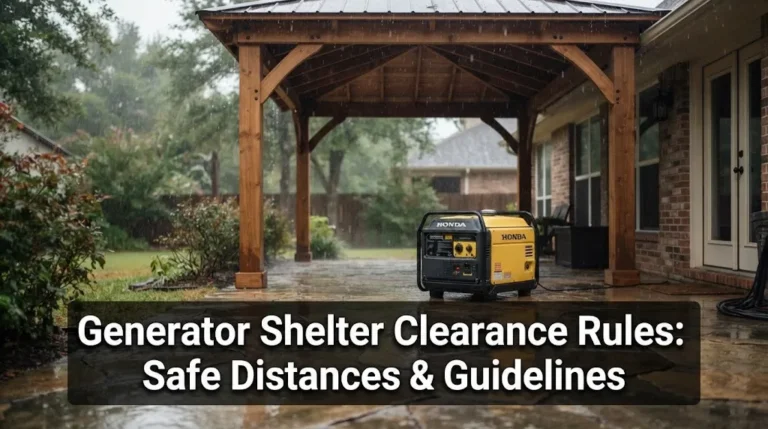
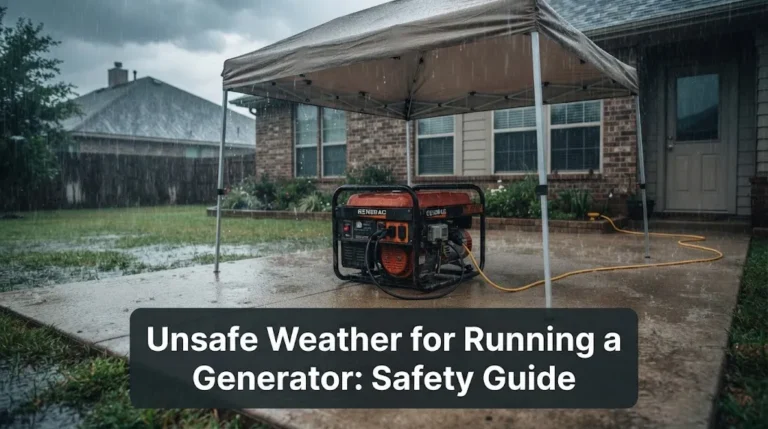
Safe wet-weather protection keeps rain off without enclosing the machine. The classic example is an open, canopy-like structure on a dry surface: a roof overhead, open sides, and plenty of room for air to move. A purpose-built running cover or generator tent works on the same principle, but only if it is designed and labelled for operation, fits the model, and leaves the air intake, cooling openings, control panel, outlets, and exhaust completely clear.
Check the fit before a storm, not during one. A cover that fits the body but blocks a handle, fuel cap, exhaust outlet, or cord exit is not a safe fit. It should stay stable in wind, drain rather than pool water, and keep wind-driven rain off the outlets. Cords should stay off wet ground, and hands should be dry before touching the generator or plugs.
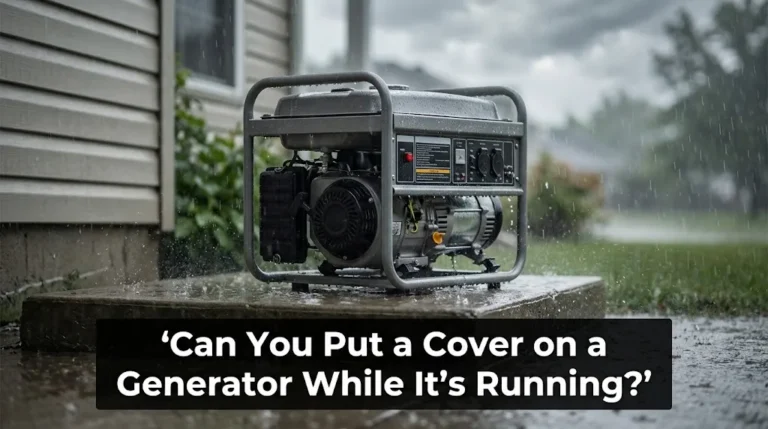
Placement still comes first: a dry, level, non-flammable surface, at least 20 feet from doors, windows, and vents, with exhaust pointed away from the house. A running cover does not shorten that distance or make a porch, carport, or garage safe. See whether you can put a cover on a generator while it is running for the running-specific rules.
Standby Generators Are a Different Case
A permanently installed standby generator is normally supplied with a weather-resistant enclosure designed for that model. It does not need an extra tarp or storage cover, and adding one can block cooling air, exhaust, or service access. Clear snow, leaves, and ice from around the enclosure and its vents.
If the enclosure is damaged or missing panels, repair or replace it through the installer or manufacturer rather than improvising a wrap. Do not stack firewood, bins, or garden equipment against it, as clearance matters for airflow and servicing.
Choosing the Right Type of Protection
Start by naming the job. Storage protection and running protection are different products, even when sellers use similar words. A permanent shelter is a building decision, with its own ventilation, fire, and clearance requirements, not a bigger tarp.
| Option | Best for | Watch out for |
|---|---|---|
| Fitted storage cover | Cool, stored generators | Trapped moisture; never use while running |
| Running cover or tent | Rain or snow during operation | Blocked exhaust, intakes, or outlets |
| Open canopy | Wet-weather operation | Wind-driven rain; unstable setup |
| Permanent shelter | Regular outdoor use | Ventilation, exhaust routing, and clearances |
Check size and shape against the actual model, not just wattage. Open-frame portables and enclosed inverter models have different exhaust positions, outlet layouts, and cooling paths. Also check that you can refuel safely, read the panel, and reach the shut-off. For rain-specific options, see what to use to cover a generator in the rain safely.
Mistakes That Undo the Benefit of a Cover
- Covering a hot generator: Wait until the engine and muffler are cool to the touch before fitting a storage cover.
- Sealing it tight for months: Check underneath for condensation, rust, pests, and pooled water, especially in humid or coastal air.
- Using a tarp as a running cover: A loose tarp can sag, pool water, melt, and trap exhaust. It is not a substitute for a ventilated running cover.
- Blocking the exhaust or intake: Even a small obstruction can raise heat and exhaust risk. Keep both paths fully clear.
- Moving the generator closer to stay dry: A porch or garage roof is not worth the carbon monoxide risk. Keep the 20-foot separation.
- Ignoring winter: Snow can block intakes and melt into electrical parts. Clear snow before and during use. For winter storage, see whether a generator can be stored outside in winter.
A Quick Decision Checklist
Ask these questions in order, and stop at the first unsafe answer.
- Is the generator switched off and cool? If not, do not cover it with a storage cover.
- Is it outdoors, at least 20 feet from openings, with exhaust pointed away? If not, move it before worrying about rain.
- Will the cover leave intake, exhaust, outlets, and controls fully clear? If not, choose a different cover or an open canopy.
- Is the ground dry and level, with cords off wet surfaces? If not, fix the surface first.
- Can you still reach the shut-off and refuel safely? If not, the setup is not ready.
Key Insight
A good cover manages three things at once: water out, heat out, and exhaust out. If it only solves the first, it is not a safe running cover.
Related Product
Generator Cover With Ventilation
A ventilated cover is useful for storage and for comparing running-cover designs, because it protects against rain and dust without sealing the unit tight.
As an Amazon Associate, we earn from qualifying purchases.
Frequently Asked Questions
Does a generator need a cover if it is stored in a garage?
It is less urgent than outdoor storage, but a light cover still helps against dust and accidental splashes. Keep the garage dry and ventilated, let the unit cool before covering it, and do not store fuel beside ignition sources.
Can I leave a generator outside uncovered for a weekend?
A short, dry spell is usually low risk, but rain can reach outlets and controls and leave a hard-to-start machine. Use a storage cover when it is off, or an open canopy when it is running.
Is a tarp good enough to cover a generator?
For emergency storage, a well-secured tarp is better than direct rain, but it can pool water, flap in wind, and trap moisture underneath. It is never a safe running cover. A fitted cover, or a ventilated running cover for operation, is the better choice.
Does covering a generator make it quieter?
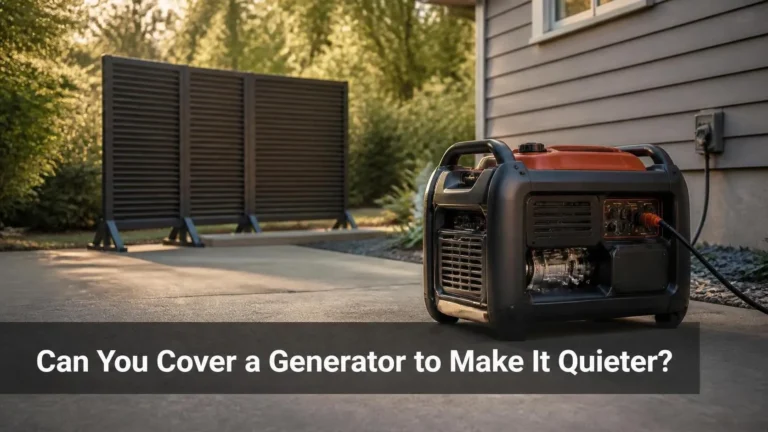
Not in any reliable way. A storage cover is not soundproofing, and wrapping a running generator to muffle noise can block airflow and create a fire or exhaust hazard. For safer noise options, see the guide to how to reduce generator noise rather than adding layers around a running unit.
What should I do if my generator gets wet despite the cover?
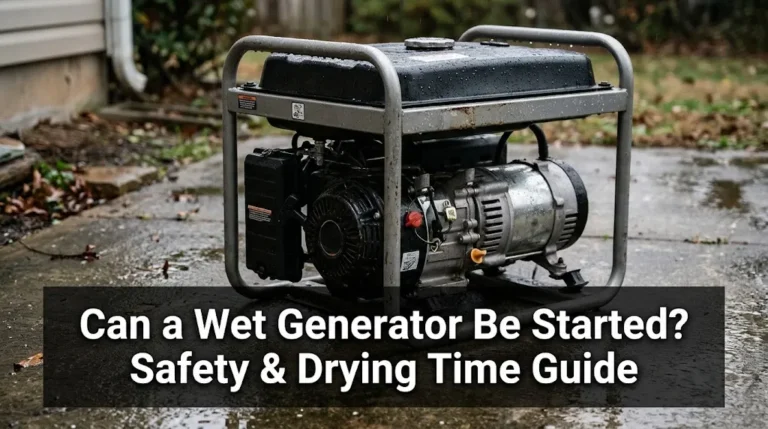
Do not start a soaked generator. Switch it off if it is safe to do so, disconnect loads, let it dry fully, and inspect outlets, cords, and air intakes for water and debris. If it was submerged or shows electrical damage, have it inspected by a qualified technician before use.
Do standby generators need an extra cover?
No. Their factory enclosures are designed for outdoor weather, and an extra cover can block ventilation and service access. Keep the enclosure intact, clear snow and debris from vents, and maintain the clearances in the installation manual.
Conclusion
Yes, a generator needs protection, but protection should match the moment. Cover a cool, switched-off generator to keep out rain, dust, and sun. Keep a running generator under an open canopy or a purpose-built running cover, outdoors and well away from the house, with heat and exhaust free to escape. Leave a standby generator in its factory enclosure. Get that distinction right, and a cover becomes simple maintenance instead of a hidden hazard.

Hi, I’m Michael Turner. I own a generator workshop in the United States and founded HomeGeneratorBlog to share practical, hands-on guidance about generator installation, maintenance, troubleshooting, safety, and backup power solutions. My goal is to help homeowners make smarter, more confident decisions through clear and reliable information