What Is a Portable Generator Used For? (Full Guide)
Quick answer: A portable generator is used to make temporary electricity anywhere the grid can’t reach or has gone down — running fridges, medical equipment, and lights during a power outage, powering tools on a job site, and keeping a camper’s fridge, fan, or CPAP machine going off-grid. It’s not meant to run a whole house indefinitely; it’s meant to bridge a gap.
I’ve had three different portable generators die on me at the worst possible moment — once during a five-day ice storm outage with a chest freezer full of a quarter of a hog. That experience taught me more about what these machines are actually good for than any spec sheet ever did. So let’s skip the marketing language and talk about what a portable generator really does, where it earns its keep, and where it’s the wrong tool.
The Short Version: What Portable Generators Actually Do
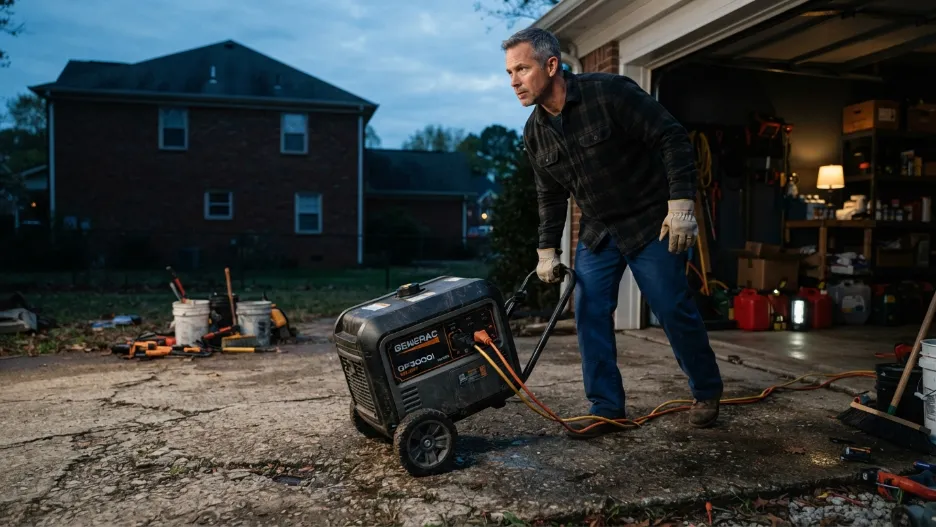
A portable generator burns fuel — gasoline, propane, or sometimes both — to spin an engine, which turns an alternator, which produces electricity you can plug things into. That’s the whole trick. No wires to the grid, no permanent installation. You wheel it outside, add fuel, pull the cord or press a button, and it makes power.
Because it’s mobile and self-contained, it fills a very specific gap: temporary power where permanent power doesn’t exist or has failed. That’s different from a standby generator, which is bolted to a concrete pad, wired into your electrical panel, and switches on automatically. A portable unit is the one you can carry to a tailgate, a campsite, or the side of the house during a blackout.
How a Portable Generator Actually Makes Electricity
Open one up and you’ll find four main parts: an engine, an alternator, a fuel system, and a control panel. The engine burns diesel, natural gas, propane, or gasoline, and the combustion cycle creates rotational force that eventually gets converted into usable AC and DC power. The alternator is the piece doing the actual electricity-making — it spins a rotor inside a stator, and that motion generates current through electromagnetic induction.
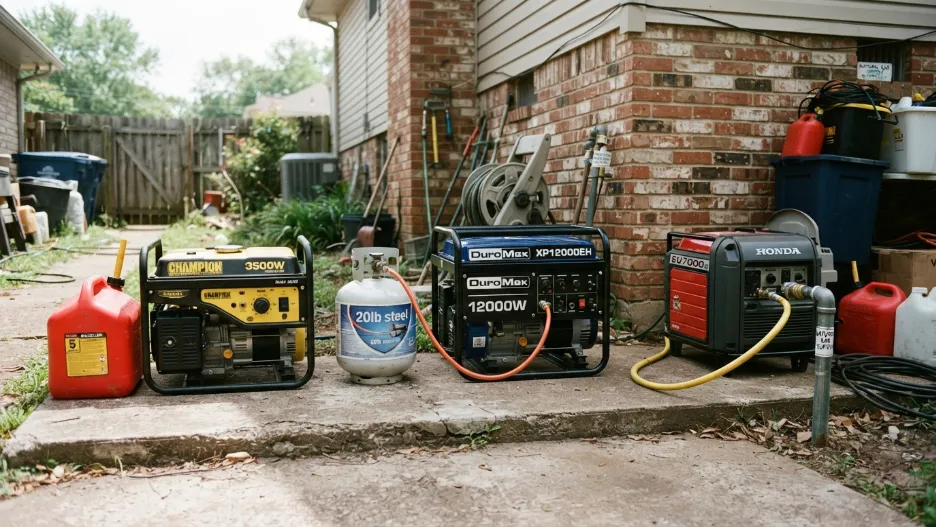
Most portable units hold between one and ten gallons of fuel, and some models are dual-fuel, running on either gasoline or propane, while tri-fuel models add natural gas into the mix. A voltage regulator keeps the output steady so you’re not frying a laptop charger every time the engine load shifts. None of this needs to be memorized to use a generator well — but knowing it helps when something goes wrong, because most portable-generator problems trace back to one of these four systems.
Fuel Type: Which One Fits Your Use Case
| Fuel | Best For | Trade-Off |
|---|---|---|
| Gasoline | Job sites, short outages, lowest upfront cost | Goes stale in storage; hard to find during regional shortages |
| Propane | Long-term storage, multi-day outages | Lower energy density; tanks add bulk and cost |
| Dual-fuel | Homeowners who want backup flexibility | Higher upfront price than single-fuel units |
| Natural gas (tri-fuel) | Homes already piped for gas, near-unlimited runtime | Requires a gas line hookup; least portable of the group |
My own dual-fuel unit has paid for the price difference twice over — once when gas stations were dry for three days after a hurricane, and once when I just didn’t feel like hauling gas cans and ran it on a 20-lb propane tank instead.
Main Use #1: Power Outages and Storm Emergencies
This is the reason most homeowners buy one. When a storm knocks out the grid, a portable generator keeps the essentials running: refrigerator, freezer, a few lights, phone chargers, a sump pump, maybe a window AC unit or space heater. Portable generators are most commonly used during blackouts caused by storms, hurricanes, or winter weather, even though people also use them for camping and other activities.
What it won’t do — and this trips people up — is run your whole house the way a standby unit does. A 3,500–5,000-watt portable unit can typically carry a fridge, a few lights, and a laptop charger at the same time, not your central AC and your electric range simultaneously. Match the generator to the short list of things you actually need, not everything in the house.
For a first outage, I’d point people toward a mid-size dual-fuel portable generator — running on gasoline or propane means you’re not stuck if one fuel type is scarce after a storm, which happens more often than you’d think when everyone’s lined up at the same gas station.
Main Use #2: Construction and Job Sites
Before a building has permanent power, contractors need something to run saws, compressors, lights, and small welders. Portable generators are most commonly used in places without access to the power grid, and construction sites are one of the most typical locations for them, since rental units can be moved around a job as work progresses. Open-frame generators dominate here — they’re built tough, not quiet, and priced to survive a work truck bed.
Main Use #3: Camping, RVs, and Off-Grid Living
This is where inverter generators shine. They’re quieter, lighter, and produce cleaner power — important if you’re charging laptops or running a CPAP machine overnight. Portable generators are useful when camping or using an RV for powering things like a CPAP machine, phones, laptops, lighting, and a mini fridge.
Campground etiquette matters here too. A screaming open-frame unit at 6 a.m. will make you the least popular site in the loop. Inverter models running in the mid-50s dBA range are the polite choice.
Main Use #4: Events, Farms, and Everyday Backup Tasks
Portable generators show up in places people don’t always expect. They’re used at sporting events for scoreboards, lights and speakers, at carnivals and fairs to run games, rides and food equipment, and at weddings and family gatherings to power food warmers, coffee makers, and DJ setups. On farms, they act as backup power for lights, heaters, fans and other equipment — critical on a dairy operation where a loss of power can mean a loss of animals.
Use-Case to Generator Match: A Quick Decision Table
| Your Situation | Best-Fit Generator Type | Typical Wattage Range |
|---|---|---|
| Whole-home emergency backup (fridge, sump pump, some lights, occasional AC) | Dual-fuel or tri-fuel portable | 5,000–8,500W |
| Camping, RV, tailgating | Inverter generator | 1,000–3,500W |
| Job site power tools and lights | Open-frame gasoline generator | 3,500–7,500W |
| CPAP, laptops, sensitive electronics | Inverter generator (low THD) | 1,000–2,200W |
| Full-home coverage during multi-day outages | Large dual-fuel portable + transfer switch | 8,000–12,000W |
| Outdoor events, food trucks, farm equipment | Mid-size open-frame or dual-fuel | 3,000–6,500W |
Common Mistakes First-Time Buyers Make
- Buying on running watts alone. A fridge’s compressor can spike to 2–3 times its running wattage for a second on startup. Undersized units stall right when you need them most.
- Skipping the transfer switch or interlock kit. Running extension cords through a cracked window works for a couple of lamps, but it’s not how you power a furnace blower or a well pump safely.
- Storing gasoline without a stabilizer. Untreated gas can gum up a carburetor in as little as 30 days, which is exactly why so many generators won’t start on the one day a year they’re needed.
- Assuming quiet means safe. A CO shutoff sensor and a quiet muffler are two different features. Check for both, not just the decibel rating on the box.
If you’re still working out exactly how many watts your household needs, it’s worth running the numbers appliance by appliance rather than guessing — our full generator sizing calculator guide walks through running watts, starting watts, and a 20–25% safety margin for a real household load.
What a Portable Generator Is Not Good For
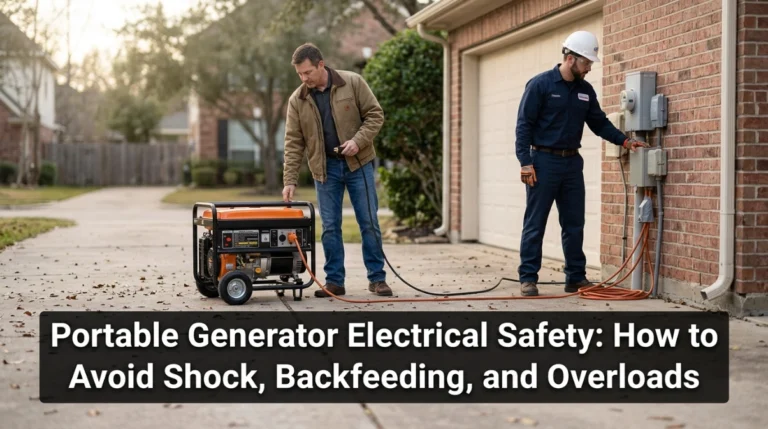
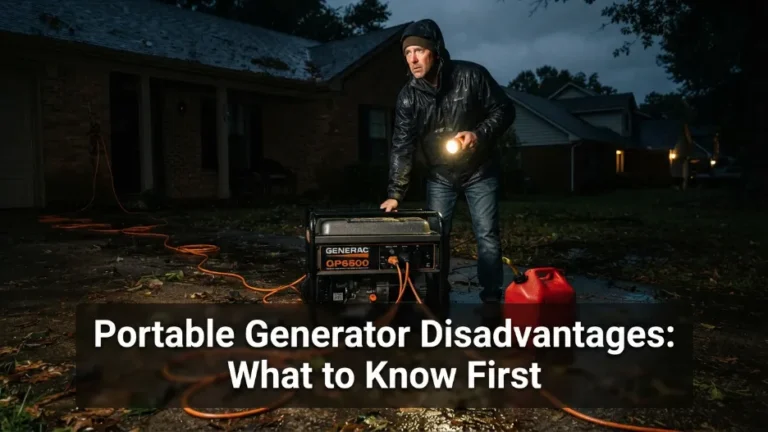
It’s worth being honest about the limits. A portable generator is not designed to run continuously for weeks — most manufacturers rate them for intermittent, not 24/7, use. It’s not a substitute for whole-home central air. And it’s not something you can legally or safely wire directly into your home’s panel without a transfer switch — doing that risks backfeeding electricity onto the grid, which can energize utility lines outside your home, putting repair crews at serious risk, and is illegal in most jurisdictions.
If your real need is multi-day, whole-house coverage every time the grid hiccups, a standby generator or a battery backup system is usually the better long-term investment. A portable unit is the right call when the need is occasional and the budget is tighter.
Safety Rules That Come With Every Use Case
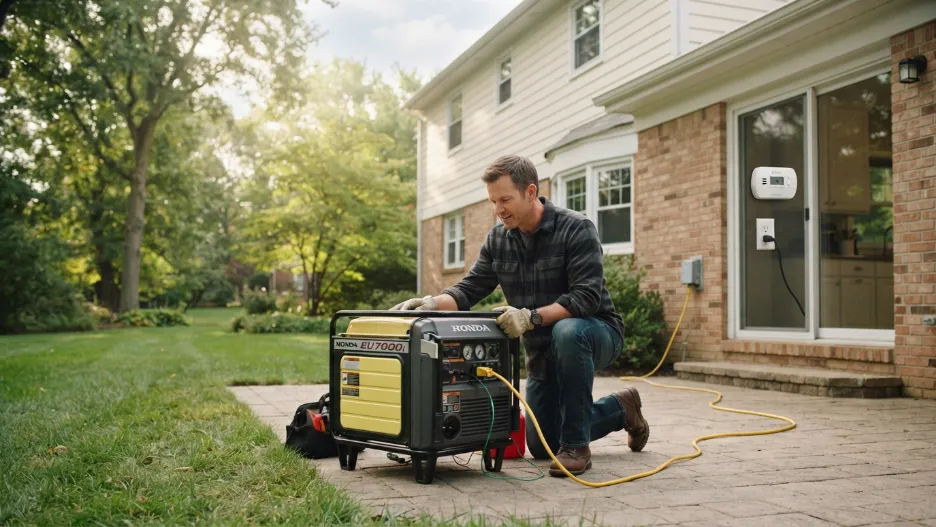
Whatever you’re using it for, the safety rules don’t change. The Consumer Product Safety Commission is blunt about it: only run a generator outside, far from windows, doors, and vents, and never indoors, in a garage, crawlspace, or shed, even with fans or open windows running. Most generator-related injuries and deaths involve carbon monoxide poisoning from units run indoors or in partly enclosed spaces, including basements and garages.
FEMA’s Ready.gov guidance lines up with this: generators, camp stoves, and grills should always run outdoors and at least 20 feet from windows. A battery-powered CO alarm inside the house is cheap insurance. Know the symptoms of CO poisoning — headache, dizziness, weakness, nausea, vomiting, sleepiness, and confusion — and get to fresh air immediately if anyone in the house feels off while the generator is running.
Conclusion
A portable generator’s whole job is simple: make electricity show up somewhere the grid doesn’t. Outages, job sites, campgrounds, farms, and backyard events all lean on that same trick, just at different scales. Figure out which of those situations is actually yours, size the generator to that need rather than to “just in case everything,” and keep it 20 feet from the house every single time. That’s really all there is to it — Michael Turner.
FAQ
Can a portable generator power an entire house?
A large one can cover the essentials — fridge, sump pump, lights, and a window unit — but most portable models aren’t sized or wired to run an entire home’s circuits at once. For true whole-house coverage, you’d need a large-capacity unit paired with a transfer switch, or a standby generator instead.
How long can a portable generator run continuously?
It depends on the tank size and load, but most gasoline units run 8–12 hours per tank at 50% load and aren’t built for true 24/7 operation. Propane and dual-fuel setups with external tanks can extend runtime significantly if you’re prepared with extra fuel.
Is it safe to run a portable generator in the garage with the door open?
No. Exhaust fumes contain extremely high levels of carbon monoxide that can rapidly become deadly if inhaled, even in a garage, basement, crawlspace, or shed with ventilation or an open door. Always run it outdoors, at least 20 feet from any door, window, or vent.
What’s the difference between a portable and a standby generator?
A portable generator is mobile, fuel-powered on demand, and needs to be manually set up and started. A standby generator is permanently installed, wired into your panel, and turns on automatically during an outage — at a much higher price.
Can I plug a portable generator directly into a wall outlet to power my house?
Never plug a generator directly into a household outlet. Doing this can create a dangerous backfeed hazard for line crews working to restore power. Use a properly installed transfer switch, or run appliances directly from the generator’s own outlets with heavy-duty extension cords.

Hi, I’m Michael Turner. I own a generator workshop in the United States and founded HomeGeneratorBlog to share practical, hands-on guidance about generator installation, maintenance, troubleshooting, safety, and backup power solutions. My goal is to help homeowners make smarter, more confident decisions through clear and reliable information