
Tri-Fuel Portable Generator: What It Is and Which One to Buy in 2026
Quick Answer
A tri-fuel portable generator runs on gasoline, propane, or natural gas, so you’re never stuck if one fuel source runs dry during an outage. For most homeowners, the Champion 100592 or a similar 10,000-watt tri-fuel unit hits the sweet spot between price and capability, though if you already have a favorite gas-only model, check our dual-fuel generator guide to see how the two-fuel version compares.
What to look for before you buy
- Running watts you need: match the generator’s continuous output to your actual appliance load, not just the peak number.
- CO safety shutoff: pick a model with an automatic carbon monoxide sensor built in.
- Fuel switch type: some units need a wrench to swap carburetor jets, others switch with a simple dial.
- Noise level: open-frame tri-fuel units run 68-74 dB, noticeably louder than inverter models.
- Natural gas hookup: confirm the model ships with (or supports) a proper NG hose kit if you plan to tap your home line.
I’ve run generators through three hurricane seasons and one week-long ice storm, and the single biggest headache was always running out of the one fuel I had on hand.
That’s what pushed me toward tri-fuel units a few years back, and I haven’t looked back since.
In this guide, I’ll break down how these generators actually work, when they’re worth the extra cost over a dual-fuel model, and which ones I’d actually put in my own garage.
What Is a Tri-Fuel Portable Generator?
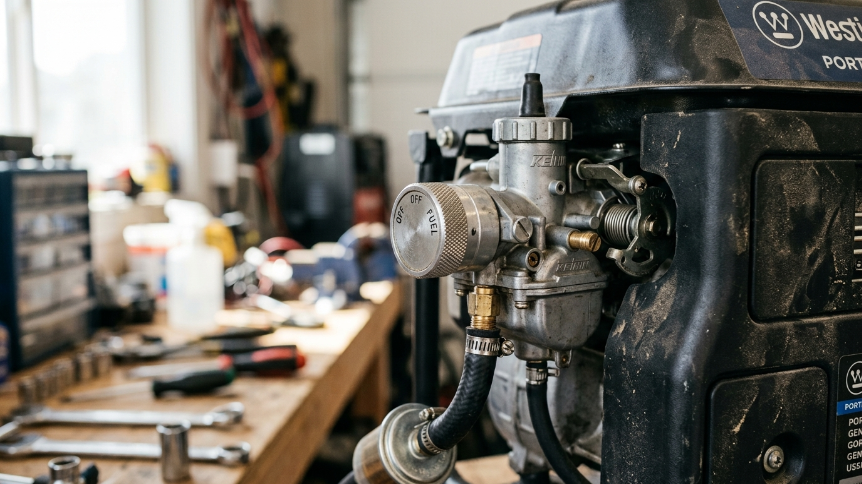
A tri-fuel portable generator is a gasoline generator that’s been modified to also accept propane (LPG) and natural gas (NG), giving you three separate fuel options on one machine.
You pick the fuel with a selector switch or dial, and the carburetor is tuned to handle all three without swapping parts.
Most tri-fuel units start life as a standard gas generator, then get a factory-installed carburetor and regulator setup, or an aftermarket conversion kit, to unlock the extra fuel types.
How Is This Different From a Dual-Fuel Generator?
A dual-fuel generator only runs on two of the three: almost always gasoline and propane.
Tri-fuel adds natural gas into the mix, which matters if your house already has a gas line, since NG never runs out during a long outage the way a propane tank eventually will.
How Does a Tri-Fuel Generator Work?
A tri-fuel generator uses a specially calibrated carburetor with separate fuel inlets, so switching fuels is usually just a matter of flipping a selector dial and connecting the right line or tank.
Internally, the engine’s air-fuel ratio adjusts slightly for each fuel type, since propane and natural gas burn a bit leaner than gasoline.
Here’s what that switching process typically looks like:
- Gasoline mode: fill the internal tank and start as you would any standard generator.
- Propane mode: connect a standard 20-lb LP tank (or larger) via the hose fitting, then flip the selector.
- Natural gas mode: connect the included NG hose kit to a home gas line or larger external supply, then flip the selector to NG.
- Startup: most models need the engine choked and started on gasoline first, then switched over once warm — check your manual, since a few newer models skip this step.
One thing I learned the hard way: output drops when you switch off gasoline.
Expect roughly 10-15% less running wattage on propane, and slightly more than that on natural gas, since both burn cooler than gasoline in a stock engine.
Tri-Fuel vs Dual-Fuel vs Gasoline-Only Generators
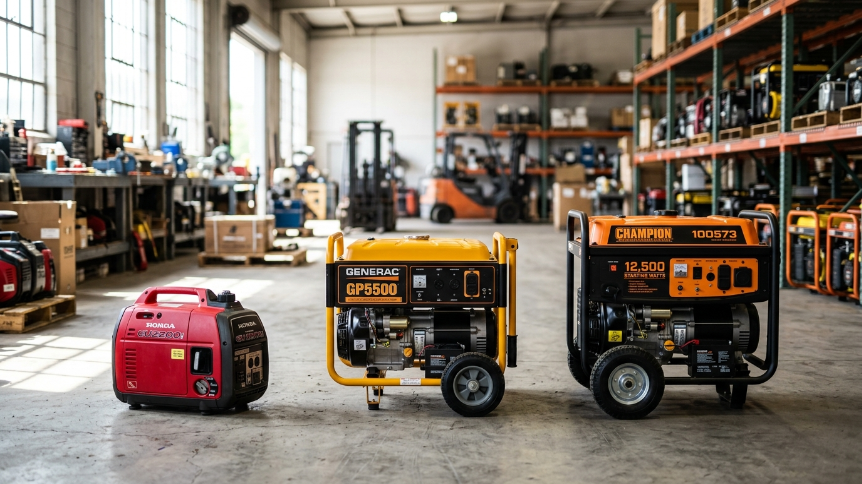
Here’s how the three options actually compare on the things that matter for home backup power.
| Feature | Tri-Fuel | Dual-Fuel | Gasoline-Only |
|---|---|---|---|
| Fuel options | Gas, propane, NG | Gas, propane | Gas only |
| Typical price premium | $150-$400 over gas-only | $80-$200 over gas-only | Baseline |
| Best for | Long outages, homes with NG lines | Occasional outages, camping | Job sites, short-term use |
| Runtime on a single tank | Unlimited on NG hookup | 10-12 hrs on propane tank | 8-14 hrs on gas tank |
| Maintenance complexity | Slightly higher | Moderate | Lowest |
What Are the Pros and Cons of Tri-Fuel Generators?
Tri-fuel generators solve the single-fuel-dependency problem, but they’re not the right fit for everyone.
Here’s a straightforward rundown of what you gain and what you give up.
- Pro — fuel security: if propane or gasoline is sold out during a regional emergency, natural gas from your home line keeps running.
- Pro — lower fuel cost over time: natural gas is typically the cheapest per-hour fuel option for long-duration use.
- Pro — no stale gasoline: you can leave the tank empty for months and just run on propane or NG.
- Con — higher upfront cost: the tri-fuel carburetor and hardware add to the sticker price.
- Con — slight power loss on alt fuels: expect less running wattage on propane and NG versus gasoline.
- Con — NG hookup needs a real gas line: apartment dwellers and homes without gas service won’t get full use of the natural gas mode.
How Much Does a Tri-Fuel Portable Generator Cost?
Budget-friendly tri-fuel models start around $700-$900 for 4,000-6,000 running watts.
Mid-range units in the 8,000-10,000 watt range typically run $1,000-$1,600, and heavy-duty models above 12,000 watts can climb past $2,000.
Add another $50-$150 if the unit doesn’t ship with a natural gas hose kit, since you’ll need to buy one separately.
How Do You Size a Tri-Fuel Generator for Your Home?
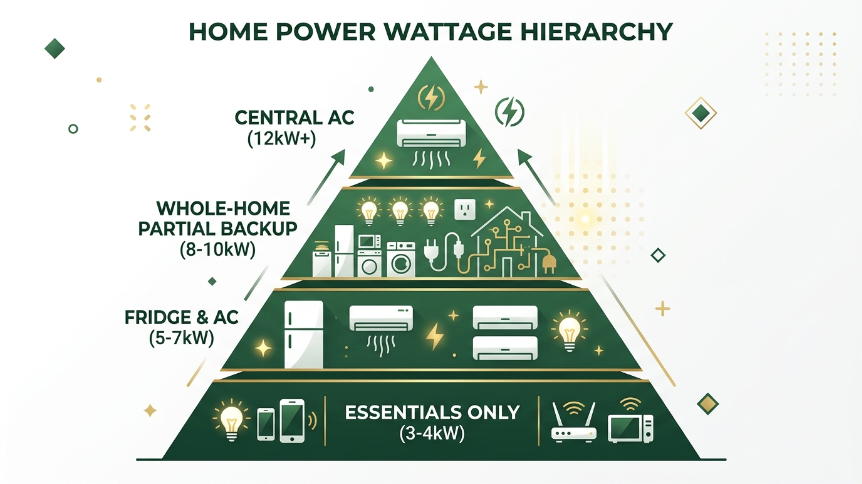
Sizing works the same way it does for any portable generator: you’re matching running watts to your actual appliance load, then adding headroom for startup surges.
A rough starting point most homeowners use:
- Essentials only (fridge, some lights, phone chargers): 3,000-4,000 running watts.
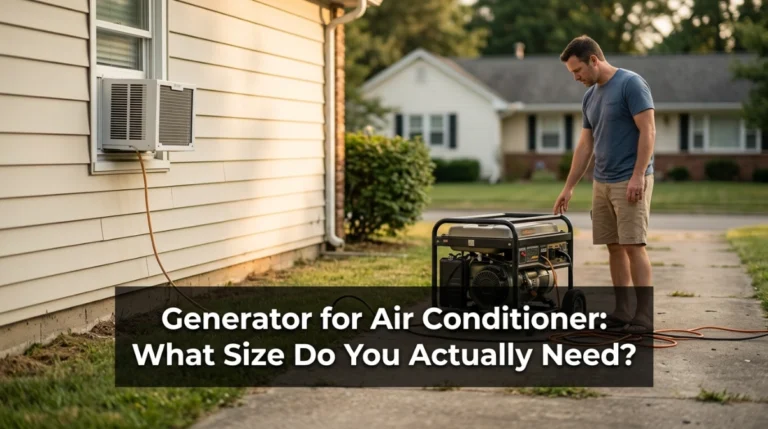
- Fridge plus a window AC unit: 5,000-7,000 running watts.
- Whole-home partial backup (furnace blower, well pump, fridge, lights): 8,000-10,000 running watts.
- Central air conditioning included: 10,000-12,000+ running watts.
If you’re not sure where your household lands, our generator sizing guide walks through the math appliance by appliance.
Is a Tri-Fuel Generator Worth It?
It’s worth the extra cost if you live somewhere with frequent multi-day outages, or if your home already has a natural gas line you can tap.
It’s less worth it if you only lose power a few hours a year, since a simple gasoline or dual-fuel unit will cover that just fine at a lower price.
I run mine on natural gas for anything longer than a day, and switch to propane or gas only when I’m away from the house line, like tailgating or a job site.
As of 2026, natural gas ready models have become the norm on new tri-fuel releases, so you’re less likely to need a separate conversion kit than you were even two or three years ago.
For safety, always run any portable generator outdoors, well away from doors, windows, and vents — the CDC’s generator safety guidance is worth a quick read before your first use, and our carbon monoxide safety guide covers placement distances in more detail.
Propane tank placement matters too: NFPA guidance recommends keeping a meaningful clearance between the generator and any propane tank to reduce fire risk.
If you’d rather stick with two fuels instead of three, our propane generator guide covers that setup on its own.
If you’re ready to pick one, here’s what I’d actually recommend:
🏆 BEST OVERALL
Champion 100592 Tri-Fuel Generator
★★★★★
Roughly 8,500 running watts with electric start and a CO shutoff sensor. I’ve had one running through two storm seasons without a single misfire switching between fuels.
💰 BEST BUDGET
Pulsar Tri-Fuel Portable Generator
★★★★☆
Around 4,000-5,000 running watts, enough for fridge, lights, and a few small appliances. A solid entry point if you just want backup for the basics without spending big.
🏠 BEST FOR WHOLE-HOME BACKUP
Westinghouse WGen11500TFc
★★★★★
Around 9,500 running watts with a 224cc engine, electric start, and built-in CO shutoff. This is the size I’d point most homeowners toward if central AC or a well pump is in the mix.
Frequently Asked Questions
Can any generator be converted to tri-fuel?
Most single-cylinder gasoline generators can be converted with an aftermarket kit, but larger V-twin engines and inverter models often need a professional installer. Always check the manufacturer’s warranty terms first, since some voids apply to aftermarket conversions.
Does a tri-fuel generator lose power on propane or natural gas?
Yes, expect roughly 10-15% less running wattage on propane and slightly more of a drop on natural gas compared to gasoline. Size the generator with that drop in mind if you plan to run mostly on alternative fuels.
Is natural gas cheaper than propane for running a generator?
In most U.S. markets, natural gas costs less per hour of runtime than propane or gasoline. The exact savings depend on your local utility rates, so check a recent bill for your actual cost per therm.
How long can a tri-fuel generator run on natural gas?
If it’s connected to your home’s gas line, it can run continuously as long as fuel supply and oil levels hold up. You’ll still need to shut it down periodically for oil checks and scheduled maintenance.
Do I need a permit to hook a generator to my home’s natural gas line?
Many jurisdictions require a licensed plumber or gas fitter to install the connection point, even if you supply your own hose kit. Check with your local building department before your first hookup.
Tri-fuel generators aren’t cheap, but if you’ve ever sat through a week-long outage watching your propane gauge drop, the extra fuel flexibility earns its keep fast. Start with the wattage your home actually needs, then let the fuel options work in your favor once the power’s out.

Hi, I’m Michael Turner. I own a generator workshop in the United States and founded HomeGeneratorBlog to share practical, hands-on guidance about generator installation, maintenance, troubleshooting, safety, and backup power solutions. My goal is to help homeowners make smarter, more confident decisions through clear and reliable information
One Comment