What Is the Average Price of an Inverter Generator? Real Costs by Size and Use
Quick Answer
The average price of an inverter generator is $800 to $1,600 for most buyers in 2026. Small suitcase models start near $400, while large high-output models can pass $4,000. Wattage, noise level, and fuel type drive most of that gap, so start by learning what to look for in an inverter generator before you compare prices.
Typical price ranges at a glance
- Compact models: $400 to $1,000 for 1,000 to 1,800 running watts.
- Midsize models: $700 to $1,600 for 1,800 to 2,800 running watts.
- Large models: $1,200 to $2,800 for 3,000 to 4,500 running watts.
- High-output models: $1,800 to $4,500 or more for 4,500 running watts and up.
- Premium brands: Honda and Yamaha often cost $500 to $1,000 more at the same wattage.
Quick buying rule
- Size the generator for running watts first, then check starting watts for motors.
- Budget $100 to $300 more for cords, fuel storage, oil, and a cover.
I’ve tested inverter generators through multi-day outages, quiet campsites, and noisy job sites. I’ve also watched friends overpay for power they never use, and underbuy and trip an overload at the worst moment.
This guide breaks down real 2026 price ranges by size, brand, and use. You’ll see what drives the cost, what ownership adds, and how to pick the right price point without guesswork.
In This Guide
- What Is the Average Price of an Inverter Generator in 2026?
- How Much Does an Inverter Generator Cost by Size and Wattage?
- What Makes One Inverter Generator Cost More Than Another?
- Inverter Generator vs Conventional Generator: Is the Price Gap Worth It?
- How Much Do Inverter Generators Cost by Brand?
- What Is the Total Cost of Owning an Inverter Generator?
- How Can You Save Money Without Buying the Wrong Generator?
- Frequently Asked Questions About Inverter Generator Prices
- Final Takeaway: What Should You Budget?
What Is the Average Price of an Inverter Generator in 2026?
The average price of an inverter generator sits near $800 to $1,600 for a typical home or camping buyer as of 2026. That range covers the popular midsize units most people bring home, not the cheapest or largest models on the market.
One average can mislead you, though. A $500 suitcase unit and a $3,500 large unit both count as inverter generators, but they serve different jobs.
Definition: An inverter generator is a portable generator that makes steady, clean power with low total harmonic distortion, or THD. Clean sine wave power means the voltage stays smooth enough for laptops, phones, TVs, and medical devices like a CPAP machine.
Portable power buyers pay extra for that clean output and quieter running. An inverter unit also throttles its engine speed to match the load, which helps it sip fuel at light loads.
During a three-day outage, I ran a refrigerator, a CPAP machine, lights, and phone charging from a midsize inverter generator. That setup cost more than a basic open-frame unit up front, but it stayed quiet enough to run overnight and used far less fuel.
Use this short checklist to place yourself in the right price band:
- Light use: Phones, lights, and small fans point you to the $400 to $800 band.
- Home essentials: A fridge, furnace blower, sump pump, and lights point you to the $900 to $1,800 band.
- RV air conditioning: A roof AC plus other loads often pushes you to the $1,400 to $2,800 band.
- Whole-room backup: Larger loads and 240-volt needs can push you past $3,000.
Retail prices move with sales, fuel prices, and storm demand. Check the spec sheet for running watts, starting watts, and runtime before you trust any headline price.
Section Takeaway: Most buyers should budget $800 to $1,600 for the generator itself, then add setup costs. Your load list matters more than any single average.
How Much Does an Inverter Generator Cost by Size and Wattage?
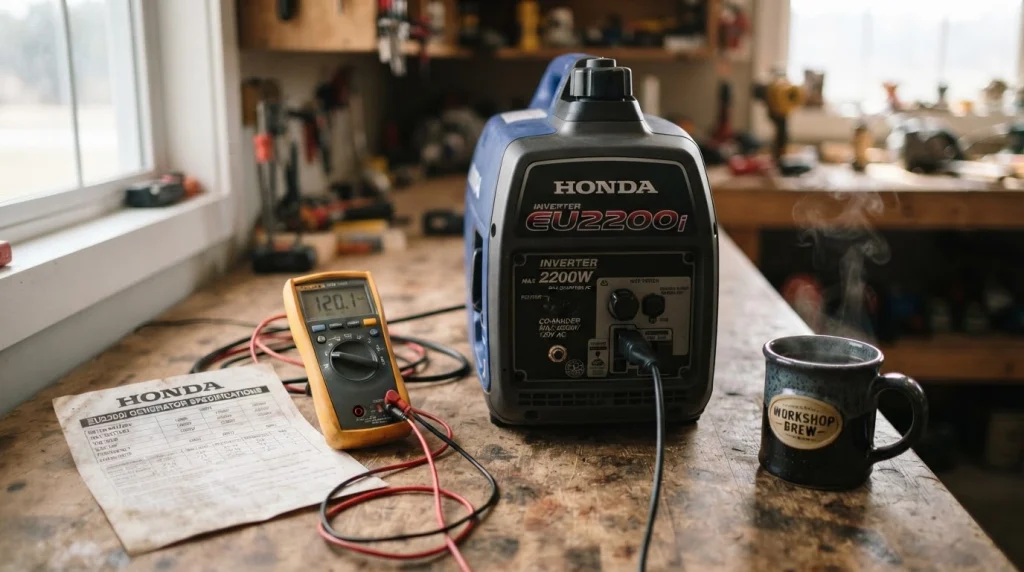
Size drives price more than any other factor. As running watts climb, you pay for a bigger engine, a larger alternator, a stronger frame, and often a larger fuel tank.
Running watts mean the power a generator can supply nonstop. Starting watts, also called surge watts, mean the short burst it can supply when a motor starts.
| Size category | Running watts | Typical price range | Best for |
|---|---|---|---|
| Compact suitcase | 1,000 to 1,800 | $400 to $1,000 | Phones, lights, CPAP, small fans |
| Popular midsize | 1,800 to 2,800 | $700 to $1,600 | Fridge, camping, RV basics |
| Large portable | 3,000 to 4,500 | $1,200 to $2,800 | RV AC, home essentials, tools |
| High-output inverter | 4,500 to 7,500+ | $1,800 to $4,500+ | Larger home backup, job sites |
Those bands reflect typical retail ranges, not one model or one store. Premium brands sit at the top of each band, while value brands sit near the bottom.
What can each size run?
Match the size to loads you will run at the same time. Add running watts for each load, then add the largest starting surge on top.
- Compact: Laptops, phones, LED lights, a CPAP machine, and a small fan.
- Midsize: A refrigerator, lights, chargers, a window fan, and a furnace blower in many homes.
- Large: An RV air conditioner, a microwave in short bursts, a sump pump, and power tools.
- High-output: Multiple large loads at once, plus 240-volt outlets on some models.
Appliance wattage varies by model and age. Read the nameplate or manual for each appliance you plan to run.
Why do starting watts change the price you should pay?
Motors need a surge to start. A refrigerator, sump pump, well pump, or air conditioner can draw two to three times its running watts for a second or two.
An undersized generator may trip its overload shutoff when that surge hits. An oversized generator costs more, weighs more, and burns more fuel at light loads.
Run this quick wattage math before you shop:
- List every load you need at once, with running watts for each.
- Add those running watts together for your base load.
- Add the highest starting surge, then leave 10 to 20 percent of headroom.
That total points you to a running-watt target. Buy for that target, not for a round number on the box.
Section Takeaway: Price follows running watts, but starting watts decide if the unit will hold up under real loads. Size first, then shop price.
What Makes One Inverter Generator Cost More Than Another?
Six features explain most price gaps at the same wattage. Noise control, fuel choice, starting system, outlets, build quality, and warranty support all add cost.
Two 2,200-watt units can sit $600 apart for good reasons. One may run quieter, start with a button, run on two fuels, and carry a longer warranty.
- Noise control: Enclosed cases, better mufflers, and sound insulation cost more to build.
- Fuel type: Dual fuel and tri-fuel models add valves, regulators, and hoses.
- Starting system: Electric start and remote start add a battery, starter, and controls.
- Parallel capability: Parallel-ready outlets and kits let two units join for more power.
- Outlets and controls: RV-ready 30-amp outlets, USB ports, and digital displays add cost.
- Build and warranty: Stronger frames, better engines, and longer coverage raise the price.
How much does quiet cost?
Quiet costs real money. Enclosed inverter generators use sealed cases and tuned exhausts to keep noise down, while open-frame models trade quiet for lower cost and more airflow.
Noise ratings use decibels, or dB, and test distance matters. A rating at quarter load sounds different from full load, so compare ratings at the same load and distance and check the spec sheet.
Campsite rules and close neighbors make quiet worth the premium for many buyers. Job-site buyers may care less about noise and more about watts per dollar.
Does dual fuel add much to the price?
Dual fuel models, which run on gasoline and propane, often cost $100 to $300 more than gas-only models at similar wattage. Propane stores longer than gasoline and starts clean in cold weather, which helps during long storage.
Propane output often runs a bit lower than gasoline output on the same unit. Check both fuel ratings on the spec sheet before you plan your loads.
Fuel storage shapes long-term cost, too. Stale fuel can clog a carburetor, so plan for fresh fuel, stabilizer, and a run schedule per your manual.
Section Takeaway: You pay for quiet, fuel choice, easy starting, and support, not just watts. Pick the features you will use weekly, and skip the rest.
Inverter Generator vs Conventional Generator: Is the Price Gap Worth It?
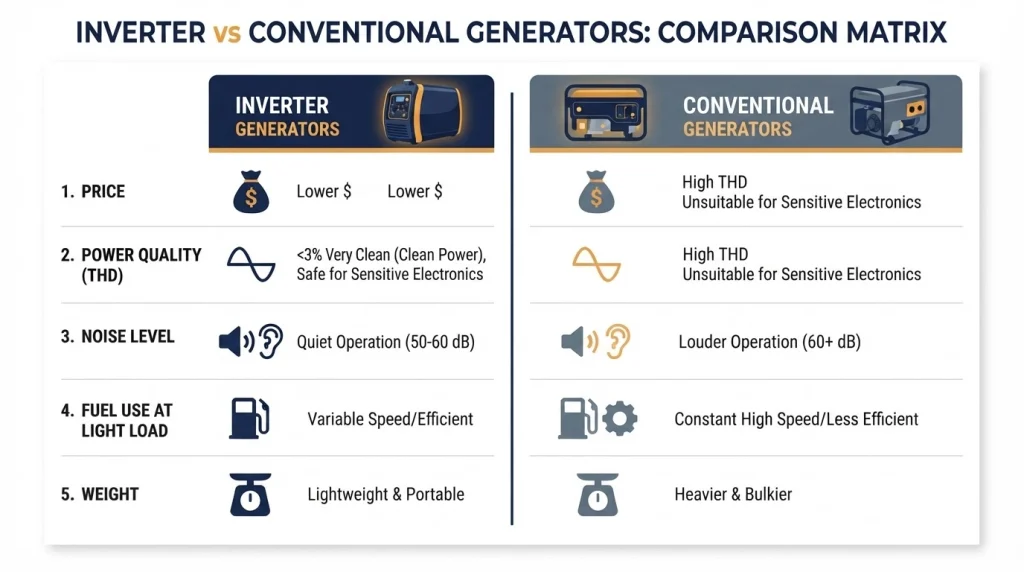
An inverter generator often costs several hundred dollars more than a conventional generator at the same wattage. That gap buys cleaner power, quieter running, and better fuel use at light loads.
A conventional generator, also called an open-frame generator, runs its engine at a fixed speed. It suits heavy tools and simple loads, but its power can run rougher for sensitive electronics.
To see how an inverter generator differs from a regular generator, compare design, power quality, and fuel use side by side. The table below sums up the trade-offs I see in real use.
| Feature | Inverter generator | Conventional generator |
|---|---|---|
| Typical price | Higher at the same watts | Lower at the same watts |
| Power quality | Clean sine wave, low THD | Rougher output, higher THD |
| Noise | Quieter in most enclosed models | Louder in most open-frame models |
| Fuel use at light load | Lower with eco-throttle | Higher at fixed engine speed |
| Weight and size | Lighter in suitcase sizes | Heavier in most cases |
| Best for | Electronics, camping, home essentials | Tools, large loads, tight budgets |
Eco-throttle, also called economy mode, lets an inverter unit slow its engine when loads drop. That saves fuel during overnight fridge cycles and light charging, which adds up over a long outage.
Energy use at home ties back to sizing and habits, not just the generator. Guidance from Energy.gov can help you think through home energy needs before you size backup power.
Choose an inverter generator when you need clean power, quiet running, or easy transport. Choose a conventional generator when watts per dollar matter most and your loads can handle rougher power.
- Pick inverter: Laptops, CPAP machines, modern fridges, RV trips, and close neighbors.
- Pick conventional: Saws, compressors, welders, and large resistive loads on a job site.
- Pick open-frame inverter: You want clean power and high watts, but you can accept more noise.
I once ran a window AC from a unit that surged each time the compressor kicked on. The fix was headroom and clean power, not a louder unit with the same watts.
Section Takeaway: The inverter premium pays off for electronics, camping, and home backup. It pays less for pure tool power, where a conventional unit gives you more watts per dollar.
How Much Do Inverter Generators Cost by Brand?
Brand alone can double the price at the same wattage. Premium brands charge for engine quality, dealer support, parts access, and resale value, while value brands compete on watts per dollar.
Price bands below reflect typical retail patterns, not fixed prices for one model. Sales, bundles, and new model years shift these bands through the year.
What do premium brands cost?
Honda and Yamaha sit at the top of most size bands. A popular 2,200-watt-class premium unit often lands near $1,100 to $1,500, while larger premium units can pass $2,500.
Buyers pay for long track records, wide service networks, and strong used prices. That premium makes sense if you run the unit often, need fast parts, or plan to resell it later.
Read whether Honda inverter generators are worth the money before you pay top dollar. The answer depends on how often you run it and how much dealer support matters to you.
What do mid-priced brands cost?
Champion, Westinghouse, and WEN fill the middle band for most buyers. Midsize units from these brands often land near $700 to $1,300, with large units near $1,400 to $2,400.
Mid-priced brands often pack in dual fuel, electric start, and RV outlets at lower prices. Warranty terms and service access vary, so read the fine print before you buy.
Compare the best inverter generator brands by your use case, not by logo alone. Camping, RV use, and home backup reward different strengths.
What do value brands cost?
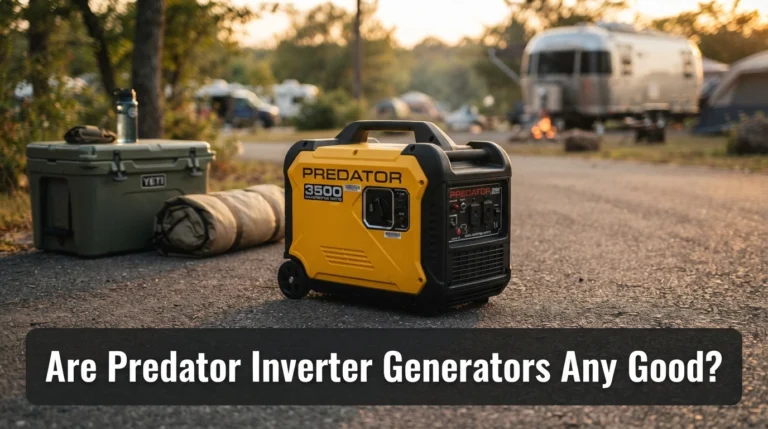
Predator, Pulsar, DuroMax, and similar value brands often undercut mid-priced rivals by $100 to $400 at the same wattage. Small units can start near $400, and large open-frame inverter units can stay under $2,000.
Value buys work well for occasional use and tight budgets. Check noise ratings, warranty service, and parts access, since those gaps show up after the sale.
Independent testing and owner reports help you sort hype from real performance. Consumer Reports offers one useful check alongside manuals and spec sheets.
- Premium buys: Proven engines, dealer support, quiet running, and strong resale.
- Mid-priced buys: Strong features per dollar, with good value for most homes.
- Value buys: Low entry cost, best for light or backup-only use.
- Watch for: Short warranties, thin service networks, and vague noise ratings.
Warranty length means little without local service. Ask who handles repairs, how long parts take, and what the warranty excludes.
Section Takeaway: Premium brands cost more for support and longevity, while value brands win on entry price. Match the brand tier to how often you will run the unit.
What Is the Total Cost of Owning an Inverter Generator?
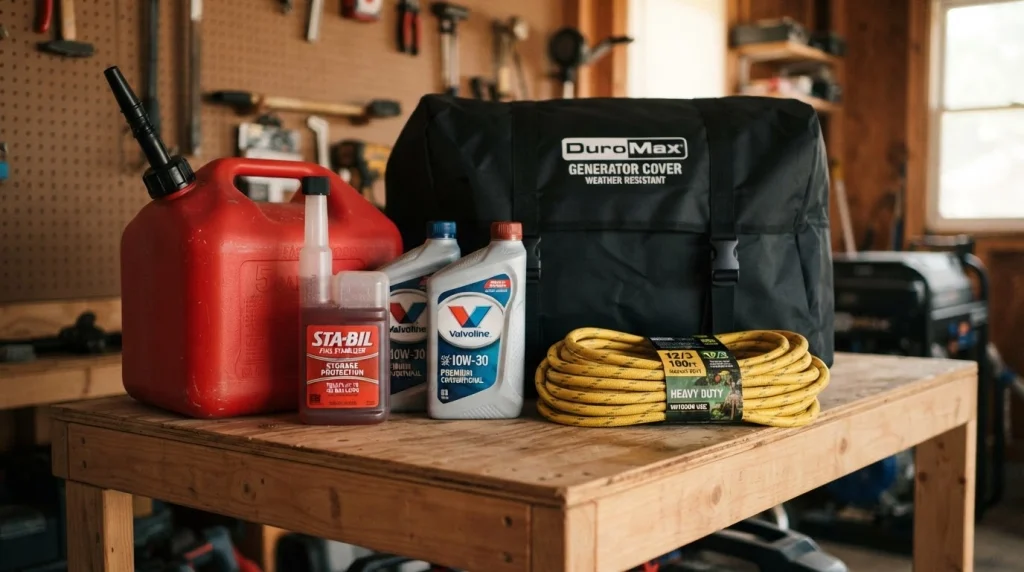
The sticker price is only part of the cost. Fuel, oil, filters, cords, covers, and home hookup gear can add hundreds of dollars in the first year.
Plan for ownership like you plan for the generator itself. A cheap unit with high fuel use and costly repairs can cost more over five years than a mid-priced unit.
- Fuel: Gasoline or propane, plus safe storage cans and stabilizer.
- Maintenance: Oil, filters, spark plugs, and break-in service per your manual.
- Accessories: Heavy-duty extension cords, a cover, and a parallel kit if needed.
- Home hookup: An inlet box, interlock kit, or transfer switch, plus electrician labor.
- Storage: A dry, ventilated spot away from living spaces.
How much does fuel cost over time?
Fuel cost depends on load, eco-mode use, tank size, and local fuel prices. A unit sipping fuel at 25 percent load costs far less per hour than the same unit at full load.
Runtime ratings at 25 percent and 50 percent load help you compare models. Check those ratings on the spec sheet, since headline runtime often reflects light loads.
Learn whether inverter generators are more fuel-efficient than regular generators before you judge fuel cost by tank size alone. Engine throttling matters more than tank size at light loads.
Break-in and upkeep protect your investment. Follow the manual for first oil changes, air filter checks, and storage steps, and run the unit on a schedule so stale fuel does not clog the carburetor.
What about home hookup costs?
Extension cords cost the least and suit a few direct loads. A transfer switch, generator inlet, or interlock kit costs more, but it lets you power chosen circuits safely through your panel.
A transfer switch is a device that safely connects a generator to home circuits and blocks backfeed to the grid. An interlock kit serves a similar safety role on some panels, and both need correct sizing and install.
Professional install often adds several hundred dollars or more, based on panel type, distance, and local rates. Get a quote from a licensed electrician before you budget for home backup.
Safety note: Run generators outdoors and well away from windows, doors, and vents. Use a transfer switch or interlock installed by a licensed electrician, and check your owner’s manual before use.
Carbon monoxide kills quickly and has no smell. Guidance from the U.S. Consumer Product Safety Commission and the Centers for Disease Control and Prevention stresses outdoor use, distance from the home, and working CO alarms.
Section Takeaway: Budget $200 to $600 for fuel, upkeep, and accessories in year one, plus install costs if you connect to home circuits. The cheapest generator rarely stays the cheapest.
How Can You Save Money Without Buying the Wrong Generator?
The best saving comes from buying the right size the first time. Returns, parallel kits, and second units cost more than sizing right up front.
Start with your load list, then shop the price band that fits it. Sales and bundles help, but only after the size fits.
When should you spend more?
Spend more when the use case punishes a weak unit. Nighttime outages, medical devices, RV air conditioning, and daily job-site use reward headroom and quiet running.
- Medical loads: A CPAP machine or home oxygen setup needs steady power and runtime.
- Hot climates: Air conditioning surges demand headroom and strong starting watts.
- Frequent use: Daily or weekly use rewards better engines and longer warranties.
When can you spend less?
Spend less when loads stay light and use stays rare. Phones, lights, and short camping trips rarely need a large premium unit.
- Light camping: A compact unit covers charging, lights, and small fans.
- Short outages: A midsize unit covers a fridge and lights for hours, not days.
- Tight budgets: An open-frame inverter unit gives clean power at lower cost.
Two small parallel-capable units can beat one large unit for transport and flexibility. Parallel capability means two units can join through a kit to share a larger load, but kits and cords add cost.
What is a smart shopping checklist?
Use this checklist to compare models on equal terms. It keeps headline watts and sale prices from steering the choice.
- Confirm running watts, starting watts, and THD on the spec sheet.
- Compare noise ratings at the same load and distance.
- Check runtime at 25 percent and 50 percent load, plus tank size.
- Confirm outlets, fuel type, start type, and parallel ports.
- Read warranty terms, service access, and return rules.
Shop sales in spring and fall, when camping and storm seasons shift demand. Avoid storm-week panic buys, when prices and stock swing fast.
Check the generator size you need for a power outage if home backup drives your buy. That sizing step often saves more than any coupon.
At a quiet campsite, I once watched a loud unit draw complaints within an hour. My quieter enclosed unit cost more, but it let us run a fan and charge gear without tension with neighbors.
Section Takeaway: Save by sizing right, shopping off-peak, and skipping features you will not use. Spend where quiet, runtime, and support protect your actual use.
Frequently Asked Questions About Inverter Generator Prices
What is a good price for a 2,000-watt inverter generator?
A good price for a 2,000-watt-class inverter generator is $600 to $1,200 for most brands in 2026. Value models sit near the low end, while premium brands with quieter running and longer warranties sit near the high end.
Are cheap inverter generators worth it?
Cheap inverter generators can work well for light, occasional use like camping and phone charging. They make less sense for daily use, medical loads, or RV air conditioning, where noise, runtime, and support matter more.
Why are Honda inverter generators so expensive?
Honda charges more for proven engines, quiet enclosed designs, wide dealer support, and strong resale value. That premium suits frequent users, while occasional users often get better value from mid-priced brands.
How much does it cost to run an inverter generator per hour?
Hourly cost varies with load, eco-mode use, tank size, and local fuel prices, so no single number fits all models. Divide your fuel price by the runtime at your typical load to estimate cost, and check the spec sheet for runtime at 25 percent and 50 percent load.
Is a dual fuel inverter generator worth the extra cost?
A dual fuel model is worth the extra $100 to $300 if you store fuel long-term or want propane as a backup fuel. It matters less if you rotate fresh gasoline often and run the unit on a regular schedule.
Should I buy two small generators or one large one?
Two small parallel-capable units offer easier transport and flexible power, since you can run one for light loads. One large unit costs less overall in many cases and avoids parallel kit costs, but it weighs more and offers less flexibility.
Final Takeaway: What Should You Budget?
Budget $800 to $1,600 for the generator, plus $200 to $600 for fuel, cords, upkeep, and accessories in the first year. Add install costs if you plan to connect the unit to home circuits through an inlet or transfer switch.
Let your load list set the size, let your use set the brand tier, and let the spec sheet confirm the details. That order keeps you from paying for watts you will not use, or buying too little power for the loads that matter most.
Start with wattage math tonight, compare two or three models in your band, and buy the unit that fits your loads, noise limits, and budget. A right-sized inverter generator should serve you for years, through outages, trips, and quiet nights at camp.

Hi, I’m Michael Turner. I own a generator workshop in the United States and founded HomeGeneratorBlog to share practical, hands-on guidance about generator installation, maintenance, troubleshooting, safety, and backup power solutions. My goal is to help homeowners make smarter, more confident decisions through clear and reliable information