
Portable Generator Oil Change: How to Do It Safely
Quick Answer
To change portable generator oil, warm the engine briefly, shut it off, disconnect the spark plug boot, drain the old oil, reinstall the drain plug, and refill with the oil grade specified in your manual. Because different engines use different oil capacities and service schedules, understanding how the portable generator engine uses oil helps you avoid overfilling or using the wrong viscosity.
Portable generator oil change steps
- Check the manual: Confirm the required oil viscosity, capacity, drain location, and maintenance interval.
- Warm the oil: Run the generator for a few minutes so the oil drains more freely.
- Shut it down: Turn off the engine, remove all electrical loads, and let hot surfaces cool enough to work safely.
- Drain completely: Place a drain pan underneath and remove the drain plug or use the manufacturer-approved draining method.
- Refill slowly: Add the specified oil in small amounts and stop at the proper dipstick or filler-neck level.
- Check for leaks: Start the generator outside, let it run briefly, shut it down, and recheck the oil level.
My practical rule
- Never assume that a 5-hour, 50-hour, or 100-hour oil-change interval applies to your generator until you check its manual.
A portable generator oil change is simple maintenance, but small mistakes can become expensive. I see the most trouble when owners guess the oil type, pour in the entire bottle, or postpone the first break-in service.
This guide covers the method I use, along with oil grades, change intervals, disposal, and the mistakes worth avoiding in 2026.
What Is a Portable Generator Oil Change?
A portable generator oil change is the process of draining used lubricant from the engine crankcase and replacing it with the correct amount of fresh engine oil. The oil lubricates moving parts and helps control heat, friction, deposits, and wear.
Most modern gasoline, propane, and dual-fuel portable generators use four-stroke engines with a separate crankcase oil supply. That means the engine oil isn’t mixed with the fuel.
- Fresh oil maintains a protective lubricating film between moving engine parts.
- Correct viscosity helps oil flow properly at the temperatures where you operate the generator.
- Correct oil level prevents lubrication problems caused by running too low or too full.
- Regular changes remove contaminated oil instead of leaving it circulating through the engine.
If you’re new to engine-driven backup power, my gasoline portable generator guide explains the engine, fuel system, alternator, and other major parts in plain language.
How Often Should You Change Oil in a Portable Generator?
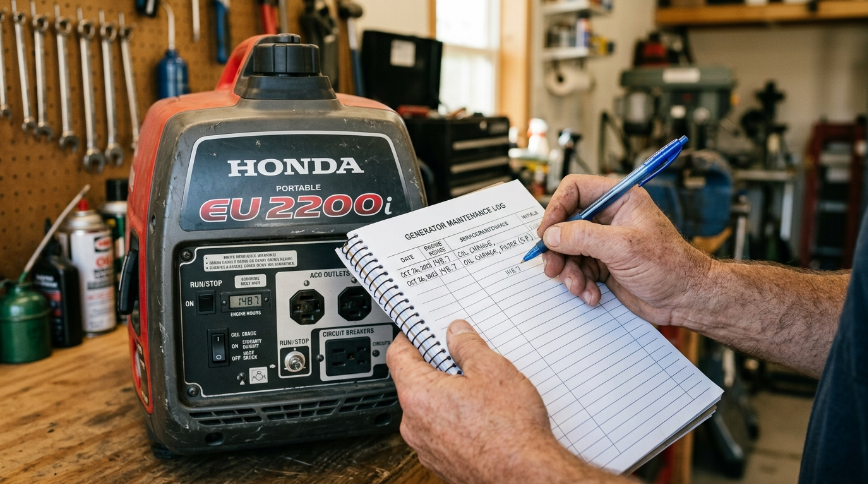
Your owner’s manual sets the correct oil-change interval. Depending on the engine, the first change may come after only 5 hours or as late as roughly 20–30 operating hours.
Regular intervals also vary. Some manufacturers specify about 50 hours, while others allow around 100 hours under normal operating conditions.
| Manufacturer guidance | Initial oil change | Typical later interval | Important note |
|---|---|---|---|
| Generac portable guidance | 20–30 hours | Every 100 hours | Exact model requirements take priority. |
| Westinghouse portable guidance | 5 hours | Every 50 hours or season | Check the maintenance schedule for your model. |
| Briggs & Stratton small-engine guidance | 5 hours | Every 50 hours or annually | Certain engine designs have different requirements. |
You can compare those schedules with current Generac portable-generator guidance, Westinghouse maintenance information, and the Briggs & Stratton maintenance schedule.
Long outages make runtime hours easy to underestimate. A generator running 20 hours each day can accumulate 100 hours in only five days.
When should you change oil sooner?
Heavy operating conditions can justify earlier service when the manual calls for it. Heat, dust, extended high-load operation, and repeated long runs all put more stress on a small air-cooled engine.
- Check the oil level before each extended operating period.
- Track engine hours instead of guessing from calendar time.
- Keep enough approved oil on hand for at least one outage oil change.
- Write the last oil-change hours on a maintenance tag or notebook.
What Oil Should You Use in a Portable Generator?
Use the viscosity and service classification specified by the generator manufacturer. SAE 10W-30 is common, but that doesn’t make it correct for every generator or temperature.
For example, Generac’s current portable guidance lists SAE 30 for warmer conditions, 10W-30 across a broader cool-weather range, and synthetic 5W-30 across all listed temperatures. Other manufacturers publish different recommendations.
| Oil grade | Why owners encounter it | What to do |
|---|---|---|
| SAE 30 | Common recommendation for warmer operating temperatures on some engines. | Use only when your manual and temperature range allow it. |
| 10W-30 | Frequently specified for portable four-stroke engines. | Confirm the manual before buying. |
| Synthetic 5W-30 | Some manufacturers approve it for a wide temperature range. | Use it only when the engine manufacturer permits it. |
The label on the oil bottle matters less than matching the engine specification. Don’t choose oil solely because it’s marketed as premium or synthetic.
What Tools Do You Need for a Generator Oil Change?
You don’t need a professional toolbox. I prefer having everything beside the generator before touching the drain plug.
- Correct fresh engine oil
- Low-profile drain pan or sealed drain container
- Small funnel or measured oil dispenser
- Correct socket or wrench for the drain plug
- Clean shop rags or paper towels
- Disposable gloves
- Replacement drain-plug washer if your manual requires one
- Cardboard or absorbent material for accidental drips
Some enclosed inverter generators also require a screwdriver or hand tool to remove an access panel. Check before the outage starts.
How Do You Change the Oil in a Portable Generator?
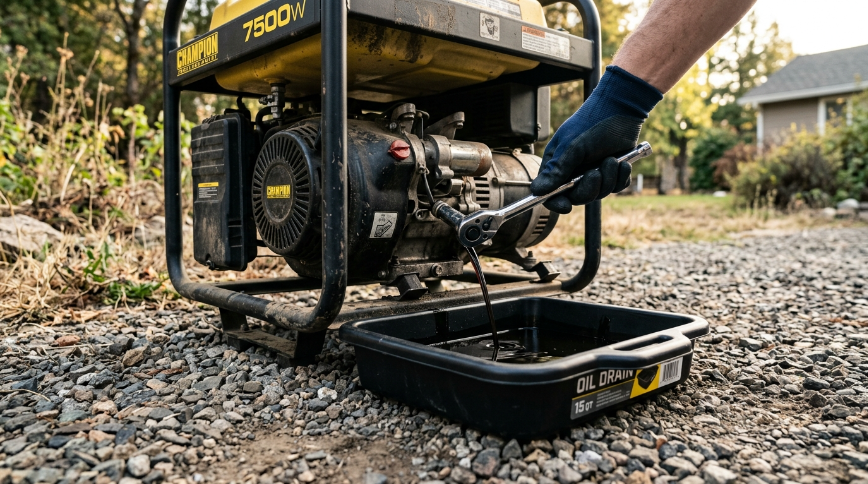
Warm the oil, shut the engine down, drain it safely, and refill slowly to the specified level. The exact drain-plug location and dipstick procedure depend on the generator.
- Move the generator outdoors. Perform any engine-running steps in a safe outdoor location away from doors, windows, and vents.
- Remove electrical loads. Unplug connected equipment before starting the maintenance process.
- Warm the engine briefly. A few minutes of operation makes the oil flow more easily.
- Shut the generator off. Turn off the fuel supply when appropriate and let exhaust components cool enough to work around safely.
- Disconnect the spark plug boot. This reduces the chance of an accidental engine start while your hands are near moving parts.
- Remove the oil fill cap or dipstick. Opening the fill point can help the crankcase drain more freely.
- Position the drain pan. Put it directly beneath the drain point before loosening anything.
- Remove the drain plug. Use the correct wrench and let the oil empty into the container.
- Inspect and reinstall the plug. Check the sealing washer or O-ring if your generator uses one, then tighten to the manufacturer’s specification.
- Add fresh oil gradually. Start below the listed capacity and check the level before adding more.
- Reinstall the fill cap. Wipe away any spilled oil before starting the engine.
- Run and recheck. Reconnect the spark plug boot, start the generator outside briefly, shut it down, and inspect for leaks before checking the level again.
My trick for avoiding overfilling
I don’t dump the full published capacity into an empty engine in one pour. I add most of it, pause, check the level correctly, and finish in small amounts.
That extra minute matters. Generator crankcases are small, so a few ounces can make a noticeable difference.
How Much Oil Does a Portable Generator Take?
Oil capacity depends on engine size and generator design. Small inverter generators may hold around half a quart, while larger open-frame units can hold more than a quart.
A current Champion 4,650-watt inverter, for example, lists a 0.5-quart capacity. A larger Westinghouse WGen11500TFc lists 40.3 ounces, or about 1.26 quarts.
- Don’t estimate from wattage: Two similarly rated generators can use different engines.
- Don’t trust bottle size: A one-quart bottle doesn’t mean your crankcase needs one quart.
- Don’t force the last ounces: Stop when the manual’s level-check procedure says the engine is full.
The dipstick procedure also matters. Some engines require the dipstick to rest on the threads during measurement, while others use a different method.
What Are the Most Common Portable Generator Oil Change Mistakes?
The biggest mistakes are using the wrong oil, overfilling, forgetting the break-in change, and servicing a generator while it’s dangerously hot. Most are easy to prevent with a manual and a few minutes of preparation.
- Skipping the first change: New engines often have a shorter initial service interval than later changes.
- Overfilling the crankcase: More oil isn’t extra protection and may cause poor running or other engine problems.
- Running with low oil: Low-oil shutdown is backup protection, not a replacement for checking the level.
- Using a random viscosity: Oil that’s acceptable for one model or climate may not match another.
- Cross-threading the drain plug: Starting the plug by hand helps protect the crankcase threads.
- Ignoring a damaged washer: A poor seal can create a slow leak that lowers the oil level over time.
- Working beside a hot muffler: Warm oil is useful, but the exhaust system can remain hot enough to burn you.
Maintenance has a direct effect on how dependable an engine remains over time. My guide to portable generator lifespan explains the other habits that affect long-term service life.
Can You Change Generator Oil During a Long Power Outage?
Yes, and you may need to if runtime reaches the manufacturer’s maintenance interval. The key is planning a shutdown instead of trying to service a running or dangerously hot machine.
Before the outage season, I keep spare oil, a funnel, rags, and a drain container with the generator supplies. That prevents a simple maintenance interval from becoming an emergency shopping trip.
- Disconnect loads and shut the generator down normally.
- Let dangerous hot surfaces cool before working around them.
- Complete the oil change according to the manual.
- Check the oil level before restarting.
- Reconnect loads gradually after the generator is running normally.
Never bring a generator into a garage or other enclosed area simply to make maintenance easier. Carbon monoxide remains dangerous even when doors are open.
The U.S. Consumer Product Safety Commission says portable generators should operate outdoors at least 20 feet from a home, with exhaust directed away from the building. My portable generator carbon monoxide safety guide covers placement and CO precautions in more detail.
You can also review the CPSC carbon monoxide guidance before using a generator during an outage.
What Should You Do With Used Generator Oil?
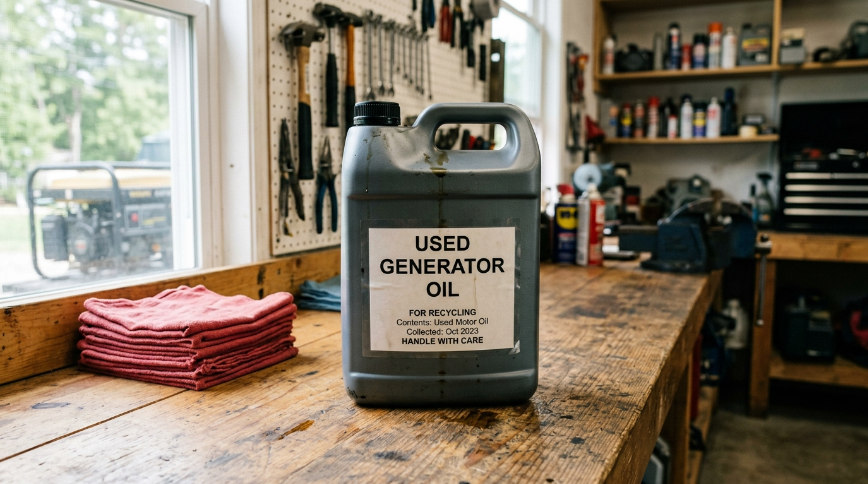
Collect used generator oil in a clean, leak-resistant container and take it to an appropriate used-oil recycling or collection location. Don’t dump it on soil, into drains, or into storm sewers.
Keep water, antifreeze, solvents, gasoline, and other chemicals out of the used oil. Mixing materials can make recycling more difficult.
- Drain the oil into a clean pan.
- Transfer it into a tightly sealed container if needed.
- Label the container so it isn’t mistaken for fresh oil.
- Keep it upright during transport.
- Take it to an approved local collection or recycling facility.
The EPA’s used-oil recycling guidance explains why collecting and recycling used motor oil is preferable to improper disposal.
Portable Generator Oil Change Supplies I Recommend
If you’re putting together a maintenance kit before the next outage, these are the types of supplies I’d keep beside the generator. Always verify your generator’s required oil viscosity before buying oil.
🏆 Best Oil Pick When 10W-30 Is Specified
Mobil 1 Advanced Full Synthetic Motor Oil 10W-30
★★★★★ 4.8/5
This is a widely available full-synthetic SAE 10W-30 oil. I like keeping one clearly labeled oil type with each generator rather than grabbing whatever happens to be on the garage shelf, but use this only if your manual approves 10W-30.
💧 Best for Cleaner Draining
FloTool 42003MI 16-Quart Drain Container
★★★★☆ 4.6/5
The 16-quart capacity is far more than a portable generator needs, but the closed-container design also gives you storage space for several small-engine oil changes. I prefer a drain container that can move used oil without requiring another messy transfer immediately.
🛠️ Best for Controlled Refilling
Lisle 19732 6-Quart Oil Dispenser
★★★★☆ 4.5/5
Its translucent body has quart and liter markings, while the flexible pouring spout helps with awkward fill openings. I prefer measured pouring because small generator crankcases are easy to overfill when oil comes straight from a large bottle.
Frequently Asked Questions
How often should I change the oil in my portable generator?
Follow your generator’s owner manual because schedules vary by engine. Some manufacturers require the first oil change after about 5 hours, while others specify around 20–30 hours, with later changes commonly falling around 50–100 operating hours.
Can I use 10W-30 in a portable generator?
Many portable four-stroke generators specify 10W-30 for at least part of their operating temperature range. However, you should confirm the viscosity chart in your owner’s manual because SAE 30, synthetic 5W-30, or another grade may be specified for your model and climate.
Should generator oil be changed hot or cold?
Oil generally drains more easily when the engine has been run briefly and the oil is warm. Shut the generator off before draining it, and allow the muffler and other dangerously hot components to cool enough for safe maintenance.
What happens if I overfill a portable generator with oil?
Overfilling can cause poor engine operation and may push oil where it doesn’t belong. If you accidentally add too much, don’t assume the engine will simply burn off the excess; drain enough oil to restore the level specified by the manufacturer.
Does a portable generator need an oil change if it wasn’t used much?
Possibly. Some manufacturers include a calendar interval such as once per season or annually, even when runtime is low, so check both the hour-based and time-based requirements in your manual before deciding to postpone service.
Final Takeaway
A portable generator oil change doesn’t require much time or equipment. The important part is following the correct oil specification, capacity, and maintenance interval for your exact engine.
Check the level before long runs, track operating hours during outages, and keep fresh oil and basic service supplies ready. A ten-minute maintenance job is much easier to handle before the next storm than when your generator is already overdue for service.

Hi, I’m Michael Turner. I own a generator workshop in the United States and founded HomeGeneratorBlog to share practical, hands-on guidance about generator installation, maintenance, troubleshooting, safety, and backup power solutions. My goal is to help homeowners make smarter, more confident decisions through clear and reliable information



One Comment