Do Inverter Generators Qualify for Federal Tax Credits? What Actually Counts
Quick Answer
No, a gasoline or propane inverter generator does not qualify for a federal tax credit in 2026. Fuel-burning generators never appeared on the federal clean energy credit lists, and the main residential credit that covered solar and battery storage ended for spending after December 31, 2025. A solar generator is a different kind of equipment, and that difference explains most of the confusion.
Why the answer is no
- Fuel source matters: The federal credits rewarded clean energy equipment, not a portable engine that burns gasoline, propane, or natural gas.
- Name causes confusion: A solar inverter and an inverter generator share a word, but only solar and battery equipment could qualify under Section 25D.
- Credit ended in 2025: Section 25D does not apply to residential spending after December 31, 2025, so a 2026 purchase earns no federal credit.
- Efficiency does not change it: Quiet operation, eco mode, and lower fuel use do not turn a fuel generator into qualifying clean energy property.
- Deduction is separate: A credit and a deduction follow different rules, and a narrow medical or business deduction may still apply in some cases.
What to do next
- Do not subtract 30% from a generator price when you compare models.
- Keep your receipt and check the medical, business, and state rules below before you file.
I have tested inverter generators through multi-day outages, RV trips, and job-site days, and I still hear the same hopeful question at checkout time. People want to know if the tax code will help pay for backup power.
This guide gives you a straight answer for 2026, explains why fuel generators sit outside the federal credits, and shows the narrow cases where a deduction or a state program might help. You will also learn how to spot ads that blur the line between a generator and a solar battery system.
In This Guide
- What Is an Inverter Generator — and Why Does the Name Cause Tax Confusion?
- Do Inverter Generators Qualify for Federal Tax Credits in 2026?
- Why Did Gasoline and Propane Inverter Generators Never Qualify?
- What Qualified Before 2026? Solar, Batteries, and the End of Section 25D
- Inverter Generator vs Solar Generator vs Battery Storage: How Is Tax Treatment Different?
- Can You Deduct an Inverter Generator Instead of Claiming a Credit?
- Are There State, Utility, or Other Incentives Worth Checking?
- How Should You Check Your Situation Before You Buy or File?
- Frequently Asked Questions About Inverter Generators and Federal Tax Credits
What Is an Inverter Generator — and Why Does the Name Cause Tax Confusion?
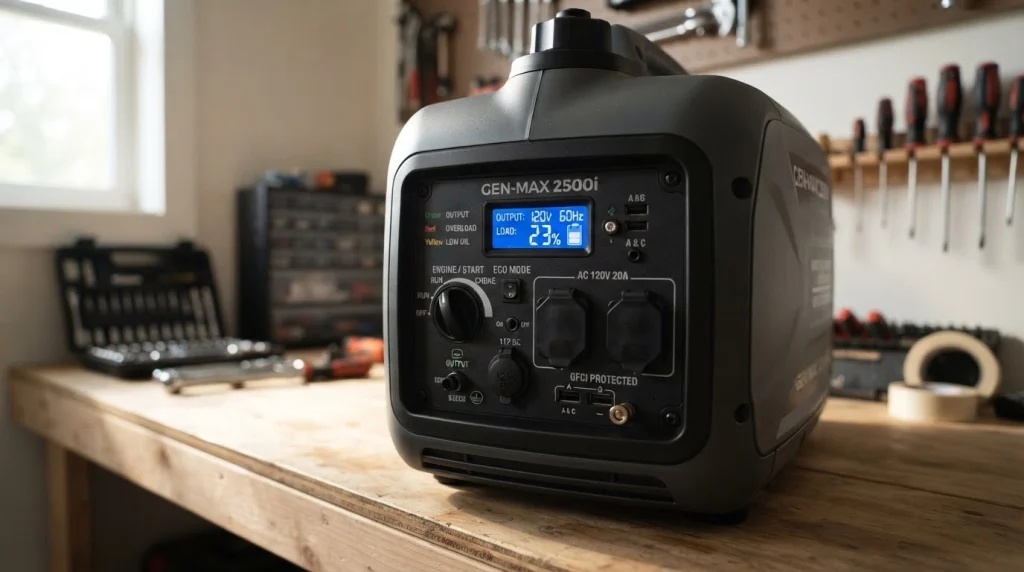
An inverter generator is a portable generator that makes raw AC power, converts it to DC power, and then rebuilds it as stable AC power with a clean sine wave. That extra step helps the output stay steady for phones, laptops, and other sensitive electronics.
Clean sine wave means the power curve looks smooth and regular, much like utility power. Total harmonic distortion, or THD, measures how much the wave strays from that ideal shape, and inverter models tend to keep THD low.
How does an inverter generator work?
A small engine spins an alternator and creates power that varies with engine speed. The inverter electronics then shape that power into a steady 120-volt output at the right frequency.
Most inverter models also use an eco-throttle or economy mode. The engine slows down under a light load, which saves fuel and lowers noise.
- Running watts: The power a generator can supply on a steady basis.
- Starting watts: The short surge a motor needs when it first starts.
- Parallel capability: The option to link two matching units for more power.
- Runtime at partial load: How long a tank lasts at 25% or 50% load.
I learned the running-versus-starting lesson during a storm outage when a fridge and a CPAP machine ran fine together. A window AC unit then tried to start, the generator surged, and the overload light made the math plain.
Check the spec sheet for your model before you trust any wattage claim. A fridge may draw only 150 to 200 running watts, yet need several times that amount for a brief start-up surge.
Why do people confuse inverter generators with solar inverters?
Solar panels make DC power, and a home solar system needs an inverter to turn that DC power into AC power for the house. That solar inverter is one part of a clean energy system.
An inverter generator uses inverter electronics too, but its energy source is still fuel. The shared word describes a power-shaping step, not the fuel source.
That mix-up shows up in search results, store listings, and casual advice. Someone reads that an inverter qualified as part of a solar install, then assumes a portable inverter generator qualifies too.
It does not work that way. Tax law looks at the type of property and its energy source, not at one shared word in the product name.
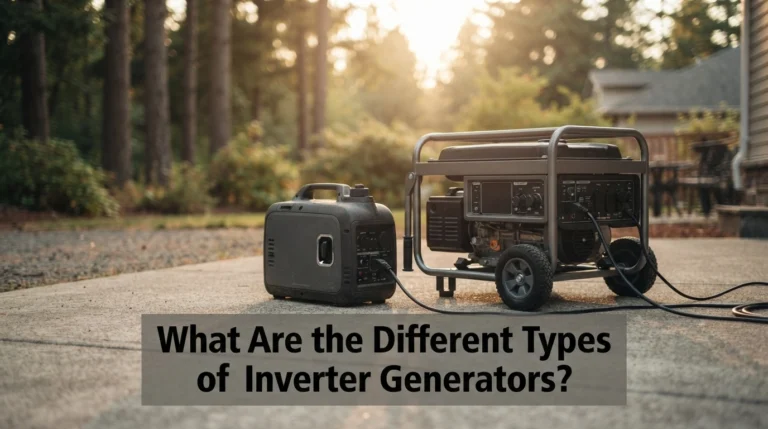
Learn how an inverter generator differs from a conventional generator if you want the full design comparison. A conventional open-frame generator skips the inverter stage and often produces rougher power at higher noise.
Section takeaway: An inverter generator is a fuel-powered portable power source with cleaner output, not a solar or battery system, and that fuel source is why the tax rules treat it differently.
Do Inverter Generators Qualify for Federal Tax Credits in 2026?
No. As of 2026, no federal tax credit covers a gasoline, propane, dual fuel, or tri-fuel inverter generator bought for home use. That answer holds for portable models, open-frame inverter models, and larger standby-style units that burn fuel.
The main residential clean energy credit never listed fuel generators as qualifying property. It also ended for new residential spending after December 31, 2025.
What does the short answer mean for a homeowner?
You cannot claim a federal credit on Form 5695 for a portable inverter generator. You cannot claim one for the generator portion of a larger backup setup either.
Installation parts do not change that result on their own. A transfer switch, generator inlet, or interlock kit helps you connect power safely, yet it does not turn a fuel generator into clean energy property.
- Portable inverter generator: No federal credit in 2026.
- Dual fuel inverter generator: No federal credit, even when you run it on propane.
- Standby generator on natural gas: No federal credit for home backup use.
- Transfer switch or inlet alone: No credit when the power source is a fuel generator.
Check current guidance from the IRS before you file, because tax law changes and older articles still describe credits that no longer apply. This guide is general information, not tax advice for your return.
Do dual fuel, propane, or CARB-compliant models qualify?
No exception exists for a cleaner-burning fuel or a stricter emissions label. Propane burns cleaner than gasoline in some respects, and a CARB-compliant model meets California air rules.
Neither trait puts the unit on the clean energy credit list. The credit lists named property types, and fuel generators were not among them.
Quiet operation does not change the answer either. A quiet generator helps at a campsite and keeps neighbors calm, but noise level is not a tax test.
Fuel efficiency does not change it as well. Eco mode can stretch a tank through the night, yet the unit still burns fossil fuel to make power.
Section takeaway: In 2026, no fuel-burning inverter generator qualifies for a federal tax credit, no matter the fuel type, noise level, or emissions label.
Why Did Gasoline and Propane Inverter Generators Never Qualify?
The federal residential credits had a narrow purpose. They aimed to push homes toward renewable energy and better efficiency, not toward general backup power.
A fuel generator serves a real need during an outage. It does not generate power from sun, wind, or geothermal heat, and it does not seal or insulate a home.
What did the clean energy credits actually reward?
The Residential Clean Energy Credit, known as Section 25D, covered named property types for a home. The list included solar electric panels, solar water heating, small wind turbines, geothermal heat pumps, fuel cells, and battery storage technology.
The Energy Efficient Home Improvement Credit, known as Section 25C, covered a different list. It focused on insulation, windows, doors, heat pumps, and certain heating and cooling upgrades.
Neither list named a portable generator, a conventional generator, or an inverter generator. A product must fit a named category to qualify, and a close match does not count.
- Section 25D: Renewable energy and battery storage for a home.
- Section 25C: Home efficiency upgrades such as insulation and heat pumps.
- Fuel generator: Backup power from gasoline, propane, diesel, or natural gas.
Does fuel efficiency or low emissions change anything?
No. Inverter generators often beat open-frame models on fuel use at light loads, and eco mode helps a small tank last longer. That efficiency still comes from burning fuel.
Learn why these units are more fuel-efficient than regular generators if fuel cost matters to your choice. Fuel savings help your wallet, but they do not create a tax credit.
Emissions rules matter for health, air quality, and where you can run a unit. They do not rewrite the credit lists.
Does home backup use change anything?
Home backup use explains why many people buy a generator. It does not make the generator clean energy property.
A fridge, sump pump, furnace blower, or CPAP machine may need power during an outage. The credit rules still ask what type of equipment made the power, not which appliance used it.
I have run a fridge, lights, phones, and a CPAP machine through an outage on a small inverter unit. That setup kept the house calm, yet I never treated the purchase as a clean energy credit.
Safety note: Run a fuel generator outdoors and well away from windows, doors, and vents. Use a transfer switch or interlock installed by a licensed electrician for a home hookup, and check your owner’s manual before use.
Section takeaway: Fuel generators never fit the named clean energy or efficiency categories, so efficiency, quiet operation, and backup use could not make them qualify.
What Qualified Before 2026? Solar, Batteries, and the End of Section 25D
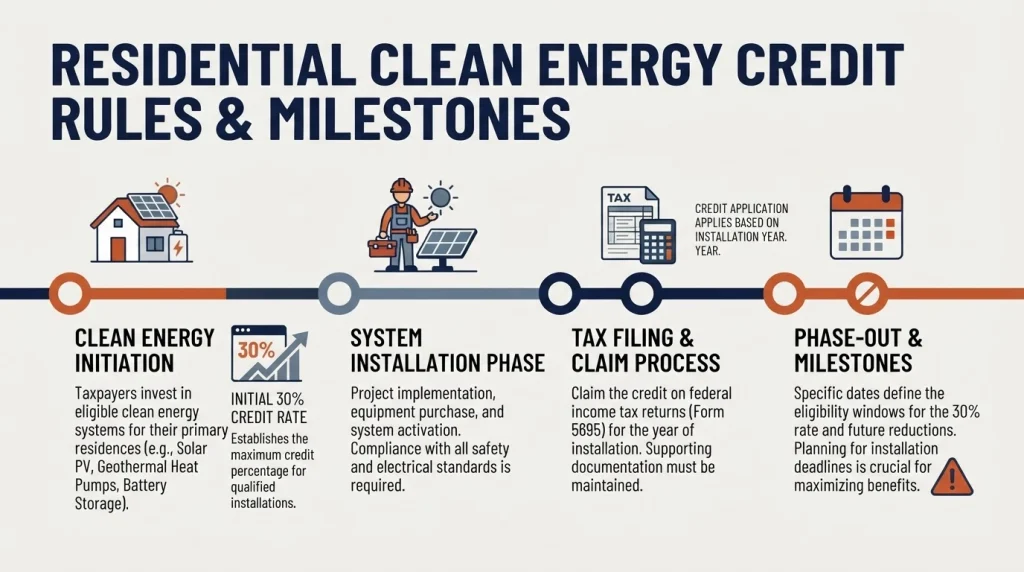
Section 25D offered a 30% credit for qualifying residential clean energy property installed from 2022 through 2025. The credit had no annual dollar cap for most property types, which made it a major factor in solar and battery pricing.
Battery storage technology with a capacity of at least 3 kilowatt-hours qualified, even as a standalone system without solar panels. Solar panels, wiring, inverters that formed part of the solar system, and installation labor could also count when the rules were met.
When did Section 25D end?
Congress ended Section 25D for residential spending after December 31, 2025, through Public Law 119-21, often called the One Big Beautiful Bill Act. The same law ended Section 25C on the same schedule.
The IRS treats a Section 25D expense as made when the original installation is complete. A deposit paid in 2025 does not preserve the credit if installation finished in 2026.
That timing rule catches many buyers by surprise. A signed contract or a paid invoice is not enough on its own when the install finished after the cutoff.
For background on federal energy programs, see the U.S. Department of Energy. For filing rules, the IRS guidance and Form 5695 instructions control.
Could a battery or solar system installed in 2025 still be claimed?
Yes, if the system met the rules and installation finished on or before December 31, 2025. You would claim that credit on your 2025 federal return using Form 5695.
Keep the install completion date, the itemized invoice, and proof of payment. Those records show when the work finished and what the system included.
A fuel generator installed next to a solar or battery system does not join that claim. Only the qualifying solar or battery property counts, and the generator stays outside the credit.
What about unused credit carried forward?
Section 25D was nonrefundable, so it could cut your tax bill to zero but could not create a refund beyond that point. Unused credit from a qualifying year could carry forward to a later year under the form instructions.
That carryforward rule helps people who already earned a credit in 2025 or earlier. It does not create a new credit for a generator or battery bought in 2026.
Ask a tax professional to check your carryforward amount if you filed Form 5695 in an earlier year. The form history matters more than a sales estimate.
Section takeaway: Solar and qualifying battery storage could earn a 30% federal credit through 2025, but that credit ended after December 31, 2025, and fuel generators never shared in it.
Inverter Generator vs Solar Generator vs Battery Storage: How Is Tax Treatment Different?
Product names blur the lines, so a side-by-side view helps. The table below shows how federal tax treatment differs by equipment type for a homeowner purchase in 2026.
| Equipment type | Power source | Federal credit in 2026? | Why |
|---|---|---|---|
| Inverter generator | Gasoline, propane, or natural gas | No | Fuel generators were never on the Section 25D or 25C lists. |
| Conventional generator | Gasoline, propane, diesel, or natural gas | No | Same rule as an inverter generator, with rougher power output. |
| Solar generator | Battery charged by solar panels | No for a new 2026 purchase | Qualifying battery storage could count through 2025, but Section 25D ended after 2025. |
| Home battery storage | Grid or solar charging, stored in a battery | No for a new homeowner purchase in 2026 | The 3 kWh battery category ended with Section 25D after 2025. |
| Standby generator | Natural gas, propane, or diesel | No | Permanent install does not change the fuel-source rule. |
Read the table as a tax summary, not a buying ranking. Each type suits a different use, and runtime, noise, and fuel storage often matter more than tax treatment.
Why is a solar generator different from an inverter generator?
A solar generator is a battery pack with an inverter and charge controls, often sold with portable solar panels. It stores power and releases it with no engine, no exhaust, and no fuel tank.
An inverter generator makes power on demand with an engine. It can run as long as you have fuel, while a solar generator runs until its battery drains.
That difference shaped the old credit rules. Battery storage fit the clean energy list when it met the size and install rules, while a fuel engine did not.
What about a portable power station bought in 2026?
A portable power station bought and set up in 2026 earns no federal residential credit. The Section 25D cutoff applies whether the unit holds 1 kWh for camping or a larger capacity for home backup.
Portable plug-in units also raised a separate question before 2026 about install and home-use rules. A tax professional should review any claim for an earlier year, because the facts and paperwork matter.
Compare an inverter generator vs portable power station on runtime, noise, and load size before you choose. A battery unit wins on indoor-safe use and silence, while a fuel unit wins on long runtime.
What about a standby generator?
A standby generator sits outside the home, starts on its own during an outage, and runs on natural gas or propane. It offers hands-free backup, yet it follows the same federal credit rule as a portable fuel unit.
No federal credit applies to a new standby install in 2026. A medical or business deduction may still need a separate review, as the next section explains.
See an inverter generator vs standby generator comparison if you want help with size, cost, and install trade-offs. The right choice often turns on outage length and which circuits must stay live.
Safety note: The Consumer Product Safety Commission warns about carbon monoxide risk from portable generators. Keep fuel units outside, far from doors and windows, and use working CO alarms in the home.
Section takeaway: Tax treatment follows the power source and equipment type, so a battery system and a fuel generator sit in different tax buckets even when both keep the lights on.
Can You Deduct an Inverter Generator Instead of Claiming a Credit?

A credit cuts your tax bill dollar for dollar, while a deduction cuts the income that gets taxed. That gap matters, because a deduction worth a few hundred dollars in tax savings is not the same as a 30% credit.
For most homeowners, a generator bought for general backup use is a personal expense. Personal expenses do not create a federal deduction in the year of purchase.
Three narrow paths can change that result. Each path has strict tests, and you should confirm your facts with a tax professional before you claim anything.
Can a generator qualify as a medical expense?
A generator may count in part as a medical expense when its main purpose is medical care for you, your spouse, or a dependent. A common case involves a ventilator, oxygen concentrator, or other device that needs steady power.
IRS Publication 502 covers capital expenses for medical care. You must subtract any increase in your home value caused by the improvement, and only the rest can count as a medical expense.
- Physician letter: Get a written statement that steady power is medically necessary.
- Value test: Subtract the rise in home value from the total cost.
- AGI floor: Only medical costs above 7.5% of adjusted gross income count.
- Itemize: You must itemize on Schedule A to claim medical expenses.
For a portable unit, the value test may work differently than for a permanent install. A portable generator you can move or sell may add little or no value to the home itself.
Keep the letter, the receipt, and notes on which medical device the unit powers. A clear paper trail helps if the IRS asks questions later.
Can a business, farm, or rental property deduct a generator?
Yes, for the business-use share. A generator that powers a business, a farm operation, or a rental property can be a depreciable business asset.
Business owners may use Section 179 expensing or bonus depreciation for qualifying property, subject to current limits and placed-in-service rules. Those rules change, so check the current year guidance with your tax adviser.
A rental generator follows business asset rules for the rental activity. Keep the purchase, install, and repair records separate from personal home records.
Fuel, oil, and maintenance for business use may also count as business costs. Track business hours or business load share in a simple log.
What about a home office?
A home office can support a partial deduction when the office meets the exclusive and regular use tests. Only the business-use share of the generator cost counts.
Many filers use square footage to set that share. An office that covers 10% of the home would support a 10% business share, if the other tests are met.
The simplified home office method does not allow depreciation on the generator. The regular method may allow it, but the record-keeping is heavier.
Do not claim 100% business use for a unit that also powers the whole house. That overclaim is a common audit risk.
What records should you keep?
Good records turn a gray claim into a clear one. They also help you prove cost, date, and use if you sell the home or face a review.
- Save the itemized receipt, install invoice, and proof of payment.
- Note the date the unit went into service and the date any install finished.
- Keep a physician letter for a medical claim, or a use log for a business claim.
- Record fuel, oil, filters, and repair costs in one folder.
- Save the spec sheet, manual, and warranty terms with the tax folder.
Section takeaway: A deduction is possible in narrow medical, business, and rental cases, but general home backup use alone does not create one, and each path needs proof.
Are There State, Utility, or Other Incentives Worth Checking?
Federal law is not the only place to look. State, local, and utility programs vary widely, and some focus on battery storage, wildfire safety, or medical baseline needs.
Most of those programs still favor batteries and solar over fuel generators. A few may help with related costs, such as a battery, a transfer switch, or a home energy audit.
Do state credits cover fuel generators?
State rules differ, so no single answer fits every state. Many state clean energy credits mirror the federal lists and leave fuel generators out.
Some states offer sales tax relief, rebates, or grants for specific backup equipment after storms or during wildfire season. Those offers often have short windows and strict proof rules.
Check your state energy office and your utility website before you buy. Search for battery storage, backup power, and medical baseline programs by name.
The Database of State Incentives for Renewables and Efficiency, known as DSIRE, lists state and utility programs in one place. Use it as a starting point, then confirm the current terms with the program office.
What about utility rebates for batteries?
Some utilities offer battery rebates or bill credits for customers in high fire-risk areas or on medical baseline rates. Those programs often require a qualifying battery size and a utility-approved install.
A fuel generator does not meet a battery rebate test. A battery paired with solar may meet it, even when no federal credit applies in 2026.
Ask your utility about demand response or virtual power plant programs too. Some pay battery owners for grid support during peak hours, subject to local rules.
What about disaster help after an outage?
Disaster assistance is not a tax credit. Federal disaster help may cover certain costs after a declared disaster, but the rules are narrow and help varies by event.
Keep receipts for fuel, food loss, hotel stays, and repairs after a storm. A tax professional can tell you if any cost fits a casualty or disaster rule for your year.
Insurance may also help with some outage costs, subject to your policy. Read the policy before you assume a generator purchase is covered.
- State energy office: Check for battery, solar, and backup power programs.
- Utility: Check for rebates, medical baseline help, and battery programs.
- Local emergency office: Check for storm-season grants or loan programs.
- Tax adviser: Check how a state rebate affects your federal and state returns.
Section takeaway: State and utility help exists in some places, but it leans toward batteries and solar, so check local terms before you count on any rebate for a fuel generator.
How Should You Check Your Situation Before You Buy or File?
Start with the price you will pay, not the credit you hope to claim. A generator that fits your loads, fuel plan, and noise limits is a sound buy on its own merits.
Then run a short tax check. That check takes less time than a return, and it stops a costly surprise at filing time.
- Confirm the equipment type: Note whether the unit burns fuel or stores power in a battery.
- Confirm the install date: Note when installation finished, not just when you paid.
- Confirm the use: Note personal, medical, business, rental, or mixed use.
- Confirm the program: Check federal, state, and utility rules in writing.
- Confirm with a pro: Ask a CPA or enrolled agent to review a medical or business claim.
What questions should you ask a tax professional?
Bring the receipt, the spec sheet, and your use notes to the meeting. Short, direct questions get clear answers.
- Does my medical or business use meet the IRS tests for this year?
- How should I split mixed personal and business use?
- Should I use Section 179, bonus depreciation, or regular depreciation?
- How does a state rebate affect my return?
- What records should I keep, and for how long?
A 30-minute review costs less than a denied claim. It also helps you plan fuel, maintenance, and install costs with clear eyes.
What red flags should you watch for in ads?
Ads that promise a 30% federal credit on a fuel generator are wrong for 2026. Ads that show a net price after a credit, with no note about the 2025 cutoff, are also suspect.
Watch for vague phrases such as tax-eligible, credit-ready, or government rebate. Ask the seller to name the exact credit, the exact law section, and the exact install deadline.
If the seller cannot name those details, treat the claim as sales talk. A real incentive has a program name, a deadline, and written terms.
Choose size and features first, then check incentives. Read what to look for in an inverter generator to compare running watts, THD, noise, runtime, and outlets before you shop.
Section takeaway: Confirm the equipment type, install date, use, and written program terms before you buy, and let a tax professional review any medical or business claim.
Frequently Asked Questions About Inverter Generators and Federal Tax Credits
Do inverter generators qualify for federal tax credits in 2026?
No. Gasoline, propane, dual fuel, and natural gas inverter generators do not qualify for a federal tax credit in 2026. They never appeared on the Section 25D or Section 25C lists, and those residential credits ended for spending after December 31, 2025.
Did inverter generators ever qualify for the 30% clean energy credit?
No. The 30% Residential Clean Energy Credit covered solar, battery storage, and other named clean energy property through 2025. Fuel-burning generators were never part of that list, even when they were quiet, efficient, or CARB-compliant.
Does a solar generator qualify for a federal tax credit in 2026?
No, not for a new purchase in 2026. Qualifying battery storage of at least 3 kWh could count under Section 25D through 2025, but the credit ended for residential spending after December 31, 2025. A system installed in 2025 may still be claimed on a 2025 return.
Can I deduct a generator if I need it for medical equipment?
Part of the cost may count as a medical expense when a physician states that steady power is medically necessary. You must subtract any rise in home value, itemize on Schedule A, and clear the 7.5% of AGI floor for total medical costs. Keep the physician letter and receipts.
Can a business deduct an inverter generator?
Yes, for the business-use share, when the generator serves a business, farm, or rental activity. Section 179, bonus depreciation, or regular depreciation may apply under current rules. Mixed home and business use needs a fair split, such as square footage for a qualifying home office.
Do I need Form 5695 for an inverter generator?
No. Form 5695 covers residential energy credits, and a fuel generator does not qualify for those credits. Use that form only for qualifying solar or battery property from 2025 or earlier, or for a valid carryforward from an earlier year.
Bottom line: Buy an inverter generator for quiet, clean, portable power that fits your loads and fuel plan. Do not buy one for a federal tax credit, because no such credit exists in 2026.
If a medical need, a business use, or a local battery program applies to your case, check the written rules and talk with a tax professional before you file. That short check protects your return and keeps your backup plan honest.

Hi, I’m Michael Turner. I own a generator workshop in the United States and founded HomeGeneratorBlog to share practical, hands-on guidance about generator installation, maintenance, troubleshooting, safety, and backup power solutions. My goal is to help homeowners make smarter, more confident decisions through clear and reliable information