
What Is the Best Home Generator for the Money? 2026 Guide
Quick Answer
For most homeowners, the Westinghouse WGen9500DFc is the best home generator for the money in 2026. It combines 9,500 running watts on gasoline, dual-fuel operation, electric and remote start, a CO sensor, and transfer-switch-ready outlets at a competitive price. Before buying, calculate your required generator power capacity so you don’t pay for watts you will never use.
What gives you the best value?
- Useful output: Aim for enough running watts to cover your actual emergency loads, not the largest advertised peak number.
- Fuel flexibility: Dual-fuel models let you switch between gasoline and propane when one fuel becomes difficult to find.
- Home connection: A 120/240V transfer-switch-ready outlet makes a generator much more useful for household circuits.
- Safety features: Look for automatic carbon monoxide shutoff, overload protection, and low-oil shutdown.
- Practical convenience: Electric start, wheels, a fuel gauge, and reasonable runtime matter during a long outage.
I don’t judge home generators by the biggest wattage number on the box. The better question is how much usable backup power you get for your money.
For this 2026 guide, I focused on output, fuel options, household connectivity, runtime, safety, portability, and current manufacturer pricing where available.
What Is the Best Home Generator for the Money in 2026?
The Westinghouse WGen9500DFc is my best overall value pick for most homes. Its 9,500 gasoline running watts give you considerably more breathing room than a basic 5,000-watt generator without moving into expensive permanent standby territory.
It also runs on gasoline or propane. That flexibility becomes especially useful when a storm disrupts local gasoline supplies.
Home generator value means getting enough continuous and starting power, useful household connections, safe operation, and dependable features without buying unnecessary capacity.
| Generator | Gasoline Output | Propane Output | Noise | Best For |
|---|---|---|---|---|
| Westinghouse WGen5300DFc | 5,300 running / 6,600 peak W | 4,800 running / 5,900 peak W | As low as 68 dBA | Budget essentials |
| Champion 201532 | 5,250 running / 6,500 starting W | 4,725 running / 6,500 starting W | 64 dBA | Quiet inverter backup |
| Westinghouse WGen9500DFc | 9,500 running / 12,500 peak W | 8,500 running / 11,200 peak W | As low as 74 dBA | Best overall value |
| DuroMax XP13000HX | 10,500 running / 13,000 peak W | 10,000 running / 12,500 peak W | 74 dB | Higher-demand homes |
These generators solve different problems. The WGen5300DFc saves money upfront, while the DuroMax delivers more continuous power for larger loads.
The WGen9500DFc sits between those extremes. That’s why I consider it the sweet spot for a homeowner who wants serious backup without jumping straight to a standby generator.
How Many Watts Do You Actually Need for a House?
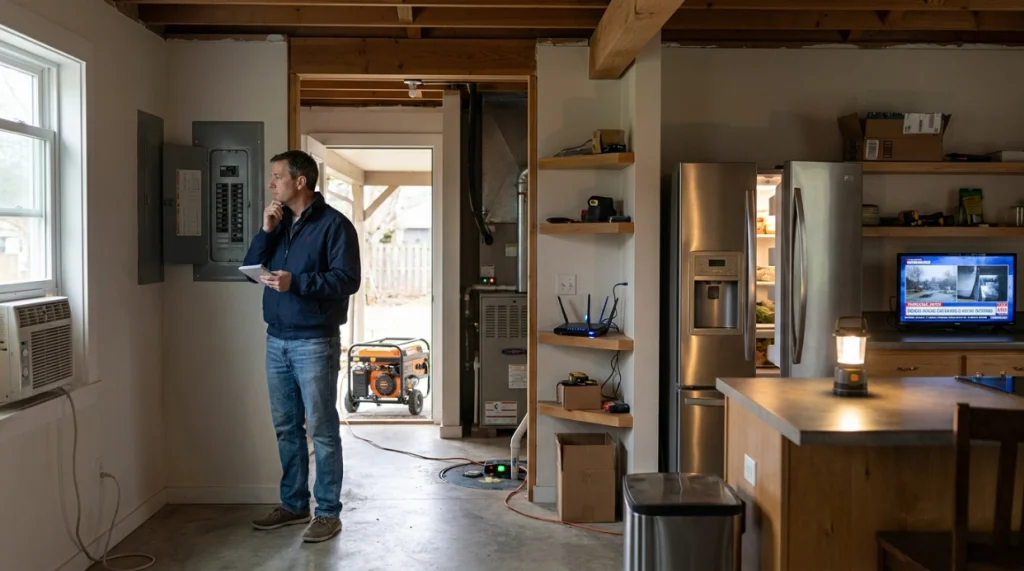
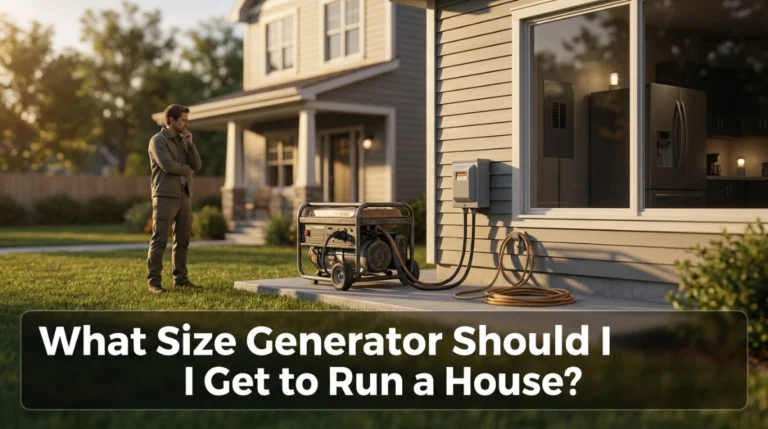
Many homes can run essential outage loads on roughly 5,000 to 8,500 running watts, while heavier backup setups may need 10,000 watts or more. Central air, well pumps, electric water heating, and other large loads can raise the requirement quickly.
Your house size is not the best sizing method. Your appliances and their starting demand matter much more.
- 3,000–5,000 watts: Refrigerator, lights, internet equipment, television, chargers, and selected small appliances.
- 5,000–7,500 watts: Adds more room for a furnace blower, sump pump, freezer, or modest window air conditioner.
- 7,500–10,000 watts: A practical home-backup range for several essential circuits and motor-driven appliances.
- 10,000–14,000 watts: Better for larger pumps, more simultaneous appliances, and selected 240V equipment.
- 14,000 watts and above: Often enters broad whole-home or standby-generator territory.
If you are still estimating your load, my guide on what size generator will run a house walks through the calculation in more detail.
Don’t confuse running watts with starting watts
Running watts are the power a generator can continuously supply. Starting watts are temporary extra capacity for motors and compressors as they start.
This distinction changes how much generator you can realistically use. A generator advertised as 13,000 watts may provide closer to 10,500 watts continuously.
Why Is the Westinghouse WGen9500DFc My Best Value Pick?
It balances substantial output with features that homeowners can use during a real outage. On gasoline, it produces 9,500 running watts and 12,500 peak watts.
On propane, output drops to 8,500 running watts and 11,200 peak watts. That is still enough for a strong managed-backup setup in many homes.
- Dual fuel: Run gasoline or propane without being locked into one stored fuel.
- 120/240V output: Supports household-style backup connections when installed correctly.
- L14-30R and 14-50R outlets: Useful connections for larger home-backup loads.
- Electric and remote start: Easier than relying only on a recoil cord.
- CO shutdown: An onboard sensor can shut the engine down if unsafe CO accumulates around the generator.
- Long runtime: Westinghouse lists up to 12 hours at 25% load on its 6.6-gallon gasoline tank.
My practical rule is to buy enough capacity that normal emergency loads don’t keep the generator near its maximum rating. That extra breathing room helps when a refrigerator, pump, or blower starts unexpectedly.
As of 2026, Westinghouse lists this model at $1,399. Retail prices and promotions can change, so I would still compare the live purchase price before ordering.
Is a Cheaper 5,000-Watt Generator Enough?
Yes, if you want essential backup rather than near-whole-house convenience. The Westinghouse WGen5300DFc gives you 5,300 running watts on gasoline and 4,800 on propane.
That can be a better use of your money if your outage plan is intentionally small.
- Refrigerator and freezer
- Selected lighting
- Wi-Fi and electronics
- Gas-furnace blower
- Sump pump, depending on startup demand
- Small kitchen appliance used one at a time
Westinghouse currently lists the WGen5300DFc at $829. It also includes dual-fuel capability, remote and electric start, CO shutdown, and a transfer-switch-ready L14-30R connection.
For homeowners who lose power occasionally and can manage loads, that combination is difficult to ignore.
Is an Inverter Generator Worth the Extra Money for Home Backup?
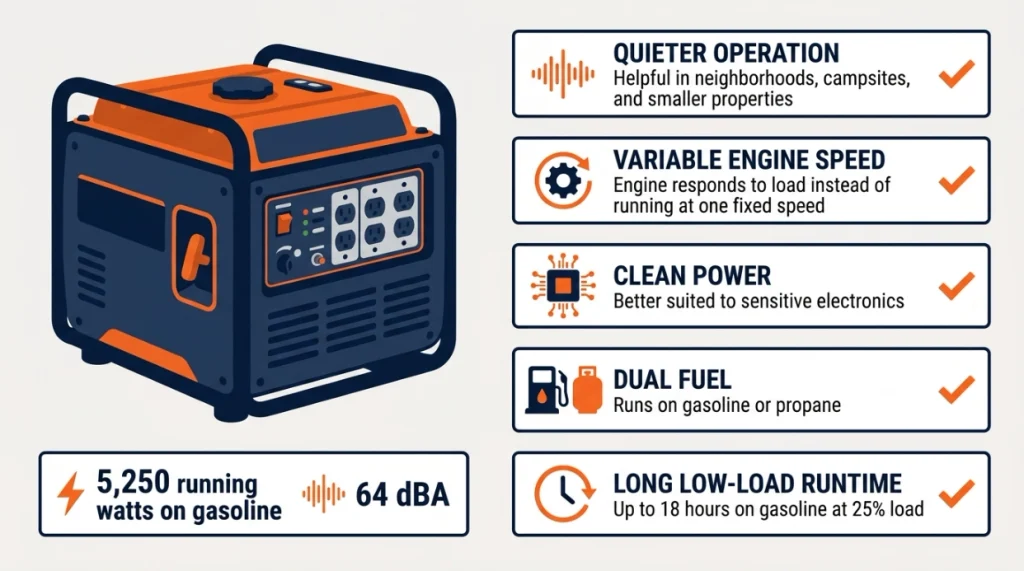
An inverter generator is worth considering when lower noise and cleaner power matter more than maximum watts per dollar. Conventional open-frame generators usually deliver more raw output for the same budget.
The Champion 201532 is a useful example. It produces 5,250 running watts on gasoline while operating at a manufacturer-rated 64 dBA.
- Quieter operation: Helpful in neighborhoods, campsites, and smaller properties.
- Variable engine speed: Allows the engine to respond to load instead of running at one fixed speed.
- Clean power: Better suited to sensitive electronics.
- Dual fuel: The 201532 runs on gasoline or propane.
- Long low-load runtime: Champion lists up to 18 hours on gasoline at 25% load for this model.
If quiet operation is high on your list, read my inverter portable generator buying guide before defaulting to a conventional generator.
When Is a Bigger Generator Worth the Money?
A larger portable generator makes sense when pumps, air conditioning, and multiple household circuits need to operate together. That’s where something like the DuroMax XP13000HX becomes attractive.
It produces 10,500 running watts on gasoline and 10,000 running watts on propane. Its peak ratings are 13,000 and 12,500 watts respectively.
DuroMax also lists a 120/240V L14-30R outlet and a 14-50R outlet. The machine includes push-button electric start and CO shutdown.
- Gasoline runtime: Up to 17 hours at 25% load.
- Gasoline tank: 8.3 gallons.
- Noise: Manufacturer lists 74 dB.
- Weight: 240 pounds dry.
- Warranty: DuroMax lists a five-year warranty.
The tradeoff is size. A 240-pound generator is technically portable, but you won’t want to move it around casually.
DuroMax currently lists the XP13000HX at $1,399. At that price, its high continuous output makes it compelling when wattage matters more than compactness.
What Features Matter Most When Buying a Home Generator?
Spend your money on useful output, safe home connectivity, and fuel flexibility before convenience extras. A feature has little value if it doesn’t improve how your generator handles an outage.
- Running wattage: This is your real continuous power budget.
- Starting capacity: Check that pumps, compressors, and refrigerators can start without tripping the generator.
- 120/240V capability: Important when powering suitable household circuits and many larger appliances.
- Transfer-switch-ready outlet: Makes professional connection to home circuits easier.
- Dual or tri-fuel capability: Gives you options during fuel shortages.
- CO shutoff: A worthwhile safety feature, though it never makes indoor operation safe.
- Electric start: Particularly helpful for larger engines that require more effort to pull-start.
- Fuel gauge and hour meter: Useful for refueling and maintenance planning.
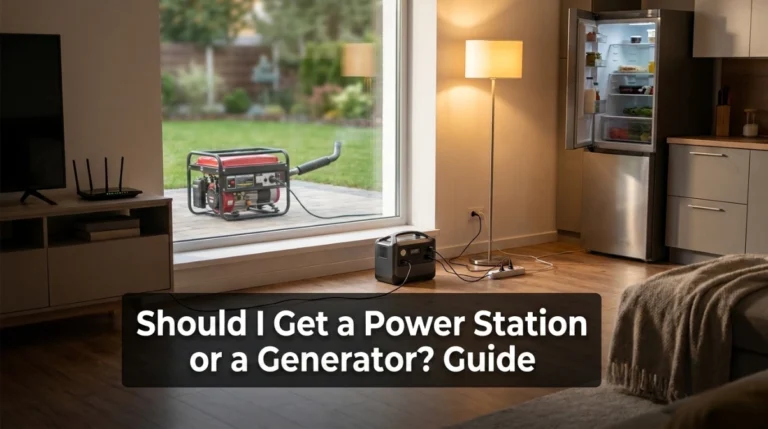
A portable model also has uses beyond emergency backup. My breakdown of portable generator advantages explains where that flexibility can justify choosing portable power over a fixed system.
How Do You Connect a Generator to a House Safely?
Never plug a portable generator directly into household wiring through an ordinary outlet. A properly installed transfer switch or other code-compliant transfer equipment must prevent generator power from backfeeding utility lines.
The Occupational Safety and Health Administration’s portable generator guidance warns against connecting a generator directly to a building’s electrical system without a properly installed transfer switch.
- Have a qualified electrician install home transfer equipment.
- Use properly rated generator cords and intact three-prong extension cords.
- Never exceed the generator’s continuous output rating.
- Keep electrical connections protected from wet conditions.
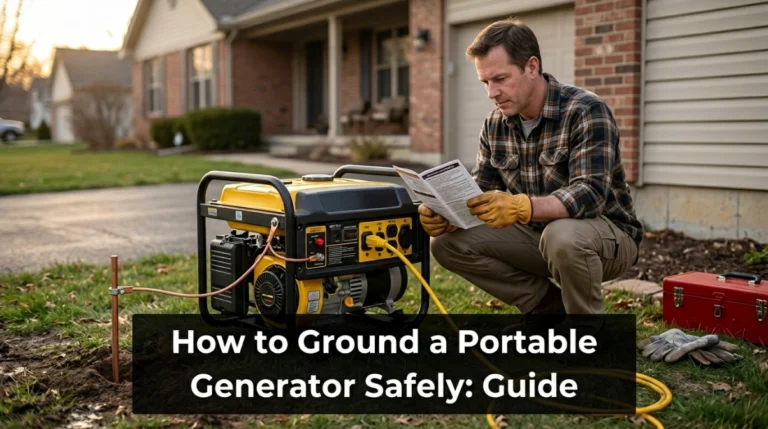
- Follow the grounding instructions in your specific generator manual.
The Electrical Safety Foundation International also explains why transfer switches matter for preventing dangerous backfeeding.
How Far Should a Portable Generator Be From Your House?
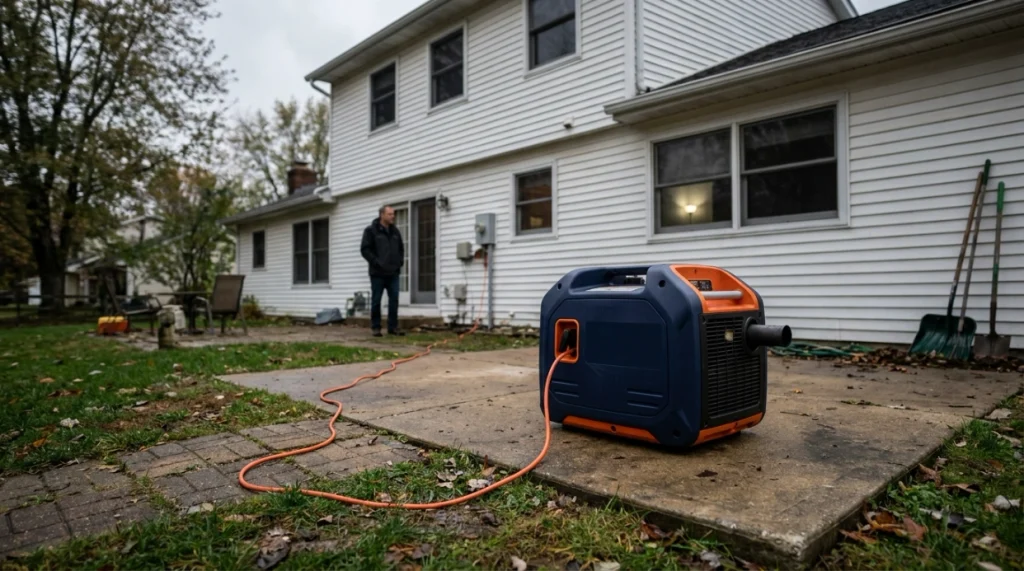
Operate a fuel-powered portable generator outdoors and at least 20 feet from the home, with exhaust directed away from buildings and openings. Never run one in a garage, basement, shed, porch, or other enclosed or partially enclosed space.
The U.S. Consumer Product Safety Commission stresses that carbon monoxide from portable generators can become deadly quickly.
- Keep the generator outdoors.
- Maintain at least 20 feet of separation from the home.
- Point exhaust away from doors, windows, and vents.
- Install working CO alarms on every level and outside sleeping areas.
- Never assume an open garage door makes generator operation safe.
The EPA’s portable-generator placement guidance also shows why balconies, decks, porches, garages, and locations near windows are unsafe.
How Much Should You Spend on a Home Generator?
For portable home backup, I would focus first on the roughly 5,000- to 10,000-running-watt range instead of setting a fixed dollar budget. That keeps your buying decision tied to the loads you need to power.
Current manufacturer listings show how wide the value range can be.
- Around $800: The Westinghouse WGen5300DFc currently represents an affordable dual-fuel essentials setup.
- Around $1,400: The WGen9500DFc adds considerably more output while retaining dual-fuel convenience.
- Around $1,400: The DuroMax XP13000HX currently offers even more running wattage, but in a much heavier package.
Prices change often. Compare today’s price against continuous wattage and useful features rather than judging value from the discount percentage shown by a retailer.
If you’re ready to pick one, these are the three models I would put at the top of the list.
🏆 Best Overall
Westinghouse WGen9500DFc
★★★★☆ 4.8/5
9,500 running watts on gasoline, 8,500 on propane, remote/electric start, CO shutdown, and transfer-switch-ready 120/240V outlets. I like this model for homeowners who want enough capacity to handle a serious outage without paying for permanent standby installation.
💰 Best Budget
Westinghouse WGen5300DFc
★★★★☆ 4.5/5
5,300 gasoline running watts, dual-fuel operation, remote/electric start, CO shutdown, and a transfer-switch-ready outlet. This is the model I’d consider when the plan is refrigeration, pumps, heating controls, lights, and selected outlets rather than full-house comfort.
⚡ Best High Output
DuroMax XP13000HX
★★★★☆ 4.7/5
10,500 gasoline running watts and 10,000 propane running watts give this generator serious home-backup capability. I would choose it when heavier loads justify its 240-pound dry weight and larger 8.3-gallon fuel tank.
Frequently Asked Questions
What size generator gives the best value for a typical home?
For many homeowners, roughly 7,500 to 10,000 running watts provides a useful balance of cost and capability. It can cover several essential circuits while leaving room for motor startup, although homes with central air or large electric appliances may require more.
Is a dual-fuel generator worth the extra money?
Yes, dual fuel is valuable for emergency backup because it gives you gasoline and propane options. Propane stores more conveniently than gasoline, while gasoline often produces the generator’s highest rated output.
Will a 5,000-watt generator run a house?
A 5,000-watt-class generator can run essential loads in many homes, including refrigeration, lights, electronics, and selected heating or pump equipment. It usually cannot run every major appliance together, so careful load management is important.
Is a 10,000-watt generator enough for a whole house?
A 10,000-running-watt generator can provide strong managed backup for many homes, but it is not automatically a true whole-house solution. Central air, electric water heating, dryers, ranges, well pumps, and other 240V loads can exceed its capacity when operated together.
Is a portable generator cheaper than a standby generator?
A portable generator generally has a much lower equipment and installation cost because it does not require a permanent engine, automatic transfer system, and fixed installation. However, portable generators require manual setup, fueling, safe outdoor placement, and proper connection during an outage.
Final Takeaway: Which Home Generator Is Worth Your Money?
For most buyers, I would start with the Westinghouse WGen9500DFc. Its combination of 9,500 gasoline running watts, dual-fuel capability, household-ready outlets, remote start, and CO shutdown makes it a strong middle ground.
Choose the WGen5300DFc if your priority is affordable essential backup. Step up to the DuroMax XP13000HX when your household loads justify more continuous power.
The best deal isn’t the generator with the biggest number or the lowest sale price. It’s the one that safely covers your real outage loads without making you pay for capacity you don’t need.

Hi, I’m Michael Turner. I own a generator workshop in the United States and founded HomeGeneratorBlog to share practical, hands-on guidance about generator installation, maintenance, troubleshooting, safety, and backup power solutions. My goal is to help homeowners make smarter, more confident decisions through clear and reliable information
One Comment