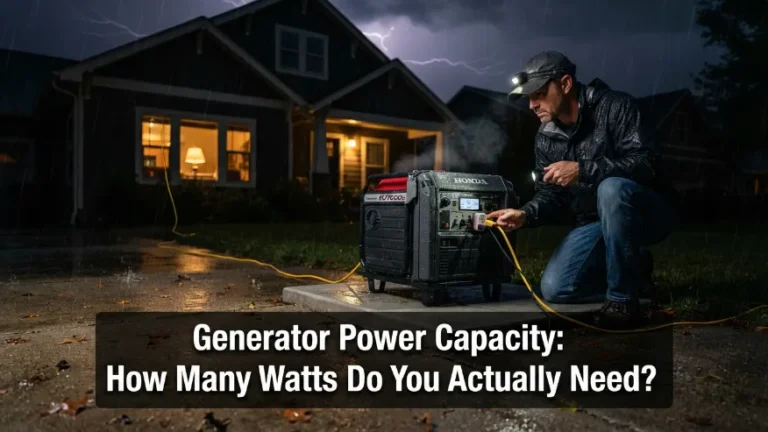
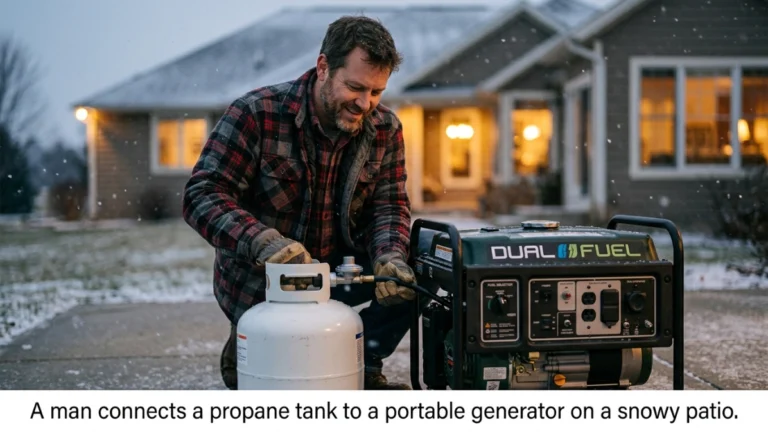
10 Best 6000 Watt Portable Generators for 2026: Real Home Backup Power
The best 6000 watt portable generator right now is the Westinghouse WGen6000DFc EFI, pairing fuel injection, remote start, and a CO sensor. We evaluated 10 generators in the 6,000-watt class, scoring each on Power Output, Fuel Flexibility, and Noise & Efficiency. Most 6000-watt generators look identical on paper but fail on propane or 240V loads, and our scoring exposes that gap. Whether you need home backup, RV power, or a quiet campsite unit, this guide gives you one clear answer.
Quick Comparison: All 10 Generators Ranked
| # | Product | Best For | Rating | Badge | |
|---|---|---|---|---|---|
| 1 | WGen6000DFc EFI | Home backup | 4.8/5 | Best Overall | Buy → |
| 2 | iGen8200TFc | Natural gas homes | 4.7/5 | Best Tri-Fuel | Buy → |
| 3 | Champion 6500W Inverter | Quiet operation | 4.6/5 | Quietest Pick | Buy → |
| 4 | WEN DF680iX | Dual-fuel value | 4.5/5 | Best Dual-Fuel Value | Buy → |
| 5 | GENMAX GM6000iED | Remote start | 4.4/5 | Best Remote Start | Buy → |
| 6 | Champion 6250W Open Frame | Budget 240V inverter | 4.3/5 | Best Budget Inverter | Buy → |
| 7 | Champion 6500W Open Frame | RV plus home | 4.3/5 | Best for RVs | Buy → |
| 8 | Generac GP6500E | Motor loads | 4.2/5 | Best Heavy-Duty | Buy → |
| 9 | Westinghouse WGen6000 | Budget backup | 4.1/5 | Best Budget | Buy → |
| 10 | A-iPower SUA7600iED | Auto fuel switching | 4.0/5 | Best Auto Fuel Switch | Buy → |
How We Chose These Generators
What we evaluated
10 generators from 6 brands (Westinghouse, Champion, WEN, GENMAX, Generac, A-iPower), each rated between 5,000 and 6,600 running watts on gasoline.
Our 3 scoring criteria
Power Output (running and surge watts, 240V access), Fuel Flexibility (gas, propane, natural gas, tank size), and Noise & Efficiency (dBA, runtime, power quality).
Sources we relied on
Manufacturer spec sheets and product pages, retailer listings, and owner-reported reliability patterns. Every runtime and noise figure is the maker’s published rating.
What we cut and why
Units over 9,000 running watts (too heavy for this class), 4,500-watt models like the DuroMax XP5500EH (too small), and 50 Hz export models like the Generac GP6000E.
What to Look for When Buying a 6000 Watt Portable Generator
Two generators with the same 6,000 number on the box can behave very differently once a well pump kicks on or the gas runs low. These five factors decide whether a model actually covers your outage.
1. Running Watts vs. Starting Watts
The running rating is what the generator holds all day; the starting figure is a brief surge for motors. A model sold as “6,000 watts” may run only 5,000. Understanding running watts versus starting watts is the single most important sizing step.
2. Fuel Type: Gas, Dual Fuel, or Tri-Fuel
Gasoline gives full rated power but goes stale in storage. Propane stores for years and burns cleaner, at roughly a 10% power penalty, and natural gas removes refueling entirely if you have a line. Before you rely on propane, check how long a 20 lb propane tank lasts at your expected load.
3. Inverter vs. Open Frame
Inverter generators produce clean power (under 3% THD) that is safe for computers and smart appliances, and they throttle down at light loads to save fuel. Open-frame models are louder but usually carry bigger tanks and stronger motor-starting surge.
4. Outlets and Transfer-Switch Readiness
For home backup, you want an L14-30R 120/240V twist-lock outlet so one cord feeds your panel safely. RV owners need a TT-30R or 50A outlet. Read how a portable generator transfer switch works before an outage, not during one.
5. CO Shutoff and Starting System
Most current models include carbon monoxide sensors that kill the engine when CO builds up, a feature worth insisting on. Electric or remote start matters more than people expect; pulling a recoil cord in a cold storm is where many outage plans fail.

Westinghouse WGen6000DFc EFI Dual Fuel Portable Generator: The Easiest 6,000-Watt Backup to Live With
Best for: Home backup through a transfer switch
If you want a generator that starts like a car on a cold outage morning, this is the one to buy. Electronic fuel injection replaces the carburetor, so there is no choke to fiddle with and far less risk of gummed-up fuel after months in storage. It delivers 6,000 running and 7,500 peak watts on gasoline, also runs on propane, and its key fob lets you start it from the porch. The L14-30R twist-lock feeds a transfer switch directly. The trade-off: as an open-frame unit, it is noticeably louder than an inverter.
- Fuel injection: no choke, no carburetor cleaning
- Up to 14 hours on 4.75 gallons of gas
- Remote key-fob start plus CO sensor shutoff
- L14-30R and TT-30R outlets for house and RV
- Open-frame design is louder than inverter models
- Conventional output, not inverter-clean power
4.9/5
4.7/5
4.6/5
Westinghouse iGen8200TFc Tri-Fuel Inverter Generator: Inverter-Clean Power on Three Fuels
Best for: Natural gas homes and sensitive electronics
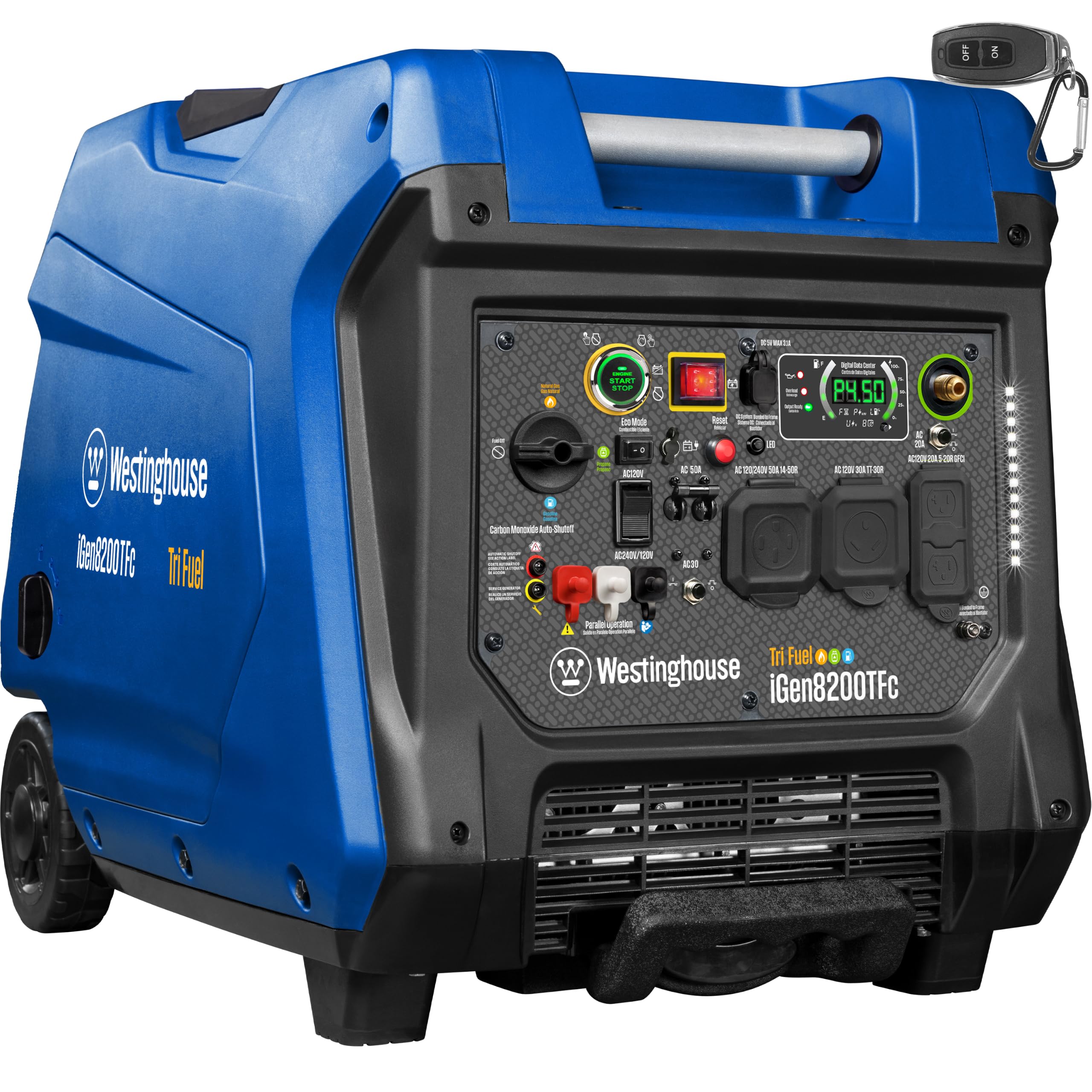
Homeowners with a natural gas line get something no other pick here offers: a fuel supply that never needs a gas-can run. The iGen8200TFc switches between gasoline, propane, and natural gas, producing 6,600 running watts on gasoline and 5,280 on natural gas, all at under 3% THD for sensitive electronics. At about 60 dBA at quarter load, it is the quietest unit in this roundup. The catch is output drop: on natural gas, peak watts fall to 6,560, so a large AC compressor and a well pump may need staggered starts.
- Runs on gasoline, propane, or natural gas
- Under 3% THD, safe for electronics
- About 60 dBA at quarter load
- 50A outlet, remote start, CO sensor
- Natural gas output drops to 5,280 running watts
- Natural gas use requires a dedicated gas connection
4.6/5
4.9/5
4.6/5

Champion 6500-Watt RV Ready Inverter Generator with CO Shield: Quiet Enough for a Campground, Strong Enough for Backup
Best for: Quiet neighborhoods, camping, and RVs
If noise is what will annoy you, or your neighbors, at 2 a.m., start here. Champion rates this enclosed inverter at 64 dBA from 23 feet, roughly conversation level, while it still produces 6,500 starting and 5,000 running watts. It stretches 3.95 gallons into up to 15 hours at 25% load, and its clean power, under 3% THD, is safe for laptops and TVs. CO Shield shuts the engine down if carbon monoxide builds up around it. The limitation is fuel: it runs on gasoline only, so propane storage is off the table.
- 64 dBA from 23 feet
- Up to 15 hours on 3.95 gallons
- Under 3% THD clean power
- CO Shield automatic shutoff
- Gasoline only, no propane option
- 5,000 running watts limits big simultaneous loads
4.5/5
4.0/5
4.9/5

WEN DF680iX 6800-Watt Dual Fuel Inverter Generator: Dual-Fuel Inverter Power Without the Premium
Best for: Dual-fuel inverter power on a mid-range budget
For buyers who want inverter-clean power and propane flexibility without stepping into flagship territory, the DF680iX hits the sweet spot. Its 224cc engine makes 6,800 surge and 5,100 rated watts on gasoline, or 6,000 and 4,500 on propane. A fuel shut-off runs the carburetor dry before shutdown, the single best habit for avoiding stale-fuel clogs. WEN’s CO Watchdog adds automatic carbon monoxide shutoff, and the unit is marketed for EV charging backup. Some owners report inverter failures, so register the warranty the day it arrives.
- Gas or propane with inverter-clean output
- Fuel shut-off keeps the carburetor clean
- CO Watchdog automatic shutoff
- Eco mode trims fuel use at light loads
- Some owners report inverter board failures
- Propane drops output to 4,500 rated watts
4.5/5
4.6/5
4.3/5
GENMAX GM6000iED Dual Fuel Inverter Generator: Remote-Start Dual Fuel in a Compact Inverter
Best for: Remote start convenience in a dual-fuel inverter
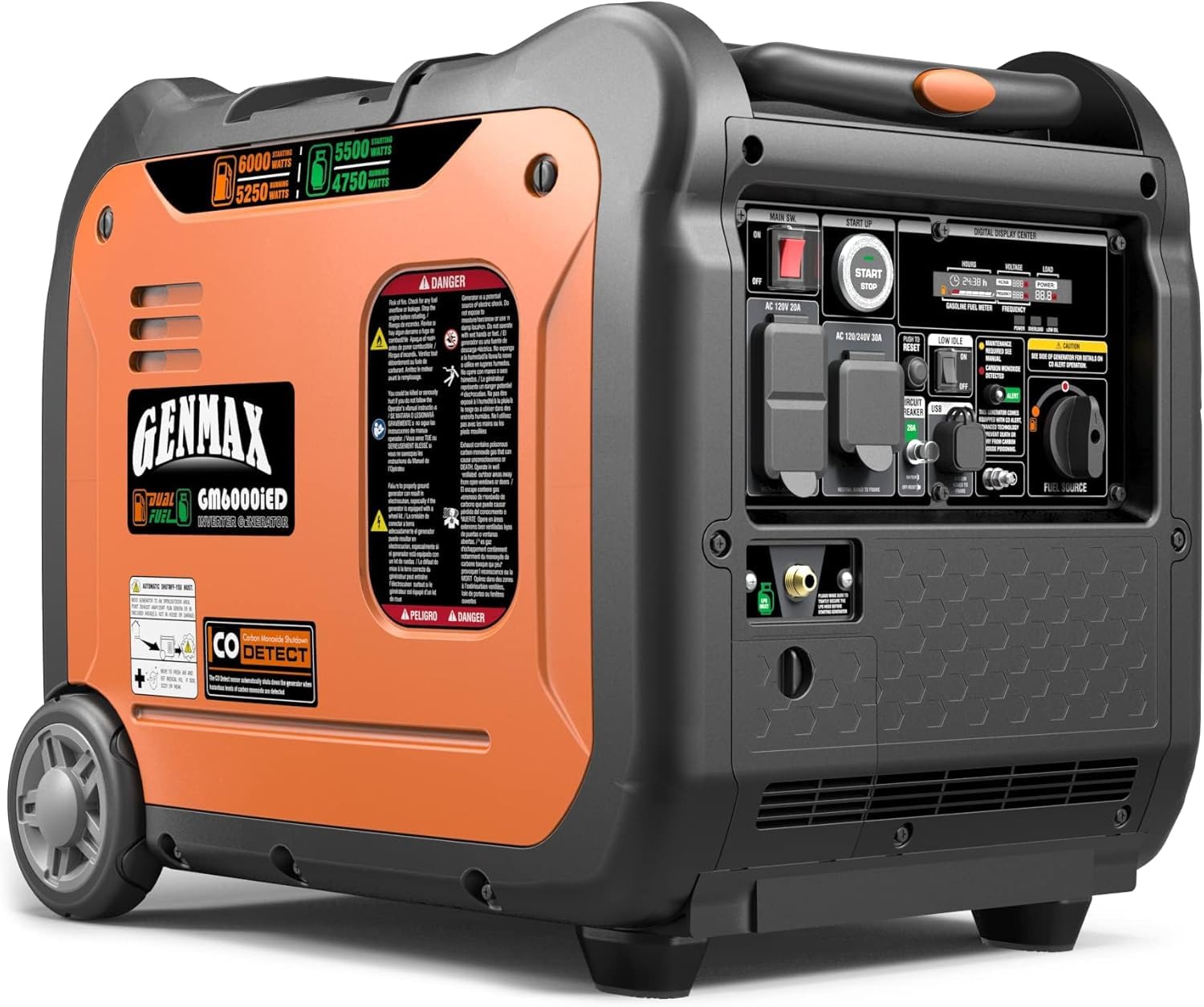
If you want push-button convenience from inside the house, the GM6000iED adds remote start to a dual-fuel inverter at a lower tier than the big brands. Its 312cc engine produces 6,000 starting and 5,250 running watts on gasoline, or 5,500 and 4,750 on propane, at about 62 dBA under quarter load. You get an L14-30R twist-lock and two 5-20R outlets, plus CO detection that shuts the engine down. The weak points are the small 3.6-gallon tank, good for about 8.5 hours at half load, and no availability in California.
- Remote and electric start included
- About 62 dBA at quarter load
- Gas or propane, 5,250 running watts
- CO Detect automatic shutoff
- 3.6-gallon tank, about 8.5 hours half load
- Not sold in California
4.3/5
4.6/5
4.5/5

Champion 6250-Watt Open Frame Inverter Generator (100519): 240V Inverter Power at an Open-Frame Tier
Best for: Budget 240V inverter backup
Most inverters this size sit in premium territory, but this open-frame design brings inverter electronics and a 240V twist-lock to a budget-friendly tier. The 301cc engine makes 6,250 starting and 5,000 running watts and runs up to 13.5 hours at 25% load on 4.2 gallons. Champion says it is 50% quieter and 20% lighter than its traditional 5,000-watt model, landing at 69 dBA from 23 feet and 121 pounds. It is EPA certified and CARB compliant. The trade-offs are recoil start only and no propane option.
- L14-30R 240V twist-lock for transfer switches
- Up to 13.5 hours at 25% load
- 69 dBA, quieter than conventional open frames
- Four 20A GFCI household outlets
- Recoil start only, no electric start
- Gasoline only, no propane
4.3/5
3.8/5
4.2/5

Champion 6500-Watt RV Ready Open Frame Inverter with CO Shield: RV-Ready Output With CO Shield Protection
Best for: RV owners who also need home backup
RV owners who also want backup for the house will like how this open-frame inverter splits the difference. It makes 6,500 starting and 5,250 running watts from a 301cc engine, runs up to 13.5 hours at 25% load on 4.3 gallons, and comes RV-ready for a direct camper hookup. Champion’s Quiet Technology keeps it at 69 dBA, and CO Shield shuts it off if carbon monoxide accumulates. Cold Start Technology helps with winter pulls. The downside is that 69 dBA is still louder than enclosed inverters, and it runs on gasoline only.
- RV-ready output for direct camper hookup
- 5,250 running watts from 301cc engine
- CO Shield automatic carbon monoxide shutoff
- Cold Start Technology for winter pulls
- 69 dBA, louder than enclosed inverters
- Recoil start, gasoline only
4.4/5
3.8/5
4.2/5

Generac GP6500E Portable Generator: The Motor-Starting Workhorse
Best for: Well pumps and other motor-heavy loads
If your outage list includes a well pump, sump pump, or window AC, starting surge matters more than running watts, and that is where the GP6500E earns its spot. It is rated at 6,500 running and 8,125 starting watts, and Generac’s PowerRush technology claims over 40% more starting capacity for motor loads. A 6.9-gallon steel tank gives up to 10.5 hours at 50% load, and the steel tube cradle shrugs off rough handling. Electric start includes the battery. Expect conventional open-frame noise and no propane option.
- PowerRush: over 40% more starting capacity
- 6.9-gallon steel tank, 10.5 hours half load
- Electric start with battery included
- Hour meter tracks service intervals
- Gasoline only, no dual-fuel option
- Heavy steel frame needs two people to lift
4.8/5
3.6/5
3.6/5
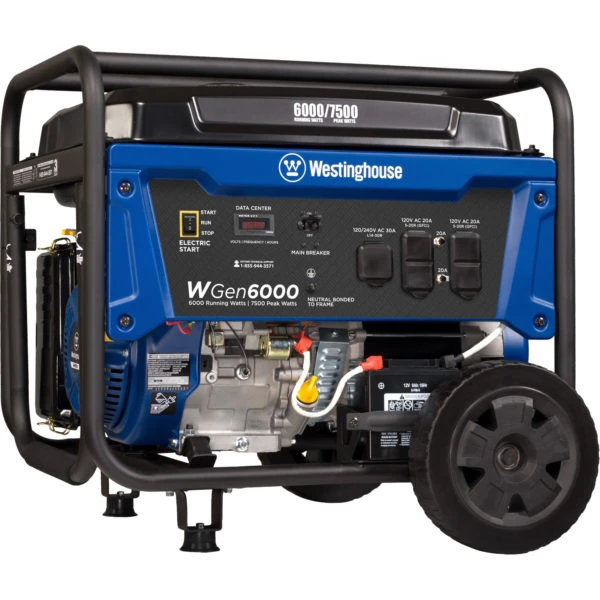
Westinghouse WGen6000 Electric Start Portable Generator: Big Tank, Simple Controls, Budget Backup
Best for: Budget gas-only home backup
If your budget is tight and gasoline is easy for you to store, the WGen6000 gives you full 6,000-watt output without paying for extras you may never use. Its 420cc OHV engine with a cast iron sleeve produces 6,000 running and 7,500 peak watts, and the 6.6-gallon tank is rated for up to 18 hours at light load. Electric start with recoil backup, an L14-30R outlet, and two GFCI duplexes cover home essentials. It skips propane and inverter electronics, so it is louder and less fuel-flexible than the picks above it.
- 6.6-gallon tank, up to 18-hour runtime
- 420cc engine with cast iron sleeve
- Electric start with recoil backup
- Battery, oil, and tool kit included
- Gasoline only, no propane
- No inverter; louder conventional output
4.5/5
3.4/5
3.4/5

A-iPower SUA7600iED Dual Fuel Inverter Generator: Automatic Fuel Switching in an Enclosed Inverter
Best for: Long outages with propane as a fallback
Running out of gas at 3 a.m. is the outage scenario this generator is designed around. The SUA7600iED is an enclosed dual-fuel inverter that switches fuels automatically, delivering 6,100 running and 7,600 peak watts on gasoline from a 322cc engine. With both gasoline and propane connected, it can move to the second fuel without you stepping outside, and it runs at around 62 dBA. It ranks last because A-iPower has a less established service network than Westinghouse, Champion, or Generac, and fewer independent owner reports exist on long-term reliability.
- Automatic switching between gas and propane
- 6,100 running watts on gasoline
- Enclosed inverter, about 62 dBA
- Smaller service network than major brands
- Fewer long-term owner reliability reports
4.3/5
4.3/5
4.1/5
Top 3 Head-to-Head: WGen6000DFc EFI vs iGen8200TFc vs Champion 6500W Inverter
These three cover the decisions most buyers actually face: the easiest home-backup machine, the most fuel-flexible inverter, and the quietest gas-only option.
| Feature | #1 WGen6000DFc EFI | #2 iGen8200TFc | #3 Champion 6500W |
|---|---|---|---|
| Power Output | 6,000 running / 7,500 peak | 6,600 running / 8,200 peak, Best | 5,000 running / 6,500 starting |
| Fuel Flexibility | Gasoline or propane | Gas, propane, natural gas, Best | Gasoline only |
| Noise & Efficiency | Open frame, up to 14 hr per tank | About 60 dBA, under 3% THD, Best | 64 dBA, up to 15 hr at 25% load |
| Starting and storage | EFI, no choke, remote fob, Best | Remote and electric start | EZ Start Dial |
| Choose if… | You want reliable starts on a transfer switch | You have a natural gas line or sensitive electronics | Noise matters most and gas is easy to store |
Who These Generators Are NOT For
A 6,000-watt portable is a smart middle ground, but it is the wrong tool in a few common situations.
If you live in an apartment or need power indoors, no gas generator is safe for you; a battery power station is the right answer. And if you only need to charge phones and run a camp light, a 2,000 to 3,000-watt inverter is lighter, cheaper, and far quieter.
Common Mistakes to Avoid
Most generator regrets come from setup and sizing, not from the model itself.
Frequently Asked Questions About 6000 Watt Portable Generators
What will a 6000 watt generator run?
A 6000 watt generator can run most household essentials at the same time: a refrigerator, freezer, sump pump, furnace blower, lights, router, and TV usually total 3,000 to 4,500 running watts. Leave headroom for startup surges, which can reach two to three times a motor’s running draw. Big electric loads like a water heater, range, or dryer generally need to run alone, with other appliances switched off first.
Can a 6000 watt generator run a whole house?
A 6000 watt generator can power a typical home’s essential circuits, but not everything at once. Plan to cover refrigeration, lighting, internet, a sump or well pump, a gas furnace blower, and small appliances, while rotating or skipping central AC, electric water heaters, ovens, and dryers. Connect through a transfer switch or interlock so you can choose which circuits stay on from the panel.
Will a 6000 watt generator run central air conditioning?
Sometimes. A small 2- to 3-ton central air conditioner can run on a 6000 watt generator if little else is on, but compressor startup surge is the real obstacle and can exceed the generator’s starting rating. A soft-start kit cuts that surge substantially and often makes the difference. Check your condenser’s locked-rotor amps first, and read our guide to sizing a generator for an air conditioner before you buy.
How long will a 6000 watt generator run on a tank of gas?
Most 6000 watt portable generators run roughly 8 to 14 hours per tank at half load, depending on tank size and engine efficiency. In this roundup, the Westinghouse WGen6000DFc EFI is rated up to 14 hours on 4.75 gallons, while the Generac GP6500E is rated up to 10.5 hours on 6.9 gallons at 50% load. Lighter loads extend runtime, and inverter models stretch fuel further by throttling down.
How many amps is a 6000 watt generator?
A 6000 watt generator supplies about 50 amps at 120 volts, or 25 amps at 240 volts, based on watts divided by volts. In practice, most portable models route 240V power through a 30-amp L14-30R twist-lock outlet, and each 120V household outlet is limited by its own breaker, usually 20 amps. Size your transfer switch or inlet to the generator’s largest outlet, not its total wattage.
Can a 6000 watt generator run a well pump?
Yes, in most cases. A typical 1 HP 240-volt well pump draws around 9 to 10 running amps, though it surges much higher at startup. Use the generator’s 240V L14-30R outlet through a transfer switch, and start the pump before other motor loads. Models with strong starting capacity, like the Generac GP6500E with its PowerRush surge rating, handle repeated pump starts more comfortably.
Is a 6000 watt inverter generator better than an open-frame one?
An inverter is better if you need clean power for electronics, low noise, or fuel savings at light loads, since inverters produce under 3% THD and throttle the engine down. An open-frame model is better if you mainly run pumps, tools, or heavy motor loads on a tighter budget, because it usually offers bigger tanks and stronger surge. Many homeowners choose an open frame for backup.
Our Final Verdict
For most homes, the 6,000-watt class is about matching fuel and noise to your outage, not chasing peak numbers. If you will back up a panel through a transfer switch and want the fewest starting problems, choose our top pick; if quiet or natural gas matters more, the next two picks fit better.

Hi, I’m Michael Turner. I own a generator workshop in the United States and founded HomeGeneratorBlog to share practical, hands-on guidance about generator installation, maintenance, troubleshooting, safety, and backup power solutions. My goal is to help homeowners make smarter, more confident decisions through clear and reliable information