GENLITEC DG12000E Portable Diesel Generator Review
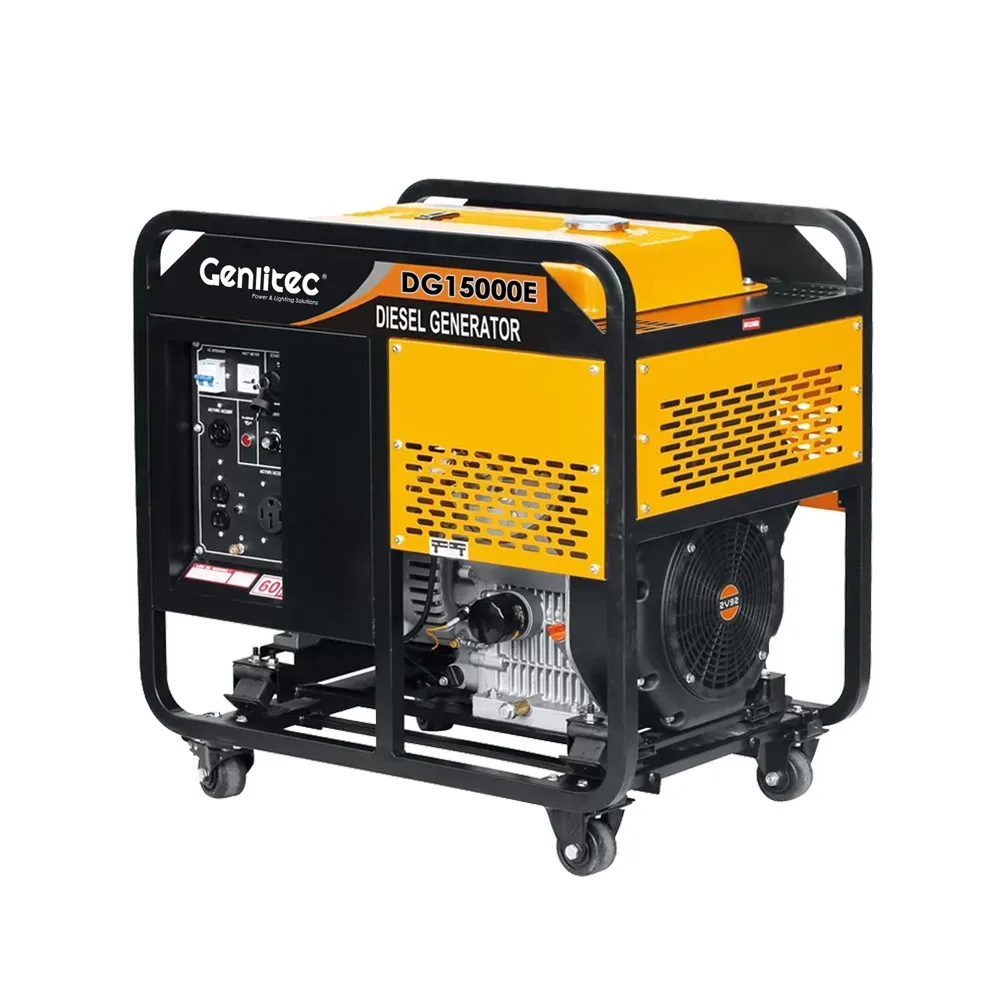
The GENLITEC POWER DG12000E is an open-frame portable diesel generator designed to deliver substantial electrical output. It primarily serves property owners, agricultural operations, and worksites needing independent power where grid electricity is unavailable or unreliable.
This portable diesel generator provides 10 kW of rated output in its 50Hz configuration. Its electric starting system, wheeled frame, and substantial fuel capacity make it an option for demanding backup-power applications.
However, portability has practical limits when equipment weighs 200 kilograms. This review examines verified specifications, operating considerations, and important purchasing limitations without claiming independent hands-on testing.
🏆 My Quick Verdict
💡 Best For: Buyers needing a substantial diesel-powered electricity source for suitably matched equipment, agricultural activities, and backup applications.
⚡ Key Specs:
10 kW rated output and 10.5 kW maximum output at 50Hz; 25L fuel tank; 0.912L V-twin diesel engine; electric start; 200kg net weight.
✅ Bottom Line: The DG12000E combines substantial rated output with practical monitoring and starting equipment. Its heavy construction, unspecified operating noise, and need for regional electrical compatibility checks make careful purchasing essential.
At a Glance
- Delivers 10 kW continuous rated output in the 50Hz configuration.
- Uses an air-cooled, four-stroke, V-twin diesel engine.
- Includes electric starting, a battery, wheels, and an hour meter.
- Provides automatic low-oil protection and an AC circuit breaker.
- Weighs 200kg, making transportation a significant consideration.
- Requires verification of regional voltage, frequency, and outlet compatibility.
GENLITEC DG12000E Specifications
| Specification | Manufacturer Data |
|---|---|
| Model | DG12000E |
| Generator design | Open-frame diesel |
| Rated output, 50Hz / 60Hz | 10 kW / 11 kW |
| Maximum output, 50Hz / 60Hz | 10.5 kW / 11.5 kW |
| Engine | DE2V920 (2V88) |
| Engine displacement | 0.912 liters |
| Cooling system | Air-cooled |
| Fuel capacity | 25 liters |
| Starting system | Electric start |
| Voltage regulation | Brush-type alternator with AVR |
| Dimensions | 885 × 655 × 890 mm |
| Net weight | 200 kg |
Design & Build Quality
The DG12000E uses an open-frame design that leaves its engine and generator components accessible. This configuration favors straightforward servicing over the enclosed appearance of sound-attenuated generators.
Its published dimensions indicate a substantial machine requiring dedicated storage space. The 200kg weight also means that positioning, loading, and transport should be planned before delivery.
Integrated wheels help with movement across suitable surfaces. However, wheels do not eliminate the challenges of stairs, uneven terrain, or vehicle loading.
Setup, Installation & Ease of Use
- Inspect the shipment for transport damage before accepting or operating the machine.
- Verify the supplied voltage and frequency against your equipment requirements.
- Position the generator outdoors on stable, level ground.
- Keep exhaust directed away from buildings, openings, and occupied areas.
- Check engine oil, diesel fuel, battery connections, and installation instructions before starting.
- Use correctly rated cables and manufacturer-approved electrical connections.
- Arrange professional transfer equipment installation when connecting household circuits.
- Store the cooled generator in a dry location following manufacturer guidance.
Core Performance & Feature Breakdown
The DG12000E provides substantial rated power for loads that fit its electrical configuration. Its manufacturer lists different output figures for 50Hz and 60Hz versions, so buyers must identify the exact supplied variant.
Its 50Hz rated output equals 10,000 watts, but that does not guarantee compatibility with every 10,000-watt load. Motor starting requirements, receptacle ratings, and simultaneous consumption determine usable capacity.
Diesel Engine Performance
The 0.912-liter V-twin engine uses four-stroke combustion and air cooling. These characteristics support a relatively straightforward mechanical layout without requiring a liquid-cooling system.
However, the manufacturer’s published specifications do not establish verified real-world fuel consumption across different loads. Any runtime estimate would therefore require additional performance data.
Electrical Output Quality
The brush-type alternator incorporates automatic voltage regulation to help manage output voltage. AVR alone does not establish inverter-grade electricity or a specific total harmonic distortion rating.
Owners planning to operate sensitive electronics should request documented power-quality measurements. Electrical compatibility should never be assumed from the generator’s capacity alone.
Expert Insight
Calculate continuous loads and starting surges separately before selecting a generator. Confirm voltage, frequency, outlet ratings, and electrical protection with the supplier, especially when importing equipment between regions.
Key Features Explained
Electric Starting System
Electric starting reduces the physical effort required to initiate operation. The manufacturer identifies a battery as standard equipment, although battery care remains an important ownership responsibility.
Automatic Low-Oil Protection
The oil-alert system provides protection against operation when oil conditions trigger its safety mechanism. This feature supplements routine inspection rather than replacing proper maintenance.
Built-In Monitoring Instruments
The voltmeter provides a convenient indication of electrical output, while the hour meter tracks accumulated operation. These instruments assist with routine observation and maintenance scheduling.
Optional Transfer Equipment
The manufacturer lists automatic transfer switching as an optional accessory rather than standard equipment. Buyers must verify supported controls, starting arrangements, and installation requirements before considering automatic backup operation.
Real-World Usability & Maintenance
Diesel ownership requires attention to fuel cleanliness, correct lubrication, and periodic engine inspection. Maintenance intervals should follow the documentation supplied with the specific generator.
Outdoor operation also creates practical concerns involving weather exposure, security, exhaust routing, and safe cable placement. Never operate a diesel generator indoors, inside garages, or near ventilation openings because exhaust contains deadly carbon monoxide.
Long-term ownership depends on replacement-parts availability and competent local servicing. Confirm access to filters, electrical components, batteries, and engine support before purchasing.
Pros & Cons
Pros
- Substantial rated capacity supports demanding, appropriately matched electrical loads.
- Electric starting improves convenience compared with manual-only starting.
- Integrated monitoring instruments make operating conditions easier to observe.
- Standard wheels offer some mobility despite the machine’s considerable weight.
Cons
- The 200kg weight complicates transport and repositioning.
- Verified noise and loaded fuel-consumption figures are not published in the reviewed specifications.
- Regional electrical compatibility and local service support require confirmation.
Common Issues & Fixes
Generator Does Not Start
Starting difficulties can result from insufficient fuel, a discharged battery, or an engine protection condition. Check basic operating requirements and follow the manufacturer’s diagnostic procedure.
Output Breaker Trips
An overloaded circuit or connected electrical fault can activate breaker protection. Disconnect loads, inspect the cause, and restore operation only after correcting the problem.
Unexpected Voltage Readings
Unexpected voltmeter indications may signal load problems or an electrical-system fault. Disconnect sensitive equipment and request qualified inspection rather than adjusting internal electrical components yourself.
What to Know Before You Buy
The first purchasing question concerns the exact electrical variant. Confirm frequency, rated voltage, socket configuration, and single-phase or optional three-phase requirements directly with the supplier.
Next, request written information about warranty coverage, local support, noise, runtime, and replacement parts. The published product specifications alone do not establish these ownership details.
For household backup applications, professional electrical planning is essential. Read this portable generator transfer switch guide before arranging a safe installation.
Buyers uncertain about required capacity should also review how to size a generator for home use. Matching actual loads is more important than choosing equipment solely by advertised wattage.
Who Should Buy It / Who Should Skip It
✅ Who Should Buy It
- Property owners with substantial, carefully calculated backup-power demands.
- Agricultural operators needing compatible independent electrical supply.
- Buyers who can accommodate heavy equipment and routine diesel servicing.
✗ Who Should Skip It
- Campers needing a lightweight, easily transported generator.
- Buyers requiring independently verified low-noise operation.
- Users unable to confirm compatible voltage, frequency, or servicing.
Alternatives to Consider
Two alternatives deserve attention when the DG12000E does not fit your requirements. Their different designs and capacities make direct specification comparisons important.
GENLITEC DG12000S
Best For: Buyers preferring an enclosed diesel-generator design.
Main Advantage: Enclosed construction instead of the DG12000E open frame.
Trade-off: Higher published net weight.
Key Spec: 10 kW rated output at 50Hz and 257kg net weight.
Generac XD5000E
Best For: Buyers who need less generating capacity and a published runtime specification.
Main Advantage: Manufacturer-documented runtime at half load.
Trade-off: Considerably lower electrical output capacity.
Key Spec: 5,000 running watts and 32.4-hour runtime at 50% load.
Is It Worth It?
The DG12000E is worth considering when its published capability closely matches your electrical requirements. Its value depends on the actual purchase quotation, included equipment, and long-term service arrangements.
Without verified current pricing or independent reliability testing, a definitive value-for-money ranking would be misleading. Obtain comparable quotations and assess installation costs before committing.
Final Verdict
The GENLITEC DG12000E is a credible candidate for substantial portable diesel power based on its published specifications. Choose it only after confirming electrical compatibility, service support, and the practical demands of operating a heavy open-frame generator.
Frequently Asked Questions
Can the GENLITEC DG12000E power a house?
Yes, it can supply compatible household loads when correctly configured and installed. Actual coverage depends on continuous demand, motor-starting requirements, electrical compatibility, and approved transfer equipment.
How much power does the DG12000E produce?
The 50Hz version provides 10 kW rated output and 10.5 kW maximum output. Manufacturer figures for the 60Hz version are 11 kW rated and 11.5 kW maximum.
What size is the GENLITEC DG12000E?
Its published dimensions are 885 × 655 × 890 millimeters. Allow additional space for safe ventilation, access, and maintenance.
Does this generator include a warranty?
The reviewed manufacturer specifications do not confirm a particular warranty term. Request written warranty conditions and information about authorized service before ordering.
What maintenance does the DG12000E require?
It requires appropriate diesel-engine maintenance, including oil, filter, and fuel-system attention. Follow the supplied engine documentation for exact procedures and service intervals.
Can the DG12000E operate sensitive electronics?
Compatibility cannot be guaranteed from the published AVR specification alone. Request verified power-quality data and check the equipment manufacturer’s electrical requirements.
Affiliate disclosure: HomeGeneratorBlog earns a small commission when you purchase through links on this page — at no extra cost to you. Our editorial process is independent: affiliate relationships never influence which products we recommend or how we rank them.

Hi, I’m Michael Turner. I own a generator workshop in the United States and founded HomeGeneratorBlog to share practical, hands-on guidance about generator installation, maintenance, troubleshooting, safety, and backup power solutions. My goal is to help homeowners make smarter, more confident decisions through clear and reliable information