
Portable Generator Cover: Storage, Weather & Running Guide
Quick Answer
A portable generator cover protects your machine from dust, sun, rain, snow, and debris, but you need the right type. Use a fitted storage cover only when the generator is off and cool, while an engineered running cover is designed to maintain ventilation during outdoor operation. Your generator must still follow safe portable generator placement.
What to look for
- Correct cover type: Choose storage protection or an engineered running cover based on how you will use it.
- Proper fit: Measure the generator instead of buying by wattage alone.
- Weather resistance: Look for durable material that handles water, sunlight, and wind.
- Safe ventilation: Never block the engine intake, cooling airflow, exhaust, or control panel while operating.
- Secure attachment: Straps, clamps, or elastic hems help prevent a cover from blowing away.
Most important rule
- Never run a generator underneath a normal storage cover, plastic sheet, or tightly wrapped tarp.
A generator often spends far more time sitting than running. That makes a good cover one of the simplest ways to protect the machine between outages.
The tricky part is that products sold as “generator covers” do different jobs. I separate them into storage covers and purpose-built running covers because confusing the two can create serious heat, electrical, and carbon monoxide risks.
What Is a Portable Generator Cover?
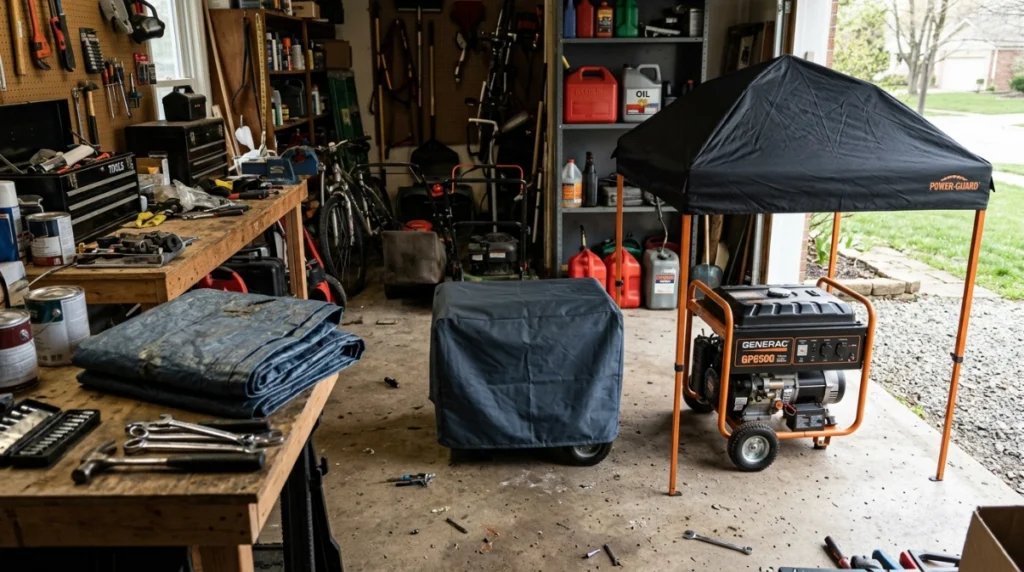
A portable generator cover is a protective enclosure or canopy made to shield a generator from weather, dirt, dust, and sunlight. Its safe use depends on whether it was designed for storage or operation.
A traditional fitted cover normally surrounds most of the generator. It works well when the engine is shut down, cool, and stored between uses.
A running cover works differently. It protects vulnerable areas while leaving space for engine cooling and exhaust flow.
- Storage cover: Protects a shut-down generator from dust, UV exposure, moisture, leaves, and dirt.
- Running cover: A raised weather canopy engineered for outdoor generator operation.
- DIY tarp: General-purpose material that may block airflow or contact hot components if positioned incorrectly.
Understanding that difference matters more than brand or appearance. A cheap cover used correctly is safer than an expensive cover used for the wrong purpose.
Can You Run a Portable Generator With a Cover On?
You should never operate a portable generator under a normal fitted storage cover. Only use a cover during operation when its manufacturer specifically designs and approves it as a generator running cover.
Generator engines need unrestricted cooling air. The exhaust system also reaches temperatures that can damage nearby material.
A tightly fitted cover can create several problems:
- Blocked cooling airflow
- Engine overheating
- Heat damage to the cover
- Exhaust recirculation
- Carbon monoxide concentration around the generator
- Reduced access to controls and outlets
The U.S. Consumer Product Safety Commission also stresses that portable generators belong outdoors. Its current guidance says to keep them at least 20 feet from homes and buildings, with exhaust directed away from doors, windows, and vents.
You can review the CPSC portable generator safety and standards information for additional guidance.
A weather canopy does not change the carbon monoxide rule. Think of it as rain protection, not permission to move the generator closer to your house.
What about a tarp?
I would not drape a tarp directly over a running generator. It can sag, shift in wind, trap heat, or touch the muffler.
If severe weather makes generator operation necessary, follow the generator manufacturer’s instructions. Use only a compatible system designed to preserve ventilation and electrical protection.
Storage Cover vs. Running Cover: Which Do You Need?
Choose a storage cover if the generator is protected while switched off. Choose an engineered running cover if you need weather protection during outdoor operation.
| Feature | Storage Cover | Engineered Running Cover | Loose DIY Tarp |
|---|---|---|---|
| Use while generator runs | No | Yes, when manufacturer-approved | Not recommended directly over generator |
| Dust protection | Excellent | Limited | Moderate |
| Rain protection | During storage | Designed for operation | Depends on setup |
| Ventilation | Not intended for running | Engineered into design | Unpredictable |
| Typical priority | Storage and cleanliness | Operating in bad weather | Temporary general shelter |
Most homeowners who keep their generator inside a clean garage or storage building only need a fitted storage cover. Outdoor storage demands stronger weather and UV protection.
A running cover becomes useful when outages occur during rain or snow. That is especially important when waiting for dry weather is not practical.
How Do You Choose the Right Portable Generator Cover Size?
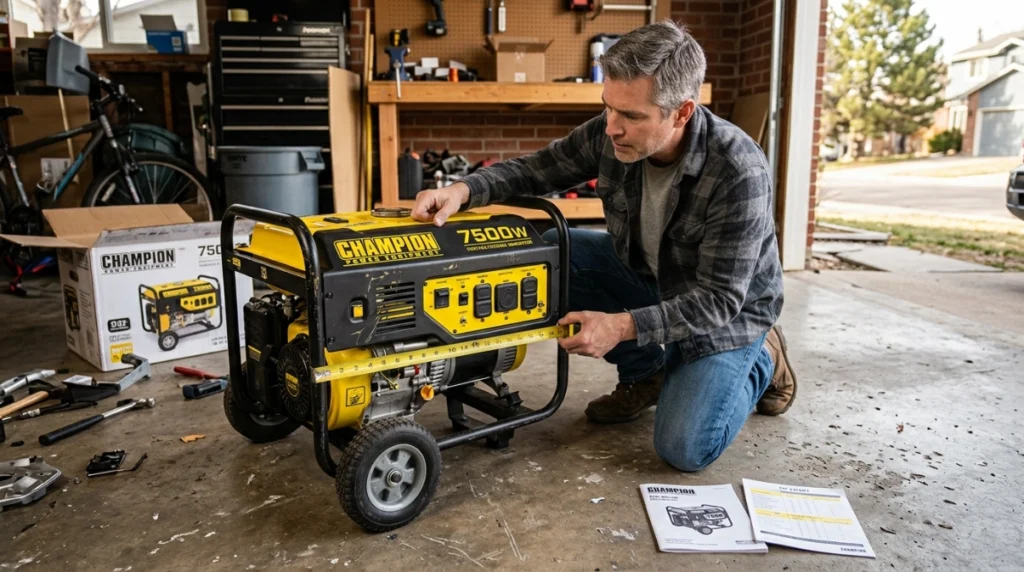
Measure the generator’s length, width, and height at its widest points before ordering a fitted cover. Include wheels, handles, frames, and control-panel projections that remain attached during storage.
Do not rely only on labels such as “5,000-watt generator cover.” Two generators with identical wattage ratings can have completely different frames.
- Measure length: Measure from the furthest front point to the furthest rear point.
- Measure width: Include frame tubing, wheels, and other permanent projections.
- Measure height: Measure from the ground or frame base to the highest permanent point.
- Check the product’s fit range: Compare your measurements with the manufacturer’s specifications.
- Verify generator style: Confirm whether your machine is open-frame or fully enclosed inverter-style.
A storage cover should fit securely without being painfully tight. Excess material that constantly flaps in wind can wear through faster.
Running-cover sizing can be more complicated because some systems attach to frame posts or use straps. Owners of enclosed models should also understand how an inverter portable generator differs from a traditional open-frame unit before choosing a mounting system.
What Material Is Best for a Generator Storage Cover?
For outdoor storage, look for durable water-resistant fabric with UV protection and reinforced seams. Indoor storage usually needs less weather resistance but still benefits from a dust-resistant fitted cover.
Common cover materials include polyester, Oxford-style fabric, vinyl-coated fabric, and other synthetic outdoor textiles.
- Polyester: Lightweight and common in affordable storage covers.
- Heavy woven fabric: Better suited to abrasion and frequent outdoor exposure.
- Vinyl-coated material: Offers strong water resistance but needs appropriate ventilation during storage.
- UV-resistant fabric: Valuable when the generator sits in direct sunlight.
I also look at seams before worrying about fabric marketing terms. Water commonly reaches equipment through weak stitching, openings, and poorly secured edges.
An elastic hem, buckle strap, or drawcord helps outdoors. Wind can turn a loose generator cover into a sail surprisingly quickly.
Will a Generator Cover Prevent Rust?
A cover can reduce exposure to rain and dirt, but it cannot guarantee that a generator will never rust. Moisture trapped underneath a cover can still attack frames, fasteners, electrical connections, and exhaust components.
This is why I avoid covering a warm or wet generator immediately after use. Letting the unit cool and dry first reduces condensation under the fabric.
- Store the generator on a dry, stable surface.
- Remove mud, leaves, and standing water.
- Allow the engine and exhaust to cool completely.
- Dry the frame before installing the storage cover.
- Check periodically for condensation or corrosion.
If outdoor humidity is high, inspect the machine more often. A waterproof shell cannot remove moisture that is already underneath it.
How Should You Cover a Generator During Long-Term Storage?
Prepare the machine first, then install the storage cover after the generator has cooled and dried. Covering a neglected generator does not prevent stale fuel, battery discharge, or carburetor problems.
For gasoline models, storage preparation deserves special attention. Our portable generator fuel-system guide explains why fuel condition becomes such a common source of no-start problems after long periods of inactivity.
- Turn the generator off and disconnect electrical loads.
- Let the engine and muffler cool completely.
- Follow the owner’s manual for fuel storage or fuel stabilizer.
- Clean dirt and debris from the generator.
- Make sure the unit is completely dry.
- Inspect for fuel, oil, or battery leaks.
- Install the fitted cover and secure its straps or hem.
- Keep the covered generator in a dry, ventilated storage location when possible.
Never use a cover to hide an active leak. Fuel problems should be repaired before storage.
Does a Running Cover Make a Generator Safe Near the House?
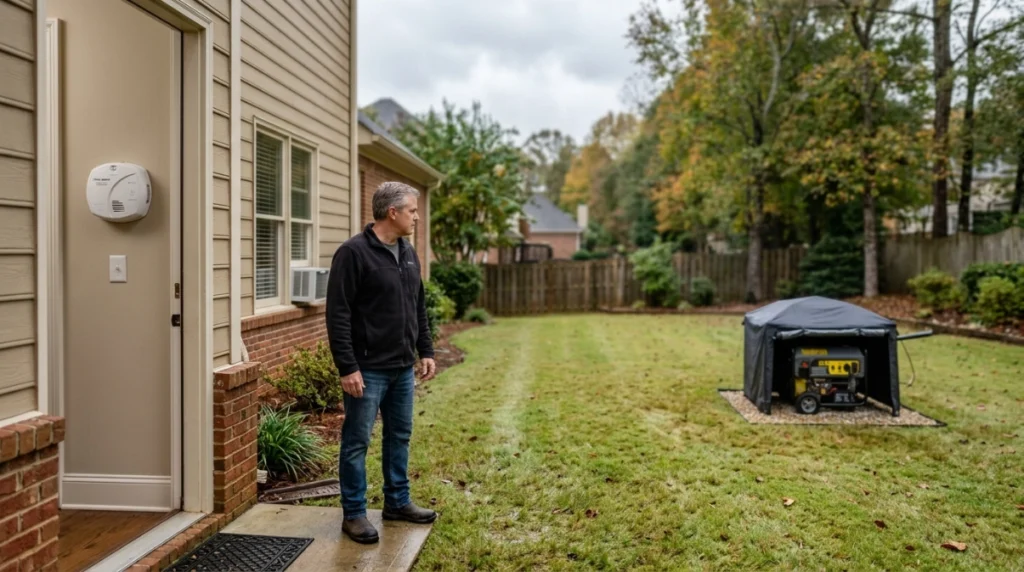
No. A running cover protects against weather; it does not make generator exhaust safe. Portable generators still need outdoor placement with generous clearance from occupied buildings.
The CDC says generators should operate outside, more than 20 feet from windows, doors, and vents. A battery-powered or battery-backup carbon monoxide alarm should also protect the home.
Read the CDC carbon monoxide guidance before planning your emergency generator location.
For a deeper explanation, see our portable generator carbon monoxide safety guide.
The same rule applies in 2026 whether your cover costs $20 or $200. A weather canopy does not neutralize carbon monoxide.
Safe operating checklist
- Keep the generator fully outdoors.
- Maintain at least 20 feet from the home and building openings.
- Point exhaust away from doors, windows, vents, and people.
- Follow the generator manufacturer’s wet-weather instructions.
- Use a running cover only when specifically designed for that generator or mounting style.
- Keep a working battery-powered or battery-backup CO alarm inside the home.
Ready.gov gives similar generator guidance in its power outage preparedness recommendations. It is worth reviewing before storm season.
Portable Generator Covers I Would Consider
If you’re ready to pick one, I would first decide whether you need protection while running or only during storage. These three options cover distinctly different situations.
🏆 Best Running Cover
GenTent Universal Clamp Kit
★★★★★ 4.8/5 editorial rating
Designed for many open-frame portable generators, this raised canopy uses frame-mounted clamps instead of wrapping the engine. I like this style when the real problem is operating outdoors during bad weather rather than simply covering a stored machine.
⛈ Best for Champion Owners
Champion 100376 Storm Shield by GenTent
★★★★☆ 4.7/5 editorial rating
Champion specifies this Storm Shield for many of its open-frame portable generators in the 4,000 to 12,500 starting-watt range. I would choose it over a generic tarp when compatible Champion fitment is confirmed and operation in rain or snow is the priority.
🛡 Best for Storage
Generac 6811 Portable Storage Cover
★★★★☆ 4.6/5 editorial rating
Generac markets the 6811 as a storage cover for compatible 5–8 kW portable generators. This is the type I would choose for dust, sunlight, transportation, and storage protection, but it should come off before starting the generator.
Always verify your exact generator dimensions and model before ordering. Wattage alone is not enough to guarantee cover compatibility.
Frequently Asked Questions
Can I leave my portable generator covered outside all year?
You can use a weather-resistant storage cover outdoors, but year-round exposure is still harder on a generator than sheltered storage. Keep the machine off the ground, inspect beneath the cover for trapped moisture, and follow the manufacturer’s storage instructions for fuel, batteries, and corrosion prevention.
Should I cover my generator immediately after using it?
No. Let the generator shut down and cool completely before installing a fitted storage cover. The muffler and engine can remain hot after operation, and covering the unit too soon can trap heat and moisture against components.
Is a waterproof generator cover enough for running in rain?
Not by itself. A normal waterproof storage cover should not remain on a running generator. For wet-weather operation, use only a compatible cover specifically engineered for running generators, while still following the manufacturer’s instructions, outdoor placement rules, ventilation requirements, and electrical safety guidance.
Can I build a permanent shelter around my portable generator?
A shelter must not turn the generator location into an enclosed or partially enclosed space. Carbon monoxide, cooling airflow, exhaust heat, electrical protection, and manufacturer-required clearances all matter, so a homemade enclosure should never be assumed safe simply because it has openings.
How tight should a portable generator storage cover fit?
A cover should be secure enough that wind cannot easily remove it, but it should not require excessive stretching over controls or sharp frame edges. Measure the complete generator dimensions and use the cover manufacturer’s fit chart rather than choosing by wattage alone.
Final Takeaway
The best portable generator cover depends on one question: will the generator be running or stored? A fitted storage cover protects a cool, shut-down machine, while an engineered running canopy addresses weather without wrapping the engine.
Do not let a cover create false confidence. Keep the generator outdoors, maintain safe clearance from your home, direct exhaust away from openings, and follow both the generator and cover manufacturers’ instructions every time you operate it.
Measure your generator now and choose the correct cover before the next outage. It is much easier to solve weather protection before the rain starts.

Hi, I’m Michael Turner. I own a generator workshop in the United States and founded HomeGeneratorBlog to share practical, hands-on guidance about generator installation, maintenance, troubleshooting, safety, and backup power solutions. My goal is to help homeowners make smarter, more confident decisions through clear and reliable information

5 Comments