How Much Does a 5000-Watt Inverter Generator Cost? Prices, Value Picks, and Hidden Costs
Quick Answer
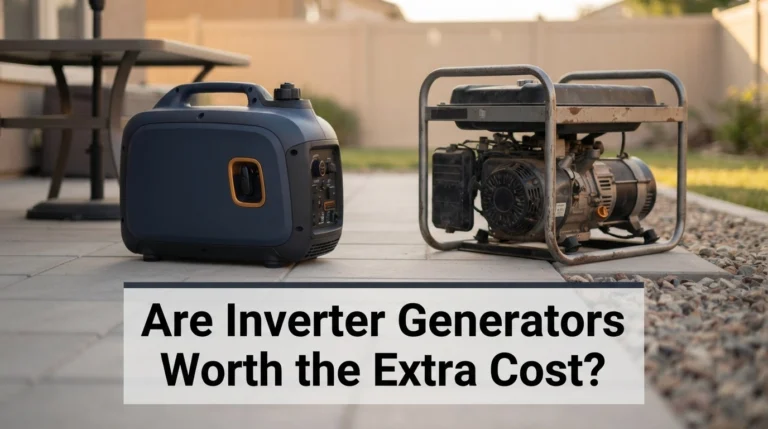
Most 5000-watt inverter generators cost $900 to $2,500 as of 2026, with the best value for home backup usually landing between $1,200 and $1,800. Check running watts first, because many models sold as 5000 watts deliver closer to 4000 running watts, and that gap decides what you can run at once. For most buyers, the extra money over a conventional generator buys cleaner power, lower noise, and better fuel use, as explained in this guide to whether inverter generators are worth the extra cost.
What to expect at each price point
- Budget, $900 to $1,200: Open-frame inverter models with solid power, louder sound, and fewer comfort features.
- Mid-range, $1,200 to $1,800: Quieter enclosed or dual-fuel models with electric start, better outlets, and longer runtime.
- Premium, $1,800 to $2,500: Top-tier enclosed models with the lowest noise, refined engines, and longer warranties.
- True 5000 running watts: Costs more than a 5000 starting-watt model, so compare running watts, not the headline number.
- Hidden costs: Add $100 to $800 or more for cords, fuel, oil, a cover, and any inlet or transfer-switch work.
Buy it right the first time
- Add up running watts for the loads you will run together, then add headroom for motor starting surges.
- Choose 240-volt output only if you need a well pump, a larger air conditioner, or a panel connection.
- Pick dual fuel if you want propane storage for long outages and easier starts after months in the garage.
I’ve tested a lot of portable power gear in outages, at campsites, and on job sites, and the 5000-watt inverter generator sits in a sweet spot for many homes. It’s big enough to keep a fridge cold, run lights and chargers, and power a furnace blower or sump pump, yet it’s still small enough to move without a trailer.
This guide goes deeper than a single price quote. You’ll see real 2026 price tiers, what drives the gap between a $900 model and a $2,500 model, what a 5000-watt unit can run, and the setup costs most buyers miss.
In This Guide
- What Does 5000 Watts Actually Mean for an Inverter Generator?
- How Much Does a 5000-Watt Inverter Generator Cost in 2026?
- What Makes One 5000-Watt Model Cost More Than Another?
- Is a 5000-Watt Inverter Generator Better Value Than a 2000, 3000, or 7000-Watt Model?
- What Can a 5000-Watt Inverter Generator Run?
- What Is the True Total Cost Beyond the Sticker Price?
- How Do You Choose the Best-Value 5000-Watt Inverter Generator?
- Frequently Asked Questions About 5000-Watt Inverter Generator Costs
- Final Takeaway: What Should You Pay for a 5000-Watt Inverter Generator?
What Does 5000 Watts Actually Mean for an Inverter Generator?
An inverter generator is a portable generator that makes AC power, converts it to DC, then inverts it back to clean AC power with low total harmonic distortion, or THD. That clean sine wave output is gentler on phones, laptops, modern furnaces, and other sensitive electronics than the rougher output from many conventional generators.
Power quality is only half the story. You also need to know how much power the unit can sustain, not just how much it can surge for a few seconds.
Starting watts vs running watts: which number should you trust?
Starting watts, also called surge watts, describe the brief burst a generator can supply when a motor starts. Running watts describe the steady load it can carry without tripping an overload.
Most 5000-watt inverter generators advertise 5000 starting watts and 4000 to 4500 running watts. A few larger units in this class deliver close to 5000 running watts, and they cost more for that headroom.
- Read the spec sheet: Look for running watts on gasoline and on propane, since propane output is often lower.
- Check the outlets: A 30-amp RV outlet and a 240-volt outlet change what you can connect, even at the same wattage.
- Watch the load limit: Plan to run at 80 percent of running watts or less for steady use, so motors can start without an overload shutdown.
I learned this the hard way during a summer outage when a fridge, a freezer, and a window air conditioner all tried to cycle at once. The generator handled each load alone with ease, but the combined surge tripped it until I staggered the starts.
Is 5000 watts enough for home backup power?
For many homes, yes, if you pick essential circuits and manage loads in turns. A 5000-watt class unit can cover refrigeration, lights, internet gear, a furnace blower or sump pump, and small kitchen loads, but it will not run a whole house like a standby generator.
Central air, electric ranges, electric water heaters, and large well pumps often need more power or 240-volt capacity. Check each appliance nameplate before you assume it will fit, and size for the loads you will run at the same time.
Section takeaway: Shop by running watts, not the headline number, and leave headroom for motor surges so your 5000-watt generator starts loads without tripping.
How Much Does a 5000-Watt Inverter Generator Cost in 2026?
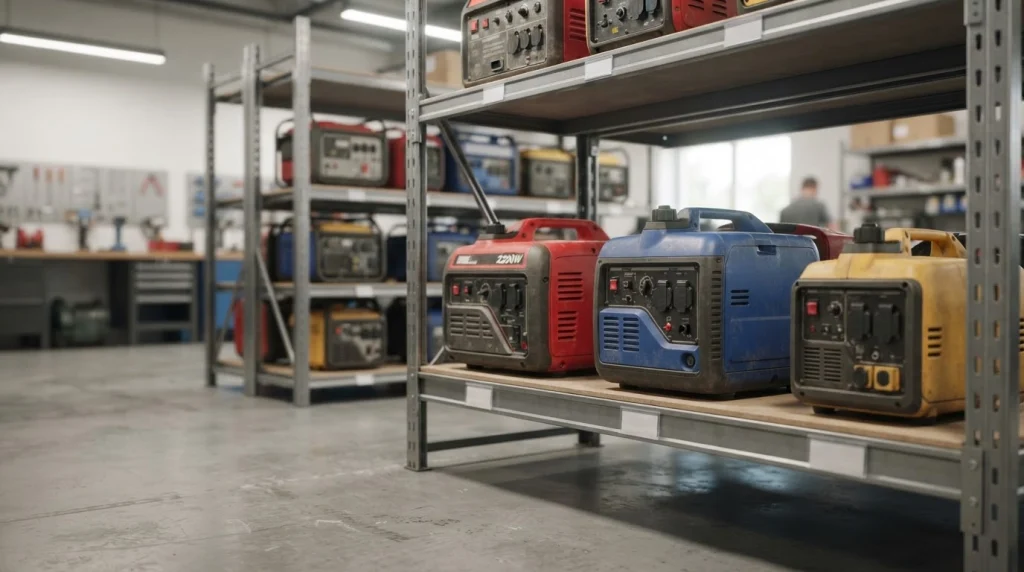
As of 2026, a 5000-watt inverter generator typically costs $900 to $2,500, depending on design, fuel type, noise level, and brand. Open-frame models cluster at the low end, while quiet enclosed models and premium brands sit at the high end.
Prices move with sales, fuel prices, and storm-season demand. Use the ranges below as a planning guide, then check current listings for the exact model and fuel setup you want.
| Price tier | Typical price in 2026 | What you usually get | Best for |
|---|---|---|---|
| Budget open-frame inverter | $900 to $1,200 | 5000 starting watts, basic outlets, recoil start, louder sound | Job sites and backup on a tight budget |
| Mid-range enclosed or dual fuel | $1,200 to $1,800 | Quieter case, electric start, RV outlet, often dual fuel | Home backup, RV use, and neighborhood-friendly use |
| Premium enclosed | $1,800 to $2,500 | Lowest noise, refined engine, remote start, longer warranty | Frequent use, camping, and noise-sensitive areas |
| True 5000 running watts | $2,000 to $3,000 or more | Larger engine and alternator, often 240-volt output | Larger loads, well pumps, and panel-fed backup |
What does a budget 5000-watt inverter generator cost?
Budget models in the $900 to $1,200 range give you clean inverter power without the quiet case or extras. You still get low THD for electronics, but you trade noise, weight, and ease of use for savings.
That trade can be smart for a job site or a rural property with space. It feels less smart at 10 p.m. in a dense neighborhood, when every decibel matters to you and your neighbors.
What does a mid-range 5000-watt inverter generator cost?
Mid-range models from $1,200 to $1,800 hit the value sweet spot for most homeowners. You often gain an enclosed case, electric start, a larger fuel tank, a 30-amp outlet, and dual-fuel capability in the same price band.
Dual fuel adds real outage value. Propane stores for years without going stale, and a 20-pound tank can keep you running when gas stations lose power or lines get long.
Why do premium 5000-watt inverter generators cost $2,000 or more?
Premium models charge for quiet operation, build quality, dealer support, and long-term reliability. Honda and Yamaha sit in this tier in many buyers’ minds, and the price gap reflects tighter engineering and a stronger service network.
Before you pay the premium, weigh how often you will use the unit. If you want to know whether that top-tier price pays off for your use, read this look at whether Honda inverter generators are worth the money.
Section takeaway: Most buyers should budget $1,200 to $1,800 for a quiet, capable 5000-watt inverter generator, and reserve $2,000 or more for premium quietness, true 5000 running watts, or heavy use.
What Makes One 5000-Watt Model Cost More Than Another?
Two generators can share a 5000-watt label and still feel like different machines. The price gap usually comes from the case, the engine, the fuel system, the outlets, and the brand behind the warranty.
Start with your must-haves, then pay for those first. Extras are nice, but they should not push you past a model that already covers your loads.
- Enclosed vs open-frame: Enclosed cases cost more and run quieter, while open frames cost less and cool well.
- Fuel type: Dual-fuel and tri-fuel models cost more, but they add propane and sometimes natural gas options.
- Starting system: Electric start and remote start add cost, and they help a lot in cold weather or for users who struggle with recoil pulls.
- Voltage and outlets: A 240-volt outlet, a 50-amp outlet, or a twist-lock outlet raises the price and expands what you can power.
- Noise control: Better mufflers, insulation, and low-speed eco modes cost more to build, and they show up in the price.
- Parallel capability: A parallel kit lets two smaller units share a load, and compatible models often carry a small premium.
- Brand and warranty: Longer warranties, wider parts networks, and proven engines command higher prices for a reason.
Enclosed vs open-frame: which design is worth the extra money?
Enclosed inverter generators hide the engine in a sound-dampening case. They suit RV parks, campgrounds, and suburbs, where noise rules and neighbor goodwill matter.
Open-frame inverter generators use a steel frame and cost less per watt. They suit job sites, farms, and open lots, where noise is less of a concern and airflow helps in hot weather.
Does dual fuel add real value at this size?
Dual fuel lets you run on gasoline or propane with a simple selector. Propane burns cleaner, stores longer, and starts easier after months of storage, though it often delivers slightly less running power.
For storm backup, that flexibility can be worth $100 to $300. For occasional camping, gasoline alone may be enough, and you can put the savings toward a better cord set.
Emissions rules and fuel efficiency also shape design and cost. The EPA sets standards that push makers toward cleaner, more efficient engines, and those gains often show up as better fuel use at light loads.
How much should brand and warranty matter?
Brand matters most when you need parts, service, or warranty help after a storm. A strong dealer network can turn a two-week wait into a two-day fix.
Compare warranty length, service locations, and owner feedback on starting, surging, and fuel-system issues. A broad look at the best inverter generator brands can help you shortlist makers before you compare models.
Section takeaway: Pay for quietness, dual fuel, 240-volt output, and warranty support only when your loads and location need them, and skip the rest to keep the price in check.
Is a 5000-Watt Inverter Generator Better Value Than a 2000, 3000, or 7000-Watt Model?
The best size is the smallest unit that covers your real loads with headroom. An oversized generator wastes fuel and money, while an undersized one trips, surges, and frustrates you at the worst time.
Use the table below to compare typical prices and uses. Check the spec sheet for running watts, since labels vary by brand and fuel type.
| Generator size | Typical price in 2026 | Typical running watts | Best use |
|---|---|---|---|
| 2000-watt inverter | $450 to $1,100 | 1600 to 1800 | Camping, charging, and one small fridge |
| 3000-watt inverter | $700 to $1,500 | 2300 to 2800 | RV air conditioning, camping, and light backup |
| 5000-watt inverter | $900 to $2,500 | 4000 to 4500, some near 5000 | Home essentials, RV use, and job-site power |
| 7000-watt inverter | $1,800 to $3,800 | 5500 to 6500 | Larger homes, well pumps, and heavy loads |
When does a smaller generator save you money?
A 2000-watt or 3000-watt inverter generator costs less, weighs less, and sips fuel at light loads. It wins for camping, tailgating, and backup for a fridge, lights, and phones.
Two smaller units with a parallel kit can also match a 5000-watt unit, with easier lifting and a backup if one unit fails. That setup costs more in total, though, once you add the kit and two maintenance schedules.
When is a 7000-watt inverter generator the smarter buy?
Step up when you need 240-volt power for a well pump, a larger air conditioner, or a panel-fed setup. A 7000-watt class unit gives you more headroom for motor starts and lets you run more loads at once.
That headroom comes with more weight, more fuel use, and a higher price. Buy it for real loads, not for peace of mind alone, and confirm the outlet and voltage match your hookup plan.
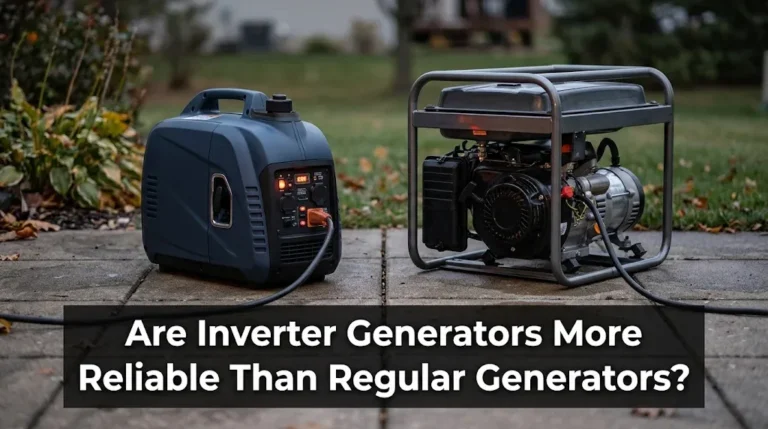
If you are torn between inverter and conventional power at this size, this comparison of an inverter generator vs a regular generator lays out the noise, fuel, and power-quality trade-offs in plain terms.
Section takeaway: A 5000-watt inverter generator offers the best balance of price, power, and portability for most home backup needs, while smaller units win for camping and larger units win for heavy 240-volt loads.
What Can a 5000-Watt Inverter Generator Run?
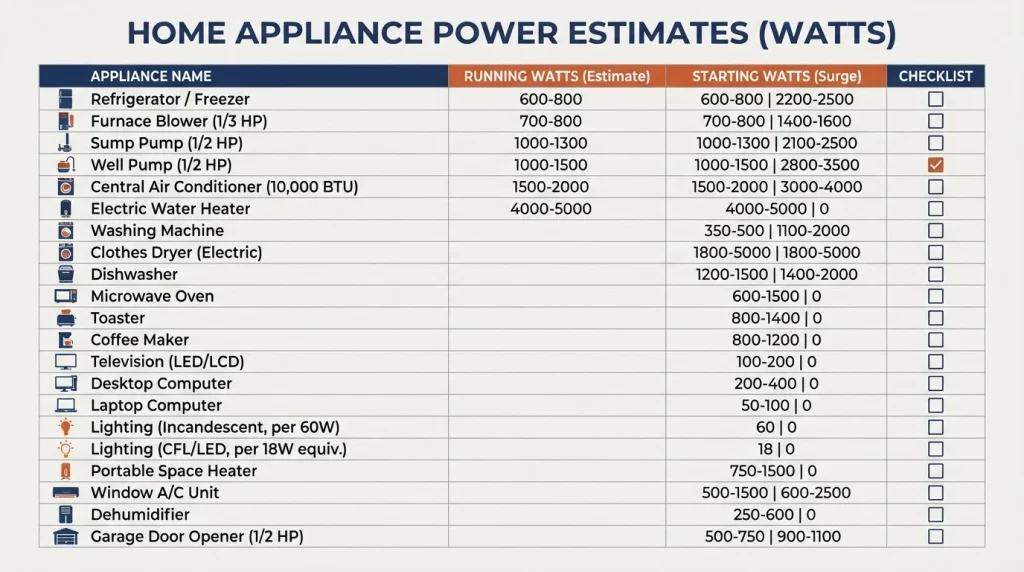
A 5000-watt class inverter generator can run a useful set of home essentials at once, if you manage the mix. The key is to add running watts for steady loads and leave room for the short surge when a fridge, pump, or air conditioner motor starts.
Use the estimates below as a starting point only. Check each appliance nameplate and your owner’s manual, since age, size, and motor type change the numbers.
| Appliance or load | Running watts estimate | Starting watts estimate | Notes |
|---|---|---|---|
| Refrigerator | 150 to 300 | 800 to 1200 | Cycles on and off, so stagger starts |
| Chest freezer | 100 to 200 | 600 to 1000 | Pair with a fridge, but watch combined surges |
| Furnace blower | 500 to 900 | 1200 to 2000 | Gas furnace blower only, not electric heat |
| Sump pump, 1/3 to 1/2 HP | 800 to 1300 | 2000 to 3000 | High surge, so start it before other motors |
| Window air conditioner, 10000 BTU | 900 to 1200 | 2200 to 2800 | Run one unit, not two, at this size |
| Microwave | 1000 to 1500 | 1200 to 1800 | Use in short bursts and pause other loads |
| Lights, internet, phones, and CPAP | 200 to 400 | 250 to 500 | Low steady load, ideal for overnight use |
How do you do the wattage math in five minutes?
List the loads you must run together, not every load in the house. Add their running watts, then add the largest starting surge on top of the steady total.
- List essentials: Write down the fridge, freezer, blower or pump, lights, and chargers you need at once.
- Add running watts: Use nameplate ratings or the estimates above as a rough guide.
- Add one surge: Add the biggest motor start, such as a sump pump or air conditioner, to the steady total.
- Compare to running watts: Keep the steady total under 80 percent of the generator’s running watts.
- Stagger starts: Start motors one at a time and let each settle before you add the next load.
A simple home example helps. A fridge at 200 watts, a freezer at 150 watts, lights and chargers at 250 watts, and a furnace blower at 700 watts total 1300 running watts, which leaves plenty of headroom on a 4000 running-watt unit.
Add a sump pump surge or a window air conditioner, and the math gets tighter. That is why load management matters more than raw wattage, and why a clear sizing plan saves money.
For a step-by-step sizing method, see this guide to choosing the right generator size for a power outage. It walks through the same load math for different home sizes and outage plans.
Safety note: Run generators outdoors and well away from windows, doors, and vents, and never run one in a garage, even with the door open. Carbon monoxide can build up fast, so place the unit downwind and use working CO alarms indoors.
The CDC and the CPSC both warn about generator carbon monoxide risk, and both stress outdoor placement at a safe distance from the home. Follow their guidance and your owner’s manual, and keep the exhaust pointed away from people and buildings.
Section takeaway: A 5000-watt inverter generator covers home essentials well when you stagger motor starts and keep steady loads under 80 percent of running watts.
What Is the True Total Cost Beyond the Sticker Price?
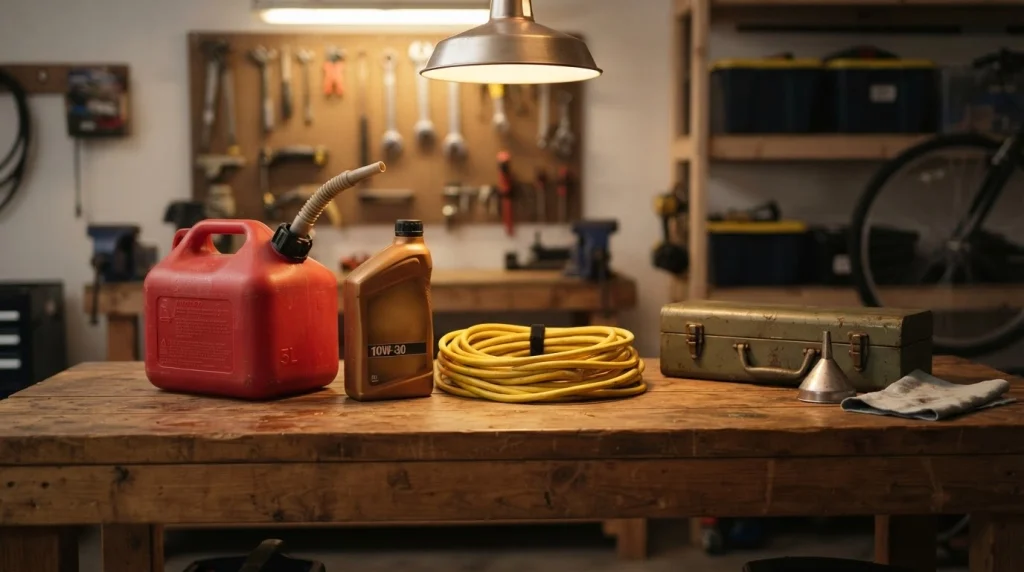
The generator price is only the start. Fuel, oil, cords, and a safe home hookup can add hundreds of dollars in the first year, and those costs shape the real value of your purchase.
Budget for the full setup before you buy. A $1,400 generator with a $600 hookup plan costs more than a $1,600 generator you can run safely with cords you already own.
- Heavy-duty extension cords: $50 to $150 for outdoor-rated, right-gauge cords that match your load and distance.
- Fuel storage: $30 to $120 for approved gas cans, a propane tank, stabilizer, and a safe storage spot.
- Oil and filters: $20 to $60 per year for break-in oil, regular oil changes, and a spare spark plug and air filter.
- Cover and shelter: $30 to $120 for a fitted cover or a ventilated running shelter that keeps rain off without trapping heat.
- Parallel kit: $60 to $150 if you plan to pair two units, plus a second generator if you go that route.
- Inlet box and cords: $150 to $400 for a generator inlet box, a heavy inlet cord, and related hardware.
- Transfer switch or interlock: $300 to $1,000 or more installed, depending on panel type, labor, and local code.
How much does fuel cost for a 5000-watt inverter generator?
Fuel use depends on load, eco mode, and tank size. At light loads with eco-throttle on, an inverter generator slows the engine and sips fuel, while at full load it burns far more per hour.
Expect roughly 0.3 to 0.7 gallons of gasoline per hour at moderate loads for many models in this class. Check the spec sheet for runtime at 25 percent and 50 percent load, and treat those figures as guides, not promises.
Eco mode, also called economy mode, lets the engine speed match the load. It saves fuel and cuts noise at light loads, but it can lag when a motor starts, so turn it off for heavy motor loads.
For broader guidance on saving energy during outages and at home, the U.S. Department of Energy offers practical tips on load management and efficient backup power use. Pair that advice with your manual’s fuel and maintenance schedule.
What do home hookup costs look like?
A safe panel connection needs a transfer switch or an interlock kit installed by a licensed electrician. That hardware stops backfeed, which can harm utility workers and damage your generator.
Never plug a generator into a wall outlet to backfeed your home. That shortcut, often called backfeeding, is dangerous and illegal in many areas, and it puts others at risk.
Safety note: Use a transfer switch or interlock installed by a licensed electrician for any panel connection, and check your owner’s manual before use. Keep cords dry, use GFCI outlets where required, and never overload a cord or outlet.
What does maintenance cost over five years?
Plan for oil changes per your manual, air filter checks, spark plug swaps, and fuel-system care. Stale fuel causes many hard-start and surging complaints, so use stabilizer, drain fuel for long storage, or run the unit dry as the manual directs.
Run the generator under load every month or two, even outside storm season. That habit keeps the battery charged, the carburetor clear, and small problems visible before an outage turns them into big ones.
Section takeaway: Add $200 to $800 for cords, fuel, and maintenance in year one, and $300 or more for a safe panel hookup, so your total budget reflects the real cost of backup power.
How Do You Choose the Best-Value 5000-Watt Inverter Generator?
Value means the right power, noise, and fuel setup for your loads, at a price you can justify for how often you will use it. A cheap unit that trips under your sump pump is not a bargain, and a premium unit you run twice a year may be overkill.
Work through the checklist below before you compare brands. It takes ten minutes and saves far more in returns, upgrades, and regret.
- Size by running watts: Add your must-run loads, add one motor surge, and pick a unit with headroom.
- Pick your fuel: Choose gasoline for simple use, dual fuel for long outages, and propane storage if you hate stale gas.
- Set a noise limit: Choose enclosed and quiet if you have close neighbors, an RV park, or a campground in mind.
- Match the outlets: Confirm the RV, 120-volt, and 240-volt outlets fit your cords, RV, and hookup plan.
- Check weight and wheels: Confirm you can move, lift, and store the unit alone, or plan for a second person and a ramp.
What mistakes push the price up without adding value?
Buyers often pay for watts they never use, outlets they never plug into, and features they never learn. A 240-volt outlet helps only if you have a 240-volt load or a panel plan that needs it.
Another common mistake is buying on starting watts alone. Compare running watts, runtime at 50 percent load, tank size, and noise at a stated distance, and use the same load basis across models.
- Skipping the load list: Guessing leads to an undersized unit or an oversized bill, so do the math first.
- Ignoring propane output: Propane running watts run lower on many dual-fuel models, so check both fuel ratings.
- Forgetting cords: A long, thin cord drops voltage and heats up, so buy the right gauge for the run.
- Buying during a storm: Prices spike and stock runs thin, so buy and test before storm season when you can.
When should you spend more, and when should you save?
Spend more when you run the unit often, need quiet operation, or rely on it for medical gear, a sump pump, or a home office. In those cases, reliability and service support pay for themselves fast.
Save when use is rare, loads are light, and noise is not an issue. An open-frame inverter model can cover a fridge and lights for far less, and you can put the savings toward fuel and cords.
Independent testing and owner feedback can sharpen your shortlist. Consumer Reports covers generator performance and safety topics, and its ratings help you weigh noise, power quality, and ease of use side by side.
For a full buying checklist, read this guide on what to look for in an inverter generator. It covers specs, safety features, and the questions to ask before you commit.
Section takeaway: Choose by running watts, fuel, noise, and outlets for your real loads, then buy the best-built model in that tier instead of chasing the highest headline wattage.
Frequently Asked Questions About 5000-Watt Inverter Generator Costs
How much should I pay for a good 5000-watt inverter generator?
Most buyers should pay $1,200 to $1,800 for a good 5000-watt inverter generator in 2026. That range usually buys a quieter enclosed or dual-fuel model with electric start, a 30-amp outlet, and enough running watts for home essentials.
Is 5000 starting watts the same as 5000 running watts?
No, starting watts are a brief surge for motor starts, while running watts are the steady load a generator can carry. Many 5000-watt models deliver 4000 to 4500 running watts, so always compare running watts and check the spec sheet for both gasoline and propane ratings.
Can a 5000-watt inverter generator run my whole house?
It can run essential loads in most homes, but it will not power a whole house at once like a standby generator. Plan for a fridge, lights, chargers, and one large motor load at a time, and use a transfer switch or interlock for any panel connection.
Are dual-fuel 5000-watt models worth the extra cost?
Dual fuel is worth the extra $100 to $300 if you face long outages or want fuel that stores well. Propane avoids stale-gas problems and starts easier after storage, though propane output is often slightly lower than gasoline output on the same model.
How much does it cost to run a 5000-watt inverter generator for a day?
Daily fuel cost depends on load, eco mode, and local fuel prices, but many models use roughly 0.3 to 0.7 gallons per hour at moderate loads. At that rate, a full day can use 7 to 17 gallons, so load management and eco mode matter more than tank size alone.
Should I buy two smaller generators with a parallel kit instead?
Two smaller parallel-capable units can match a 5000-watt unit and offer easier lifting plus a backup if one fails. That setup usually costs more in total and doubles maintenance, so choose it for portability and redundancy, not to save money.
Final Takeaway: What Should You Pay for a 5000-Watt Inverter Generator?
Pay $900 to $2,500 for the generator itself, and aim for $1,200 to $1,800 if you want quiet, capable home backup without overspending. Then add cords, fuel, oil, and any safe hookup work to your total before you judge the deal.
Do your load math, compare running watts, and test the unit under load before you need it. A generator you trust, placed safely outdoors and maintained per the manual, is worth far more than a bigger label on a box.
Start with your must-run loads today. Pick the tier that covers them with headroom, and you’ll buy once, buy right, and sleep better through the next outage.

Hi, I’m Michael Turner. I own a generator workshop in the United States and founded HomeGeneratorBlog to share practical, hands-on guidance about generator installation, maintenance, troubleshooting, safety, and backup power solutions. My goal is to help homeowners make smarter, more confident decisions through clear and reliable information