
What Size Generator Do You Need for Your Home?
Quick Answer
Most homes need somewhere between 5,000 and 8,500 running watts to cover the essentials (fridge, well pump, furnace blower, a few lights, and a window AC), while a true whole-house setup that includes central air usually calls for 10,000 to 20,000+ watts. The fastest way to land on your exact number is to add up the running watts of what you want to power, then tack on extra for the highest single starting surge — you can see the full math in our generator power capacity breakdown.
Typical Generator Size by Need
- Small essentials only: 3,000–5,000 watts covers a fridge, some lights, and phone/laptop charging.
- Standard outage kit: 5,000–7,500 watts adds a sump or well pump, furnace blower, and a window AC unit.
- Larger home, more circuits: 8,500–10,000 watts handles a small central AC, electric range burner, and more simultaneous loads.
- Whole-house coverage: 12,000–20,000+ watts is what most standby units use to run central air, an electric water heater, and the whole panel at once.
- Safety margin: Always size 20% above your calculated running load to cover starting surges and future additions.
Before You Buy
- List every appliance you actually need during an outage — not everything you own — and check the nameplate for its running and starting watts before picking a model.
I’ve sized generators for my own house through three separate multi-day outages, and I’ve helped a handful of neighbors do the same after ice storms took our block down for the better part of a week. The honest truth is that “what size generator” doesn’t have one universal answer — it depends entirely on what you’re trying to keep running. In this guide, I’ll walk you through the actual math, show you real numbers for common home setups, and cover the mistakes I made the first time I did this myself.
What Size Generator Do I Need for My Home?
A generator’s size is measured in watts, and the right size for your home is simply the total running wattage of everything you want powered at once, plus extra headroom for whatever has the biggest startup surge. For a typical single-family home covering essentials — fridge, some lighting, a furnace blower, and a laptop or two — that lands most people in the 5,000 to 7,500-watt range. If you want to understand exactly what “watts” means on a generator spec sheet and why it’s the number that matters most, I go through it in detail in how generator watts work.
Generator sizing, defined
Generator sizing is the process of matching a generator’s rated wattage output to the combined electrical demand of the appliances and circuits you plan to run during a power outage. It accounts for two separate numbers — running watts (continuous draw) and starting watts (the brief surge when a motor kicks on) — and the generator you buy has to comfortably clear both.
How Do You Calculate What Size Generator You Need?

You calculate generator size by listing every device you want to run, adding up their running watts, then adding the single highest starting watt figure from that list on top of the total. Here’s the exact process I use with neighbors:
- Step 1: Write down every appliance you want powered during an outage — not your whole house, just what actually matters.
- Step 2: Find the running watts for each one, usually printed on a nameplate or in the owner’s manual.
- Step 3: Add all the running watts together for your base total.
- Step 4: Identify the single appliance with the highest starting watts (usually a fridge, well pump, or AC compressor) and add that number to your base total — you don’t add every appliance’s starting watts, just the largest one, since motors rarely all start at the exact same instant.
- Step 5: Add a 15–20% buffer for safety margin and future appliances.
| Appliance | Running Watts | Starting Watts |
|---|---|---|
| Refrigerator | 700 | 2,200 |
| Furnace blower fan | 800 | 2,350 |
| Sump pump (1/3 HP) | 800 | 1,300 |
| Window AC unit | 1,200 | 3,600 |
| LED lighting (10 bulbs) | 100 | — |
| Wi-Fi router + laptop charging | 150 | — |
| Total running + largest surge (window AC) | 3,750 | +3,600 |
Add the running total (3,750W) to the largest single starting surge (3,600W) and you get 7,350 watts as your rock-bottom minimum — which is exactly why a 7,500 to 8,000-watt generator is such a common recommendation for this kind of setup. Build in your buffer and you’re comfortably at an 8,500-watt unit.
What Size Generator Do You Need for a Whole House?
Whole-house coverage — meaning every circuit in your panel, including central air conditioning, an electric water heater, and a full kitchen — typically requires 12,000 to 20,000+ watts, and this is almost always handled by a standby generator wired through an automatic transfer switch rather than a portable unit. A 2,500-square-foot home with a 3-ton central AC system, electric dryer, and electric water heater can easily push past 15,000 running watts once you factor in the AC compressor’s starting surge.
Portable generators can technically get you there, but at that size you’re looking at a large dual-fuel or towable unit, plus a transfer switch installed by a licensed electrician so you’re not backfeeding power into the grid — a mistake that can injure utility workers restoring your line.
What Size Generator Do You Need to Just Run the Essentials?
For essentials-only backup — fridge, some lights, phone charging, and maybe a sump pump — a 3,000 to 5,000-watt generator is usually enough. This is the sweet spot for apartment dwellers, smaller homes, or anyone who just wants the basics covered without spending on a large unit or dealing with its weight and fuel consumption.
- 3,000 watts: Fridge, lights, and device charging — no motor-heavy appliances.
- 4,000 watts: Adds a sump pump or a small window fan/AC unit.
- 5,000 watts: Comfortable room for a furnace blower plus the fridge and lighting.
Generator Size by Common Home Setup
| Home / Use Case | Recommended Wattage | Typical Setup |
|---|---|---|
| Apartment / small home | 2,000–3,500W | Inverter generator, essentials only |
| 1,000–1,800 sq ft home | 5,000–7,500W | Fridge, furnace, sump pump, lights |
| 1,800–2,800 sq ft home | 7,500–10,000W | Above plus window AC or partial kitchen |
| Whole-house w/ central AC | 12,000–20,000W | Standby unit + automatic transfer switch |
| RV / camping backup | 2,000–3,500W | Small inverter generator |
What Size Generator Do You Need to Run an Air Conditioner?
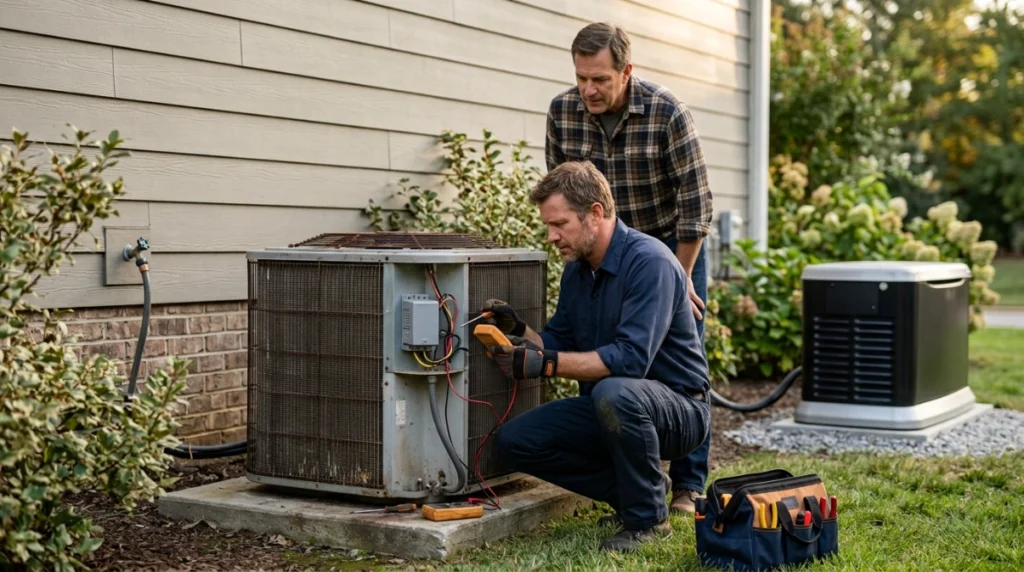
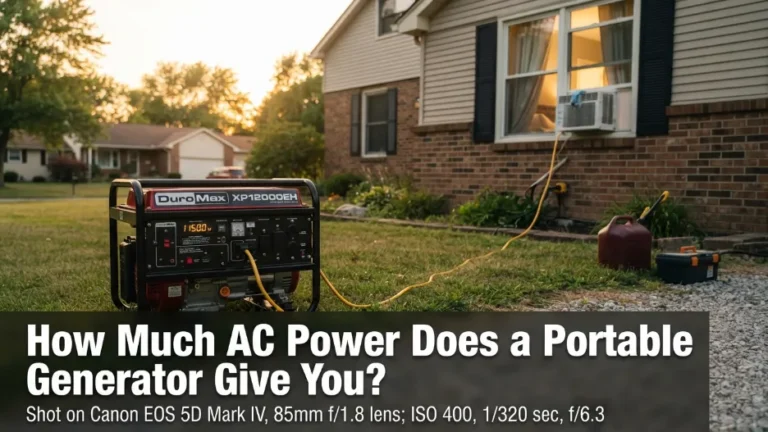
A window or portable AC unit typically needs 1,000 to 1,500 running watts and up to 3,600 starting watts, while a central AC system’s compressor can demand 15,000+ starting watts depending on tonnage — which is why central air is usually the single biggest factor in generator sizing. If AC is your priority, I break down exact wattage by unit type and tonnage in sizing a generator for your air conditioner.
The compressor’s starting surge is the part people underestimate. A generator that can easily run your AC once it’s going can still stall trying to get the compressor started, which is why soft-start devices have become popular — they cut that starting surge by roughly 65–70% so a smaller generator can handle a central AC unit it otherwise couldn’t.
Running Watts vs. Starting Watts: Why This Trips People Up
Running watts are what an appliance draws once it’s operating steadily, while starting watts are the short, higher burst of power a motor needs for roughly 1–3 seconds when it first switches on — and sizing your generator using running watts alone is the single most common mistake first-time buyers make. I’ve gone deeper into this distinction, with a full breakdown of which appliances have the biggest surge gap, in running watts vs starting watts.
The first time I sized a generator for my own house, I added up running watts only, bought a 5,000-watt unit, and had it bog down and trip the breaker the moment my well pump kicked on — the running load fit fine, but the 3x starting surge didn’t. That’s the mistake this whole calculation exists to prevent.
Does the Sizing Math Change for Portable vs. Standby Generators?
No — the underlying wattage math is identical whether you’re buying a portable or a standby unit; what changes is how much capacity you can realistically get in that form factor and how it connects to your home. Portable generators top out around 12,000–17,500 watts for the largest dual-fuel or tri-fuel consumer models, while standby units routinely go up to 22,000+ watts because they’re stationary and permanently plumbed to a fuel line.
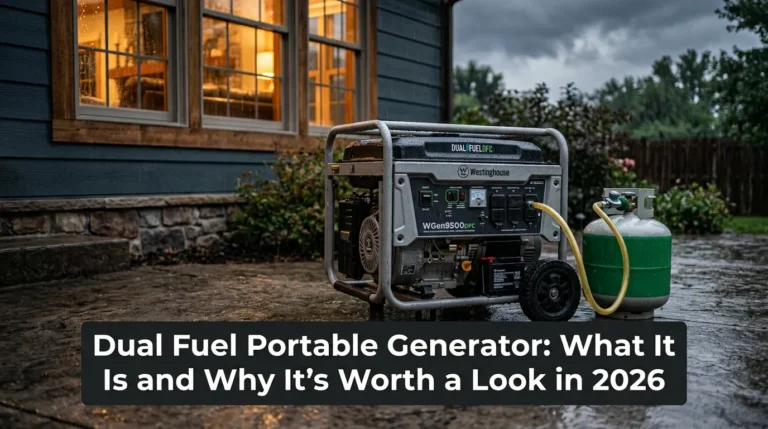
If fuel flexibility matters to you — especially for longer outages where gasoline gets hard to find — it’s worth reading through our dual fuel portable generator guide before you commit to a wattage tier, since dual-fuel models let you size around whichever fuel is actually available during a crisis.
My Take After Three Outages
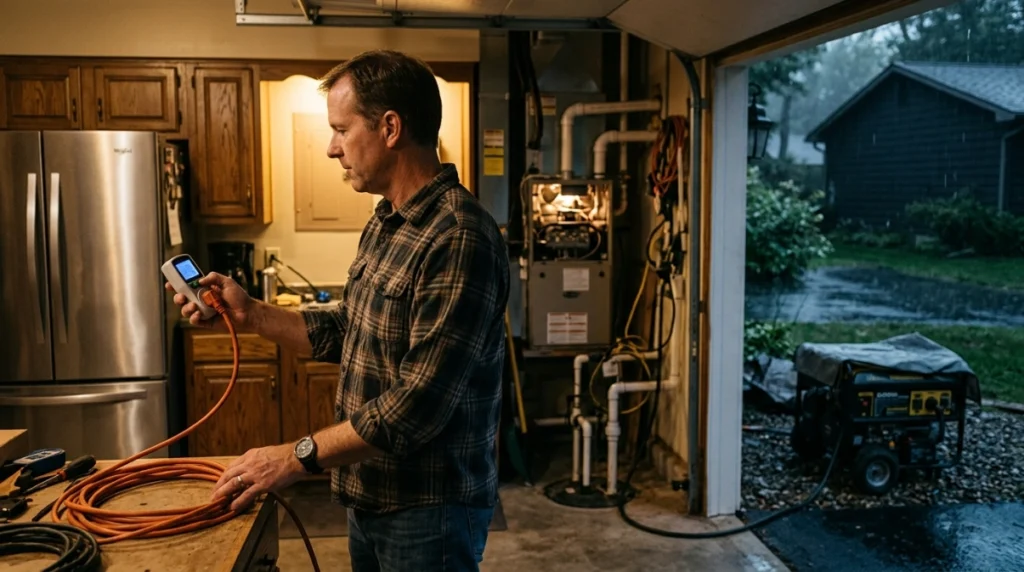
I initially bought a generator that was “sized right” on paper but felt undersized in practice, because I hadn’t accounted for running the fridge and the sump pump and the furnace blower all cycling on at slightly different, unpredictable moments. As of 2026, my recommendation to anyone sizing for the first time is to calculate your number, then buy one full size tier above it — going from a calculated 6,500 watts to an actual 8,000-watt unit cost me about $150 more and has never once made me worry about tripping a breaker mid-storm.
A basic plug-in wattage meter is also worth the ten dollars — it let me confirm my actual fridge and furnace draw instead of trusting the nameplate numbers, which run a little conservative on some brands.
Generator Size Recommendations
Based on the load calculations above, here’s where most homeowners land:
Best for Essentials: 3,500–4,500W Inverter Generator
Covers a fridge, lights, and device charging with quiet, clean power — good for apartments or as a backup to a larger unit.
Best for Most Homes: 7,500–8,500W Portable Generator
Handles a fridge, furnace blower, sump pump, and a window AC with room to spare for the starting surge.
Frequently Asked Questions
What size generator do I need to run my whole house?
Most whole-house setups with central air need a 12,000 to 20,000-watt standby generator installed with an automatic transfer switch. The exact number depends on your home’s square footage, AC tonnage, and whether you have electric heat or a water heater.
Will a 5,000-watt generator run a house?
A 5,000-watt generator can run a smaller home’s essentials — fridge, some lighting, and a furnace blower — but it typically can’t handle central air conditioning or several large appliances running at once. It works well as an essentials-only backup for outages.
How many watts does a house need during a power outage?
Most homes need 5,000 to 8,500 watts to cover essentials during an outage, based on adding up running watts for key appliances plus the largest single starting surge. Whole-house coverage with central AC pushes that to 12,000+ watts.
Is it better to oversize a generator?
Yes, sizing one tier above your calculated minimum is generally worth it, since it gives you headroom for starting surges, future appliances, and reduces strain on the engine from running near maximum capacity constantly.
Can I run a refrigerator and window AC on the same generator?
Yes, a 5,000 to 6,000-watt generator can typically run a refrigerator and a window AC unit together, as long as you account for both appliances’ starting watts rather than just their running watts when sizing.
Sources: U.S. Consumer Product Safety Commission — Generators and Carbon Monoxide, U.S. EPA — Carbon Monoxide and Indoor Air Quality, OSHA — Using Portable Generators Safely, U.S. Department of Energy — Building America Solution Center, and This Old House — Backup Power Guide.

Hi, I’m Michael Turner. I own a generator workshop in the United States and founded HomeGeneratorBlog to share practical, hands-on guidance about generator installation, maintenance, troubleshooting, safety, and backup power solutions. My goal is to help homeowners make smarter, more confident decisions through clear and reliable information
7 Comments