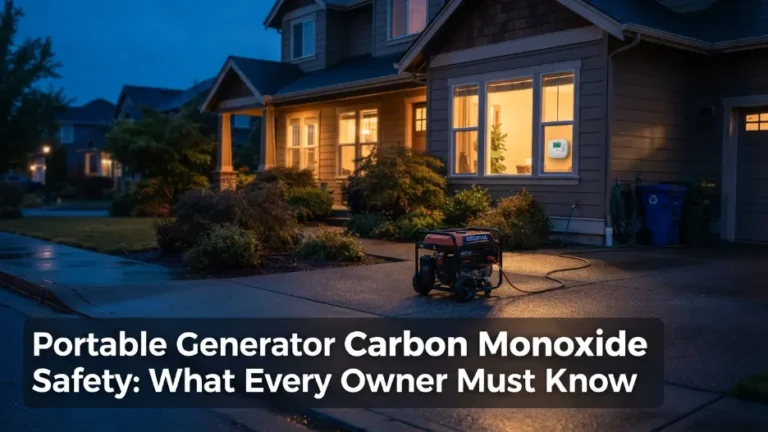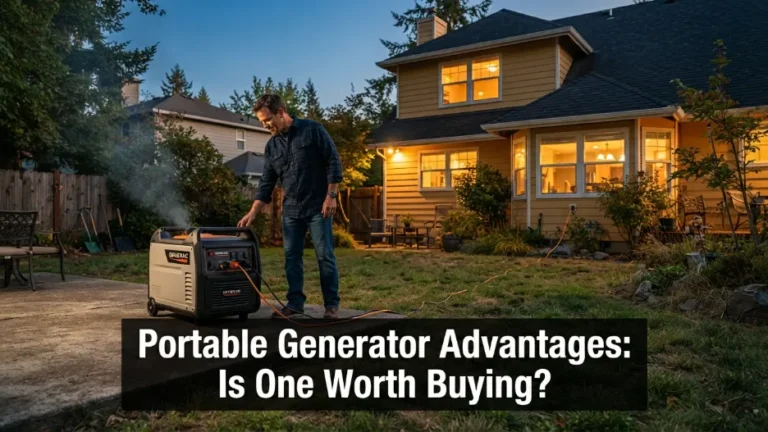
Portable Generator Overheating: Causes, Fixes & Prevention
Quick Answer
Portable generator overheating usually comes from excessive electrical load, restricted cooling airflow, low or degraded engine oil, a dirty air filter, blocked cooling fins, or operation in extreme heat. Shut the generator down if it loses power, repeatedly trips or shuts off, smells burnt, smokes, or shows another abnormal heat warning, then correct the cause before restarting it. Proper portable generator placement is also essential because restricted airflow can trap heat around the engine.
Common overheating warning signs
- Repeated shutdown: The generator stops after warming up but may restart after cooling.
- Power problems: Output drops, an overload light appears, or a breaker repeatedly trips.
- Burning odor: Hot insulation, wiring, oil, or debris produces an unusual smell.
- Smoke or melting: Visible smoke or distorted plastic needs immediate shutdown and inspection.
- Abnormal engine behavior: Surging, struggling, or major power loss can accompany excessive heat.
Quick verification
- Check electrical load, oil level, air filter, cooling openings, and your owner’s manual before assuming an internal engine failure.
A portable generator gets hot during normal operation, especially around the engine and muffler. The problem starts when heat rises beyond what the cooling system can safely manage.
I don’t judge overheating by how hot the muffler feels. I look for abnormal behavior, then work through load, oil, and airflow before replacing parts.
What Does Portable Generator Overheating Mean?
Portable generator overheating is abnormal heat buildup that causes reduced performance, protective shutdown, component damage, or increased fire risk. Normal engine heat by itself does not mean the generator is overheating.
Most gasoline portable generators use an air-cooled engine. A flywheel fan pulls air through openings and across cooling fins to carry heat away.
- Engine: Produces mechanical power and most of the generator’s heat.
- Cooling fins: Increase surface area so moving air can remove engine heat.
- Fan and shrouds: Direct cooling air around the cylinder and cylinder head.
- Alternator: Converts mechanical energy into electricity and also produces heat under load.
- Engine oil: Lubricates moving parts and helps control friction-related heat.
If you want to see how those components work together, my guide to the portable generator engine explains the basic layout in plain language.
How Can You Tell If a Portable Generator Is Overheating?
An overheating generator usually shows a change in normal operation rather than one specific temperature. Watch for shutdowns, unstable output, unusual smells, smoke, or signs of electrical overheating.
The muffler can become dangerously hot during completely normal operation. Don’t use muffler temperature alone as your test.
- Thermal or protective shutdown: Some generators stop automatically when an unsafe condition develops.
- Overload warning: Inverter generators may illuminate an overload indicator and disconnect output.
- Loss of power: The engine may struggle as electrical demand or an engine problem increases.
- Breaker trips: Repeated trips can point toward excessive load or an electrical fault.
- Burning smell: Hot wiring, winding insulation, oil, or debris needs investigation.
- Visible smoke: Shut the unit down immediately and keep people clear.
A low-oil shutdown can sometimes look like an overheating shutdown. Check the low-oil indicator and oil level before assuming heat is the cause.
A carbon monoxide safety shutdown is different too. Never disable or bypass a CO shutoff system to keep a generator running.
The CDC’s carbon monoxide guidance says portable generators should operate outdoors more than 20 feet from windows, doors, and vents.
Why Is My Portable Generator Overheating?
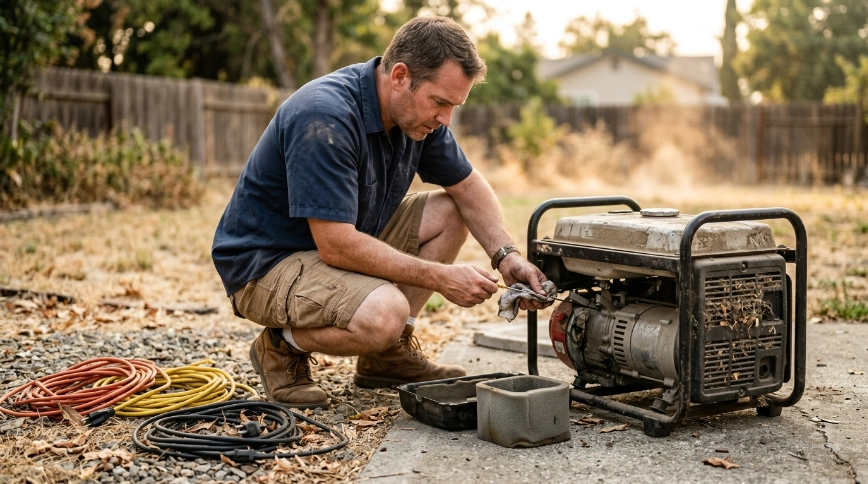
The most common causes are overload, poor airflow, lubrication problems, dirty cooling components, and harsh operating conditions. I start with the easy external checks before opening anything.
| Possible cause | Typical clue | Safe first check | First action |
|---|---|---|---|
| Electrical overload | Overload light, breaker trip, engine struggling | Compare connected loads with rated running and starting watts | Disconnect nonessential loads |
| Restricted airflow | Heat builds quickly near walls, boxes, tarps, or debris | Inspect every cooling opening and surrounding clearance | Move the generator into open outdoor air |
| Low or wrong oil | Low-oil warning, shutdown, increased mechanical noise | Check oil on level ground using the manual’s method | Correct the level and use specified oil |
| Dirty air filter | Weak power, poor throttle response, dirty filter element | Inspect the filter after the engine cools | Clean or replace it as the manual directs |
| Hot weather or altitude | Generator handles the load normally in cooler conditions | Check your manual’s temperature and altitude guidance | Reduce load as required |
1. The Generator Is Overloaded
More electrical load means more work for both the engine and alternator. That extra work creates additional heat.
Motor-driven equipment makes this harder because compressors and pumps can need a large burst of starting power. Your generator must handle that surge without exceeding its limits.
Use my generator power capacity guide to calculate the load before reconnecting appliances.
2. Cooling Air Is Blocked
Cardboard windbreaks, walls, storage boxes, leaves, and poorly designed covers can block cooling air. Even an outdoor generator can overheat when hot air keeps recirculating around it.
Honda’s official EU2000i owner’s manual, for example, warns that operating less than three feet from an obstruction can cause overheating and damage.
That three-foot figure is a model-specific example, not a universal replacement for your manual. Always follow the clearance stated for your generator.
3. Engine Oil Is Low, Old, or Incorrect
Oil reduces friction between moving engine parts. Low oil or unsuitable oil can increase wear and heat while reducing lubrication.
- Park the generator on a level surface before checking oil.
- Use the viscosity and service specification listed in the owner’s manual.
- Change oil at the manufacturer’s required hour or calendar interval.
- Investigate leaks instead of repeatedly topping off a falling level.
4. The Air Filter or Cooling Fins Are Dirty
A clogged air filter can reduce engine performance, while packed cooling fins prevent heat from leaving the cylinder efficiently. Dusty jobsites make both problems more likely.
Wait until the generator is safely cooled before cleaning or disassembly. Never spray water directly into the engine, alternator, receptacles, or control panel.
If you’re unsure what you’re looking at, use my portable generator parts guide to identify the major components first.
5. Ambient Temperature or Altitude Is Reducing Capacity
Hot air makes cooling harder, and higher altitude reduces the oxygen available to the engine. A load that works comfortably under mild conditions may become too demanding in harsher conditions.
Don’t guess at a universal derating percentage. Check the environmental limits and derating instructions for your exact model.
What Should You Do When a Portable Generator Overheats?
Stop adding load and shut the generator down if it shows abnormal heat symptoms. Continuing to run it can turn a simple airflow or overload problem into expensive damage.
- Disconnect or turn off loads. Remove electrical demand before troubleshooting.
- Shut down the generator. Use the normal stop procedure unless an emergency requires immediate shutdown.
- Keep fuel away. Never refuel a hot generator.
- Let the unit cool. Don’t touch the muffler, cylinder head, or hot engine components.
- Check oil. Verify the correct level on flat ground after the unit is safe to service.
- Inspect airflow. Remove debris and confirm that cooling inlets and outlets are open.
- Inspect the air filter. Clean or replace it only as your manual specifies.
- Recalculate electrical load. Look for appliances with large starting-watt demands.
OSHA’s portable generator safety guidance specifically warns that overloading can lead to overheating and create a fire hazard.
Never pour water over an overheating generator to cool it quickly. Water near live electrical equipment creates another serious hazard.
Can Overloading Make a Portable Generator Overheat?
Yes. Running above the generator’s rated capacity increases electrical and mechanical stress and can produce excessive heat.
Starting watts matter too. A refrigerator, air conditioner, well pump, or power tool can briefly demand far more power during startup than during normal running.
- Running watts: Continuous power an appliance needs after startup.
- Starting watts: Short surge needed by some motors and compressors.
- Rated output: Power the generator is designed to supply continuously under specified conditions.
- Maximum output: A short-term ceiling on models that provide a separate maximum rating.
For example, loading a 5,000-running-watt generator with 4,700 watts leaves little room for another motor to start. A compressor surge can push demand beyond the generator’s available capacity.
I prefer leaving practical headroom instead of planning to run continuously at the absolute limit. That margin becomes more useful during hot weather and changing appliance loads.
How Do You Prevent a Portable Generator From Overheating?
Prevention comes down to airflow, reasonable loading, and routine maintenance. As of 2026, those basics remain central in current manufacturer safety and service guidance.
- Follow the manual’s clearance: Keep cooling openings away from walls and obstructions.
- Operate outdoors: Never move the generator into a garage or shed to solve a weather problem.
- Keep vents clean: Remove grass, leaves, dust, and debris before operation.
- Check oil before use: Confirm the level using the manufacturer’s procedure.
- Service the air filter: Increase inspection frequency in dusty conditions.
- Stay within rated capacity: Account for starting watts as well as continuous loads.
- Inspect cords and plugs: Damaged or undersized electrical equipment can overheat.
- Use only approved running covers: Never wrap a running generator with a tarp.
- Follow environmental derating: Reduce load when the manual requires it for heat or altitude.
The Generac product manual library is a useful example of why model-specific documentation matters. Oil, service intervals, load limits, and maintenance procedures vary between generators.
Good heat management also protects long-term engine and alternator life. My guide to portable generator lifespan explains the maintenance habits that matter most over years of use.
When Should You Stop Troubleshooting and Call for Service?
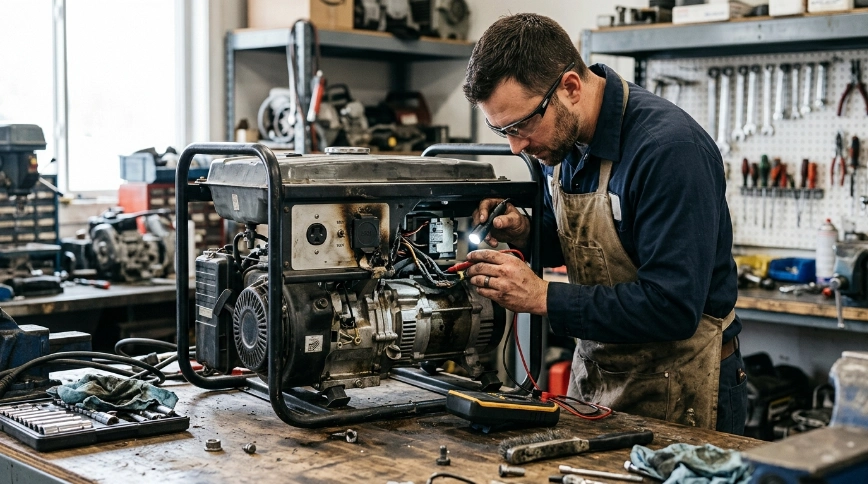
Basic airflow, oil, filter, and load checks are reasonable for most owners. Internal electrical or engine repairs deserve more caution.
- Smoke continues after the generator is shut down.
- Wiring, receptacles, or plastic parts appear melted or scorched.
- A fuel or oil leak reaches hot engine components.
- The generator repeatedly shuts down with correct oil and a light load.
- Voltage or frequency becomes unstable under a normal load.
- The alternator smells burnt or shows signs of winding damage.
- The cooling fan, shroud, or internal components are broken.
- Abnormal knocking, grinding, or metallic noise appears.
If smoke or fire develops, move people away and contact emergency services when appropriate. Don’t remove covers or reach into a running generator.
The U.S. Consumer Product Safety Commission also stresses outdoor generator operation because exhaust contains deadly carbon monoxide.
Tools I Recommend for Checking Generator Heat Problems
You don’t need a toolbox full of equipment to find many overheating causes. These are the tools I find most useful for checking temperature trends, electrical load, and safe wet-weather operation.
🏆 Best Diagnostic Tool
Fluke 62 MAX Infrared Thermometer
★★★★★ 4.8/5
The 62 MAX measures surface temperature without touching hot components and has a 10:1 distance-to-spot ratio. I like it for comparing the same engine or alternator location over time, but I never use one universal surface-temperature number to declare every generator overheated.
⚡ Best for Load Checking
P3 P4400 Kill A Watt Meter
★★★★☆ 4.6/5
The P4400 displays volts, amps, watts, hertz, VA, and energy use for compatible 120-volt plug-in loads, with a listed maximum of 15 amps and 1,875 VA. I use this type of meter to check individual appliances, not to measure an entire generator or a 240-volt circuit.
🌧️ Best for Wet Weather
GenTent Universal Open Frame Generator Running Cover
★★★★☆ 4.5/5
This purpose-built running cover is designed to shield compatible open-frame generators from weather while maintaining access for airflow and exhaust. I prefer a purpose-designed system over improvised tarps, but fit and manufacturer instructions still need to be checked before operation.
Frequently Asked Questions
Can a portable generator catch fire from overheating?
Yes. Severe overheating can damage wiring, insulation, fuel-system components, or nearby combustible material, and an overloaded generator can create a fire hazard. Shut the generator down if you see smoke, melting, fuel leakage, or a strong burning smell.
Why does my generator shut off after running for 20 or 30 minutes?
A heat-related shutdown is possible, but don’t assume it is the only cause. Check oil level, electrical load, cooling airflow, air-filter condition, fuel venting, warning indicators, and your model’s troubleshooting instructions before restarting.
Can a dirty air filter cause a generator to overheat?
A severely restricted air filter can reduce engine performance and contribute to poor operation under load. Service the filter according to the owner’s manual, and inspect it more often when the generator operates in dusty conditions.
Should I put a fan next to an overheating generator?
An external fan should not be used as a substitute for fixing blocked cooling passages, overload, low oil, or a failed factory cooling component. Keep the generator in its approved operating configuration and repair the underlying problem.
Is it normal for a portable generator to feel extremely hot?
Some parts, especially the muffler and engine, become hot enough to cause serious burns during normal operation. Look for abnormal shutdowns, power loss, warning lights, smoke, melting, or unusual odors instead of judging the generator only by touch.
Final Takeaway
When a portable generator starts overheating, reduce the load, shut it down, and check oil, airflow, filters, cooling passages, and operating conditions. Don’t keep restarting a unit that repeatedly overheats.
Most heat problems are easier to solve before insulation, engine parts, or the alternator suffer damage. Fix the cause first, then return the generator to service only when it operates normally and safely.

Hi, I’m Michael Turner. I own a generator workshop in the United States and founded HomeGeneratorBlog to share practical, hands-on guidance about generator installation, maintenance, troubleshooting, safety, and backup power solutions. My goal is to help homeowners make smarter, more confident decisions through clear and reliable information