Can You Legally Live Off the Grid? Laws, Permits, and Rules for 2026
Quick Answer
Yes, you can legally live off the grid in the United States. No nationwide federal law prohibits off-grid living, but state and local regulations determine whether your particular property and setup are allowed. You may need permits for your home, water supply, septic system, and electricity generation. If you plan to generate your own electricity, understanding your portable generator options is a useful starting point.
What makes off-grid living legal?
- Local zoning approval: Your property must allow your intended residential use and dwelling type.
- Building code compliance: Permanent homes generally need to meet applicable construction and occupancy standards.
- Approved water supply: Wells, rainwater collection, and other water sources must comply with relevant regulations.
- Legal sewage disposal: Septic systems or approved alternatives must meet local health requirements.
- Safe electrical systems: Solar installations, batteries, and generators must follow applicable electrical and safety requirements.
Before buying land
- Verify the exact parcel: Contact the local planning department and health authority before purchasing or constructing anything.
Living off the grid sounds wonderfully simple: buy some land, install solar panels, and stop paying utility bills. Unfortunately, the legal side isn’t quite that straightforward.
When I look at off-grid power plans, I start with the property rules rather than the generator specifications. This guide explains the laws, permits, and practical decisions that matter before you commit.
What Does Living Off the Grid Actually Mean?
Living off the grid means operating a home independently of one or more public utility services. Most people use the term for homes that generate their own electricity and manage private water and wastewater systems.
Definition: An off-grid home is a residence that operates without relying on the public electrical grid, often using independent power generation, energy storage, private water, and onsite wastewater treatment.
However, being off-grid doesn’t automatically mean living without modern conveniences. Many homes still have refrigeration, internet access, heating, and conventional appliances.
A typical setup may include:
- Solar panels: Generate electricity during daylight hours.
- Battery storage: Supplies electricity when solar production is unavailable.
- Backup generator: Provides power during extended cloudy weather or equipment problems.
- Private well: Supplies household water where groundwater is available.
- Septic system: Treats and disposes of household wastewater onsite.
- Propane appliances: May reduce the electricity required for cooking or heating.
The important distinction is between operating independently and operating without legal oversight. Self-sufficiency doesn’t eliminate building, health, environmental, or safety requirements.
Is Off-Grid Living Legal in Every U.S. State?
Off-grid living is not prohibited nationwide, and some form of independent living is possible throughout the United States. However, no state guarantees that every parcel can support a fully off-grid residence.
As of 2026, local rules remain especially important because counties and municipalities often control residential land use. Two properties within the same state may face completely different restrictions.
Which States Are More Friendly to Off-Grid Living?
Rural areas of states such as Texas, Missouri, Tennessee, and Alaska frequently attract off-grid homeowners. Some locations offer comparatively flexible land-use regulations or fewer zoning restrictions.
That doesn’t mean every county in these states allows unrestricted development. Environmental protections, health regulations, and utility requirements can still apply.
- Texas: Some unincorporated areas have limited traditional zoning, but other development requirements can still apply.
- Missouri: Rural building and zoning requirements vary significantly by county.
- Tennessee: County rules and adopted building codes can affect off-grid construction.
- Alaska: Remote living is common, but land ownership, sanitation, access, and permitting remain important.
I wouldn’t choose a state based solely on an online ranking. A property’s actual zoning classification and permitted uses are much more useful than a statewide reputation.
Can a City Require You to Connect to Public Utilities?
Yes, some jurisdictions require available public water or sewer connections, and certain developments impose additional electrical-service requirements. Whether those rules apply depends on the property and governing regulations.
For example, a subdivision may require utility connections through its development approvals or recorded restrictions. A remote rural parcel might have no comparable requirements.
Ask the relevant local authority whether an approved independent electrical system can serve as the home’s primary power source. Request the applicable written rules rather than relying on verbal assumptions.
What Zoning and Building Laws Apply to Off-Grid Homes?
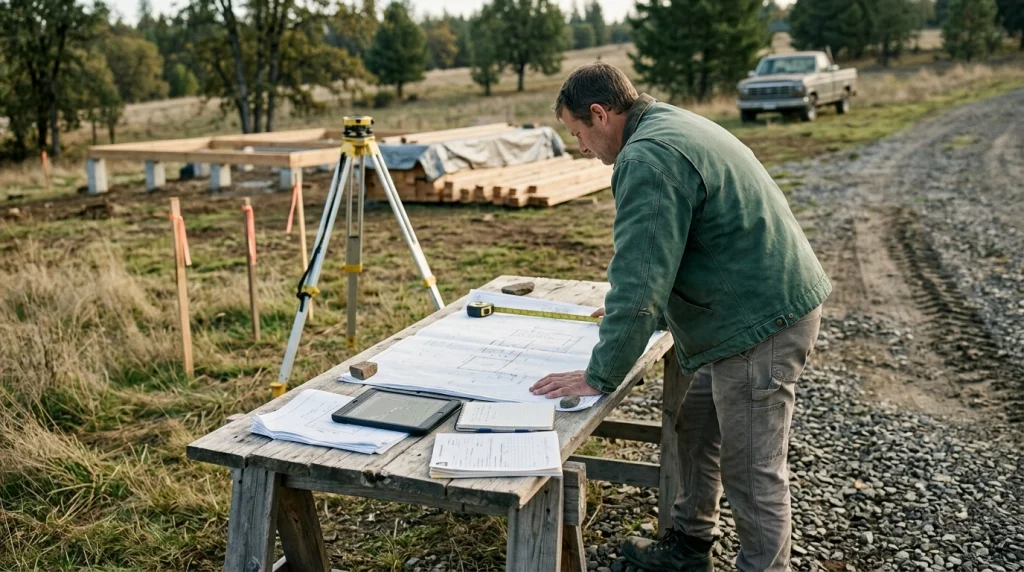
Zoning determines how land may be used, while building codes establish construction and safety requirements. You generally need to satisfy both before occupying a newly built off-grid home.
Zoning and Residential Land Use
Buying land doesn’t automatically give you permission to live on it permanently. Agricultural, recreational, conservation, and residential zoning categories may allow different activities.
Before purchasing, verify these details:
- Whether permanent residential occupancy is permitted.
- Whether the property requires a minimum dwelling size.
- Required setbacks from property boundaries and roads.
- Restrictions on accessory buildings and additional homes.
- Rules governing RVs, cabins, yurts, and other alternative structures.
- Special requirements for floodplains, protected land, or wildfire-prone areas.
An inexpensive recreational parcel can become an expensive mistake if permanent residential use isn’t allowed. The advertised property description isn’t a substitute for zoning confirmation.
Building Permits and Occupancy Requirements
A permanent off-grid house may need building permits, inspections, and approval for occupancy. These requirements can apply even when the home doesn’t connect to public electricity.
Typical inspections may address structural safety, plumbing, electrical wiring, ventilation, and sanitation. Exact requirements depend on the building codes adopted by the jurisdiction.
Some rural areas have limited building-code enforcement or exemptions for particular structures. Never assume those exemptions apply to a full-time residence without checking.
Can You Live in an RV or Tiny House on Your Own Land?
Sometimes, but property ownership alone doesn’t authorize permanent RV or tiny-house occupancy. Many jurisdictions distinguish recreational vehicles from legally habitable residential buildings.
A tiny home on a permanent foundation may face different rules from a tiny house on wheels. Some counties also restrict how long an RV can remain occupied outside an approved campground.
- Foundation-based tiny house: May qualify as a dwelling if it meets applicable codes.
- Tiny house on wheels: May be regulated as an RV or another vehicle category.
- Converted shed: Usually needs review before being approved for residential occupancy.
- Temporary campsite: May be subject to limits on duration or seasonal use.
What Permits Do You Need to Live Off the Grid?
There is no universal off-grid living permit. Instead, individual systems may require separate approvals from different government agencies.
The following table shows the issues commonly worth investigating before construction.
| Project | Possible Approval | Who to Contact |
|---|---|---|
| New residence | Zoning, building, occupancy | Planning and building departments |
| Solar and batteries | Electrical and possibly structural permits | Local building or electrical authority |
| Private well | Well construction or water-use authorization | State water agency or local authority |
| Septic system | Site evaluation and septic permit | Health or environmental department |
| Permanent generator | Electrical, fuel, or installation approval | Building and fire authorities |
| Driveway or access road | Driveway or road-access permit | Road authority or transportation department |
Important: These are potential requirements, not a universal permit checklist. Your local authorities must confirm which approvals apply to your specific property.
Can You Legally Collect Rainwater or Drill Your Own Well?
Private wells and rainwater harvesting are legal in many situations, but water laws vary by state. Water rights, collection methods, permits, and intended uses can affect what’s allowed.
Private Well Regulations
Some states require permits or notifications before drilling a well. Water availability, groundwater rights, and construction requirements may also limit where a well can be installed.
Water safety is another responsibility. The EPA’s private well guidance explains why proper location and construction are essential.
Before drilling, ask about:
- Well permit or registration requirements.
- Groundwater availability and water-use restrictions.
- Required distances from septic systems and contamination sources.
- Licensed drilling contractor requirements.
- Drinking-water testing and treatment recommendations.
Rainwater Harvesting Rules
Rainwater collection is generally permitted in the United States, although restrictions and conditions differ. Some jurisdictions regulate storage capacity, collection surfaces, plumbing connections, or household use.
Water intended for drinking may require treatment and testing. You should never assume that collected rainwater is safe to consume without proper evaluation.
Can You Use a Composting Toilet Instead of a Septic System?
A composting toilet may be allowed as part of an approved wastewater arrangement, but it doesn’t automatically replace a septic system. Local authorities may still require an approved method for handling sinks, showers, and other wastewater.
The EPA’s septic system guidance explains that state and local authorities generally oversee residential septic permits.
Depending on local regulations, your options may include:
- Conventional septic system: Uses a tank and drainfield where soil conditions are suitable.
- Alternative septic system: Uses an approved treatment method when conventional systems aren’t appropriate.
- Composting toilet: May be approved under specific installation and waste-management conditions.
- Approved greywater system: Handles certain wastewater streams when local regulations permit.
A failed soil evaluation can affect whether a parcel supports residential development. I would investigate wastewater feasibility before committing to a land purchase.
Is It Legal to Power an Off-Grid House With a Generator?
Yes, using a generator to supply residential electricity is generally legal when its installation and operation comply with applicable requirements. Generator placement, wiring, fuel handling, emissions, and neighborhood noise rules can all matter.
The bigger question is whether a generator is the best primary power source. Continuous fuel consumption and maintenance can make generator-only living difficult.
Do Generators Need Electrical Permits?
Portable generators powering compatible appliances directly may have different requirements from permanently connected systems. Connecting generator power to household circuits typically requires approved transfer equipment and code-compliant installation.
Never connect a generator to a regular wall outlet to energize household wiring. My guide on safe generator connections explains the dangerous practice known as backfeeding.
For a permanent installation, have a qualified electrician evaluate:
- Generator output and household electrical loads.
- Transfer switch or approved interlock compatibility.
- Grounding and neutral-bonding requirements.
- Wiring, overcurrent protection, and local permits.
- Fuel supply and required equipment clearances.
How Far Must a Generator Be From Your House?
For portable fuel-burning generators, the CDC recommends outdoor operation more than 20 feet from doors, windows, and vents. Exhaust should face away from occupied buildings.
The CDC’s carbon monoxide safety guidance also recommends using battery-powered or battery-backup CO detectors inside your home.
Never operate a combustion generator inside a house, garage, basement, or enclosed shed. You can also review my generator placement guide for outdoor setup considerations.
Can You Run a Generator All Night Off the Grid?
Not every jurisdiction prohibits nighttime generator operation, but local noise and nuisance rules may apply. Safety and manufacturer operating instructions remain important even when nighttime use is legal.
Check the relevant ordinance before depending on overnight power. My article about overnight generator legality explains the most common restrictions.
Solar Panels vs. Generators: Which Is Better for Legal Off-Grid Living?
Both solar and fuel-burning generators can support a legal off-grid home. The best setup depends on electrical demand, climate, installation requirements, and your ability to maintain reliable power.
Solar systems usually become more practical when paired with battery storage. The Department of Energy explains how batteries provide electricity when solar generation is unavailable.
| Factor | Solar + Battery | Fuel Generator |
|---|---|---|
| Fuel requirement | Sunlight for recharging | Gasoline, propane, diesel, or other compatible fuel |
| Operating noise | Usually low | Engine noise during operation |
| Nighttime electricity | Stored battery energy | Available while generator runs |
| Main limitation | Weather and stored capacity | Fuel, exhaust, and maintenance |
| Typical legal review | Electrical, structural, fire, or zoning rules | Electrical, noise, fuel, fire, or placement rules |
My preferred approach is to calculate daily energy consumption first. Then I would size the battery and generation system around essential loads rather than buying the largest generator available.
For a remote home, a combination of solar, batteries, and backup generation can provide flexibility. That doesn’t eliminate the need for appropriate permits and professional electrical design.
How Can You Check Whether Off-Grid Living Is Legal Before Buying Land?
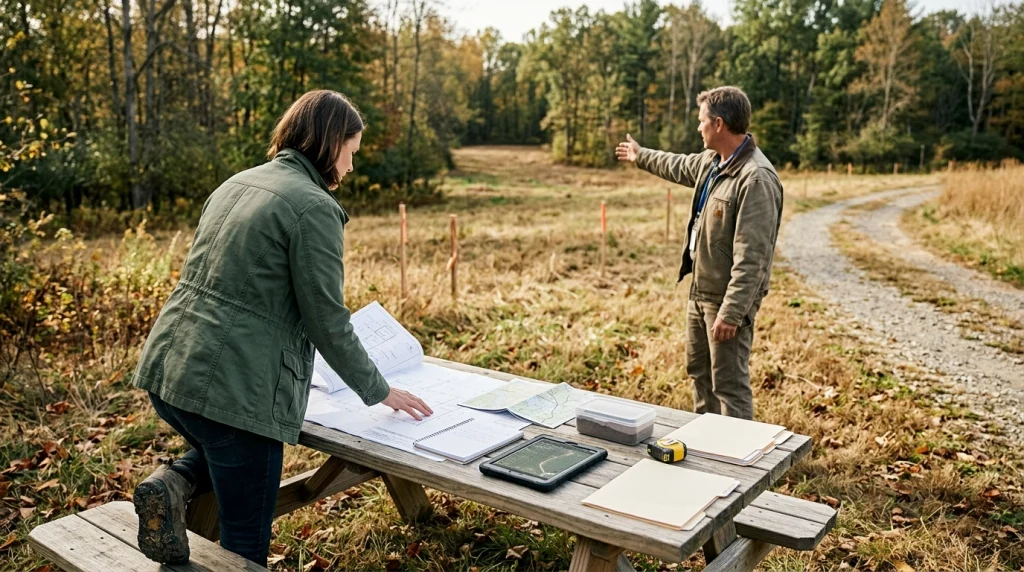
The safest approach is a parcel-specific investigation before signing an unconditional purchase agreement. Confirm residential permission, utilities, wastewater feasibility, and legal access in writing where possible.
- Identify the jurisdiction: Determine whether the parcel falls under city, county, township, or special-district regulations.
- Check zoning: Ask whether your proposed dwelling type and permanent occupancy are permitted.
- Contact the building department: Request building-code requirements, electrical permit rules, and occupancy conditions.
- Verify water access: Investigate well permits, water rights, groundwater availability, and alternative water sources.
- Check wastewater feasibility: Ask the health department about septic suitability, soil evaluations, and permitted alternatives.
- Review electrical and utility rules: Confirm whether independent generation is permitted and whether any utility connections are mandatory.
- Examine legal property access: Review recorded easements, road rights, HOA restrictions, and deed covenants.
- Document the results: Keep written responses, permit requirements, and contractor estimates before proceeding.
A practical question to ask the planning office is: “Can this parcel legally support a full-time residence using independent electricity, private water, and onsite wastewater treatment?”
That single question can reveal which other departments need to review your plans. For uncertain purchases, consider professional land-use advice and suitable contract contingencies.
What Mistakes Can Make Off-Grid Living Illegal?
Most legal problems arise from individual building or utility violations rather than the decision to live independently. Avoiding a few common mistakes can prevent major delays and expenses.
- Buying unsuitable land: Assuming every rural or agricultural parcel permits permanent residential occupancy.
- Building without approval: Constructing a permanent dwelling before confirming permit exemptions or requirements.
- Ignoring wastewater rules: Installing an unapproved toilet or waste-disposal arrangement.
- Unsafe generator wiring: Connecting generation equipment without approved electrical isolation.
- Overlooking private restrictions: Forgetting that deed covenants and HOA rules can limit property use.
- Assuming no zoning means no regulation: Ignoring health, environmental, building, and water requirements.
Local enforcement actions can include correction notices, fines, permit problems, or restrictions on occupancy. The consequences depend on the specific violation and jurisdiction.
Is Living Off the Grid Cheaper Than Staying Connected?
Not necessarily. An off-grid home may avoid recurring utility charges while requiring substantial upfront investment and ongoing maintenance.
Your budget should account for more than solar panels or a portable generator. Land preparation, water infrastructure, wastewater treatment, electrical installation, and backup equipment can become significant expenses.
Costs worth estimating include:
- Property purchase, survey, and legal review.
- Building permits and required inspections.
- Solar panels, inverter, and battery storage.
- Generator purchase, fuel, and maintenance.
- Well drilling, pumps, and water treatment.
- Septic installation or approved alternatives.
- Replacement equipment and emergency reserves.
I would also account for the downsides of generator ownership before committing to a generator-heavy setup. Fuel storage, servicing, and operating noise can matter as much as the initial price.
Off-Grid Backup Power Equipment Worth Considering
If you’re planning your electrical system, these three products serve different off-grid needs. None replaces a properly designed whole-home system, and buying equipment doesn’t establish legal permission to install or operate it.
The ratings below are editorial suitability assessments based on published specifications, not customer review scores or claims of hands-on testing.
☀️ Best for Solar-Friendly Backup
EcoFlow DELTA 2 Max Portable Power Station
★★★★½ 4.5/5 editorial fit
With 2,048Wh battery capacity, 2,400W rated AC output, and up to 1,000W solar input, this is a useful option for selected cabin essentials. I like the flexibility of charging from compatible solar panels without operating a combustion engine, although its battery capacity is limited for full-time household demand.
⛽ Best for Fuel Flexibility
Champion 201531 4500W Dual Fuel Inverter
★★★★☆ 4/5 editorial fit
This model provides 3,250 running watts on gasoline or 2,925 on propane, according to Champion. Its dual-fuel capability and CO shutdown feature make it worth considering for outdoor backup of essential 120V loads, provided its limits suit your equipment.
🔋 Best for Higher Portable Output
Westinghouse iGen5000DFc Dual Fuel Inverter
★★★★☆ 4/5 editorial fit
Westinghouse specifies 3,900 running watts on gasoline and 3,500 on propane. I would consider this for a property with several essential 120V loads, while checking its weight, fuel needs, outlet compatibility, and local operating restrictions.
Affiliate disclosure: As an Amazon Associate, this site may earn from qualifying purchases at no additional cost to you.
Frequently Asked Questions About Legal Off-Grid Living
Can you legally live off the grid without paying utility bills?
Yes, some legally established off-grid homes operate without monthly public electricity bills. However, local utility-connection rules, private contracts, and applicable service charges may affect your situation. You’ll still need to pay for equipment, maintenance, fuel, and other ongoing expenses.
Can you live off the grid on land you already own?
Possibly, but owning the land doesn’t automatically authorize permanent residential occupancy. You must check the parcel’s zoning, dwelling requirements, water availability, wastewater regulations, and any recorded restrictions before developing or occupying an off-grid home.
Do you have to pay property taxes if you live off the grid?
Generally, yes. Living independently of public utilities doesn’t automatically eliminate property taxes. Tax obligations depend on ownership, assessed value, local law, and any applicable exemptions, so consult the local assessor for property-specific information.
Can you legally live off the grid using only solar panels?
Yes, an approved off-grid solar system can provide household electricity where local rules permit that arrangement. Solar panels alone don’t supply power at night, so battery storage or another backup source is usually needed. Permanent installations may require electrical and structural approvals.
Can the government force you to leave an off-grid home?
Authorities may restrict occupancy when a residence violates applicable building, zoning, sanitation, or safety laws. Enforcement procedures and property-owner rights vary by jurisdiction. If you receive a violation notice, review it promptly and obtain qualified local legal advice.
Final Takeaway: Legal Off-Grid Living Starts With the Right Property
Yes, you can legally live off the grid, but the details determine whether your plan succeeds. Zoning, safe construction, legal water access, approved wastewater treatment, and compliant electrical systems all deserve attention.
Before buying equipment or land, contact the responsible local authorities and confirm your proposed setup. A little research now can prevent expensive changes later and help you build a reliable, legally compliant off-grid home.

Hi, I’m Michael Turner. I own a generator workshop in the United States and founded HomeGeneratorBlog to share practical, hands-on guidance about generator installation, maintenance, troubleshooting, safety, and backup power solutions. My goal is to help homeowners make smarter, more confident decisions through clear and reliable information